

Levent Kenez/Stockholm
Selçuk Bayraktar, chairman of Turkish drone manufacturer Baykar and son-in-law of President Recep Tayyip Erdogan, said autonomous jet-powered combat drones will only gain broad international acceptance after proving their capabilities in war, predicting that his company would likely be the one to demonstrate that transformation on the battlefield.
Speaking during a presentation at Baykar’s production complex in Istanbul, Bayraktar described unmanned combat aircraft as a fundamentally different type of weapon rather than another generation of fighter jets. Instead of comparing robotic aircraft with first, second, third, fourth, fifth or even sixth-generation fighters, he argued they should be viewed as an entirely separate class of military platform because they eliminate the need for human pilots and rely on software that can be copied and improved almost instantly.

His remarks were notable because they openly framed armed conflict as the event that would ultimately validate the technology. Rather than presenting future wars only as potential customers’ concerns, Bayraktar said battlefield performance would determine when robotic combat aircraft become widely accepted and suggested that Baykar expects to lead that transition.
“So, when it’s going to come, that’s a good question. It’s going to take a long time, but it will come once the capacity is demonstrated in a war, and it will be. So we are the frontier; we’re probably going to demonstrate it to the world,” Bayraktar said.
He argued that autonomous combat aircraft represent a technological shift similar to the transition from manned to automated systems in other industries. Unlike conventional fighter jets, which require years of expensive pilot training, robotic aircraft depend on software. Once that software is optimized, he said, the same capability can be transferred across an entire fleet almost instantly through software updates instead of training additional pilots.
Video of Bayraktar’s presentation on June 30, 2026:
Bayraktar described the aircraft as cheaper, easier to reproduce and potentially more dangerous than traditional crewed fighter jets because they are not constrained by the physical limitations or training requirements of human pilots. He said future air forces would increasingly rely on autonomous systems capable of carrying out complex combat missions.
The comments came during a visit on June 30, 2026, by parliament speakers who attended the NATO Parliamentary Summit in İstanbul. Hosted by Turkish Parliament Speaker Numan Kurtulmus, the delegation toured Baykar’s Ozdemir Bayraktar National Technology Center after meetings at Istanbul’s Dolmabahce Palace.
Unlike the Bayraktar TB2 and the Akinci combat drone, which have already been widely exported, Kızılelma is intended to operate as an autonomous jet-powered platform that could eventually perform air-to-air combat as well as strike missions. Bayraktar argued that such systems should not be considered simply another generation of fighter aircraft because they replace the pilot altogether with software.
Bayraktar drones gained international recognition after being deployed in conflicts including Libya, Ukraine and the 2020 Nagorno-Karabakh war between Azerbaijan and Armenia. Turkish officials have repeatedly cited those battlefield performances while promoting defense cooperation agreements with foreign governments and marketing Turkish-made military systems abroad.
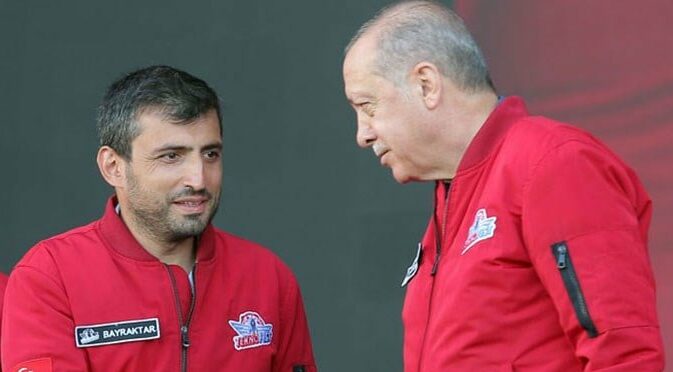
Baykar’s growing influence in the global arms market has also generated extraordinary wealth for the family controlling the company. Selçuk Bayraktar entered Turkey’s list of the country’s 10 richest individuals for the first time in Forbes’ updated 2026 rankings after a surge in Baykar’s valuation driven largely by defense exports.
Forbes estimated Bayraktar’s personal fortune at $2.7 billion, putting him ninth among Turkey’s wealthiest business figures. The ranking marked a sharp rise from 2025, when he ranked 21st before entering the country’s top 10 richest people. His brother, Haluk Bayraktar, Baykar’s chief executive officer, also saw his fortune increase significantly. Forbes estimated his wealth at $2.4 billion, bringing the combined fortune of the two brothers to more than $5 billion.
Selçuk Bayraktar owns 52.5 percent of Baykar, while Haluk Bayraktar controls the remaining 47.5 percent. Their late father, Ozdemir Bayraktar, established the company in 1984 as an automotive parts manufacturer before it shifted its focus to unmanned aerial vehicles and became one of the world’s fastest-growing defense contractors.
President Erdogan has frequently promoted Baykar’s drones during official overseas visits and bilateral meetings with foreign leaders. Government delegations accompanying the Turkish president have often included defense industry representatives while discussing military procurement and broader strategic cooperation, making Baykar one of the country’s most visible defense exporters.
At the closing news conference of the NATO summit in Ankara on July 8, 2026, President Erdogan pointed to Turkey’s expanding defense industry, with a particular focus on the country’s unmanned aerial vehicle sector. He cited Baykar as an example of the industry’s international growth, saying the company continues to receive significant orders from around the world. “Baykar is taking an important step, and this process continues. They are receiving very serious orders from around the world and will continue to do so. This shows that our unmanned aerial vehicles and armed drones have found acceptance globally,” Erdogan said.
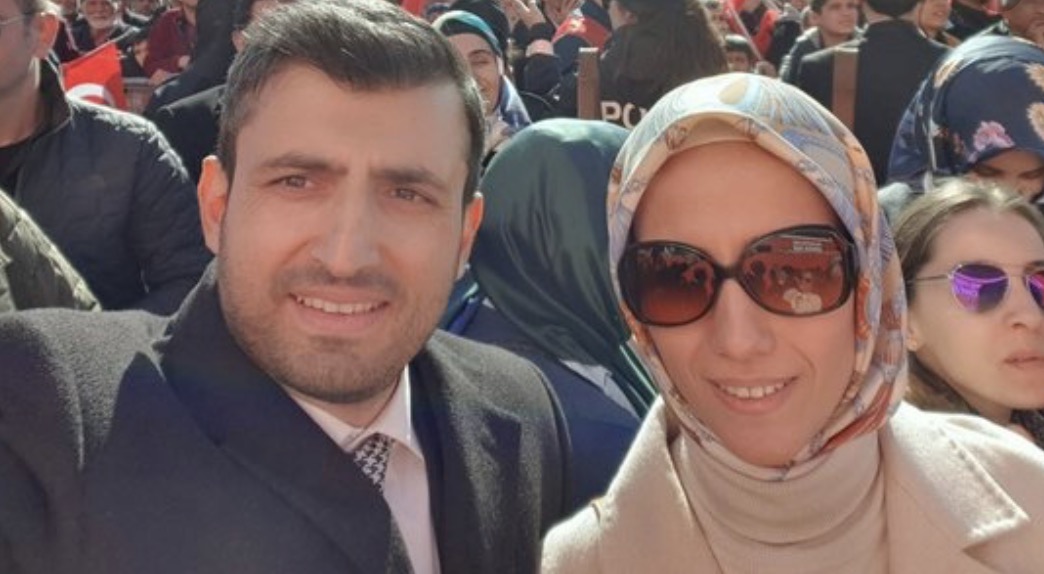
Bayraktar’s family connection to Erdogan has also fueled years of political speculation inside Turkey. Turkish media have repeatedly suggested that he could eventually enter politics and even emerge as a possible successor to Erdogan as a future presidential candidate.
Bayraktar has previously indicated in interviews that he was not opposed in principle to pursuing a political career. According to information obtained by Nordic Monitor, however, the Erdogan family has decided to support the president’s son, Bilal Erdogan, as the preferred figure to lead the ruling party after Recep Tayyip Erdogan, while Selçuk Bayraktar has not been given backing to move into frontline politics.