
Abdullah Bozkurt/Stockholm
A journalist who has long presented himself as an independent figure in Turkey was allegedly recruited and handled for years as an intelligence asset by a clandestine unit within the National Intelligence Organization (Milli İstihbarat Teşkilatı, MIT), the country’s main spy agency, according to a former senior investigator. The investigator alleged that the journalist has conducted influence operations designed to advance the political objectives of President Recep Tayyip Erdogan’s government.
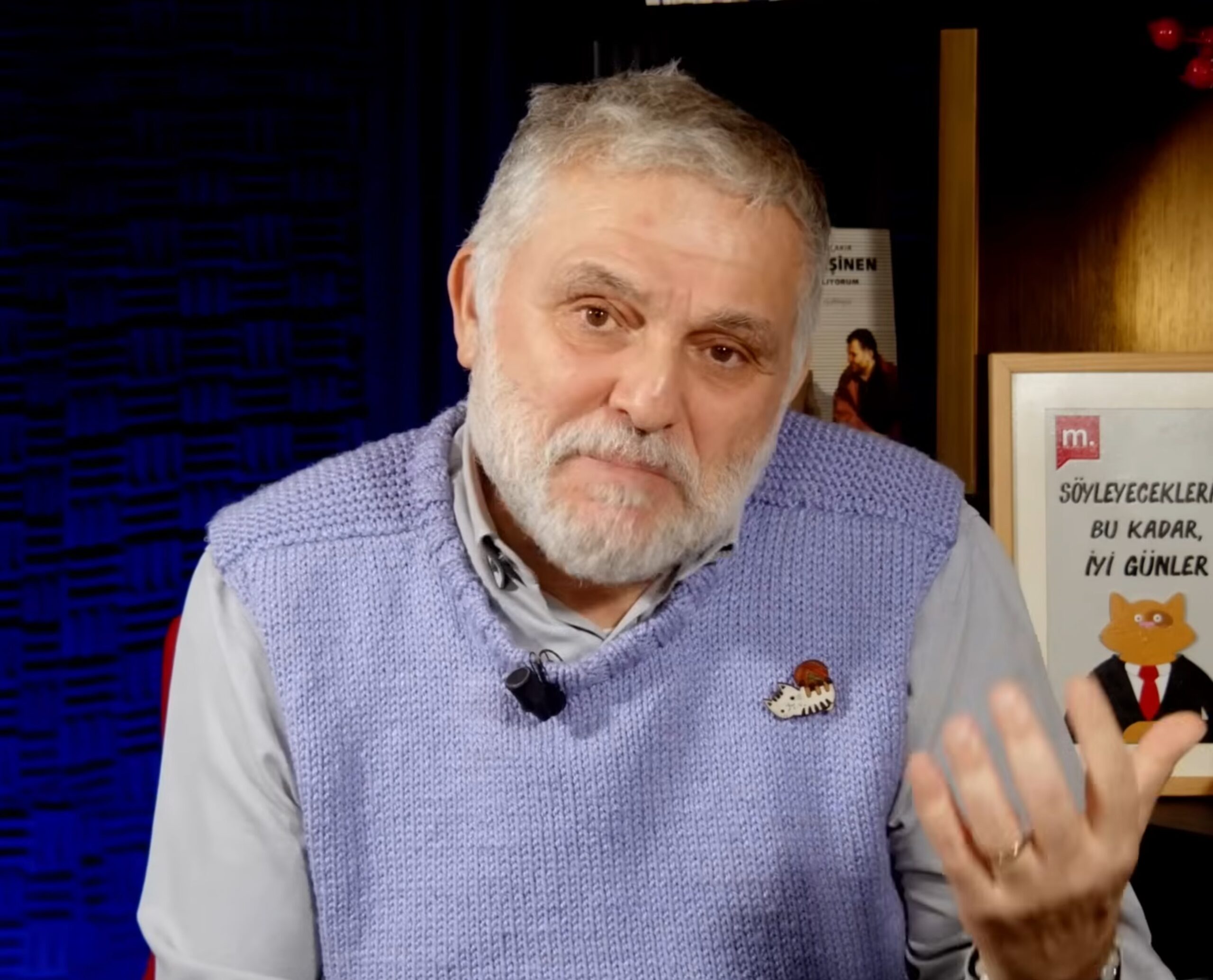
Ruşen Çakır, the CEO of Turkish media company Scope Medya Ticaret ve Pazarlama A.Ş., which operates under the Medyascope brand, was reportedly observed on two occasions meeting with senior MIT operative Sebahattin Asal, a figure said to maintain an exceptionally deep cover identity even within the spy agency. Asal is alleged to oversee highly sensitive clandestine operations whose details are known only to a small circle of officials that includes Erdogan.
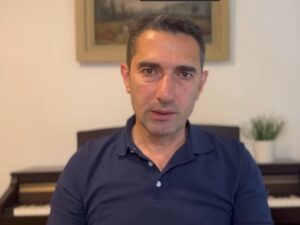
The revelation came from Mustafa Okumuş, a former senior police chief who spent years investigating organized crime syndicates in Turkey and served as head of investigations at the organized crime department in charge of prosecutorial probes. He was abruptly dismissed from his post in the aftermath of the 2013 corruption investigations, which implicated then-prime minister and current president Erdogan, members of his family and his political and business associates in alleged dealings involving Iranian sanctions evader Reza Zarrab and Yasin al-Qadi, a Saudi businessman who was once designated by the United States and the United Nations as a financier of al-Qaeda.
Through his YouTube channel, which he launched in May of this year from Germany, his new home after what he says was his unlawful imprisonment in Turkey, Okumuş has been unveiling a steady stream of previously undisclosed allegations involving Erdogan’s government. His revelations span an array of issues, including the purported involvement of state officials in cocaine trafficking and illicit money laundering, covert intelligence operations and match-fixing and illegal betting schemes that have long plagued Turkish football clubs.
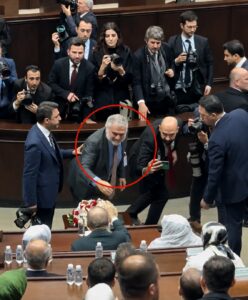
In a video posted on June 18, Okumuş revealed that he had obtained sensitive information from two trusted colleagues who served in the police force, indicating that Çakır had first been observed meeting with Asal, MIT’s deputy undersecretary and the agency’s second-ranking official, at a café in the Barbaros neighborhood of Istanbul’s Beşiktaş district. Çakır was also reportedly identified at a second meeting with Asal at another café in Istanbul’s historic Taksim neighborhood.
The encounters are believed to have occurred while police, acting under prosecutorial orders, were conducting an investigation into a separate criminal network whose reach allegedly extended into shadowy circles in Turkey’s intelligence apparatus, police force and judiciary.
Okumuş suggested that these were not routine meetings between a journalist and a source but rather encounters consistent with the handling of an asset allegedly cultivated by the intelligence agency to help shape the domestic narrative in ways beneficial to the Erdogan government. In his view Çakır’s meetings with Asal had nothing to do with journalistic work and instead constituted interactions between an intelligence handler and an asset under his supervision.
Asal has a controversial record from his years in the intelligence service. He was allegedly among the key MIT officers involved in planning and executing a false-flag coup attempt in 2016 that was orchestrated to consolidate power in the hands of Erdogan by paving the way for an executive presidency with sweeping powers, purging military commanders opposed to Turkey’s intervention in Syria in support of armed jihadist groups and criminalizing the influential opposition bloc associated with the Gülen movement under false pretenses.
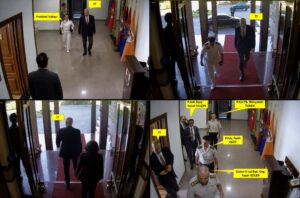
Security camera footage from inside General Staff headquarters, recorded in the afternoon on July 15, 2016 — roughly five hours before the purported coup attempt was set in motion during prime time, an unconventional timing for a military putsch — shows Asal walking through a corridor to meet with Yaşar Güler, the then-deputy chief of General Staff and now Turkey’s defense minister. Still frames from the CCTV footage, obtained by Nordic Monitor, depict Asal being escorted by an officer to the meeting.
Asal was alleged to have helped fine-tune last-minute details to ensure that a limited military mobilization, initiated after a terrorism alert had been issued by the military command, would create the appearance of a coup attempt. Despite repeated motions by defense lawyers seeking his testimony, he has never appeared in court to explain his presence at General Staff headquarters that day. His visit was followed several hours later by that of then-MIT chief Hakan Fidan, who met with Chief of General Staff Gen. Hulusi Akar.
Asal’s name also emerged in relation to the 2013 assassination of three women affiliated with the Kurdistan Workers’ Party (PKK) — Sakine Cansız, Fidan Doğan and Leyla Söylemez — who were gunned down in Paris in an operation believed to have been ordered by MIT. The hit was allegedly contracted to Ömer Güney, an insider recruited by the Turkish intelligence agency. A leaked MIT document dated November 18, 2012, revealed that the operation was supervised by Asal.
The claim was also corroborated by two senior MIT officials, Erhan Pekçetin and Aydın Günel, who were captured by the PKK in the Kurdish Iraqi city of Sulaymaniyah on August 4, 2017. Pekçetin headed the department responsible for ethnic and separatist groups operating outside Turkey’s borders, while Günel previously managed MIT’s human resources department, which was responsible for developing human intelligence assets in the field and recruiting new informants.
A leaked classified MIT document related to the 2013 assassinations of three Kurdish activists in Paris bears the initials of Sebahattin Asal along with those of three other intelligence officers, suggesting his involvement in the planning and oversight of the covert operation:
They stated that the Paris assassinations had been orchestrated by Asal, who was rewarded for the killings with a promotion to deputy director in charge of MIT’s Strategic Intelligence Directorate, a highly sensitive division whose reports were circulated only among a small circle of senior Turkish officials, including President Erdogan.
The two captured MIT officers also identified a number of journalists whom they said had been recruited by MIT as intelligence assets.
Asal retired from the agency in 2023.
MIT’s use of journalists as assets and informants is not a new phenomenon. The agency has for years embedded its own operatives in various Turkish media outlets under journalistic cover. In the absence of any Turkish law prohibiting such practices, MIT has developed a well-established modus operandi for infiltrating the country’s media sector, placing hundreds of intelligence operatives in news organizations over the years.
About a dozen journalists have been exposed in recent years as allegedly working for Turkey’s intelligence agency, some through chance encounters, others in court cases or criminal investigations in which a MIT asset or operative accused of serious crimes disclosed his or her intelligence affiliation in an apparent attempt to shield themselves from criminal liability.
A series of amendments to Turkey’s intelligence legislation over the past two decades has afforded MIT near-total impunity, giving President Erdogan effective veto power over any investigation or prosecution of MIT personnel unless he personally approves it. Several investigations implicating MIT operatives in arms trafficking, the transfer of jihadist fighters and drug and vehicle smuggling were effectively buried after Erdogan refused to authorize prosecutors to proceed with criminal charges.
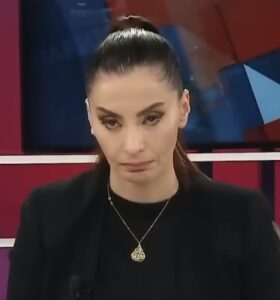
A previous Nordic Monitor investigation extensively documented how MIT has for decades employed journalism as a cover for espionage, influence campaigns and psychological operations, building a network of reporters, editors, photographers and commentators capable of moving about freely, penetrating sensitive environments and influencing public discourse while masking clandestine activities behind press credentials.
The report identified Yahya Bostan, the then-news coordinator at the state-run Anadolu news agency, as an intelligence asset whose name had previously surfaced in an investigation into an Iranian Quds Force network operating in Turkey. Bostan now writes commentary for the hard-line Islamist Yeni Şafak daily, echoing government talking points in line with directives from the intelligence agency.
The report also named Nuh Yılmaz, a former columnist for the pro-government Daily Sabah and a SETA analyst who later rose through MIT’s ranks, becoming a powerful figure within the agency responsible for handling journalists planted in the Turkish media. After his boss, Hakan Fidan, was reassigned as foreign minister, Yılmaz moved to the foreign service and currently serves as Turkey’s ambassador to Syria.
Hande Fırat, a journalist for the Hürriyet daily and CNN Türk who is best known for her live FaceTime interview with President Erdogan during the MIT-orchestrated false-flag coup attempt of July 15, 2016, was identified in the report as maintaining close ties with intelligence officials. According to the investigation, she received training from the agency in counter-surveillance techniques and was frequently seen visiting MIT headquarters. Her handler was Yılmaz while he was with the agency.
Veteran television host Fatih Altaylı, now a YouTuber, was also named in the report as being among media personalities alleged to have collaborated with MIT. The report claimed that the agency had assigned him the codename “Siyah” (“Black”).
Former journalist and opposition Republican People’s Party (CHP) parliamentarian Tuncay Özkan, who once ran Kanaltürk television, was described as having maintained contacts within intelligence circles. Other names that have surfaced in recent years include Çetiner Çetin, a Habertürk correspondent covering Syria and conflict zones who frequently traveled with Turkish-backed armed groups, and Cem Küçük, a fiercely pro-Erdogan commentator known for publicly singling out government critics and journalists for attack. Both were among media figures alleged to have maintained links with MIT.
Hayri Birler was another figure whose intelligence ties were exposed. Birler was serving as deputy representative at Hürriyet’s Ankara bureau when his intelligence role came to light. He later quit journalism and returned to his primary profession, ultimately being appointed as MIT’s regional director in Diyarbakır. Prior to his tenure at Hürriyet, Birler had also worked for the Milliyet newspaper.
Photojournalist Mustafa Özer, who undertook overseas assignments under press cover while employed by French news agency AFP, was identified as having ties to MIT after his arrest in a criminal investigation. During his police interview, he acknowledged his affiliation with the spy agency. Sabah newspaper writers Abdurrahman Şimşek, Ferhat Ünlü and Nazif Karaman, who were described as participants in intelligence-driven media campaigns and disinformation efforts coordinated by MIT, were also named as MIT assets.
Many of these individuals reportedly attended briefings at MIT headquarters, underwent training in tradecraft and counter-surveillance techniques and were groomed by the agency to assist in shaping public narratives, targeting dissidents and facilitating covert operations overseas.
Çakır has become the latest addition to a growing roster of media figures who have been exposed in recent years as allegedly having worked for Turkey’s intelligence agency.
In a third encounter, Çakır was allegedly observed entering MIT’s Istanbul office in Beşiktaş in the company of MIT operative Yılmaz. According to Okumuş, the journalist was recognized by the driver of a senior police chief who was in the area and approached him to say hello. Okumuş claimed that Çakır appeared visibly uneasy after realizing he had been seen entering the intelligence facility and sought to account for his presence by saying that he was on his way to the nearby Conrad Hotel.
Çakır’s public writings and commentaries over the years have been notably defensive of Hakan Fidan, the longtime intelligence chief who now serves as foreign minister, lending additional credence to the allegations raised by Okumuş. Medyascope has frequently published favorable coverage of MIT’s operations targeting Erdogan’s opponents, particularly the Gülen movement, which has been critical of Erdogan’s government on a range of issues, including pervasive corruption within the Turkish administration and Turkey’s support for and facilitation of armed jihadist groups.
For example, Çakır has been an ardent defender of radical jihadist groups, including Turkey’s Hizbullah, a Sunni Kurdish Islamist organization that waged a violent campaign of assassinations, kidnappings and brutal torture across southeastern Turkey. Hizbullah — not to be confused with Lebanese Hezbollah, although both groups have been linked to Iran — reached the height of its power in the 1990s, when police raids uncovered secret execution chambers and hours of videotaped torture sessions, earning the organization a reputation as one of Turkey’s most violent clandestine Islamist movements.

The group’s founder, Hüseyin Velioğlu, was killed in a police raid in 2000, prompting Turkish Hizbullah to retreat from armed militancy and rebuild itself through religious, charitable and political fronts in order to sustain its network. Over time, its ideological network coalesced into the Free Cause Party (HÜDA-PAR), which now operates openly as a legal political organization.
Hizbullah struck a secret deal with President Erdogan in 2014, with its political arm endorsing Erdogan’s ruling Justice and Development Party (AKP) in exchange for the release of imprisoned Hezbollah members convicted of violent crimes. By 2023 HÜDA-PAR had formally joined Erdogan’s electoral alliance, fielding candidates under the AKP banner and gaining seats in the Turkish Parliament, a milestone that marked the first appearance of Hizbullah-linked figures on Turkey’s national ballot.
Hundreds of convicted Hizbullah members serving lengthy prison sentences have been released over the past decade with the involvement of the government.
Hizbullah’s supreme religious leader, Edip Gümüş, a fugitive believed to be residing in Iran, in 2023 called for a “global jihad against Jews,” pledging weapons and financial support for anti-Israel operations. The organization has also hosted Hamas representatives in Turkey, taken part in anti-Israel demonstrations organized by pro-government municipalities and staged rallies outside the US Embassy and consulates as well as NATO facilities.
Çakır interviewed Gümüş, providing a platform to a fugitive militant leader. In a number of commentaries the journalist portrayed Hizbullah members as victims and attributed the crackdown on the organization to police chiefs and prosecutors whom he alleged were affiliated with the Gülen movement.
The US Department of State has flagged Turkish Hizbullah as a terrorist entity on its Terrorist Exclusion List (TEL), a mechanism that targets immigration, visa and entry controls.
Çakır also defended another radical group known in Turkish as Tahşiyeciler, or Molla Muhammetçiler, a jihadist organization led by Mehmet Doğan (also known as Mullah Muhammed el-Kesri), who openly expressed admiration for Osama bin Laden and called for armed jihad in Turkey. The group had been under surveillance by Turkish security agencies since the early 2000s, and internal communications among intelligence services characterized it as a dangerous organization supportive of al-Qaeda. The investigation further revealed that the group had sent nearly 100 individuals to Afghanistan to receive weapons training.
In seized tape recordings intended for purposes of indoctrination, Mullah Muhammed was heard calling for violent jihad: “I’m telling you to take up your guns and kill them.” He also asked his followers to build bombs and mortars in their homes, urged the decapitation of Americans, claiming that the religion allows such practices. “If the sword is not used, then this is not Islam,” he stated. According to him, all Muslims were obligated to respond to then-al-Qaeda leader Osama bin Laden’s armed fight.
Erdogan vigorously defended Mullah Muhammed, helped secure his acquittal and that of his associates through judges and prosecutors loyal to his government, launched a crackdown on journalists who criticized the radical group and even retained legal counsel to file a civil lawsuit in the United States against Muslim scholar Fethullah Gülen for allegedly defaming the militant cleric. The case was ultimately dismissed by a US federal judge.
Like Erdogan, Çakır came to the defense of Mullah Muhammed’s group in the face of the crackdown, brushing aside extensive evidence gathered by investigators, including hours of intercepted communications, physical surveillance records, funds transfers, the movement of fighters and materials recovered from the homes of suspects, among them hand grenades.
A trade registry filing dated December 2024 identifies Ruşen Çakır as the chief executive officer of Scope Medya Ticaret ve Pazarlama A.Ş., a media, trade and marketing company operating under the Medyascope brand:
Çakır’s criticism of the government appears to have been confined to issues that do not breach carefully guarded red lines and are not viewed by the Erdogan government as threatening in any meaningful way. Analysts interviewed by Nordic Monitor argued that his public persona was deliberately nurtured to convey an image of independence, thereby enhancing his utility for the intelligence agency in promoting narratives deemed strategically advantageous to the government. In their assessment he has been permitted to operate with relative freedom so long as he remains within those unwritten limits.
According to these analysts, even disparaging articles planted in pro-government media seem to have contributed to strengthening this carefully managed perception of independence.
Such a carefully nurtured image may also have facilitated his efforts to obtain foreign funding under journalistic auspices. According to a statement released by Medyascope in August 2021, the outlet benefited from financial support provided by Open Society, Internews, Chrest, Heinrich Böll, grant programs administered by the French, British, Norwegian and Dutch foreign ministries, in addition to the European Endowment for Democracy (EED), Civil Rights Defenders and Sida.