
Abdullah Bozkurt/Stockholm
After years of exposure by US sanctions authorities that repeatedly identified Turkish entities and individuals as key facilitators in Iran’s military procurement networks, Ankara has introduced a new regulation to tighten control over the transportation of military and dual-use goods.
The move, widely seen as a response to sustained pressure from Washington, aims to restrict the flow of sensitive materials through Turkish territory. However, the Islamist government of President Recep Tayyip Erdogan’s long and well-documented record of enabling sanctions evasion for Iran raises serious questions about whether the measure will be enforced beyond paper compliance.
The presidential decree, signed by Erdogan on March 16 and published in the Official Gazette the following day as Decision No. 11068, establishes a detailed legal framework governing the movement of controlled military items across Turkey’s customs territory.
The regulation explicitly covers the transit passage and re-export under transit trade of military vehicles and defense equipment, weapons and ammunition, spare parts linked to military systems, military explosives and technologies associated with these categories.
These items fall under the “Kontrole Tabi Liste” (list of items subject to control), defined pursuant to Law No. 5201, which governs the control of war materials and related technologies in Turkey. Many of the items listed in the presidential decree are, in fact, already subject to an existing control regime, but the Erdogan government has for years chosen not to enforce that law with respect to Iran.
The decree is not limited to exports originating in Turkey. It applies to goods moving between two foreign countries that pass through Turkey’s customs zone — a channel long exploited by Iranian procurement networks to disguise the origin and destination of sensitive shipments.
The decree introduces a mandatory pre-clearance mechanism that puts the Ministry of Trade and customs authorities at the center of decision-making.
Any entity seeking to move controlled goods through Turkey must apply for an “uygunluk yazısı” (compliance letter) from Turkish authorities. The Ministry of Trade evaluates applications by consulting relevant public institutions and agencies, indicating a multi-agency review process.
Approval is conditional on receiving positive assessments from these institutions. Customs authorities are instructed to require this document before processing shipments. This structure creates a formal, interlocking control system that, in theory, allows intelligence, defense and trade bodies to jointly assess the risks associated with each shipment.
One of the most striking provisions is found in the decree’s extension of controls beyond the official control list. The regulation states that even when goods are not explicitly listed, they can still be subjected to scrutiny if the party handling the shipment declares or raises suspicion that the items may be used for military purposes, or if authorities determine that the goods could have military end-use implications.
This clause effectively introduces a subjective, risk-based trigger, allowing Turkish authorities to intervene without requiring formal classification of the goods. While such “catch-all” provisions are standard in advanced export control regimes, in Turkey’s context they also introduce significant discretionary power, with limited transparency or oversight regarding how that discretion is exercised.
The structure of the decree — particularly the requirement for pre-authorization, inter-agency consultation and catch-all authority — mirrors mechanisms found in US and EU export control systems.
It suggests that Ankara is attempting to align its legal framework with international standards in response to growing scrutiny from Western governments, especially the United States, which has long criticized Turkey for failing to police its role in sanctions evasion networks.
Turkey has repeatedly stated that it will not enforce unilateral US sanctions on Iran, and President Erdogan and his associates have previously helped Iran launder billions of dollars through Turkish banks using fictitious trade schemes, as revealed in a 2013 corruption investigation in Turkey and a 2016 US federal case in New York.
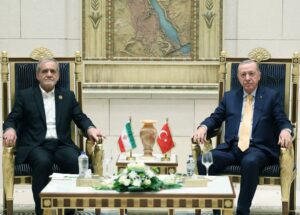
Over the years US Treasury sanctions have consistently demonstrated that Turkey remains deeply embedded in Iran’s procurement ecosystem. In multiple Office of Foreign Assets Control (OFAC) actions, Turkish entities have been designated for acting as procurement fronts for Iran’s defense industry, facilitating financial transactions that bypass sanctions and supplying components used in drone and missile systems, including the Shahed UAV program.
These cases often involved companies with minimal operational footprints, newly established entities and individuals operating through opaque commercial structures — many of which continued to function inside Turkey without significant domestic enforcement action.
The decree provides Ankara with broad legal authority to control or halt suspicious shipments. However, its implementation depends on institutions that operate within a highly centralized political system, where decisions are often shaped by strategic considerations rather than regulatory consistency.
The requirement that the Ministry of Trade seek input from “relevant institutions” is not accompanied by clear transparency or accountability mechanisms, leaving open the possibility that decisions could be influenced by political priorities.
Moreover, the same discretion that allows authorities to block shipments based on suspicion also enables them to approve or overlook transactions when it suits broader geopolitical or economic interests.

From the Turkish state lender Halkbank sanctions-evasion scheme to more recent cases involving shell companies tied to Iran’s UAV production, Ankara has repeatedly demonstrated a willingness to tolerate — and at times facilitate — activities that undermine US sanctions.
The absence of meaningful domestic prosecution against networks exposed by OFAC further suggests that regulatory tools, however robust on paper, have not translated into consistent enforcement.
Moreover, the Ministry of Trade — the primary body tasked with enforcing the regulation — has been staffed with bureaucrats whose ideological leanings often align with Iran’s clerical regime, particularly following a sweeping purge of officials in 2016 after what the government described as a failed coup, an event that was used to consolidate Erdogan’s control over state institutions.
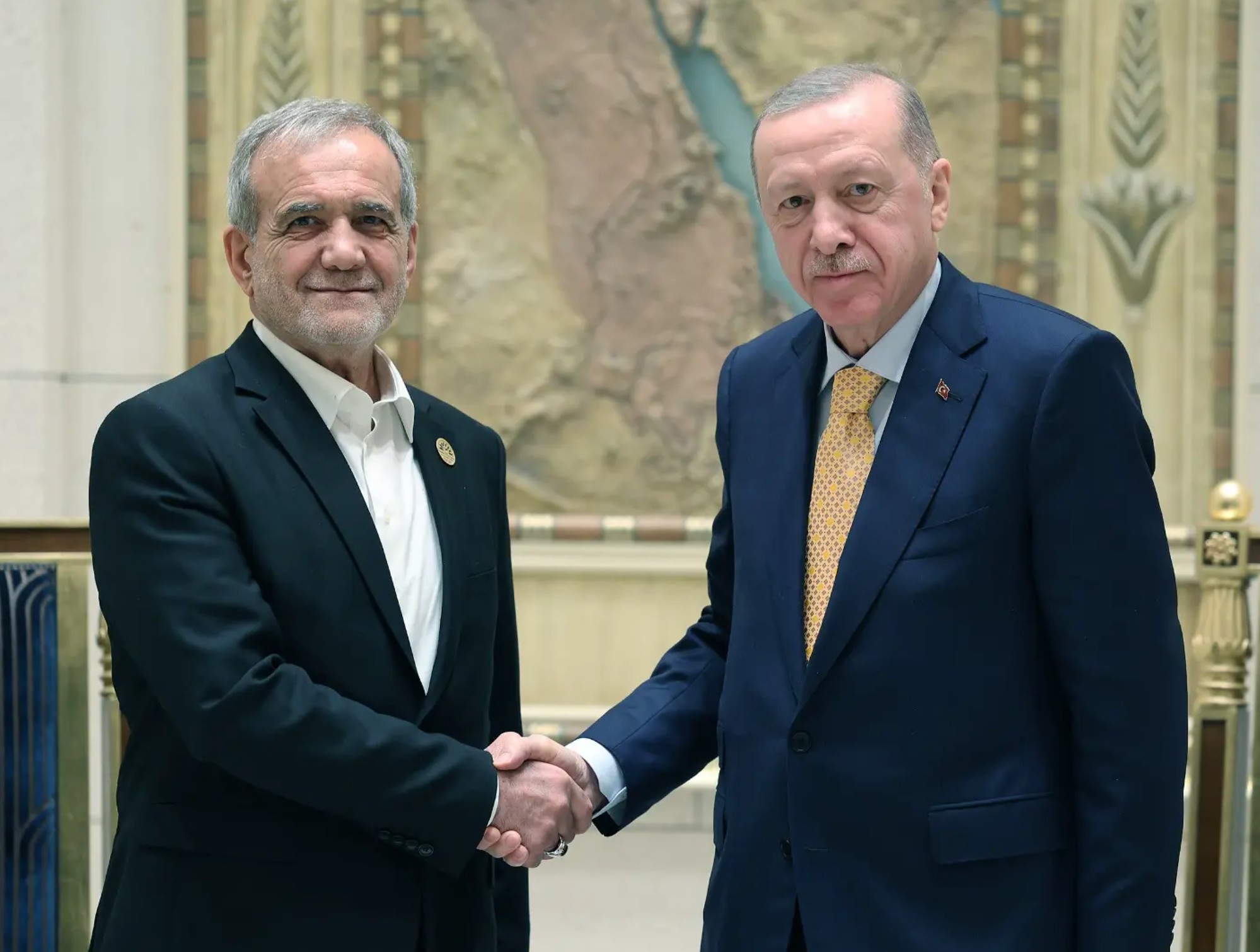
In fact, current Trade Minister Ömer Bolat, an Islamist politician, is known for his pro-Iran views. Between 2004 and 2008, he served as chairman of MÜSİAD, a major Islamist business association favored by the government that has long advocated closer economic cooperation with Iran.
Iranian efforts to tap into Turkey’s industrial and technological infrastructure have also been facilitated by former minister Mustafa Varank, who was identified as a suspect in Turkey’s most comprehensive counterterrorism investigation into the IRGC Quds Force network known as Selam Tevhid.
At the time, Varank was serving as a senior aide to Erdoğan, and his communications were wiretapped by investigators who had secured a court warrant based on preliminary evidence. However, the investigation was abruptly shut down in 2014 after Erdogan became aware of the probe, and police chiefs, prosecutors and judges involved in the case were summarily dismissed.
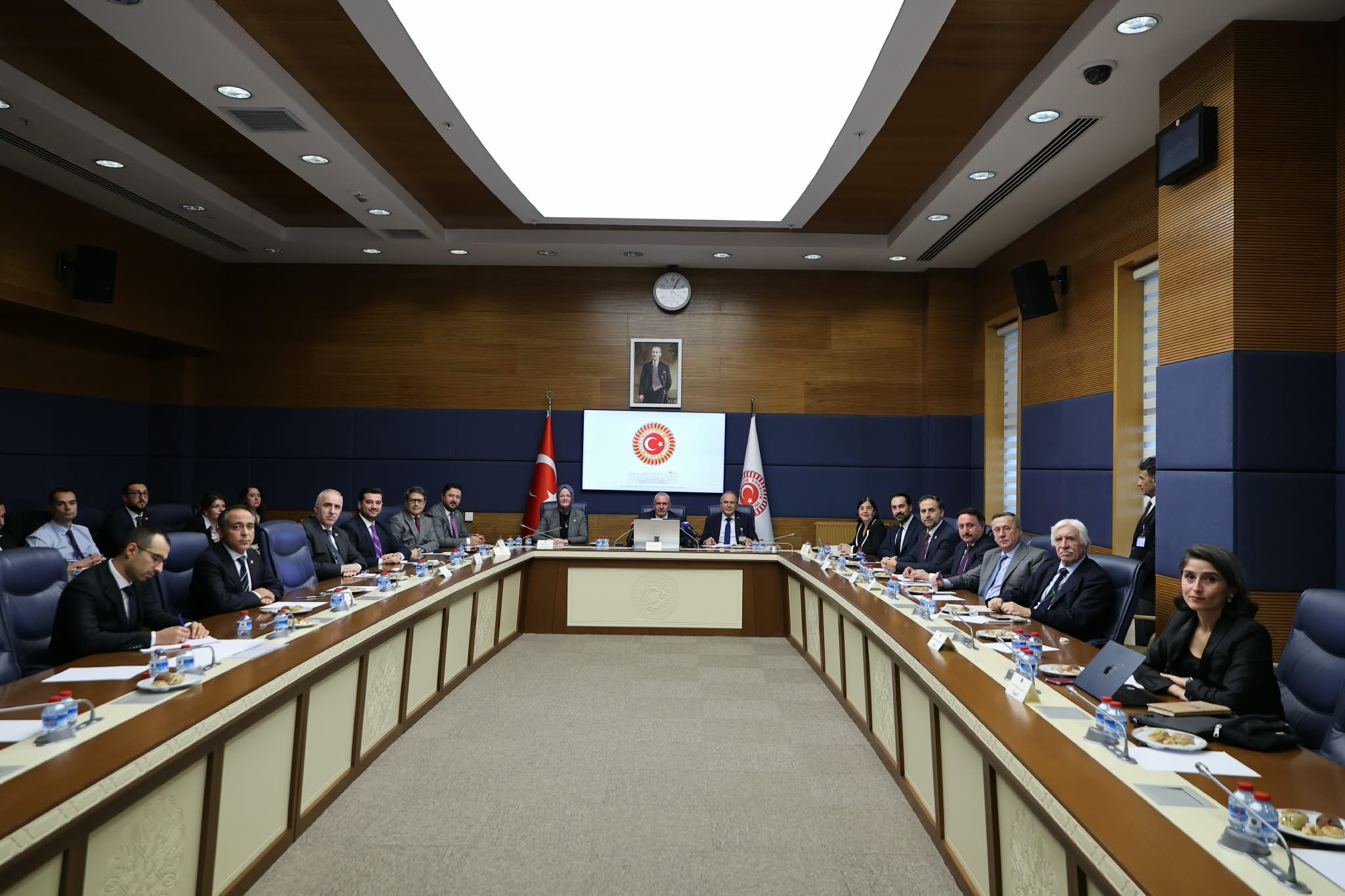
After becoming minister of industry and technology, Varank frequently met with Iranian officials and signed bilateral agreements that opened Turkey’s industrial and technological base to Iran’s clerical regime. He currently serves as chairman of the parliamentary committee on industry, trade, energy, natural resources, information and technology, a role that still gives him influence over Turkey’s industrial and technological exports.
On its face, the new presidential decree marks a significant expansion of Turkey’s formal control over the transportation of military and dual-use goods. Its provisions — including mandatory pre-authorization, multi-agency review and a broad suspicion-based trigger — equip authorities with powerful tools to disrupt illicit procurement networks, if Ankara is genuinely committed to implementing what is outlined on paper.
It is clear, however, that the effectiveness of these measures will depend entirely on political will.
Given Turkey’s longstanding role as a hub for sanctions evasion and the repeated identification of Turkish actors in OFAC designations, the decree risks being seen as a cosmetic adjustment aimed at easing US pressure rather than a genuine effort to sever ties with Iran’s military supply chains.
Until Ankara demonstrates consistent enforcement — particularly against networks operating within its own borders — skepticism will remain that the regulation represents anything more than a legal façade.