
Abdullah Bozkurt/Stockholm
Turkish President Recep Tayyip Erdogan, whose family members and close associates have consolidated near-total control over Turkey’s military-industrial complex in the past decade, has overseen the signing of nearly 100 bilateral defense cooperation agreements with foreign governments — a strategy that is rapidly expanding Ankara’s global footprint in arms sales and military technology transfers.
Erdogan frequently acts as a de facto salesman for his son-in-law Selçuk Bayraktar, chairman of Turkish drone manufacturer Baykar, while his government has shown little concern over whether armed drones exported to Africa and other regions are used in violation of human rights.
With strong backing from his father-in-law, Bayraktar entered the list of Turkey’s 10 richest individuals for the first time this year, according to Forbes’ updated 2026 ranking, reflecting a sharp rise in wealth driven by military drone exports. Forbes estimated Bayraktar’s personal fortune at $2.7 billion, placing him ninth among Turkey’s wealthiest business figures.
Many other companies in Turkey’s defense industry are run by Erdogan associates, who allegedly provide the president with a share of international sales in exchange for political protection, government favors and expedited approvals from Turkish export regulators.
Defense industry cooperation agreements have become a key instrument in this system, laying the groundwork for Erdogan to promote Turkish defense products abroad and providing privileged access for his associates to foreign officials and procurement networks.
Text of the agreement on defense industry cooperation between Turkey and Brazil:
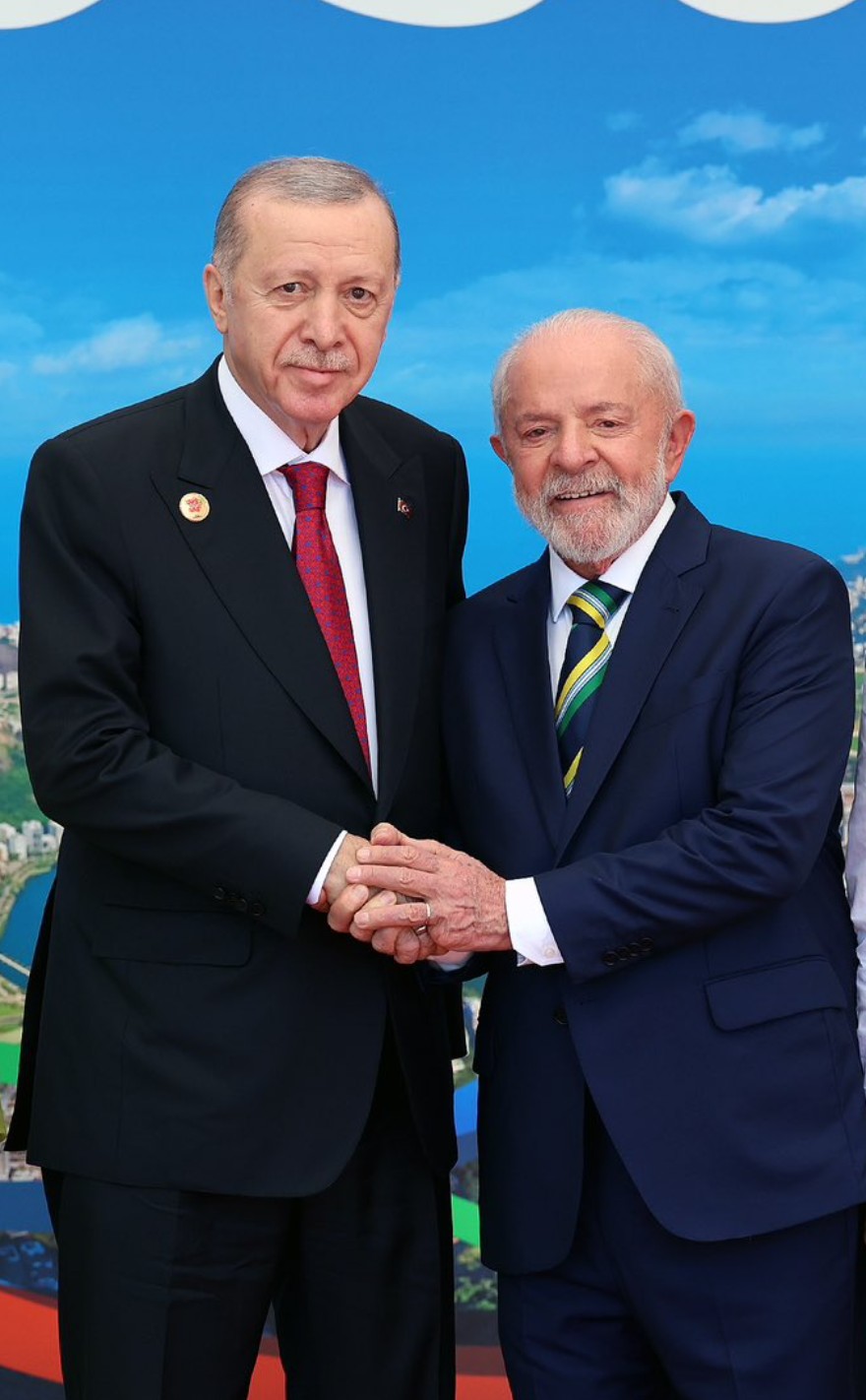
The latest such agreement, signed with Brazil and currently awaiting a vote in the Turkish Parliament, illustrates how this network of deals is being used to open new markets for Turkish defense contractors while embedding them in joint production and technology-sharing arrangements abroad.
In referring the agreement to parliament for ratification on January 16, 2026, President Erdogan explicitly framed its purpose in commercial terms, stating that “it is aimed at providing market opportunities for defense systems produced by Turkish defense industry companies.”
The document, titled “Agreement on Defence Industry Cooperation between the Government of the Federative Republic of Brazil and the Government of the Republic of Türkiye,” lays out an extensive framework for collaboration that goes far beyond conventional military ties, enabling joint weapons development, co-production and sales to third countries.
Signed on March 25, 2022, in both Brasília and Ankara by Turkey’s then–defense industries chief İsmail Demir — who was sanctioned by the US government for his role in securing a major missile purchase from Russia — and Brazil’s Secretary of Defense Products Marcos Rosas Degaut Pontes, the agreement forms part of a broader pattern in which Ankara leverages state-to-state deals to channel opportunities to its rapidly expanding defense sector.

Over the past decade Turkey’s defense industry has undergone a profound transformation, with decision-making and procurement authority increasingly centralized under the Presidency of the Defense Industry (SSB), an entity directly tied to Erdogan’s office.
Critics argue that this structure has enabled companies linked to Erdogan’s inner circle, including firms with direct or indirect ties to his family, to dominate major contracts and benefit disproportionately from international partnerships forged through government agreements.
The Brazil deal reflects this model in action. It explicitly aims to “improve the defense industry capabilities of the Parties” through cooperation in development, production, procurement and logistics of military equipment, effectively creating pathways for Turkish companies to access Brazil’s defense market and industrial base.
The agreement establishes a wide-ranging cooperation framework that includes joint research, development and production of military systems; technology transfer and industrial collaboration; procurement and modernization of defense equipment; exchange of technical expertise and data; and participation in defense exhibitions and institutional exchanges.
These provisions allow Turkish defense contractors not only to sell finished products but also to embed themselves in Brazil’s defense ecosystem through co-production and joint ventures — a model Ankara has increasingly pursued in Africa, Asia and Latin America.
Crucially, the agreement allows for the export of jointly developed systems to third countries, subject to mutual consent, effectively turning bilateral cooperation into a platform for global arms marketing.
At the heart of the agreement is a joint commission that brings together officials from Turkey’s SSB and Brazil’s Ministry of Defense. This body is tasked with identifying projects, coordinating implementation and overseeing cooperation, ensuring that political agreements translate into concrete industrial contracts.
The centralized Turkish system gives Ankara significant leverage in steering these projects toward preferred companies, reinforcing the tight nexus between political authority and defense industry expansion.
Turkish President Erdogan’s cover letter, annexed to the defense industry cooperation deal with Brazil, justifies the agreement as an opportunity to sell Turkish defense products to Brazil:
While the agreement includes provisions restricting the transfer of defense materials and classified information to third parties without mutual consent, it still provides considerable flexibility for joint exports and technology sharing under bilateral oversight.
It also sets out detailed rules on intellectual property rights, ensuring that jointly developed technologies can be commercialized while protecting ownership through separate implementation agreements.
The Brazil agreement is one of some 90 similar deals signed by Ankara in recent years as part of an aggressive campaign to position Turkey as a major global defense exporter.
These agreements serve as enabling frameworks that reduce political and legal barriers to arms deals, facilitate technology transfers and create long-term dependencies through joint production arrangements.
By combining state diplomacy with a tightly controlled domestic defense sector, Erdogan’s government has effectively built a system in which international agreements function as gateways for Turkish companies to secure contracts, expand abroad and increase revenue.
The agreement with Brazil underscores how this model operates in practice, transforming bilateral diplomacy into a tool for projecting industrial power and expanding Turkey’s influence in the global defense market — this time extending its reach into Latin America.