
Levent Kenez/Stockholm
A Turkish government-linked intelligence report positions Ethiopia at the heart of Turkey’s expanding Africa strategy, outlining a detailed and ambitious engagement plan that combines trade, investment, security cooperation and institutional outreach. But the document’s own findings show deepening imbalances, emerging regional disputes and growing security risks that could complicate Ankara’s pursuit of influence in the Horn of Africa.
The report, prepared by the National Intelligence Academy, depicts Ethiopia as a central platform where Turkey’s Africa policy is implemented, tested and refined. It asserts that developments in Ethiopia increasingly shape Ankara’s continental approach.
With an estimated population of some 132 million people, Ethiopia is one of Africa’s most populous nations and a key political actor in the region. Yet the report mentions that economic ties have not kept pace with political ambitions.
Trade between Turkey and Ethiopia showed growth from below $100 million in the early 2000s to about $216 million in 2010 and peaking at $419 million in 2015. But the momentum was not sustained. By 2025, bilateral trade had declined to $236 million. Figures released in 2023 suggested a partial recovery to approximately $330 million, still far below the joint target set by both governments to reach $1 billion in bilateral trade within five years.
Turkish exports to Ethiopia have consistently outpaced imports from Addis Ababa, creating an asymmetrical economic relationship that benefits Ankara’s manufacturing sectors more than Ethiopia’s export base.
Despite the trade contraction, Turkey has expanded its investment footprint in Ethiopia. The report identifies Turkey as the second largest foreign investor in the country after China. Turkish companies have been active in construction, infrastructure projects and textile manufacturing, particularly around industrial zones in and around the capital city of Addis Ababa. Turkish construction companies have been present in Ethiopia’s infrastructure sector since 2000.
Text of National Intelligence Academy report on Ethiopia:
Turkish businesses cited in the report face regulatory complexity, administrative delays and legal uncertainty, obstacles that have discouraged deeper integration into Ethiopia’s economy and raised questions about the sustainability of corporate involvement.
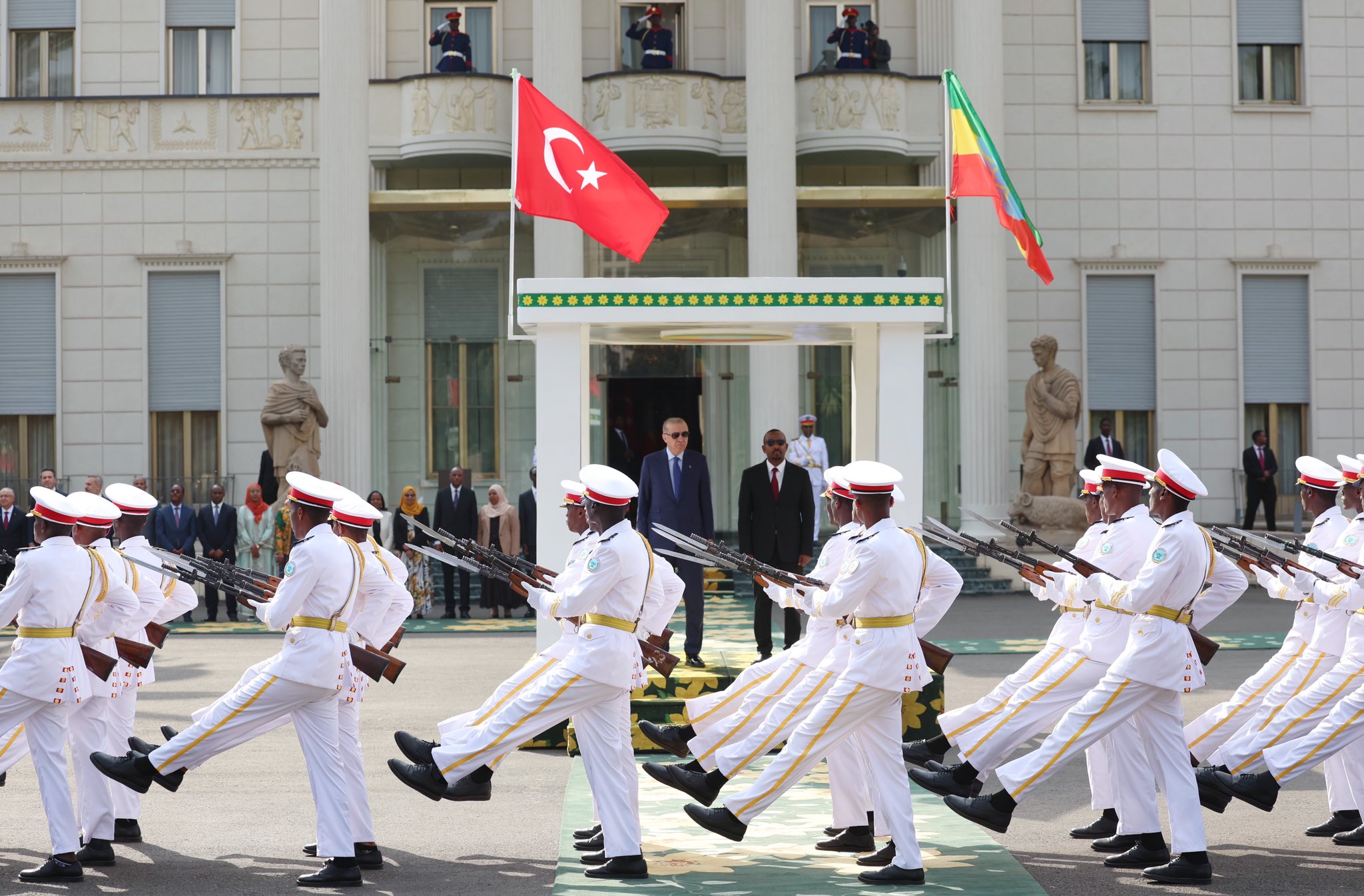
Security cooperation has become another deepening pillar of the relationship, according to the report. Contacts between Turkish and Ethiopian military delegations began in 2021, leading to talks in 2022 focused on defense industry collaboration, officer training, joint exercises and border security technologies.
Defense and security ties have expanded in scope. The report describes how Turkey’s defense industry products, military training programs and peacekeeping experience are being integrated with Ethiopia’s own operational capacity. Joint training centers, shared border security protocols and intelligence sharing frameworks have been developed, laying a foundation for coordinated action. The report suggests that aligning these efforts with international law and peace-building norms could enhance the legitimacy and depth of the partnership.
While unmanned aerial vehicles have proven effective for Ethiopia in managing simultaneous operations across its vast territory, the document notes ongoing needs for complementary land platforms. Armored combat vehicles, infantry carriers and mine resistant ambush-protected vehicles known as MRAP are identified as areas where Ethiopia seeks capability enhancements. Border monitoring and reconnaissance systems are also seen as essential amid migration pressures and security challenges across the Horn of Africa. Turkish defense contractors, with a broad range of products, are positioned as potential suppliers in these categories.
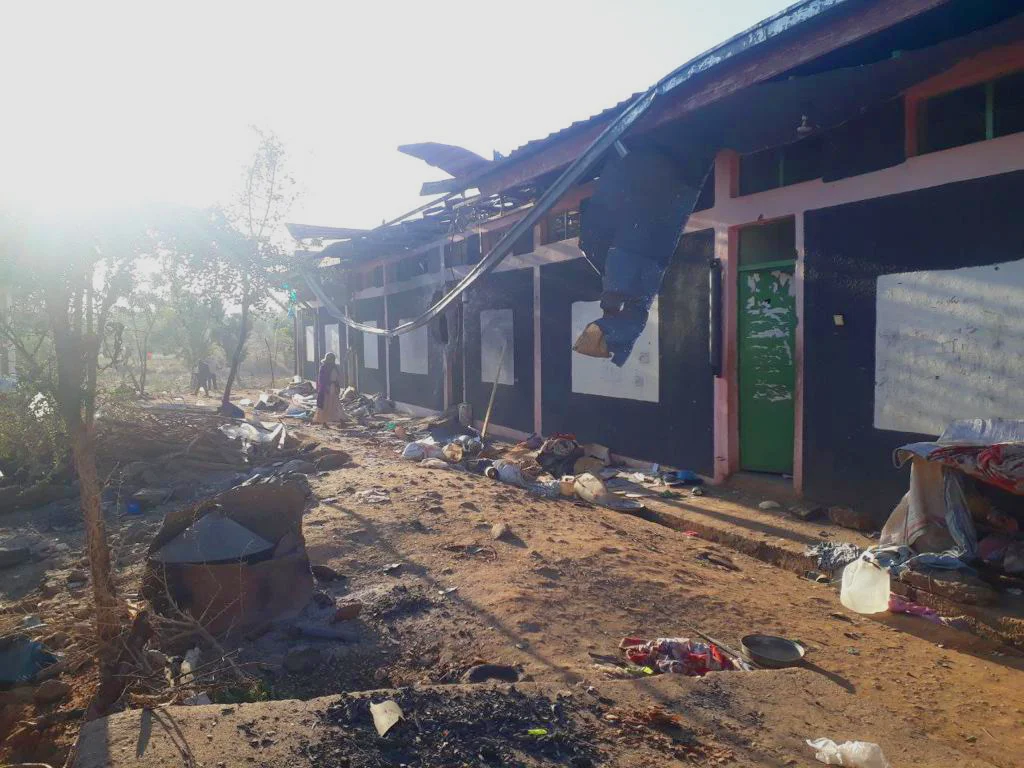
But Ankara’s security role has attracted scrutiny beyond the academy’s own analysis. Independent reporting has documented instances in which Turkish-made drones have been deployed by Ethiopian forces during internal conflicts, including operations that resulted in significant civilian casualties. Nordic Monitor previously reported in August 2024 that Turkish authorities acknowledged allowing the deployment of armed drones to Ethiopian forces during internal conflicts. The drones were used in operations that resulted in civilian casualties, particularly in regions affected by ongoing fighting such as Amhara. The report linked these deployments to a broader pattern of drone use by the Ethiopian military, which has intensified since 2023, with documented strikes including an August 13, 2023, attack in Finote Selam that killed at least 30 civilians and injured dozens more.
The intelligence report provides a candid assessment of Ethiopia’s internal vulnerabilities. It cites structural economic pressures such as foreign currency shortages, inflation and entrenched trade imbalances. It also notes governance challenges tied to Ethiopia’s federal political system, shaped by ethnic federalism and constrained coordination among regional states.
The legacy of the Tigray conflict, a devastating multi-year war between federal and regional forces, remains a defining factor in Ethiopia’s political landscape. The report describes the conflict as a source of long-term instability that has weakened national cohesion and threatened institutional capacity.
Geography is another defining element of Ethiopia’s foreign policy. Landlocked since Eritrea’s independence in 1993, Ethiopia lacks direct access to the sea, forcing reliance on neighboring ports and transport corridors. That dependence has been a persistent strategic concern and a driver of regional tensions.
Somalia plays a central role in this dynamic. Ethiopia’s efforts to secure access to maritime routes have intersected with disputes over ports and transit corridors in Somalia, where questions of sovereignty and territorial control are politically charged. These issues have repeatedly tested Ankara’s diplomatic balancing act, as Turkish officials seek to support infrastructure projects without inflaming local sensitivities.
Ethiopia’s relations with Egypt are similarly fraught. The long-running dispute over the Grand Ethiopian Renaissance Dam, a massive hydroelectric project on the Blue Nile, continues to strain ties between Addis Ababa and Cairo. For Ethiopia, the dam is essential to its development agenda. For Egypt, it is seen as a potential threat to water security. The intelligence report identifies the Nile issue as one of the Horn of Africa’s most enduring geopolitical fault lines, influencing alignments and external partnerships alike.
Turkey’s close strategic relationship with Somalia could give Ankara a potential advantage in helping mediate disputes between the two countries, particularly over access to ports and regional influence. However, deeper involvement in Ethiopia-related dynamics may complicate Turkey’s steadily improving ties with Egypt. As a result, Ankara’s expanding engagement in Ethiopia could increasingly put it in a delicate balancing act between competing regional partnerships in the Horn of Africa and the wider eastern Mediterranean diplomacy.
Across the Horn, competing external actors are intensifying their involvement. China’s economic and infrastructure footprint, Gulf states’ diplomatic outreach and Western engagement all contribute to a crowded strategic environment. Within this context, Turkey’s approach, combining economic, institutional and defense elements, amounts to a multifaceted bid for influence.