


Levent Kenez/Stockholm
More than one in three children in Turkey lives at risk of poverty or social exclusion, according to newly released official data, showing growing socioeconomic pressures that are also pushing large numbers of minors into the workforce.
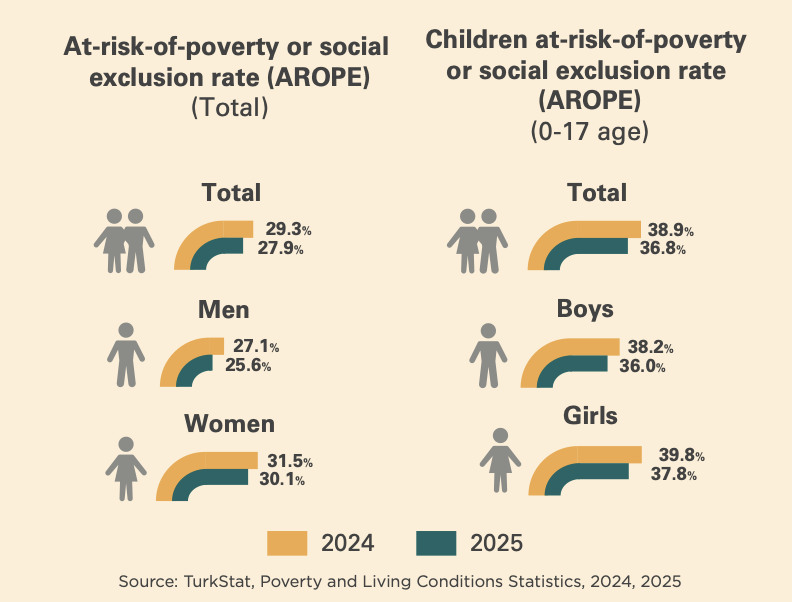
The Turkish Statistical Institute (TurkStat) said on April 20 that 36.8 percent of children were at risk of poverty or social exclusion in 2025, significantly higher than the 27.9 percent recorded for the overall population. The data point to growing vulnerability among children even as the country maintains a relatively young population compared to Europe.
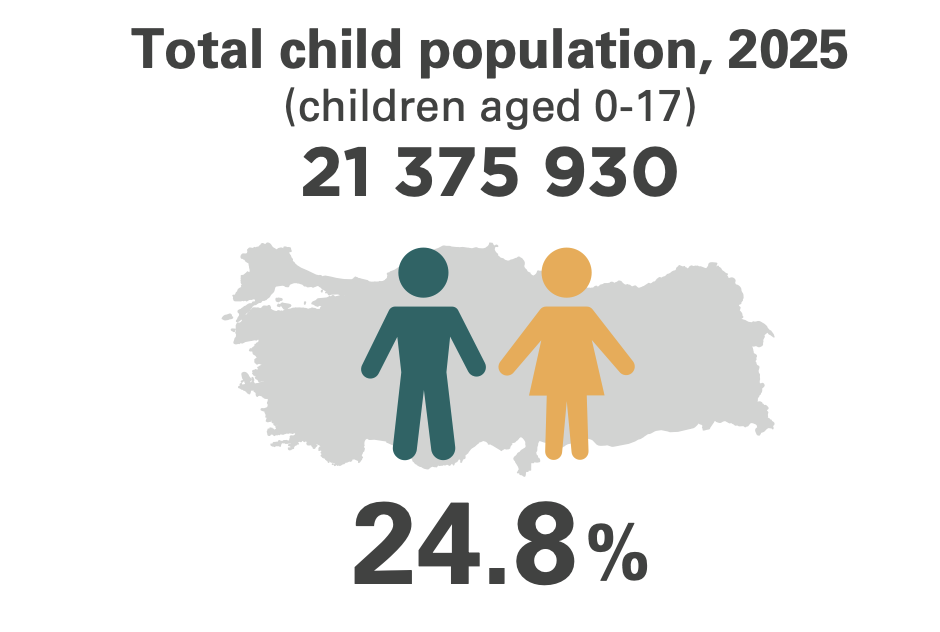
The study specifically states that it is based on the United Nations definition, which classifies individuals aged 0 to 17 as children, and found that this population totaled 21.4 million in Turkey in 2025, accounting for 24.8 percent of the country’s population of more than 86 million.
Within this population, adolescents aged 15 to 17 represent a critical group at the intersection of education and employment. Official figures show there were 3,845,207 children in this age group, including 1,973,693 boys and 1,871,514 girls. Many of them are already part of the labor force.
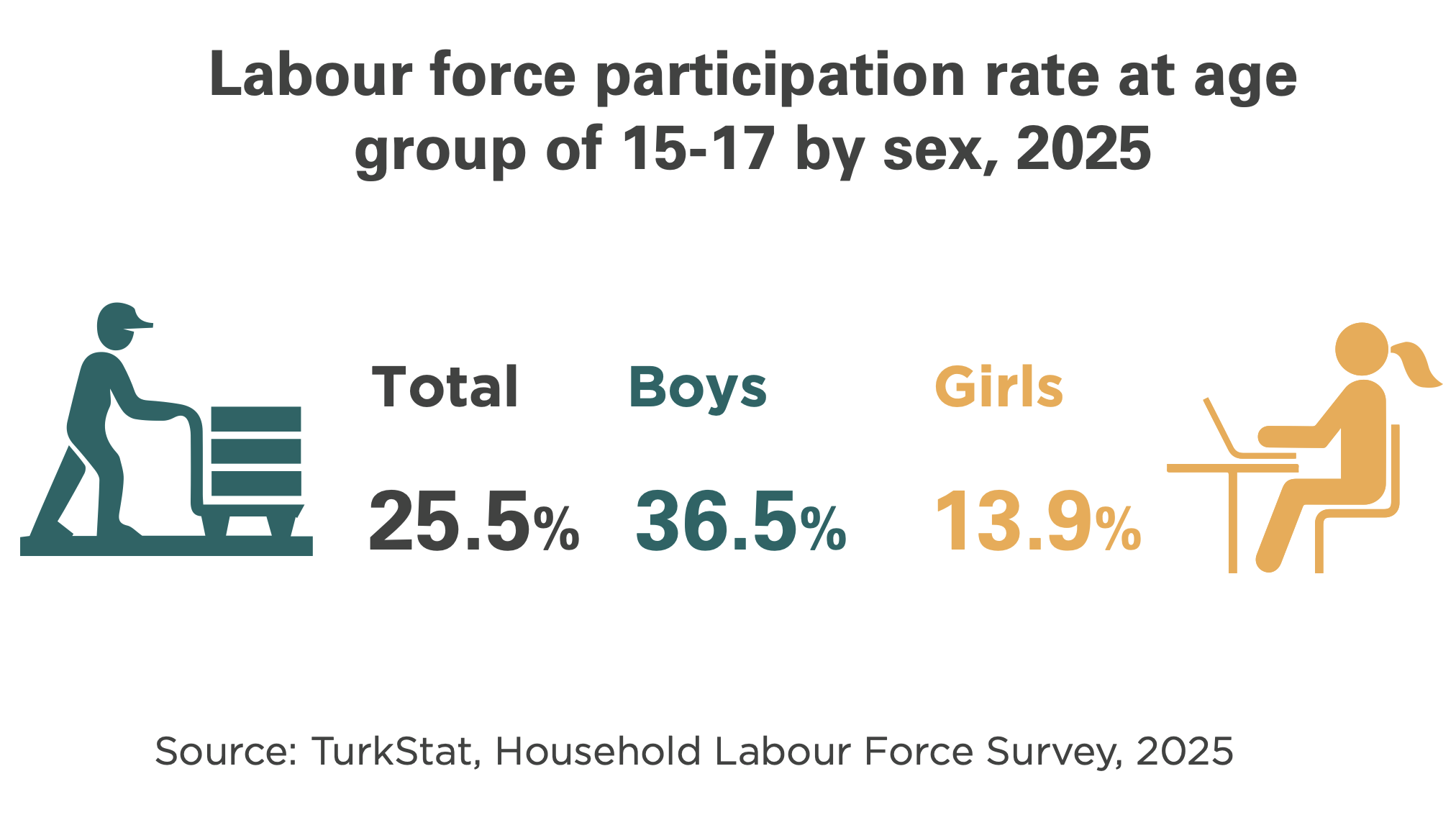
The labor force participation rate for children aged 15 to 17 stood at 25.5 percent in 2025. The rate was markedly higher among boys at 36.5 percent, compared with 13.9 percent among girls. These figures point to a substantial number of working children, though experts say the real scale is likely far greater due to widespread informal employment that is not fully captured in official surveys.
The link between poverty and child labor remains a central concern. As families face financial strain, children may be pushed to contribute to household income, often at the expense of their education. Under Turkish Labor Law, the employment of children under the age of 15 is prohibited. As a result, official statistics cover only those aged 15 and above, capturing only part of the reality. In practice, however, children younger than 15 are also known to be working in informal and unregistered sectors. A significant portion of this unrecorded group is believed to consist of children from migrant families or those under temporary protection status, further complicating efforts to measure and address the full scale of child labor.
Child labor in sectors such as agriculture, manufacturing and services often takes place outside formal systems, making it difficult to measure. Economic hardship, a rising cost of living and regional inequalities are key drivers pushing children into work at younger ages.
The broader demographic picture shows that while Turkey still has a relatively large child population, it is shrinking over time. Children made up nearly half of the population in 1970, but that share has fallen steadily to 24.8 percent in 2025. Projections suggest it could decline further to around 22.1 percent by 2030 and continue decreasing throughout the century.
Despite this downward trend, Turkey’s child population remains higher than the European Union average of 17.6 percent. Among EU countries Ireland had the highest proportion of children at 22.7 percent, followed by France and Sweden at 20.4 percent each. Countries such as Italy and Portugal had significantly lower shares, below 16 percent.
Regional differences within Turkey are pronounced. Southeastern provinces recorded the highest number of children, reflecting higher fertility rates. Şanlıurfa had the largest share at 43.3 percent, followed by Şırnak at 39.2 percent and Mardin at 36.7 percent. In contrast, provinces such as Tunceli, Edirne and Kırklareli had the lowest numbers, all below 18 percent.

Household data also highlight the central role of children in family life. In 2025, 41.9 percent of households had at least one child aged 0 to 17. About 19.1 percent of households had one child, 14.1 percent had two children and smaller groups had three or more.
The age structure of the child population shows that 30.5 percent were aged 10 to 14, making it the largest group. Children aged 5 to 9 accounted for 28.8 percent, while those aged 0 to 4 made up 22.7 percent. Adolescents aged 15 to 17 represented 18.0 percent, a group increasingly exposed to labor market pressures.
Education indicators suggest relatively high participation, though challenges remain. The net enrollment rate for 5 year olds was 82.5 percent in the 2024-2025 academic year. At the primary level, enrollment reached 95.4 percent, while lower secondary enrollment stood at 89.1 percent and upper secondary enrollment at 82.9 percent.
Completion rates were strongest in primary education at 98.6 percent and lower secondary at 96.6 percent. However, the upper secondary completion rate dropped to 81.3 percent, indicating that a notable share of students leave before finishing high school.
Gender differences were evident in completion rates, with girls outperforming boys at the upper secondary level. The completion rate for girls was 83.5 percent compared with 79.2 percent for boys.
The education system also includes a significant number of children requiring additional support. In the 2024-2025 academic year, 602,729 students were enrolled in special education programs, accounting for 3.4 percent of all students in formal education. Boys made up 62.7 percent of these students.
 Health indicators show improvements over time. The infant mortality rate declined to 9.0 per thousand in 2024, down from 13.9 per thousand in 2009. The under 5 mortality rate also fell to 11.1 per thousand over the same period.
Among children aged 1 to 17, the leading causes of death were external injuries and poisoning, followed by diseases of the nervous system, cancer and circulatory diseases. These figures point to both preventable risks and ongoing health challenges.
Life expectancy data indicate that children reaching age 15 in Turkey can expect to live an additional 64.3 years on average. Girls have a longer remaining life expectancy than boys by more than five years.
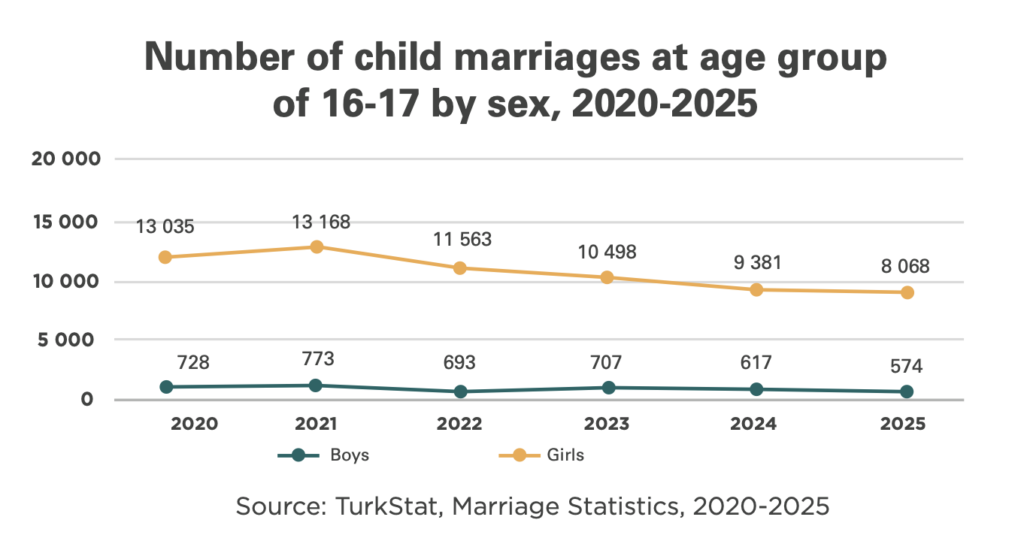
Child marriage, while declining, remains an issue. The proportion of girls aged 16 to 17 in legal marriages fell from 7.3 percent in 2002 to 1.5 percent in 2025. For boys in the same age group, the rate decreased to 0.1 percent.
Birth data reflect improvements in healthcare access. In 2024, 937,559 babies were born and survived, with nearly all births taking place in hospitals. The rate of hospital births reached 99.4 percent, up significantly from 2010 levels. Vaccination coverage remained high, although it declined slightly compared to the previous year.