

Levent Kenez/Stockholm
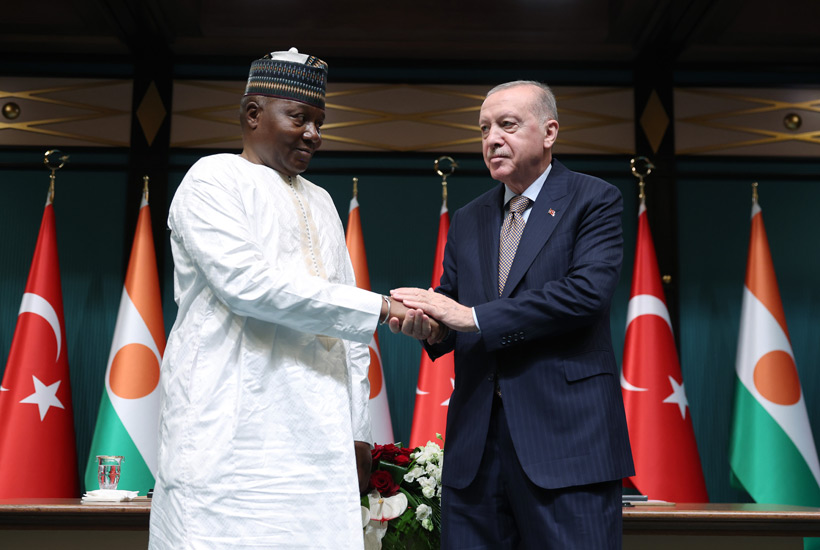
Nigerien President Abdourahamane Tchiani said Thursday that Turkish President Recep Tayyip Erdogan instructed Turkish defense contractors to provide military equipment to Niger and arrange payment later, offering an unusually public account of the financing support that has accompanied Ankara’s expanding defense relationships across Africa.
Speaking during an official visit to Turkey, Tchiani thanked Erdogan for intervening after Niger raised concerns about the financial burden of military procurement as the West African country confronts mounting security threats across the Sahel.
“When we expressed our concerns to your colleagues, to your friends in the defense industry, you actually gave an instruction and said, ‘Do whatever is necessary for them, and you can get paid later,’” Tchiani said. “For this, I thank you very much, both you and the state, for trusting us in this way.”
The remarks offered a rare glimpse into one of the mechanisms underpinning Turkey’s growing influence in parts of Africa, where Ankara has increasingly combined defense exports with military training, technical assistance and financing arrangements aimed at governments facing urgent security needs and constrained budgets.
Tchiani’s visit came as Turkey and Niger continue to deepen a relationship that has expanded rapidly over the past several years, particularly in the security sector. While Turkish officials have long promoted defense cooperation as part of a broader Africa policy, public references to deferred-payment arrangements have been uncommon.
For Niger, security remains an overriding concern. The country of roughly 27 million people sits at the center of the Sahel, a vast semi-arid region stretching across Africa that has become one of the world’s most unstable security environments. Armed groups affiliated with the Islamic State in Iraq and Syria (ISIS) and al-Qaeda operate across parts of Niger and neighboring Mali and Burkina Faso, carrying out attacks against military forces and civilians. Vast desert terrain, porous borders and a weak state presence in remote regions have complicated counterinsurgency efforts for years.
The security challenges have driven Niger’s military leadership to seek additional surveillance, reconnaissance and strike capabilities while also diversifying international partnerships.
Turkey has emerged as an increasingly important supplier. Niger has acquired Turkish-made Bayraktar TB2 armed drones, armored vehicles and other military equipment in recent years. Reports have also linked the country to additional purchases from Turkey’s defense sector as Niamey seeks to strengthen its capabilities against insurgent groups operating across its territory.
Among the systems associated with Niger’s modernization efforts is the Aksungur unmanned aerial vehicle produced by Turkish Aerospace Industries. The platform is designed for long-endurance surveillance and strike missions and can carry a range of precision-guided munitions. Niger has also previously been linked to Turkey’s HÜRKUŞ light attack aircraft programs as it seeks to expand its air capabilities.
On April 7, 2026, Turkish Defense Minister Yaşar Güler and Nigerien Defense Minister Gen. Salifou Mody signed a protocol providing on-site military training support for Nigerien forces. The agreement expanded an existing framework of military cooperation that already included training programs in Turkey for Nigerien personnel operating Turkish-made systems.
The combination of equipment sales, training and financing has become a recurring feature of Turkey’s defense relationships across Africa. Over the past two decades, Ankara has transformed its presence on the continent through an aggressive diplomatic, commercial and security outreach campaign. Turkey has expanded its network of embassies across Africa, increased high-level political engagement and sought a larger economic role in sectors ranging from infrastructure and construction to mining and energy.
Defense exports have become one of the most visible elements of that strategy. Turkish-made drones have gained prominence in multiple conflict zones and have attracted customers across Africa, the Middle East, Central Asia and Europe. Turkish defense contractors market not only equipment but also training, maintenance support and logistical assistance, allowing governments to acquire and sustain military capabilities without relying exclusively on traditional Western suppliers. Financing arrangements appear to have become an additional selling point.

Turkey’s broader engagement with Africa has also been accompanied by expanding trade. Trade between Turkey and African countries has increased significantly over the past two decades, growing from approximately $5 billion in the early 2000s to more than $37 billion in recent years, according to official Turkish figures.
Although trade with Niger remains relatively modest, commercial ties have shown steady growth. According to United Nations trade data, Turkish exports to Niger totaled approximately $101 million in 2024, while imports from Niger reached roughly $39 million. Turkish exports included machinery, electrical equipment, vehicles, food products and manufactured goods, while imports consisted largely of agricultural commodities and oilseed.
Turkish companies have also pursued opportunities in infrastructure, transportation, energy and mining projects across the Sahel, reflecting Ankara’s broader effort to convert diplomatic and political engagement into long-term economic relationships.
Turkey’s expanding role in Africa has not been without controversy. Opposition politicians and some critics of Erdogan’s government have periodically argued that Ankara’s growing political relationships abroad can create commercial opportunities for Turkish companies close to Erdogan.
For Ankara, Niger represents one of several strategically important partners in a region undergoing significant geopolitical change. The influence of former colonial power France has declined sharply across parts of the Sahel in recent years, while regional governments have increasingly sought new security and economic partnerships.
Turkey has positioned itself as one of the countries seeking to fill part of that space, offering military equipment, training, diplomatic engagement and commercial cooperation.
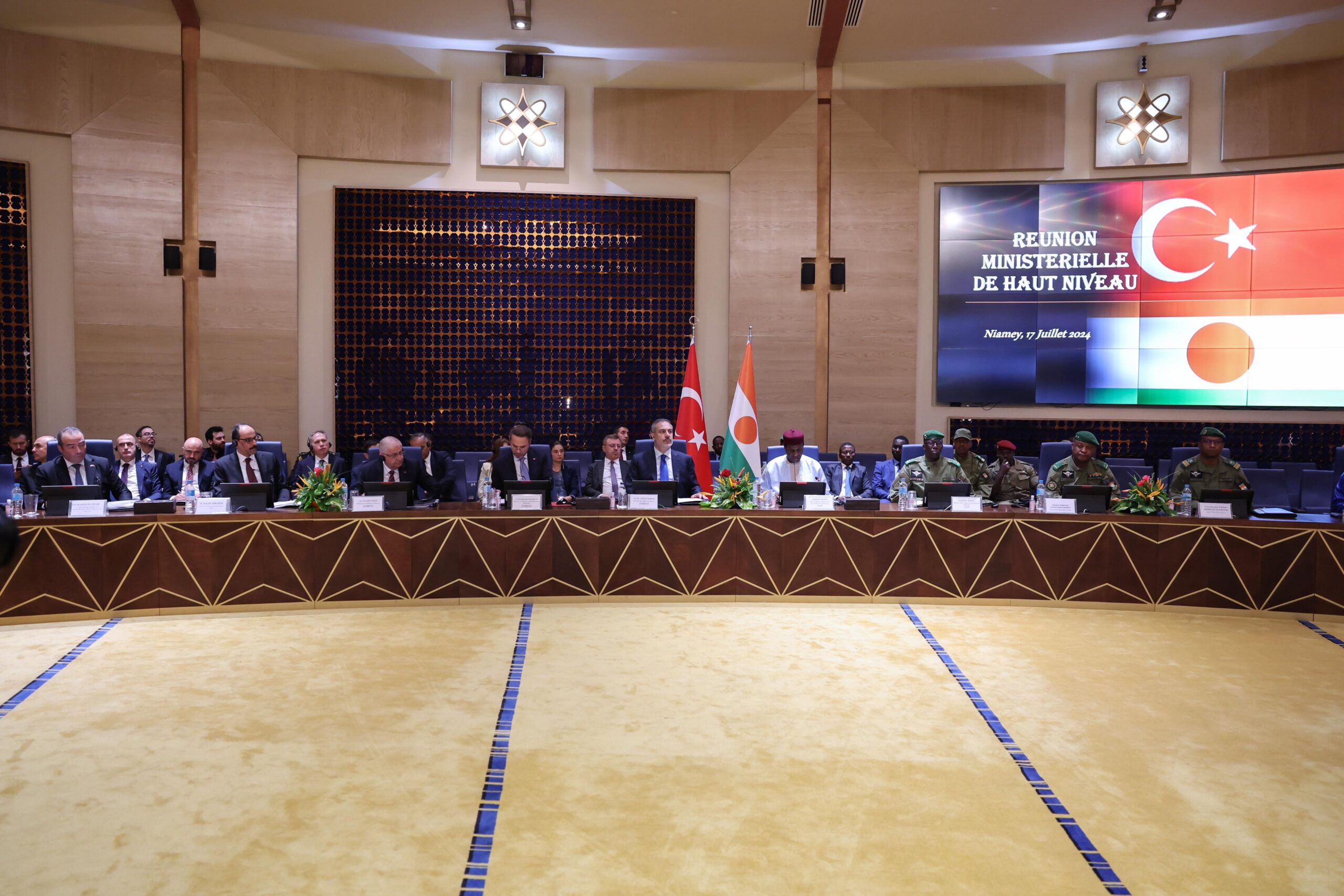
Nordic Monitor previously reported that Turkey’s National Intelligence Organization (MİT) has also established an expanded presence in Niger as part of Ankara’s broader strategy to increase its influence across Africa. The report describes Niger as a strategically significant hub linking North and Sub-Saharan Africa, where Turkish intelligence activity has intersected with foreign policy, defense cooperation and economic engagement since Niger’s 2023 military takeover and the subsequent realignment of its international partnerships.
Turkish state institutions and affiliated organizations are described as operating alongside diplomatic channels in Niger, contributing to Ankara’s presence through development assistance programs, educational initiatives and religious foundations.