
Levent Kenez/Stockholm
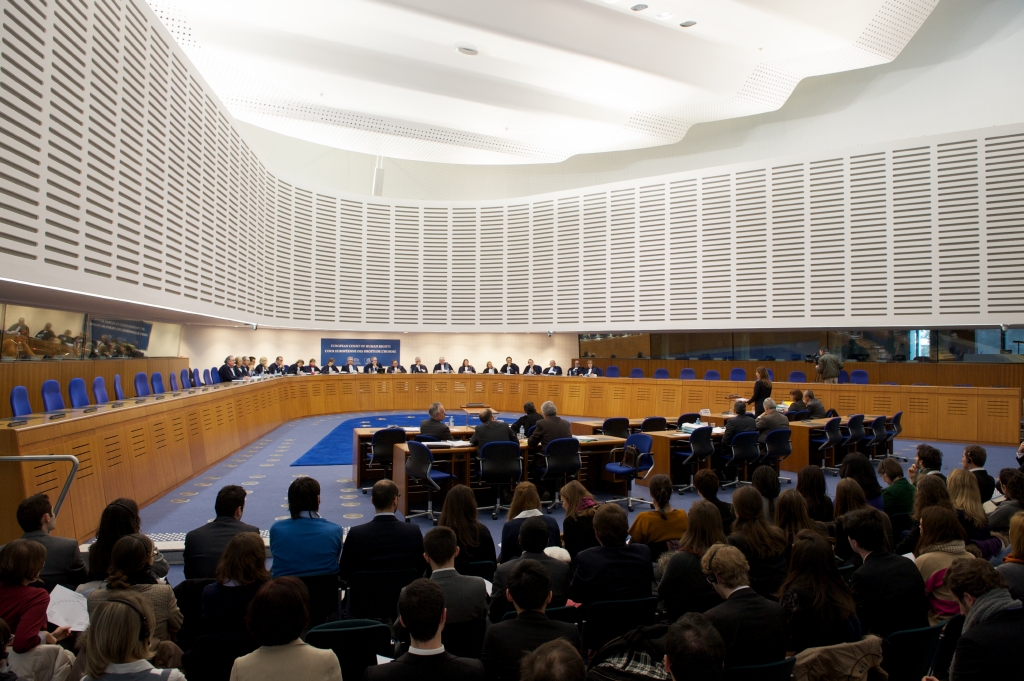
The European Court of Human Rights (ECtHR) on Tuesday ruled that Turkey violated the rights of veteran Kurdish politicians Gültan Kışanak and Sebahat Tuncel by detaining them on terrorism-related accusations in 2016, but the significance of the judgment extended beyond the findings themselves.
Both women were subsequently arrested in late 2016 during a period that saw dozens of Kurdish politicians, mayors and lawmakers detained amid a broad government crackdown following the collapse of peace talks with the Kurdistan Workers’ Party (PKK), which is designated as a terrorist organization by Turkey and its Western allies and a coup attempt in July of that year.
In a unanimous decision, a three-judge committee of the Strasbourg-based court found that the detention of the two women lacked reasonable suspicion, violated their right to liberty and interfered with their freedom of expression. The court also concluded that Tuncel’s arrest pursued the ulterior purpose of limiting political pluralism and restricting political debate.
The judgment marks the first time the court’s Second Section has issued an Article 18 ruling against Turkey through a committee, a procedure normally reserved for cases involving well-established legal principles and repetitive violations. The move suggests that Strasbourg increasingly views politically motivated restrictions on opposition figures not as isolated incidents requiring fresh examination but as part of a pattern already established in its case law.
Kışanak, a former co-chair of the Peace and Democracy Party (BDP), served two terms in parliament before becoming mayor of Diyarbakır, the largest city in Turkey’s predominantly Kurdish southeast. Tuncel also served two parliamentary terms and later became co-chair of the Peoples’ Democratic Party (HDP) and the Democratic Regions Party (DBP), two of the country’s main pro-Kurdish political movements.
Turkish prosecutors accused them of membership in an armed terrorist organization, citing speeches they delivered at public events, their involvement in the Democratic Society Congress (DTK), attendance at demonstrations and participation in funerals of deceased PKK members.
Text of The European Court of Human Rights’ ruling on Kışanak and Tuncel:
The judges said Turkish authorities failed to establish facts capable of convincing an objective observer that either politician was a member of a terrorist organization. The ruling rejected one of the central pillars of the prosecution’s case: the assumption that participation in the DTK could itself support terrorism-related accusations.
The court noted that it had already concluded in previous judgments that authorities had failed to provide sufficiently concrete evidence demonstrating that the DTK was an unlawful entity or engaged in criminal activity. As a result, membership in or participation in activities organized by the group could not reasonably be treated as evidence of terrorist organization membership.
The judgment also found that many of the statements cited by prosecutors were political speeches protected under freedom of expression. According to the court, domestic authorities largely compiled lists of meetings, demonstrations and speeches attended by the applicants without explaining how those activities established involvement in terrorism. After reviewing the speeches, the judges concluded that they were political in nature and could not be regarded as encouraging violence.
The ruling devoted particular attention to the case against Kışanak. Prosecutors had relied in part on funeral ceremonies for deceased PKK members, commemorative events held during her tenure as mayor and the use of municipal resources in connection with those activities.
The court said authorities failed to demonstrate any personal involvement by Kışanak in organizing or directing the events. Judges noted that prosecutors effectively attributed activities occurring within the municipality to Kışanak because she was mayor, without identifying specific decisions, instructions or actions linking her personally to alleged criminal conduct.
The court similarly criticized the handling of documents seized from municipal buildings and Kışanak’s residence, finding that authorities characterized the materials as supporting terrorism without adequately explaining how they did so.
The judges concluded that neither the initial detention warrants nor subsequent pretrial detention established the reasonable suspicion required under Article 5 of the European Convention on Human Rights. They also found that Turkish courts failed to provide sufficient justification for keeping both women in jail for years pending trial.
The most consequential finding concerned Tuncel. The court ruled that her detention violated Article 18 of the convention, which prohibits governments from restricting rights for purposes other than those allowed under the treaty. It concluded that her imprisonment pursued the aim of “stifling pluralism and limiting freedom of political debate,” putting the case among a small group of judgments in which Strasbourg has determined that legal measures were used for political purposes.
In reaching that conclusion, the judges connected Tuncel’s detention to a broader series of arrests targeting HDP lawmakers, mayors and party officials in late 2016. The ruling explicitly linked her case to earlier judgments involving former HDP co-chair Selahattin Demirtaş, former HDP co-chair Figen Yüksekdağ and Kurdish politician Aysel Tuğluk.

Those cases established that prosecutions and detentions directed at leading Kurdish political figures occurred within a wider political context in which opposition voices were being removed from public life. The court found that Tuncel’s detention formed part of that same pattern.
The procedural significance of Tuesday’s judgment may ultimately prove as important as the substance. Article 18 findings are relatively rare because they require the court to determine that authorities acted with a hidden political objective rather than a legitimate legal purpose. Such cases are often examined by seven-judge chambers or, in the most significant instances, the court’s 17-judge Grand Chamber.
Committee judgments, by contrast, are generally used when legal questions have already been settled through existing precedent. Their decisions are final and cannot be appealed.
By issuing an Article 18 judgment through a committee, the court effectively signaled that the principles governing such cases are no longer in dispute. Rather than treating the allegations raised by Kışanak and Tuncel as novel questions, the judges relied on an established body of jurisprudence developed through earlier cases involving Kurdish politicians and opposition figures.
For Turkey, the ruling represents another addition to a growing series of judgments finding that counterterrorism laws were used in ways incompatible with the European convention. For international audiences, it offers a broader indication of how Europe’s highest human rights court now views such cases.
The message emerging from Strasbourg is not simply that violations occurred in the detention of Kışanak and Tuncel. It is that allegations of politically motivated restrictions on opposition figures have become sufficiently recurrent that the court now treats them as part of a settled and repeating pattern within its human rights jurisprudence.
The court awarded each woman 16,000 euros ($18,300) in non-pecuniary damages. Kışanak and Tuncel were released from jail in May 2024 after spending years in detention while being prosecuted in the Kobani case, a major trial involving dozens of Kurdish politicians accused over deadly protests triggered by the Islamic State in Iraq and Syria’s (ISIS) 2014 assault on the Syrian Kurdish town of Kobani.