
Abdullah Bozkurt/Stockholm
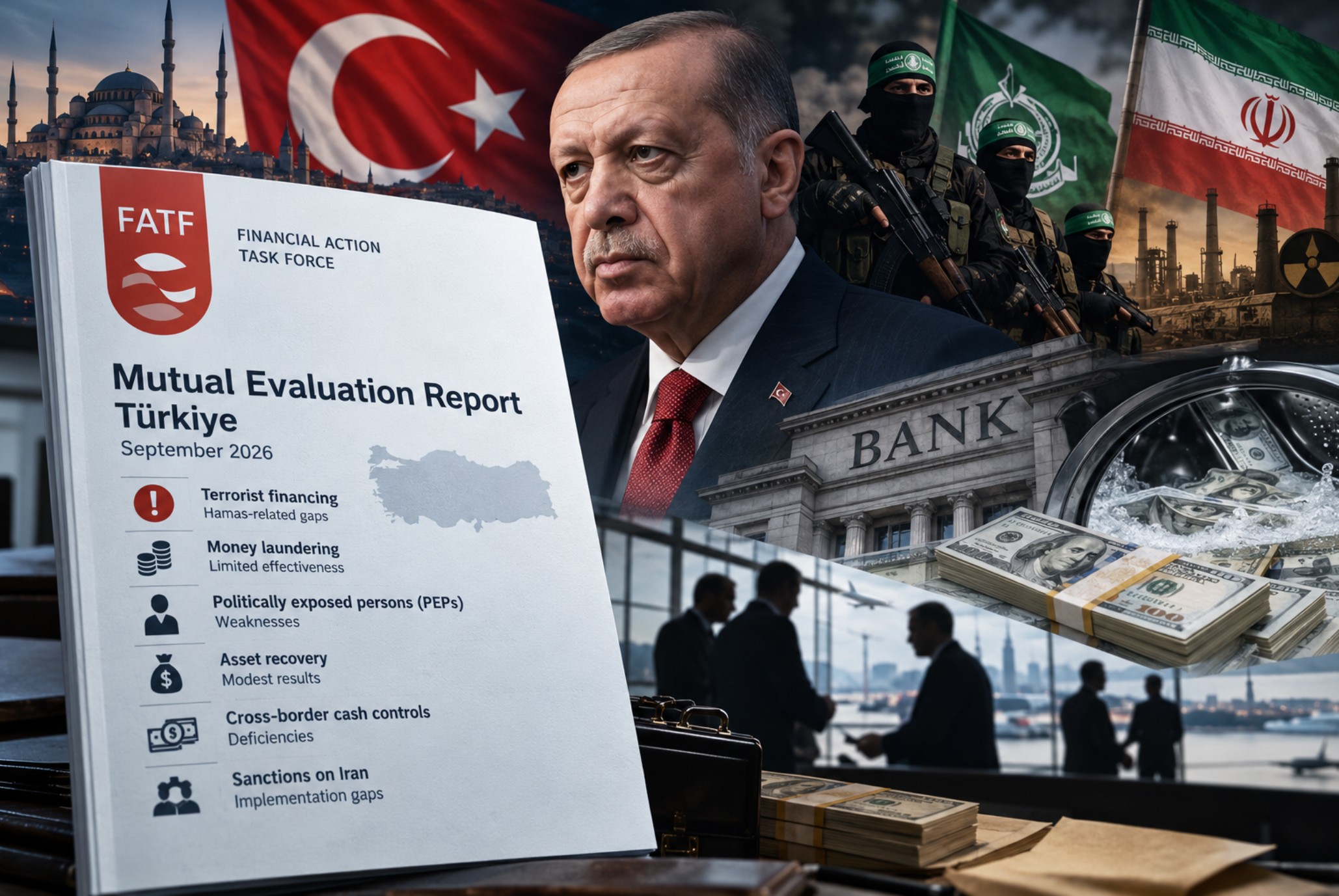
Italian law enforcement actions over the past two years have repeatedly confronted a stark reality: the threats emanating from what critics describe as the mafia-style rule of President Recep Tayyip Erdogan’s government in Turkey, where a criminal ecosystem has been allowed to flourish under the protection or tolerance of political leadership.
The pattern is increasingly evident. When Turkish networks move money, weapons, people and narcotics across borders, they export not only violence but also the institutional weaknesses and culture of impunity that enable organized crime to survive at home and metastasize abroad.
This matters for Europe because transnational Turkish groups have increasingly evolved into hybrid organizations, part street gang, part trafficking consortium and part political leverage machine, at times acting as informal proxies for the Erdogan government. They benefit from a system inside Turkey in which criminality is selectively prosecuted, while other actors remain effectively untouchable when they align with political power, serve as informal enforcers or prove useful to broader state interests.
On May 22, 2024, Italian prosecutors and police, working with cross-border partners, moved against a Turkish criminal organization operating from Italy and across Europe. The leader of the network, Barış Boyun, a Turkish national who had previously been detained in Italy on an INTERPOL warrant, was identified by prosecutors as the central figure directing operations.
Investigators said the group was involved in organized murder, arms trafficking, drug trafficking, facilitating illegal immigration and planning violent attacks. Authorities alleged that the organization maintained logistics and communication cells across Europe and that its leader continued coordinating activities even while under judicial supervision in Italy.

Boyun was also reported to have maintained corrupt ties inside Turkey that allowed his network to operate with advance warning and institutional protection. Allegations surfaced that members of Turkish law enforcement were compromised, with claims that certain officers provided information about planned operations against him, enabling him to evade arrest and leave the country before crackdowns were executed.
The significance lies not only in the arrest of Boyun and his associates but in the broader pattern it illustrates. Italy has increasingly become a staging ground for Turkish criminal figures capable of organizing violence across jurisdictions while leveraging Europe’s legal protections, especially when extradition becomes legally complicated due to credible concerns about torture and ill-treatment in Turkey.
In August 2025 Dutch authorities arrested and extradited 46-year-old Turkish national Hasan Uzun to Italy in connection with an incident that occurred in Trieste in July 2024, one day before Pope Francis was scheduled to visit the city. The case began when an abandoned trolley bag containing a 9mm handgun and ammunition was discovered at Trieste’s central railway station, prompting heightened security concerns due to the pope’s imminent appearance.
Surveillance footage identified Uzun as the individual who left the bag before departing the area. He was later located in the Netherlands and detained under a European Arrest Warrant before being transferred to Italy, where he remains in custody pending further proceedings.
Initial media reports suggested a possible link to a foiled attack plot, including speculation about extremist connections. However, Italian police later clarified that investigators had found no concrete evidence of a planned assassination attempt against Pope Francis or confirmed ties to a terrorist organization. Uzun currently faces charges related to the illegal possession of and carrying a firearm, while prosecutors continue examining whether broader criminal or extremist links can be substantiated.
Even if prosecutors ultimately reframe the motives as organized crime versus terrorism, the operational takeaway is unmistakable: Europe is confronting Turkish nationals operating in armed cells, capable of blending into diaspora communities, renting accommodations, storing weapons and exploiting the continent’s logistical openness.
In another incident in September 2025, Italian police arrested two Turkish nationals in Viterbo just hours before the city’s major Santa Rosa festival after discovering automatic weapons, including a submachine gun and ammunition, in their accommodations. The operation was carried out by DIGOS, Italy’s counterterrorism and organized crime unit, following suspicious behavior reported by the property owner.

Investigators are examining potential ties to Turkish organized-crime networks active in Italy, including possible links to previously targeted groups.
Italian investigations repeatedly point to the same enabling conditions: impunity for officials, weak safeguards and politicized institutions in Turkey, where entrepreneurs of violence can build careers, accumulate resources and cultivate protection.
Taken together, the threat is not merely about “Turkish nationals committing crimes in Europe.” It reflects the export of a governance model in which criminal networks remain resilient because institutions at home are compromised, and where political leadership may, at a minimum, fail to consistently dismantle entrenched mafia ecosystems and, at worst, allow “useful” criminals to survive while opponents face maximal coercion.
Italian cases also intersect with broader European law-enforcement trends, including multinational drug investigations, money laundering schemes, cross-border violence and networked criminal enterprises that originate from Turkey and flourish in Turkish diasporas across the continent.
If Turkey’s governance crisis continues to incubate organized crime through corruption, selective prosecution and weak accountability, Europe should expect more Turkish-led networks to establish operational bases inside EU territory rather than merely passing through it.
Recurring extradition deadlocks, driven by the Erdogan government’s poor human-rights record and documented allegations of torture and abuse in police custody and prisons, are increasingly forcing EU states to prosecute cases domestically, as removal efforts are repeatedly blocked by judicial review.
Although Italian law enforcement continues to take preventive action, the risk of spillover violence including targeted shootings, intimidation and enforcement-style attacks transplanted into European cities remains a persistent concern. At the same time, deeper financial penetration through cash-based businesses, trade-based money laundering and diaspora-linked logistics networks continues to threaten Italian public order and national security as well as stability across the continent.
Turkish criminality in Europe can no longer be viewed solely as a migration or border issue. It increasingly represents a governance-export problem, one in which institutional decay at home translates into organized-crime capability abroad.