

Levent Kenez/Stockholm
The Turkish government has publicly acknowledged its dependence on Russia for uranium fuel at the Akkuyu Nuclear Power Plant, an admission that reflects both growing discomfort in Ankara and a wider effort to rebalance relations toward the West.
Energy Minister Alparslan Bayraktar told parliament’s budget committee on November 7 that Turkey relies entirely on Russia’s state-owned Rosatom for the uranium that will power its first nuclear plant. His remarks marked the first official recognition that Moscow, already Turkey’s main natural gas supplier, also controls the country’s nuclear fuel chain.
“Will there be uranium dependence? Yes,” Bayraktar said. “To overcome this dependence, we are talking about fuel cooperation both with the country we are currently working with and with others we are discussing new projects with.”
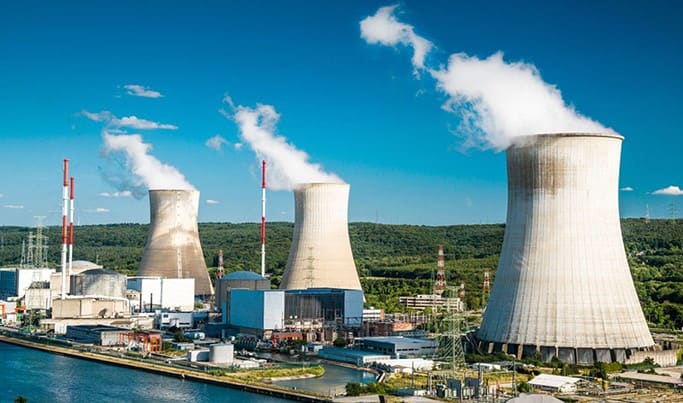
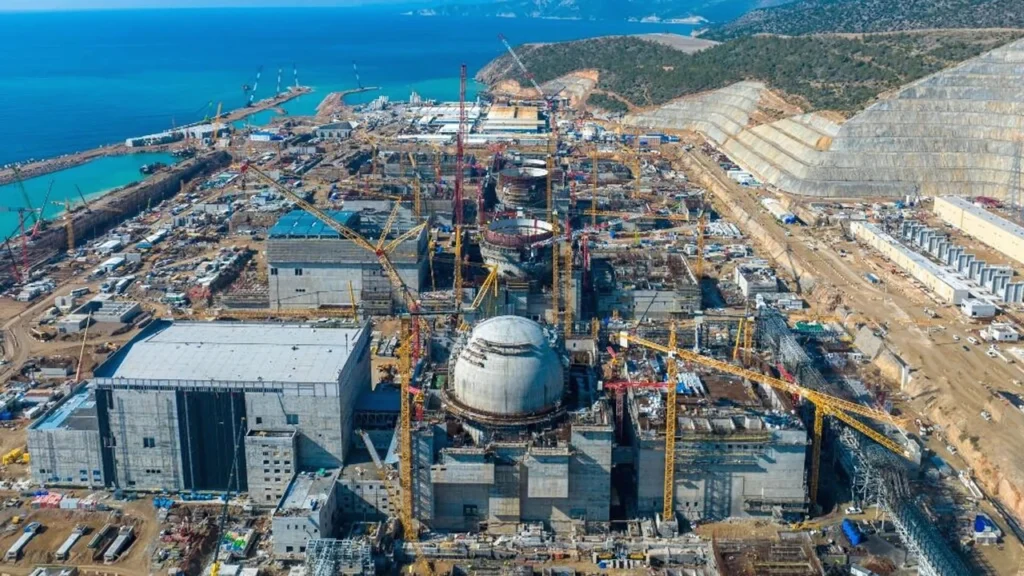
The minister’s comment confirmed what energy specialists have warned for years: that Turkey’s $20 billion Akkuyu project, built and operated by Russia under a 2010 agreement, has created a new form of strategic dependence.
Under the contract, Rosatom finances, owns and runs the plant while its subsidiary TVEL provides all uranium fuel. The arrangement makes it nearly impossible for Turkey to purchase or use uranium from any other source without Moscow’s approval.
Until recently, Turkish officials had avoided describing this as a vulnerability. But the shift in tone reflects a changing foreign policy climate. Ankara has been trying to rebuild ties with the United States and European allies after years of tension, and energy diversification has become part of that broader political recalibration.
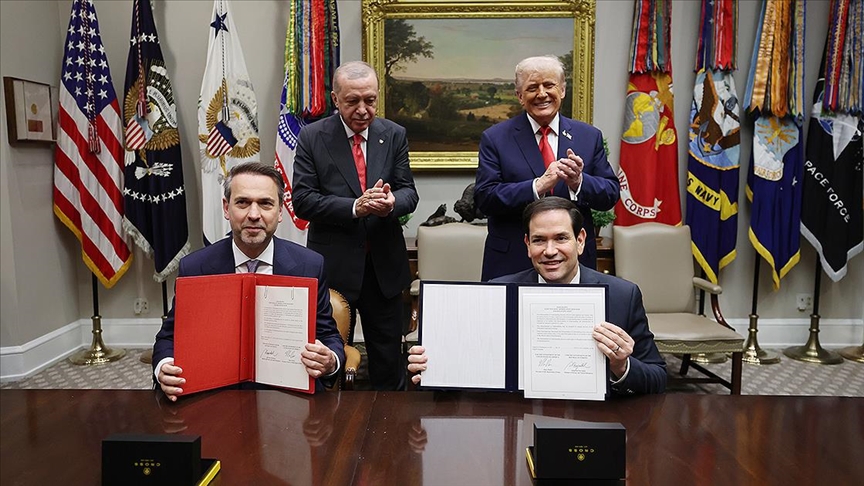
Bayraktar’s remarks came just weeks after Turkey signed a memorandum of understanding with Washington on civilian nuclear cooperation. The deal opens the way for American and South Korean participation in Turkey’s planned second nuclear power plant in the northern city of Sinop, replacing an earlier plan to give the project to Rosatom.
Officials describe the new partnership as a sign that Turkey wants to avoid repeating the Akkuyu model where Russia maintains full ownership and operational control. The energy minister said the goal for the next projects is “access to technology, competitive costs and the direct involvement of Turkish companies.”
The statement also signals how Ankara’s experience with Russia has influenced its view of long-term energy security. When the Akkuyu agreement was signed 15 years ago, the deal was celebrated as a breakthrough that would give Turkey nuclear power for the first time. The plant’s four reactors, located on the Mediterranean coast, are designed to supply up to 10 percent of Turkey’s electricity once fully operational.
Yet the dependence on Russian fuel and engineering has grown deeper than many expected. Western sanctions after Moscow’s 2022 invasion of Ukraine have complicated financial transfers for the project, delayed some Russian payments and forced Ankara to consider alternative funding. Still, the uranium contract remains untouched, and Rosatom’s TVEL is the only approved supplier.
During his presentation Bayraktar sought to justify the arrangement by highlighting the potential savings in natural gas imports. He said that when Akkuyu starts producing electricity, it will allow Turkey to save up to 7 billion cubic meters of natural gas each year. “This will reduce our import bill and support our climate goals,” he said.
The minister’s calculation, however, also shows the paradox at the heart of Turkey’s energy strategy. While the country expects to save money by importing less gas from Russia, it will simultaneously import uranium from the same country to keep the reactors running. Energy analysts have long warned that such dependence shifts rather than solves the problem.
Minutes of the parliamentary committee meeting on November 7, 2025.
The minister also said the high-priced electricity to be purchased from the Akkuyu plant would apply only to two of its four reactors, while power from the remaining two would be bought at market rates, arguing that criticism of the deal was therefore unfair. However, it remains unclear when all four reactors will become operational.
For years experts have argued that relying on a single foreign supplier for strategic resources — first gas and now uranium — leaves Turkey vulnerable to political pressure and supply disruptions. Ankara’s latest acknowledgment suggests that the government has come to the same realization.
Turkey does have small uranium deposits in Manisa, Yozgat and Nevşehir. But these reserves remain undeveloped, and the country lacks the facilities to convert or enrich uranium into nuclear fuel. Even if it could produce its own uranium, Rosatom’s control over Akkuyu’s reactor technology means no alternative fuel could be used without Russian certification.
The decision to involve the United States and South Korea in the Sinop project represents a deliberate attempt to diversify both suppliers and technology. “Future nuclear plants will not follow a single-country model,” one senior official told reporters after Bayraktar’s parliamentary appearance.
For Moscow, Turkey’s gradual shift toward Western partners is a setback. Rosatom had hoped to dominate Turkey’s nuclear sector for decades through a series of projects modeled after Akkuyu. But Ankara’s changing priorities and the slow progress at the site have prompted a rethink.
Still, the relationship between the two countries remains complex. While Ankara seeks more balanced energy ties, it continues to maintain strong economic links with Moscow. On the same day Bayraktar presented his budget, the Turkish government published a new international transport agreement with Russia in the Official Gazette.
Turkish President Recep Tayyip Erdogan approved and published in the Official Gazette a long-pending agreement with Russia aimed at improving road freight transportation between the two countries:
The protocol, signed by President Recep Tayyip Erdogan, replaces a 1988 deal and aims to modernize road freight operations between the two countries. Officials say it will ease customs procedures, reduce transport delays and strengthen the infrastructure needed to reach a bilateral trade target of $100 billion.
The timing of the new agreement was striking. As Ankara talked of reducing its energy dependence on Russia and turning toward Western nuclear partners, it also implemented a deal that expands trade and logistics cooperation with Moscow.
For many in Ankara this reflects Turkey’s ongoing balancing act, trying to both keep open channels with Russia and increase its engagement with the West.