
Levent Kenez/Stockholm
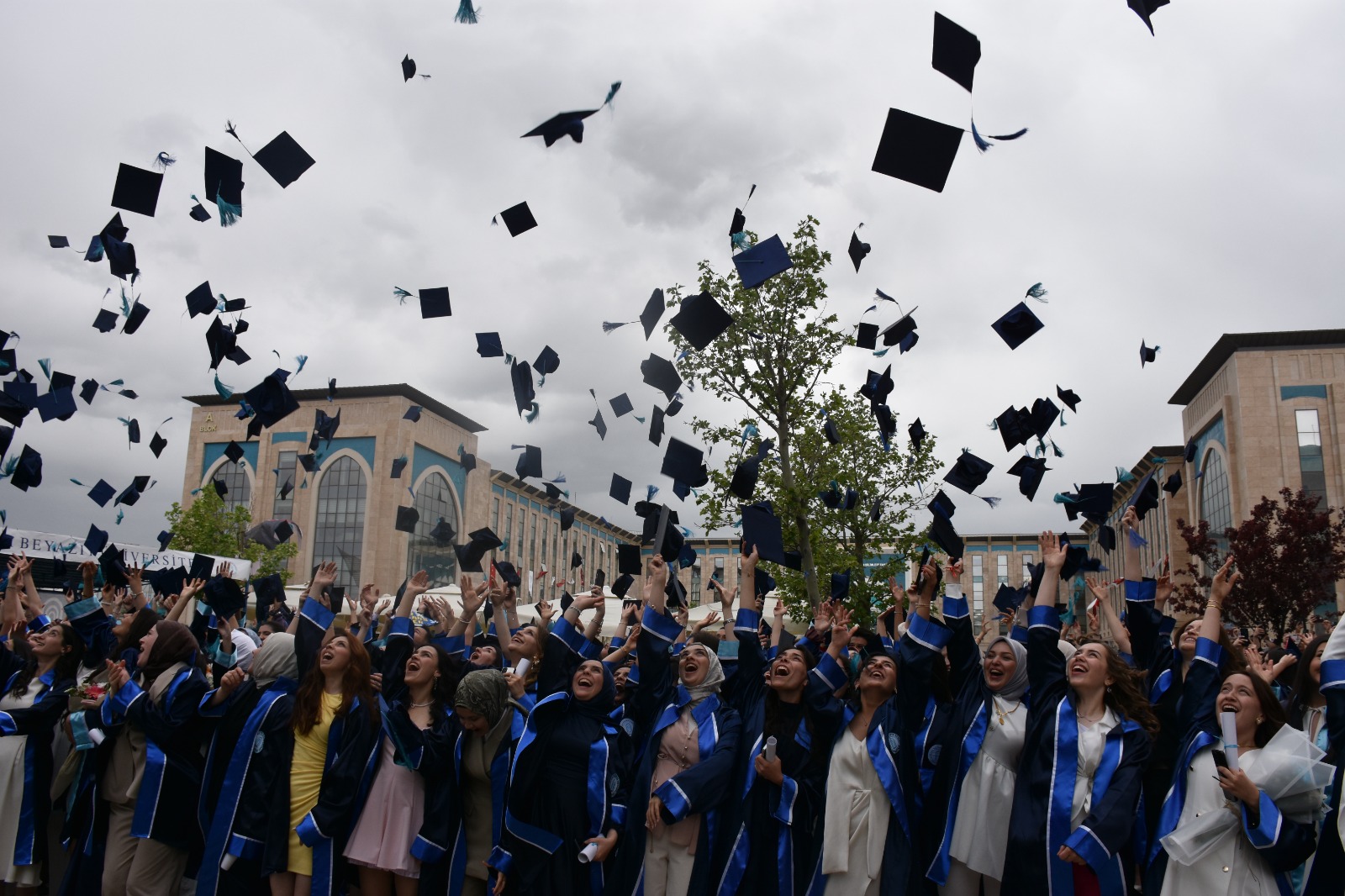
An academic article promoted by the government has called on Turkish authorities to treat thousands of state-funded graduate students studying abroad not only as scholars but also as unofficial envoys and to provide them with intelligence training before they leave the country.
The article “On Being a Citizen Diplomat in the Global Village: Türkiye’s YLSY Scholarship Holders” by Dr. Recep Şehitoğlu was published in Communication and Diplomacy, the official journal of the Presidency’s Directorate of Communications, the propaganda office of President Recep Tayyip Erdogan.
It frames recipients of the YLSY program, a government scholarship that sends Turkish students abroad for graduate studies in return for mandatory public service, as “citizen diplomats” entrusted with advancing Turkey’s soft power overseas. It recommends that the Ministry of Education coordinate with the Foreign Ministry, the Ministry of Culture and Tourism, the Directorate of Communications and the National Intelligence Organization (MIT) to orient these students before they are sent overseas.
“Students must be seen not merely as recipients of educational opportunities but as diplomatic investments,” the article says. It proposes mandatory preparation in cultural diplomacy, social media communication, diaspora networking and even intelligence.
Among the most striking proposals is a recommendation that MIT provide students with intelligence training sessions. These would include examples of espionage cases, briefings on how foreign intelligence services operate and guidelines for protecting national information. By suggesting that young scholars undergo modules usually reserved for state officials, the article implies that students should act as quasi-official representatives while overseas.
Under the program, many YLSY scholars travel abroad through bilateral academic agreements between Turkey and other countries and university partnerships. Portraying them as unofficial diplomats and preparing them with intelligence briefings raises the possibility of complicating their standing in host countries, where they are expected to act as independent researchers rather than government envoys.
The YLSY scholarship program has its roots in a 1929 law that first sent students to Europe to learn from Western universities. Over the decades the initiative has expanded, aiming to train highly qualified staff for Turkish universities and state institutions.
Applicants must be Turkish citizens with strong academic records. They are funded for master’s or doctoral studies abroad with tuition, living stipends, health costs and travel covered. In exchange they are required to return and work in designated institutions, often for twice the length of their overseas studies.
Between 1929 and 2005, 9,689 students benefited from the scheme. After a relaunch under the slogan “5,000 students in 5 years” in 2006, the program grew rapidly. From 2006 to 2013, 5,797 students were sent abroad, followed by 6,492 more between 2014 and 2023. In 2024 another 668 students were approved for departure under the latest call by the Education Ministry.
The United Kingdom has been by far the top destination, hosting 2,410 Turkish scholarship students between 2014 and 2023, more than half of all placements. The United States ranked second with 937, followed by Germany with 323, the Netherlands with 181, Canada with 121 and Russia with 89. Smaller groups went to France, Italy, Australia, Sweden, China, Japan, South Korea and Middle Eastern countries.
Despite disruptions during the COVID-19 pandemic, the government has maintained the program as a pillar of its long-term human resource and foreign policy strategy.
The Communication and Diplomacy article insists that the scholarship should not be understood solely in academic terms. It frames the students as part of Turkey’s soft power projection, arguing they “represent the Turkish brand” and can influence perceptions in foreign societies.
“Students will recognize their diplomatic role as Turkey’s ambassadors on the global stage,” the study says, recommending that they act as cultural envoys, storytellers on social media and community organizers in cooperation with the Turkish diaspora.
In addition, it calls for embassies and consulates to actively engage with scholarship holders, ensuring they are supported, monitored and guided during their studies. Regular meetings with ambassadors and cultural attachés would reinforce their sense of mission, the article suggests.
The most controversial recommendation is that students undergo intelligence awareness sessions delivered by MIT. The study proposes that before departure, young scholars should be briefed on how espionage networks operate, the risks of “spy recruitment” and the need to safeguard Turkish state information.
The rationale, according to the article, is that unprepared students may struggle to adapt in foreign cultures, leaving them vulnerable both socially and strategically. With training, they could act more cautiously and responsibly while abroad.
The YLSY program carries strict obligations. Students who complete their degrees must return to Turkey and serve in universities or public institutions for twice the length of their period of study. Those who fail to do so are required to repay the cost of their scholarships with interest. From 2014 to 2023 nearly 2,000 returned graduates were placed in Turkish public institutions and universities, many in strategic fields such as agriculture, environmental sciences and engineering. Authorities describe this as a way to build national capacity in critical sectors while retaining international expertise.
The Directorate of Communications has increasingly emphasized “citizen diplomacy” in recent years. Under this model, not only diplomats but also businesspeople, athletes, artists and students are seen as representatives of the Turkish state abroad.
The newly published article situates YLSY students within this vision, arguing that their study-abroad programs must be aligned with Turkey’s foreign policy. The goal, it says, is to “increase Turkey’s prestige in the global village” and “preserve cultural heritage for posterity.”
For the students themselves, however, the expectations may be conflicting. Officially, they are sent to study to build Turkey’s human capital. Unofficially, they are portrayed as diplomatic actors with responsibilities to promote the national narrative, defend Ankara’s positions on historical disputes and guard against espionage.
By layering intelligence orientation on top of cultural diplomacy, the program risks casting scholars as state functionaries. This could raise suspicion in host societies and complicate their relationships with foreign peers and academic institutions.
Still, the article maintains that the benefits outweigh the risks. “Students are not only pursuing degrees but serving as soft power agents,” it concludes. “Recognizing this role is essential for Turkey to enhance its international influence.”
It is not new in Turkey to encourage civilians to cooperate with security forces and intelligence services. Nordic Monitor previously reported that a new intelligence report is urging Turkey to build a nationwide system where civilians including children could serve as potential sources of intelligence, as part of a sweeping effort to prepare for hybrid warfare threats. Citing the recent Iran-Israel conflict, the National Intelligence Academy, a government institution affiliated with Turkey’s national intelligence agency MİT, calls for full coordination between neighborhood watchmen (bekçiler in Turkish), uniformed law enforcement officers patrolling residential areas primarily at night, and top strategic institutions, raising concerns about the extent to which ordinary people are expected to become part of the security apparatus.