
Abdullah Bozkurt/Stockholm
The United States’ sanctions on Turkey — sparked by Ankara’s 2019 acquisition of the Russian-made S-400 air defense system — are having a far more profound impact on Turkish defense ambitions than initially anticipated, according to a newly released report.
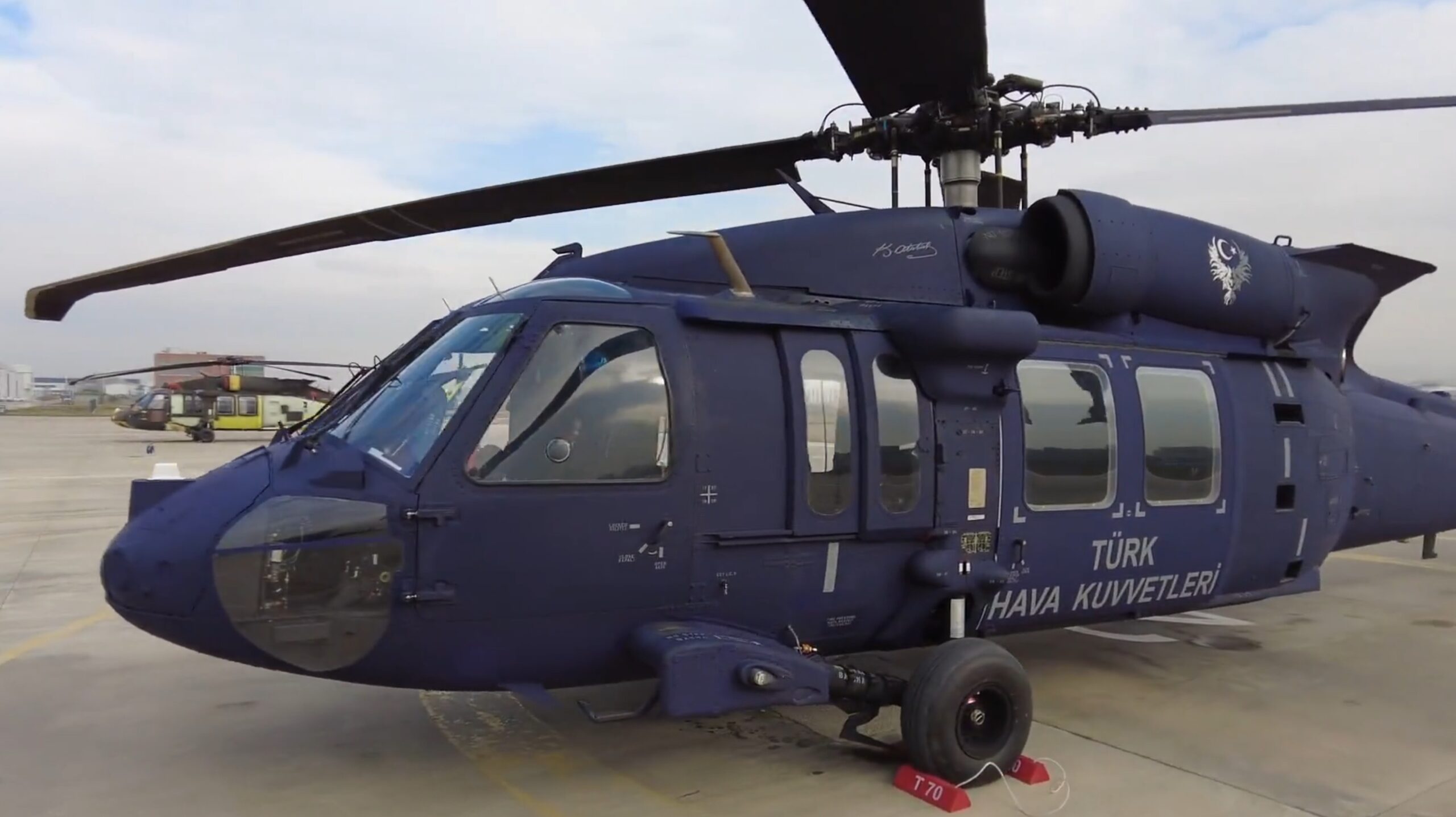
Lockheed Martin, one of the world’s largest defense contractors, disclosed in its 2024 Financial Report that the sanctions have severely disrupted its Turkish operations, particularly the Turkish Utility Helicopter Program (TUHP), which involves the co-production of T70 utility helicopters with local partners under license from Sikorsky Aircraft, a subsidiary of Lockheed Martin..
Although the program itself is not directly listed among the sanctioned projects, it has nonetheless suffered collateral damage due to broader restrictions affecting the partnering entities of the main contractor, Turkish Aerospace Industries (Türk Havacılık ve Uzay Sanayii A.Ş., TAI). To date, 22 helicopters have been produced under the program, with the first one rolling off the production line in November 2019.
Turkey has been operating T70 helicopters since the 1980s and currently maintains a fleet of 140. Under the contract with Lockheed Martin, it planned to produce an additional 109 helicopters for domestic use, with another 109 designated for export — a move expected to generate approximately $1.5 billion in export revenue.
Excerpts from Lockheed Martin’s annual financial report indicated problems in the co-production of T70 utility helicopters in partnership with Turkish Aerospace Industries:
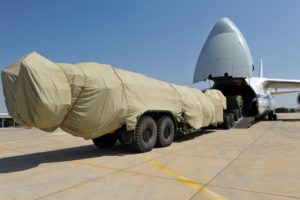
The punitive measures were imposed under the Countering America’s Adversaries Through Sanctions Act (CAATSA), a US congressional mandate designed to deter cooperation with Russia’s defense sector. Despite repeated warnings from Washington about the risks and incompatibility of integrating Russian systems within a NATO framework, Turkey proceeded with a $2.5 billion agreement to purchase the S-400 system in 2017. Russia delivered the first batch of equipment on July 12, 2019, and discussions reportedly included future co-production of the more advanced S-500 system.
In retaliation the US imposed sanctions on Turkey’s Presidency of Defense Industry (Savunma Sanayii Başkanlığı, or SSB) and key officials on December 14, 2020. The following year, Turkey was formally expelled from the F-35 Joint Strike Fighter program.
Lockheed Martin’s report, issued in March, confirms the continuing strain these sanctions have imposed on defense collaboration between the two NATO allies. The company revealed that it has struggled to obtain the necessary export licenses and authorizations required to fulfill its contractual obligations under TUHP.
“In 2020, the US Government imposed sanctions on Turkish entities and individuals that impacted our ability to execute TUHP contracts,” the report stated. As a result, the program has faced significant delays, forcing Lockheed Martin to declare force majeure and partially suspend operations as of October 5, 2024.
The company also warned that these disruptions could threaten future business opportunities in the region. “Our inability to perform under, or compete for, contracts with international customers because of actions taken by the US Government … could have an adverse effect on our operating results,” the report stated.
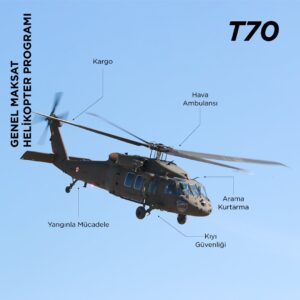
TUHP was envisioned as a hallmark of US-Turkish defense cooperation, aiming to manufacture T70 helicopters domestically while enabling global exports. The initiative includes reciprocal obligations — such as buy-back agreements and offset clauses — to ensure Turkish-made components and services are integrated throughout the supply chain.
Although Lockheed Martin and its Turkish counterparts remain engaged in dialogue, the program’s future is clouded by uncertainty. As of December 31, 2024, Lockheed had recorded cumulative losses on the TUHP, although it stressed that these losses were still minor. However, the company cautioned that if a resolution is not reached soon, the financial impact could become significant.
“If we are unable to reach an agreement in the near term,” the report warned, “we or our customer could pursue alternative remedies, which might result in reduced sales, penalties, damages, or unrecoverable costs — any of which could materially affect our financial outcomes.”
Meanwhile, another critical aspect of US-Turkish defense relations — the F-16 fighter jet program — faced years of stagnation before a breakthrough agreement was reached in 2024. Turkey, confronted with a shrinking and aging F-16 fleet after its exclusion from the F-35 program, leveraged its approval of Sweden and Finland’s NATO membership to ease the path toward securing a new deal.
The resulting agreement, valued at approximately $23 billion, covers the sale of 40 new F-16 Block 70 aircraft and modernization kits for 79 existing jets in Turkey’s arsenal. The US State Department formally notified Congress of the sale shortly after Turkey ratified Sweden’s NATO accession in early 2024.
To reduce costs, Turkey later opted to carry out part of the modernization itself, trimming the overall expense to around $7 billion. While debates continue in the US Congress, the first batch of Block 70 F-16s is expected to be delivered in 2026, with full delivery projected by the end of the decade.
In the interim, Turkey is pressing forward with its indigenous fifth-generation fighter project Kaan developed by TAI. Although the prototype completed its maiden flight in February 2024, it still relies on the US-manufactured General Electric F110 engine, underscoring continued dependencies.
In pursuit of strategic diversification, Ankara has also expressed interest in acquiring Eurofighter Typhoon jets, manufactured by a consortium of the UK, Italy, Spain, Germany and France. Negotiations are ongoing, with Germany reportedly voicing reservations about the sale.
As Turkey recalibrates its defense partnerships amid shifting geopolitical winds, US sanctions continue to cast a long shadow over its ambitions, triggering wider disruptions and forcing hard choices on future strategy and procurement.