
Abdullah Bozkurt/Stockholm
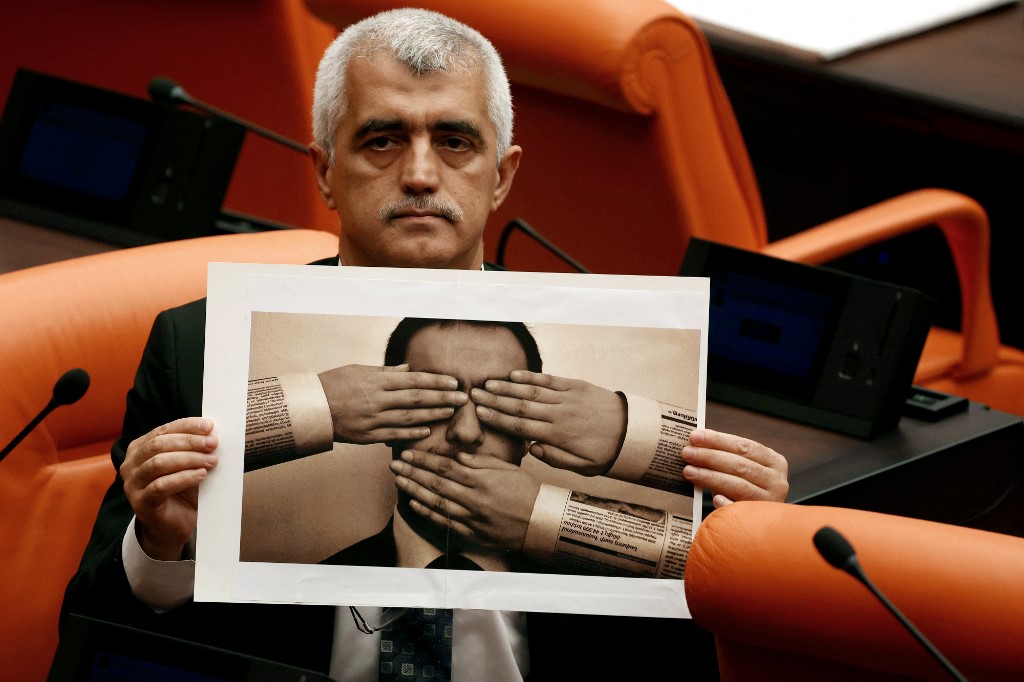
The performance of the Turkish Parliament in the last legislative session made it abundantly clear that the legislative branch’s powers to provide checks and balances on the executive have been wiped out and that the parliament has been rendered an ineffective body at the hands of President Recep Tayyip Erdogan and his ruling Justice and Development Party (AKP).
In its fifth and last legislative session, which began in October 2021 and ended in September 2022, members of the opposition submitted 716 draft bills to the Speaker’s Office. However, not a single one of these bills was deliberated upon to become law. All 80 draft bills that were approved and enacted into laws originated from the AKP or its far-right ally, the Nationalist Movement Party (MHP).
Moreover, parliamentary committees have been stripped of their authority, with some of them failing to convene a single meeting throughout the entire legislative session. In essence, they exist only on paper. For instance, the Committee for EU Harmonization (Avrupa Birliği Uyum Komisyonu), which was initially established to review all legislation to ensure its alignment with the EU acquis since Turkey is a candidate country, never held a single meeting. This serves as a clear indication of the Erdogan government’s lack of commitment to pursue EU membership.
The Committee for Agriculture, Forestry and Rural Affairs is another example of a body that has never convened. Additionally, some other committees, such as the Committee for Equal Opportunity for Men and Women, the Constitution Committee and the National Defense Committee have rarely held meetings, with the former meeting only once and the latter two meeting only twice.
Parliament document that shows the government by and large ignored the opposition’s actions to investigate the administration:
Another significant tool in the opposition’s arsenal, the parliamentary question, has also been rendered ineffective by the government. The ability of members of parliament to raise questions regarding any aspect of administrative activity is crucial for ensuring accountability, good governance and transparency in government. Questions serve as one of the many mechanisms through which parliament can hold the executive branch accountable.
The constitution’s Article 98 grants parliament oversight powers using questions, parliamentary inquiries, general debates and motions of censure. According to Article 99 of the parliamentary bylaws, written parliamentary questions must be answered by the government within 15 days of submission to the Parliament Speaker’s Office.
If it is not answered within that period, the speaker has to send a notice to the minister, reminding him/her of the responsibility to provide a response to queries. If the minister still fails to reply, he/she is exposed in the registry published by the Speaker’s Office.
During the last legislative session, a total of 15,664 written and oral questions were submitted to the government. However, only 1,298 of these questions received a response from the government within the mandated two-week timeframe, the maximum time allowed by law. Alarmingly, the remaining questions were ignored, with approximately two-thirds of all parliamentary questions going unanswered.
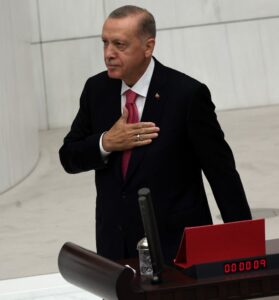
Notably, the Ministry of Justice stands out as the most negligent in responding to parliamentary questions. Out of 2,145 questions directed to the ministry, only three were answered within the designated timeframe. Similarly, the Ministry of Defense responded to merely six questions out of 195 within the two-week window. The Foreign Ministry answered 26 out of 147 questions, while the Interior Ministry managed to respond to a mere six out of 1,597 questions submitted by opposition lawmakers.
These figures highlight the significant lack of responsiveness from key government ministries, raising concerns about transparency, accountability and the effectiveness of parliamentary oversight in the legislative process.
In addition to the increasing number of unanswered or delayed responses, opposition parties have been raising concerns about the quality of content in the government’s replies to parliamentary questions. It has become obvious that the government frequently resorts to evasiveness in its responses, providing facts and information that are unrelated to the actual questions or simply referring to already published data.
This evasive behavior undermines the purpose of parliamentary questions, which is to obtain clear and specific information from the government regarding various matters of public concern. By deflecting or providing irrelevant information, the government fails to address the legitimate inquiries raised by opposition lawmakers.
Such evasiveness not only obstructs the transparency and accountability of the government but also hinders the effective functioning of the parliamentary system. The quality of responses is a crucial aspect of ensuring that parliamentary oversight fulfills its role in holding the executive branch accountable and providing accurate information to lawmakers and the public.
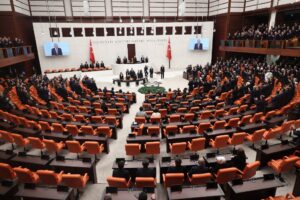
In addition to the aforementioned issues, it is worth noting that nearly all motions put forward by the opposition to establish ad hoc commissions for the purpose of investigating specific matters were consistently rejected by the combined votes of President Erdogan’s party and its far-right ally. These rejected motions included proposals to establish commissions to investigate matters such as terrorism carried out by the Islamic State in Iraq and Syria (ISIS), earthquake preparedness, politicians involved in tax evasion and offshore accounts.
The rejection of these motions to establish investigative commissions raises concerns about the government’s willingness to address critical issues and promote transparency. By blocking the formation of such commissions, the ruling party and its ally limit the ability of the opposition to conduct thorough investigations and shed light on potentially important matters.
It is worth noting, however, that the opposition did manage to successfully establish one temporary commission — the Commission to Investigate Problems of the Elderly. This achievement stands in contrast to the persistent rejection of other proposed commissions and highlights the challenges faced by the opposition in carrying out their oversight role effectively.
Last but certainly not least, the Turkish Parliament has experienced a significant erosion of its budget-making powers under President Erdogan’s rule. The government’s proposed budget easily passes through committee reviews and is swiftly approved by the assembly, often without any substantial changes. Additionally, the powers of the Court of Accounts, which is responsible for auditing government expenditures and informing the parliament, have been curtailed by the government.
The lack of meaningful legislative review in Turkey is obvious. Key tools for legislative oversight, such as parliamentary questions, budget allocations, inquiries and investigations, have become increasingly ineffective under the repressive and authoritarian regime of President Erdogan. The Turkish Parliament, in practice, has been transformed into a rubber-stamping body that merely approves the decisions of the Erdogan government without critical examination or evaluation.
This diminishing role of the legislative branch highlights the consolidation of power in the executive and raises concerns about the erosion of checks and balances, transparency and accountability within the Turkish political system. The decline of legislative audit mechanisms further reinforces the perception that the Erdogan government’s actions are no longer subject to robust scrutiny or meaningful democratic oversight.