
Abdullah Bozkurt/Stockholm
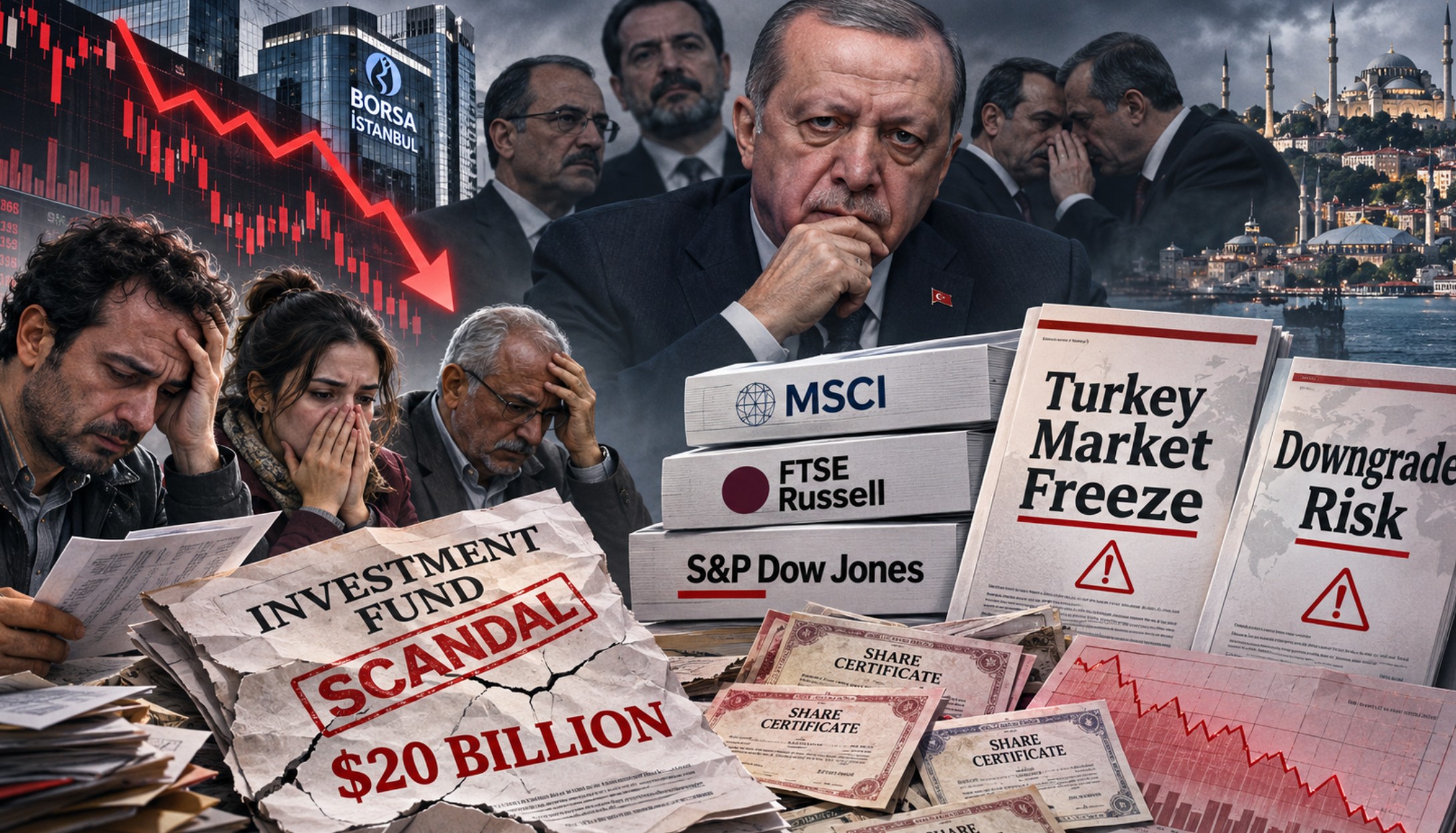
Turkey’s multibillion-dollar investment fund scandal, which has drawn scrutiny to President Recep Tayyip Erdogan’s political and family networks and shaken confidence in the country’s financial regulators, has escalated into an international credibility crisis after three major global index providers raised concerns about Turkish equities, culminating in an MSCI warning that the country could lose its Emerging Market classification.
The intervention by MSCI, one of the world’s most influential stock-market index providers, on October 15, 2026, represents a serious setback for Turkey’s efforts to attract international capital. It follows months of warnings about questionable share ownership structures, coordinated trading through investment funds, a credible insider’s trading allegations and weaknesses in regulatory oversight that preceded the collapse of 131 investment funds managing approximately $20 billion in assets.
The fallout has extended beyond financial markets, exposing divisions within Erdogan’s ruling Justice and Development Party (AKP) and raising questions about the business dealings and political connections of people in or close to the president’s inner circle.
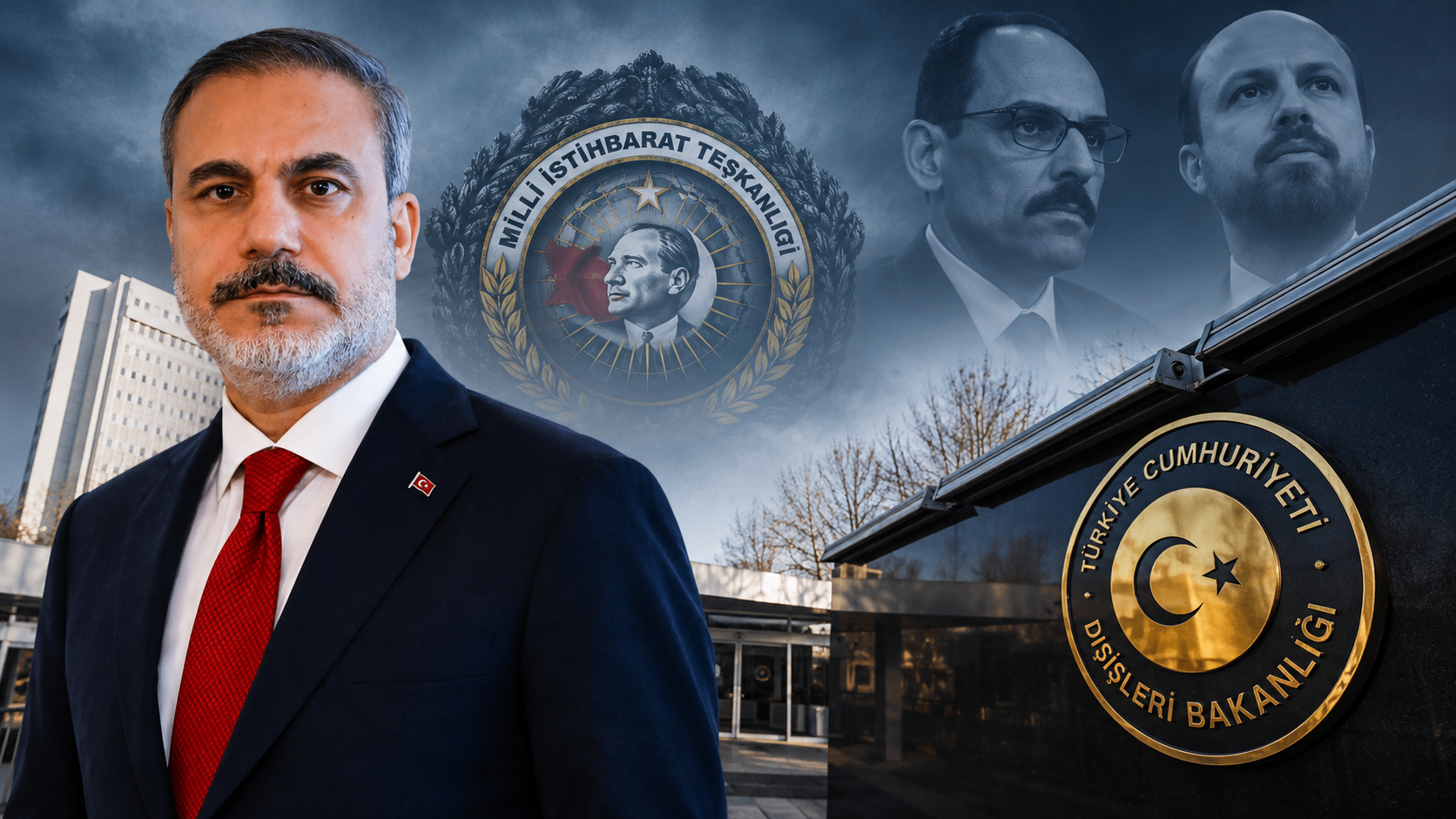
Among those whose names have surfaced in public allegations about the scandal are the president’s chief of staff Hasan Doğan, Erdogan’s son Necmettin Bilal Erdogan and his son-in-law Berat Albayrak, the former treasury and finance minister.
Doğan was named as one of the major figure who has allegedly used his straw men to make millions of dollars in a fund, while Bilal Erdogan and Albayrak’s documented public association with figures connected to the fund industry have attracted scrutiny.
The emergence of such politically sensitive names illustrates how the scandal has developed from a financial regulatory failure into a broader controversy over the relationship between political influence, market access, insider’s trading and accountability in Turkey.
Faced with a public backlash, the Erdogan government has responded with criminal investigations, arrests, regulatory changes and the departure of senior financial officials, including figures who held important positions in institutions responsible for supervising the markets. Critics have portrayed these developments as an attempt to contain public anger without fully examining the political networks that have benefited from the boom in investment funds and to certainly prevent the damage from reaching to president’s inner circle.
Global index provider MSCI announced a freeze on certain Turkish stock index changes, citing concerns over coordinated trading through investment funds and unreliable free-float calculations, while warning that Turkey could face a downgrade from Emerging Market status if market-integrity problems remain unresolved by June 2027:
What makes the crisis particularly difficult for Ankara is that international index providers operate outside the Turkish government’s domestic political and regulatory system.
While the Erdogan government wields near total control over Turkey’s media environment as well as the Turkish judiciary, it cannot determine how independent international index providers classify Turkish securities or what information foreign asset managers require before investing.
MSCI’s decision therefore introduces a form of external scrutiny that cannot be resolved merely through domestic political messaging, changes in regulatory leadership or selective criminal proceedings.
In its October 15 announcement, MSCI said institutional investors had expressed serious concerns about possible coordinated trading through investment funds closely affiliated with smaller publicly traded Turkish companies. The company warned that these practices could undermine the reliability of free-float calculations and market integrity.
Free float measures the portion of a company’s shares considered available for public trading, excluding strategic or otherwise restricted holdings under the applicable index methodology. International stock indexes use free-float-adjusted market capitalization to determine which companies qualify for inclusion and how heavily their shares should be weighted.
If shares that appear to be independently held are actually controlled by company insiders or coordinated groups operating through investment funds, the calculations may overstate how much of a company’s equity is genuinely available for trading.
That can distort index eligibility, investor perceptions of liquidity and the amounts invested by funds that track international benchmarks. MSCI announced an immediate freeze on several categories of upward index adjustments for Turkish securities.
The restrictions prevent increases in Foreign Inclusion Factors (FIF), which determine the proportion of shares eligible for inclusion in MSCI’s indexes, and increases in the Number of Shares (NOS) used in index calculations.
MSCI also suspended new additions to the MSCI Turkey Investable Market Index and upward migrations of securities into larger market-capitalization segments. The freeze will remain in place until further notice.
More significantly, MSCI warned that if Turkish authorities fail to demonstrate sufficient progress by June 2027, it may consider additional measures, including a consultation on reclassifying Turkey from Emerging Market status to Frontier Market or Standalone Market status.
The warning is consequential because it puts the country’s international market classification at risk over issues associated with ownership transparency, coordinated trading and enforcement.
A reclassification could force investment funds restricted to emerging-market benchmarks to reconsider their Turkish equity exposure, potentially reducing demand for Turkish shares and complicating access to international institutional investment. It would also represent an important setback for a government that has sought to reassure foreign investors about Turkey’s economic management.
The October announcement was not the first indication that international investors were questioning aspects of the Turkish equity market. MSCI had already intervened in the treatment of individual Turkish securities months before the investment fund crisis erupted.
One particularly revealing example involved Kiler Holding, a publicly traded company listed on Borsa Istanbul under the ticker KLRHO. In February 2026, MSCI received feedback from market participants expressing uncertainty about the company’s free float.
Instead of proceeding with an upward migration into a larger market-capitalization index, MSCI retained Kiler Holding in its Turkey Small Cap Index while maintaining its Foreign Inclusion Factor at 0.25.
The decision demonstrated that concerns about ownership structures were already affecting the company’s ability to advance within internationally followed stock indexes. MSCI subsequently conducted a more detailed assessment. On May 12, the company announced that it had reclassified certain Kiler Holding shareholders, including some investment funds, from free float to non-free float.
The adjustment reduced Kiler Holding’s Foreign Inclusion Factor from 0.25 to 0.145, a decline of 42 percent. As a result, the company failed to meet the requirements for continued inclusion in MSCI’s Global Small Cap Indexes and was removed effective June 1.
FTSE Russell’s annual country classification review confirmed concerns over the reliability and transparency of Turkish share ownership data, postponing certain index changes while maintaining Turkey’s Advanced Emerging Market classification:
This was a concrete example of how investment-fund ownership arrangements could affect a Turkish company’s standing in international equity benchmarks.
For investigators examining the subsequent scandal, the Kiler Holding case provides an important documentary trail involving specific ownership classifications, measurable index changes and an official decision by an international benchmark provider. It also raises broader questions about whether similar arrangements existed at other Turkish companies and whether domestic regulators had sufficient information to identify them.
By the summer of 2026 warnings about Turkey’s financial market structure were no longer confined to MSCI. In June MSCI’s Global Market Accessibility Review highlighted problems involving information flow, the reliability of free-float calculations and the ability of investors to assess the true ownership and trading characteristics of certain securities.
The company downgraded Turkey’s information-flow assessment, signaling that weaknesses in market transparency were affecting its broader evaluation of the country.
S&P Dow Jones Indices, another major international benchmark provider, subsequently raised concerns about Turkish stock-ownership transparency and market accessibility. In July reports of S&P’s assessment indicated that unresolved problems could lead to special treatment of Turkish securities and potentially a review of the country’s market classification.
The significance was not that S&P had already downgraded Turkey. It had not. Rather, a second major international institution was independently identifying concerns that could affect how Turkish equities were treated in global benchmarks.
FTSE Russell, part of the London Stock Exchange Group, followed with its own intervention in September. The company postponed certain index changes involving Turkish securities amid questions about the reliability and level of detail in published free-float data.
FTSE Russell also confirmed that it was engaging with Borsa Istanbul and Turkey’s Capital Markets Board (SPK) over improvements to ownership information published by Merkezi Kayıt Kuruluşu (MKK), the country’s central securities depository.
Although FTSE Russell maintained Turkey’s Advanced Emerging Market classification, its decision reinforced the concerns expressed by the other index providers. The emergence of similar warnings from MSCI, S&P Dow Jones Indices and FTSE Russell suggested that the underlying problems were not simply technical disagreements involving isolated companies.

They pointed to a broader difficulty in establishing whether publicly traded shares were genuinely held by independent investors or effectively controlled through arrangements involving affiliated funds and related parties.
Turkey’s financial authorities had been aware of potential problems involving investment funds before the crisis reached its most disruptive phase. They took some limited actions but did not really address the problems but rather allowed concentrated fund ownership structures and potentially problematic trading practices to expand without scrutiny.
The crisis reached a critical stage in mid-September when several investment funds encountered difficulties meeting withdrawal requests from investors. On September 17, SPK ordered the liquidation of 131 investment funds managed by seven asset management companies: Tera Portföy, Pusula Portföy, Hedef Portföy, Atlas Portföy, A1 Capital, Pardus Portföy and Bulls Portföy.
The affected funds had accumulated assets valued at approximately $20 billion, while official figures indicated that 455,758 individual investors held positions in the funds concerned. The extraordinary expansion of the sector had occurred against a backdrop of high inflation, currency depreciation and growing public demand for investment products capable of protecting savings.
The financial scandal soon developed into a political controversy because of the prominent government figures and politically connected business networks appearing in public allegations. Among the most significant cases was that of Fatma Betül Sayan Kaya, a former family and social affairs minister who served as a deputy chair of Erdogan’s AKP.
Kaya resigned from her party position in September after opposition politicians accused her and her husband of profiting from share transactions before the market turmoil. The allegations involved exceptionally large gains from investments in Özata Denizcilik shares.
In November, Kaya was arrested as part of the expanding investigation into suspected market manipulation. Her arrest marked a significant political development because the criminal proceedings had reached a former cabinet minister and senior ruling-party official.
S&P Dow Jones Indices — 2026 Country Classification Consultation: Official consultation document covering country classifications, including Turkey in index-composition tables. This is background material, not the separate July warning about Turkey:
The questions raised the possibility that politically influential individuals could have benefited from access to investment opportunities before they became available to a broader investor base.
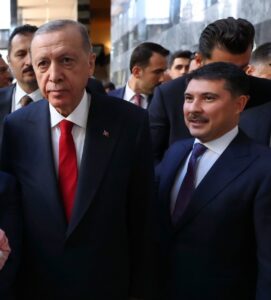
The president’s son, Necmettin Bilal Erdogan, has been publicly associated with business figures connected to the investment fund industry. One such figure is Serdar Turhan, chairman of Pusula Finans Holding, who was among the executives arrested during the investigation.
Bilal Erdogan attended the March 2026 opening of a school built by Turhan in Bingöl, along with Vice President Cevdet Yılmaz. Separately, Erdogan’s son-in-law Berat Albayrak, a former treasury and finance minister, has been mentioned in reporting and commentary about competing political and financial networks allegedly seeking to influence the handling of the scandal.
The appearance of senior presidential advisers, ruling-party politicians and members of Erdogan’s extended political and family networks in the public debate has increased pressure for an investigation capable of establishing the true beneficiaries of suspicious transactions.
The central question is whether the investigation will examine financial connections wherever they lead, including those involving politically influential individuals, or remain concentrated on market executives and officials whose removal is politically less consequential.
The government has responded to the crisis through a combination of criminal proceedings, regulatory intervention and changes in the leadership of financial oversight institutions. The departures have reached senior officials responsible for supervising financial markets and banking activities. Mahmut Sütçü, chairman of the Capital Markets Board, resigned on October 19. His predecessor, İbrahim Ömer Gönül, was removed from his subsequent position at Turkey’s accounting and auditing watchdog on October 20.
Şahap Kavcıoğlu, chairman of the Banking Regulation and Supervision Agency (BDDK) and a former central bank governor, also submitted his resignation in November. The departures represented a substantial shake-up of the institutions responsible for safeguarding Turkey’s financial system.
However, critics have questioned whether the government is concentrating on individual officials while leaving broader political relationships and possible conflicts of interest insufficiently examined.
It appears that Erdogan is sacrificing officials to contain the scandal, but what is clear is that the resignations and arrests have not ended public criticism. The scandal continues to raise questions about how investment funds accumulated such extraordinary assets, why suspicious transactions were not stopped earlier and whether investors with privileged political connections received preferential treatment.

These questions are particularly sensitive because the crisis unfolded during a period of significant financial pressure on ordinary Turkish households. Many investors turned to investment funds seeking protection from inflation and currency depreciation, making the losses and uncertainty politically damaging.
The interventions by MSCI, S&P Dow Jones Indices and FTSE Russell introduce an external dimension to the scandal that cannot be resolved solely through changes in government personnel, prosecutions or domestic media coverage.
These companies apply their own methodologies and consult international institutional investors when determining the classification and treatment of national equity markets.
Their concerns focus on issues that are measurable and relevant to investment decisions: beneficial ownership, free-float calculations, trading liquidity, market accessibility and the effectiveness of oversight.
Despite regulatory changes introduced by the SPK, the company concluded in October that investors still needed evidence of sustained enforcement and reliable information about ownership. It therefore imposed restrictions that directly affect Turkish securities in international benchmarks.
In its November 11 index review, MSCI confirmed that the freeze had been applied for the first time. Increases in the specified index factors, additions to the Turkey Investable Market Index and upward migrations were prohibited, while deletions and downward migrations remained possible.
The resulting asymmetry could restrict the ability of Turkish companies to benefit from increased index exposure even as they remain vulnerable to reductions in their existing representation. This matters because international investment funds frequently use MSCI and other benchmarks to determine asset allocations.
The measure demonstrates how concerns about ownership transparency and suspected trading irregularities can produce consequences for the wider market.
MSCI’s warning about a possible reclassification in June 2027 adds a longer-term risk. Turkey’s Emerging Market classification provides access to a substantial universe of international investors whose mandates are linked to emerging-market benchmarks. If Turkey were eventually downgraded to Frontier Market or Standalone Market status, some funds could be required to reduce or remove Turkish equities from their portfolios.
The resulting portfolio adjustments could affect market liquidity, equity valuations and the ability of Turkish companies to raise international capital. The consequences would depend on the terms of any reclassification, transition arrangements and the amount of investment tracking the relevant benchmarks.
The issue is especially sensitive because the country continues to face broader economic challenges involving inflation, currency confidence, financing needs and foreign investment.
A downgrade would not be equivalent to a sovereign credit-rating cut, which concerns government debt repayment risk. However, it could negatively influence perceptions of Turkey’s financial institutions and the reliability of its market infrastructure. That is why the MSCI decision has significance beyond the immediate fund scandal.
While Ankara continues to manage the domestic political fallout, international index providers have established a separate test: whether Turkey can demonstrate that its capital markets operate under transparent, independently verifiable rules that apply consistently, regardless of the political influence of those involved.
Erdogan’s handling of the scandal also raises broader questions about his government’s willingness to confront politically sensitive corruption allegations. Over the past decade successive controversies involving alleged financial misconduct, favoritism and politically connected business networks have fueled criticism that accountability mechanisms are selectively enforced and that individuals close to the highest levels of government often escape meaningful scrutiny.
Against this backdrop, failure to address concerns about market manipulation, ownership transparency and regulatory independence could further damage Turkey’s standing in global equity markets, discourage foreign capital inflows and increase financing pressures on an economy already struggling with persistent structural vulnerabilities. The resulting economic consequences could, in turn, deepen public dissatisfaction and undermine the very regime that Erdogan has sought to preserve. What may appear to be a strategy for managing a domestic political crisis could therefore prolong the damage to investor confidence and compound the economic pressures confronting his administration.