
Levent Kenez/Stockholm
Germany has raised concerns over the persecution of followers of the Gülen movement, a group critical of President Recep Tayyip Erdogan, citing reports of abductions, mistreatment and torture in a newly released government report on religious freedom that also documents discrimination against religious minorities and the erosion of judicial independence.
The German Cabinet approved the Fourth Report on the Global Status of Freedom of Religion or Belief on November 18. Prepared under the authority of Thomas Rachel, Germany’s federal commissioner for freedom of religion or belief, the 156-page document examines developments from 2023 to 2025 in 30 countries, including Turkey.
The report concludes that religious freedom deteriorated worldwide during the reporting period. It examines restrictions imposed by governments and other actors, the political role of religion and transnational repression targeting religious communities beyond national borders.
In its four-page assessment of Turkey, the German government describes the overall religious freedom situation as unchanged but identifies persistent structural discrimination and restrictions affecting minority communities.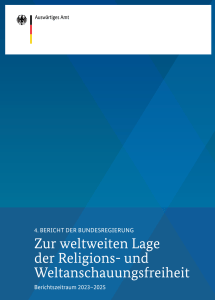
The report states that Turkey’s constitution guarantees freedom of conscience and religious belief. However, it says the government exercises extensive control over religious life through the Directorate of Religious Affairs (Diyanet), which employs approximately 140,000 people and oversees about 90,000 mosques.
According to the report, more than 98 percent of Turkey’s population is officially classified as Muslim, predominantly Sunni. Alevis, estimated to represent 15 percent of the population, are not recognized as a religious minority.
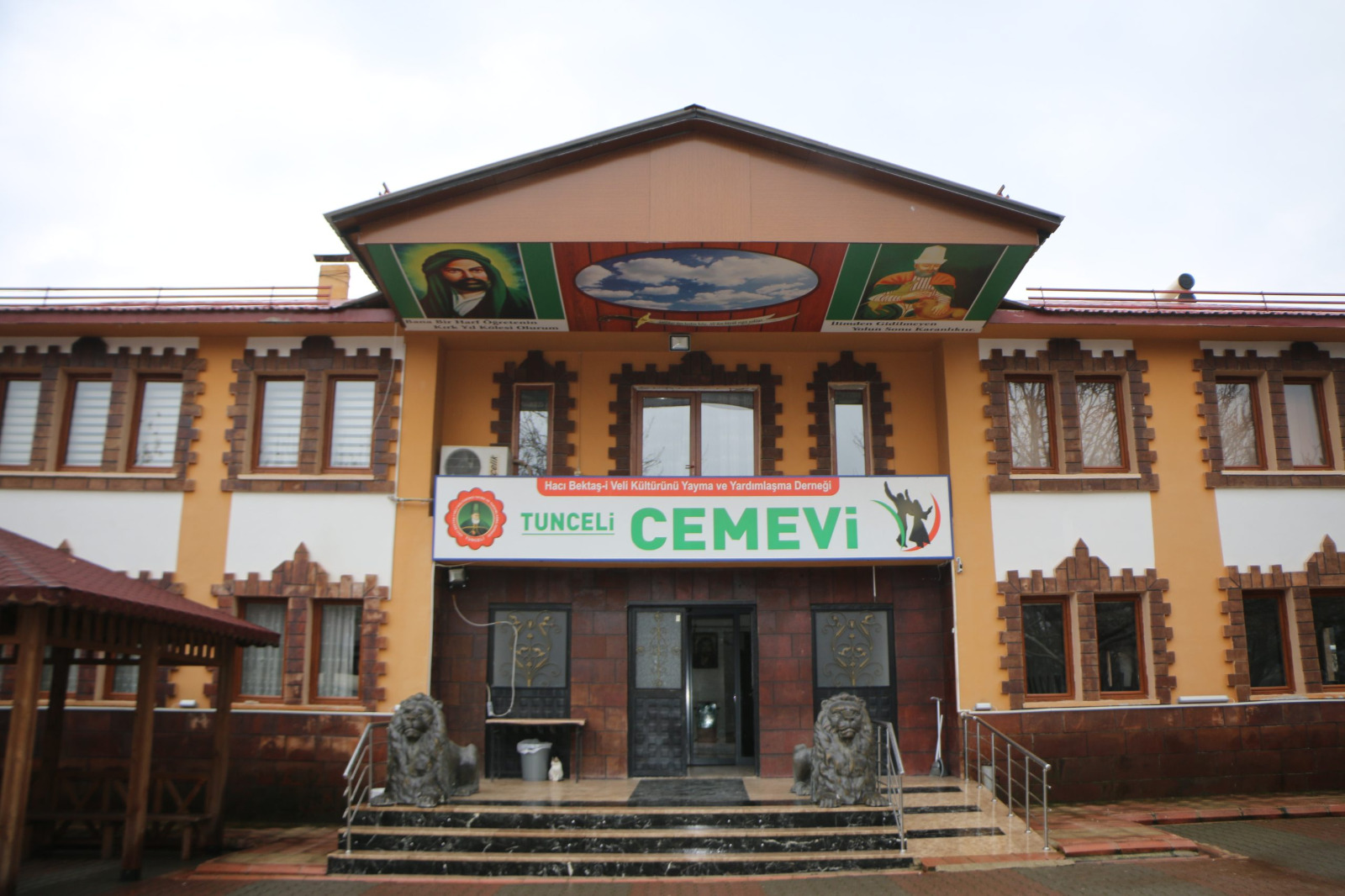
Although the government has provided financial support to Alevi houses of worship since 2022, those institutions have not been explicitly recognized as places of worship. Some Alevi organizations oppose the arrangements because of concerns about government interference.
The German assessment also identifies continuing problems involving Christian communities, including restrictions on establishing churches, training clergy and obtaining legal recognition. It notes that the Halki Orthodox Theological Seminary on Istanbul’s Heybeliada island has remained closed since 1971.
Turkey’s compulsory religious education remains predominantly based on Sunni Hanafi teachings despite changes following European Court of Human Rights rulings, the report says. It also cites credible reports of discrimination against people outside Sunni Islam in public sector recruitment.
The document links restrictions on religious freedom to greater problems involving the rule of law, judicial independence and government repression. It says religious minorities continue to face hate crimes and discriminatory treatment while acknowledging some improvements in property restitution and the restoration of historic churches under Erdogan’s government.
The report devotes specific attention to followers of the Gülen movement, inspired by Turkish Muslim cleric Fethullah Gülen, who died in the United States in October 2024.
Turkish authorities have targeted the movement since corruption investigations in December 2013 implicated Erdogan, members of his family and his political circle. The crackdown intensified after a failed military coup on July 15, 2016. The Turkish government designates the movement as a terrorist organization, a classification rejected by the movement and not internationally recognized.

The German government states that nongovernmental organizations have reported abductions, mistreatment and torture involving people targeted in the crackdown. The assessment distinguishes the treatment of Gülen followers from that of other Islamic religious communities whose activities Turkish authorities generally tolerate despite legal restrictions.
The findings come amid continuing prosecutions nearly a decade after the coup attempt. According to figures released by Turkey’s Justice Ministry, authorities have initiated legal proceedings against 720,338 people over alleged Gülen connections since 2016, securing 127,102 convictions. Another 83,404 people remain under investigation or prosecution while 10,485 are still imprisoned.
The arrests have continued in recent weeks. On November 20 Turkish courts ordered 47 people jailed pending trial following police raids across 28 provinces. The Interior Ministry said 83 suspects had been detained over 10 days, including people accused of providing financial assistance to families of movement members in prison.
In a September 2023 judgment the European Court of Human Rights ruled that Turkey violated fundamental rights by treating use of the ByLock application, a messaging app, as sufficient evidence of terrorist organization membership without an individualized assessment.
A July 2026 report by the Stockholm Center for Freedom examined findings issued by United Nations human rights mechanisms concerning Turkey’s crackdown. It identified 25 opinions by the United Nations Working Group on Arbitrary Detention finding arbitrary detention in cases involving alleged Gülen connections. In at least seven opinions, the working group warned that the systematic criminalization of lawful activities could, under certain circumstances, amount to crimes against humanity.
Human Rights Watch documented 11 cases of torture or mistreatment in police custody and five suspected enforced disappearances in an October 2017 report. The organization described beatings, threats and coercive interrogations involving detainees accused of terrorism offenses or connections to the attempted coup.
In July 2024 Human Rights Watch told the United Nations Committee Against Torture that it had documented additional suspected enforced disappearances in 2019 and 2020. The organization criticized Turkish authorities for failing to conduct effective investigations into credible allegations of abduction and torture.
One case involved former public employee Gökhan Türkmen, who disappeared in February 2019 and resurfaced in police custody nine months later. During a February 2020 court hearing, Türkmen said men wearing police vests had abducted him and held him for 271 days at an undisclosed location, where he alleged he was tortured and forced to sign a prepared statement.
In August 2026 opposition lawmaker Ömer Faruk Gergerlioğlu documented 73 alleged abductions and disappearances dating to 2015. His compilation included former civil servants, teachers and political activists. Among those still missing was Yusuf Bilge Tunç, who disappeared in Ankara on August 6, 2019. The United Nations Working Group on Enforced or Involuntary Disappearances transmitted his case to Turkey under its urgent action procedure.
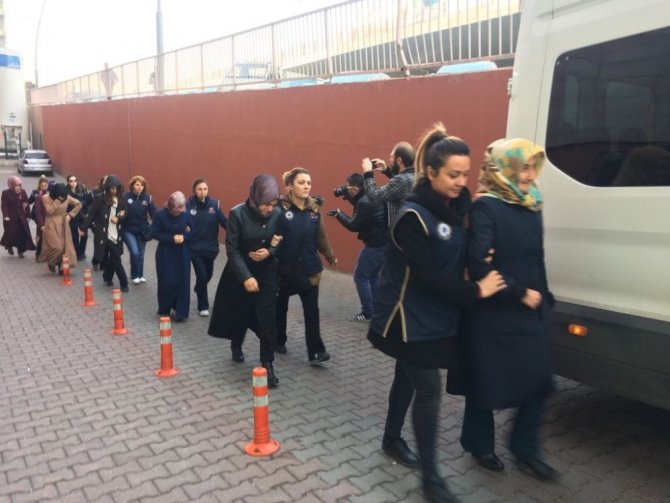
The allegations have also reached international human rights institutions. In August 2026, the United Nations Committee Against Torture asked Turkey to respond to a complaint filed by Aysun Işınkaralar, a former student dormitory director detained in May 2018 over alleged Gülen connections.
Işınkaralar alleged that police subjected her to electric shocks, strangulation, sexual harassment and a mock execution during interrogation. Medical examinations documented injuries, including scars on her ankles, while a subsequent report by the Human Rights Foundation of Turkey found her account consistent with medical and psychological evidence. Turkish prosecutors dismissed her complaint in April 2024, citing insufficient evidence.
Deaths in custody have also become the subject of legal proceedings. In a ruling issued on July 30, 2025 and communicated to the family in May 2026, Turkey’s Constitutional Court found violations of the right to life and the prohibition of torture and ill treatment in the case of teacher Gökhan Açıkkollu, who died in police custody on August 5, 2016, after 13 days of detention over alleged Gülen connections.
The court concluded that authorities had failed to protect Açıkkollu’s life and investigate allegations of abuse effectively. The United Nations Human Rights Committee had previously found rights violations in the case in October 2022.
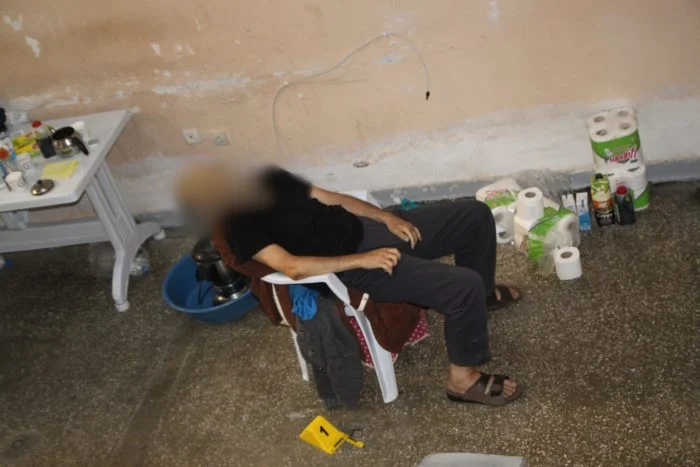
Another case involved former police inspector Mustafa Kabakçıoğlu, 44, who was found dead while sitting on a plastic chair in a quarantine cell at Gümüşhane Prison on August 29, 2020. Photographs showing his lifeless body and the conditions inside the cell prompted accusations of medical neglect. Kabakçıoğlu had been dismissed from the police force and sentenced to seven-and-a-half years over alleged Gülen connections. He had reported difficulty walking and speaking shortly before his death.
In February 2026 the International Association for Human Rights Advocacy said the United Nations Human Rights Committee had registered and communicated to Turkey a complaint concerning the death of teacher Halime Gülsu, who died in prison in April 2018. Gülsu, who suffered from lupus, had been arrested for allegedly helping families of prisoners accused of Gülen connections. Her representatives alleged that she was deprived of essential medication while incarcerated.
Concerns about medical care continued throughout 2025. Lawyer Süleyman Yıldırım, 59, died on December 8 after being released from prison in critical condition. Convicted over alleged Gülen connections, he had undergone a leg amputation and was diagnosed with lung cancer. His family accused prison authorities of delaying medical treatment.
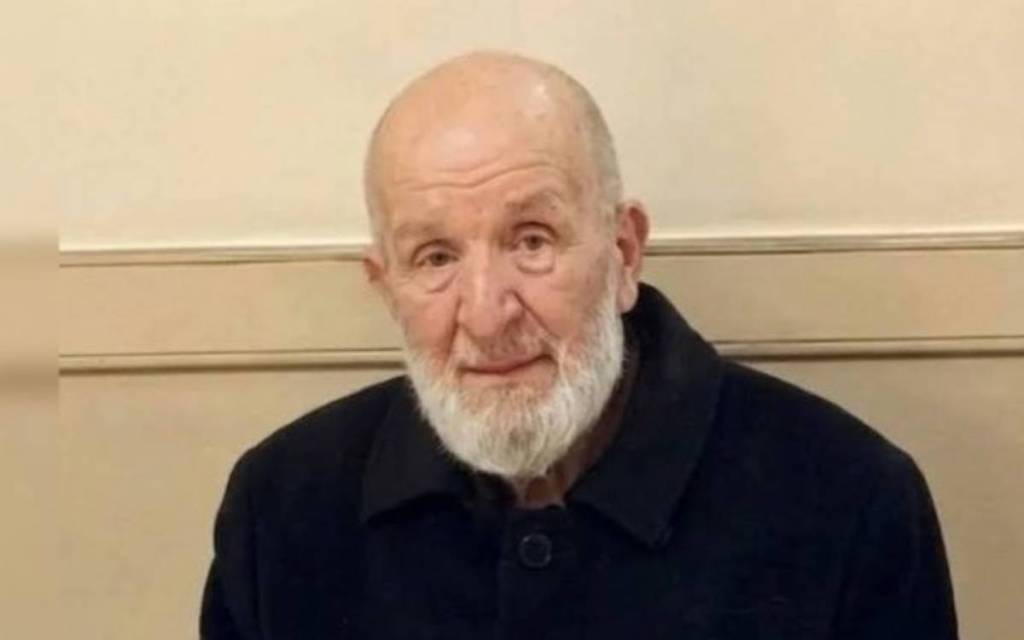
The latest reported death involving a seriously ill prisoner with alleged Gülen connections occurred on October 26, when Abdullah Tırpan, 73, died at Istanbul’s Başakşehir Çam and Sakura City Hospital after being transferred there from Metris Prison.
Tırpan was serving a seven-and-a-half-year sentence for alleged membership in the movement. He suffered from diabetes, hypertension and serious circulatory problems. Doctors amputated his left leg below the knee on October 22 after gangrene developed, but his condition deteriorated and he was put on a ventilator.
Despite repeated requests for medical release, Turkey’s Council of Forensic Medicine concluded in December 2025 that he could remain incarcerated. Medical assessments in May and June 2026 reached similar conclusions. Another examination on October 6 reportedly found no medical obstacle to his continued imprisonment.
Independent lawmaker Mustafa Yeneroğlu visited Tırpan at Metris Prison on October 9 and warned that his deteriorating condition could be fatal without urgent intervention. After Tırpan’s death, Gergerlioğlu questioned why his sentence had not been suspended despite medical reports documenting serious illness.