
Abdullah Bozkurt/Stockholm
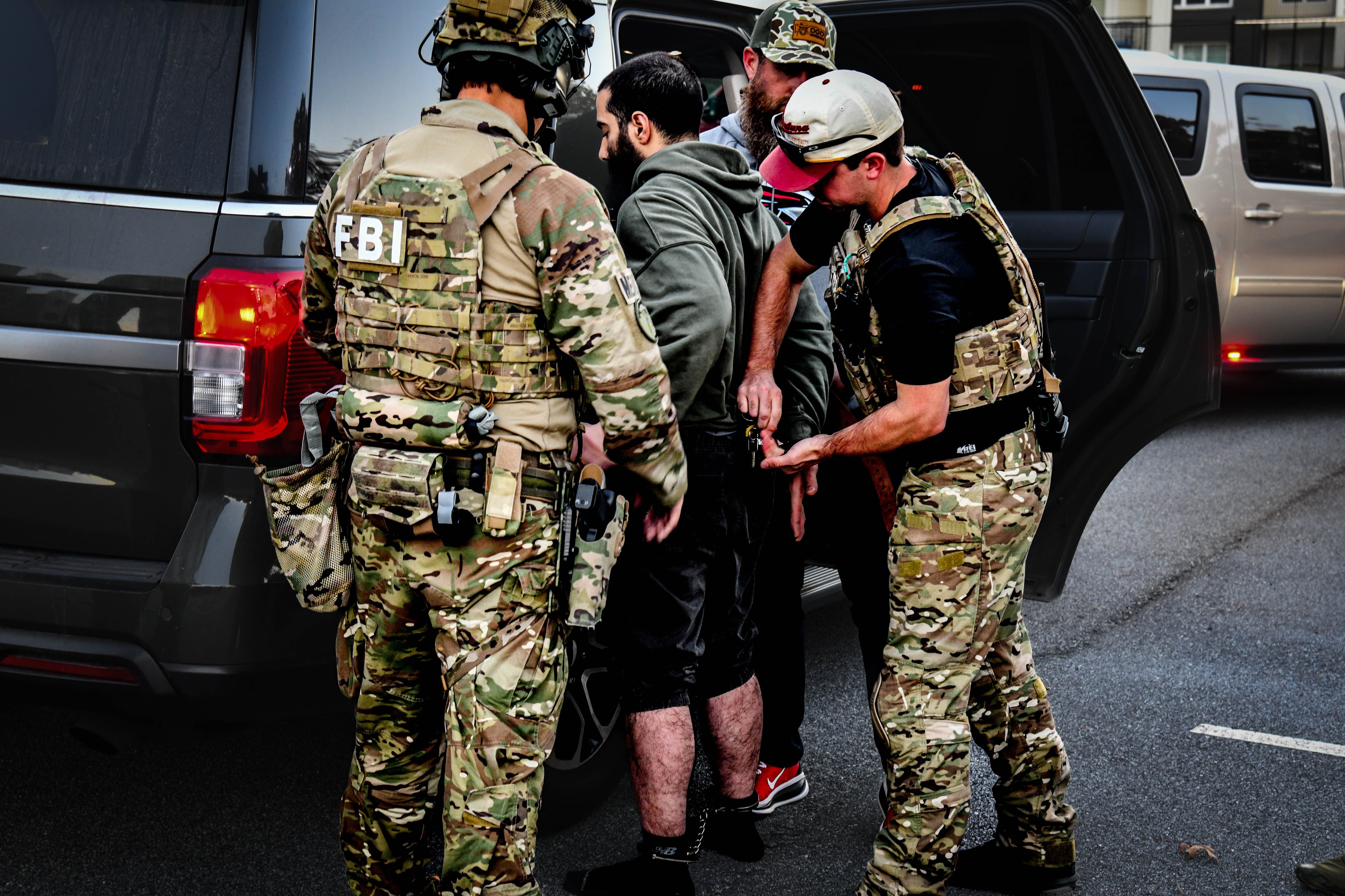
A 34-year-old American who relocated to Turkey, married a Turkish woman and spent more than two years in the country before being deported by Turkish authorities has been taken into custody by the FBI on charges stemming from an investigation into cryptocurrency payments allegedly benefiting the Islamic State in Iraq and Syria (ISIS), according to newly disclosed federal court documents.
Younes Moustafa Younes, a US citizen of Egyptian descent, was arrested by FBI agents in Georgia on November 18 following an investigation that uncovered more than $26,000 in cryptocurrency transfers allegedly linked to ISIS supporters and their families in Syria. The investigation also revealed his extensive connections to Turkey, where he established a family, attended a local mosque, advocated the establishment of an Islamic caliphate and remained for more than two years despite initially telling American border officials that he was visiting as a tourist for only a week.
The details emerged in a 34-page sworn affidavit submitted by FBI Special Agent Kate Palmquist of the Atlanta Joint Terrorism Task Force and filed in the US District Court for the Middle District of Georgia on November 19.
The affidavit provides an unusually detailed account of Younes’ relocation to Turkey, his ideological radicalization, his activities before and after his stay in the country and his eventual deportation by Turkish authorities, who classified him as a security threat but apparently opted to expel him rather than pursue criminal prosecution in Turkish courts.
The case appears to fit a broader pattern in which Turkish authorities have frequently deported foreign nationals suspected of links to ISIS and other jihadist organizations to their home countries or third countries rather than fully investigating their alleged activities and pursuing criminal prosecution in Turkey. The practice raises serious questions about Ankara’s willingness to investigate suspected jihadist networks operating on Turkish soil and hold their members accountable under Turkish law.
The scale of the practice was acknowledged by former Turkish interior minister Süleyman Soylu, who disclosed in February 2023 that Turkey had repatriated 1,126 ISIS members of European origin over the preceding five years. Turkish government figures also showed that approximately 9,000 suspected foreign terrorist fighters from 102 countries had been deported since 2011, including more than 1,100 to European Union member states.
An FBI affidavit filed in the US District Court for the Middle District of Georgia on November 19, 2026, details an investigation into Younes Moustafa Younes, an American accused of financing ISIS through cryptocurrency who spent more than two years living in Turkey before being detained and deported by Turkish authorities:
Younes was charged with international money laundering and destruction of evidence. He appeared before US Magistrate Judge Charles Weigle on November 19 and faces up to 20 years in prison on each charge if convicted.
His connections to Turkey began in September 2022, when he departed Newark Liberty International Airport aboard a Turkish Airlines flight to Istanbul. Before boarding, officers from US Customs and Border Protection questioned him about his travel plans. Younes told the officers he intended to spend approximately one week in Turkey for tourism and had made no hotel reservations. Asked where he intended to stay, he said he would figure it out after arriving in Istanbul. He also claimed to have neither relatives nor friends in Turkey and said he planned to continue on to Egypt, where he had family connections.
He informed the officers that he had purchased one-way tickets for the different legs of his journey and expected to return to the United States on September 21, 2022.
However, the FBI investigation subsequently established that Younes had no intention of making a brief tourist visit. Before leaving the United States, he had quit his job, sold his car, repaid relocation expenses to his employer and apparently withdrawn money from his retirement account.
Instead of returning as planned, he remained in Turkey for more than two years, building a new life in the country. During his stay Younes married a Turkish woman whom he said he had met through the mosque he attended. The couple subsequently had a child. The marriage and birth of his child indicated that his relocation had evolved into a long-term settlement rather than the temporary visit described to American border officials.
His American passport expired on February 6, 2025, while he was still in Turkey, and he did not renew it.
Investigators also obtained electronic communications showing that Younes had become increasingly hostile toward Western political systems and considered life in the United States incompatible with his religious and ideological beliefs.

In a WhatsApp group discussion on February 18, 2023, Younes, while living in Turkey, argued that Muslims could not fully practice their religion under democratic or other secular political systems. “We can never enjoy the full benefit of Islam if we are living under democracy, communism, socialism, etc.,” he wrote, according to the FBI affidavit.
He criticized governments across the Middle East for maintaining legal systems influenced by Western laws, arguing that retaining only some elements of Islamic law was insufficient. Younes also defended the idea of reestablishing an Islamic caliphate and criticized religious scholars who discouraged discussion of that objective.
The communications suggest that Younes regarded his relocation to Turkey as part of a broader rejection of Western society. His ability to settle in the country for more than two years, establish a family, attend a local mosque and maintain his life raises questions about whether he benefited from a network of local contacts, including individuals sympathetic to ISIS or other jihadist groups, who may have helped facilitate his stay.
Yet there is no indication in the FBI affidavit that Turkish authorities conducted a comprehensive investigation into his local connections, identified potential facilitators or examined whether individuals in Turkey had assisted his activities. Rather than pursuing criminal charges against Younes or establishing the extent of any support network surrounding him, Turkish authorities ultimately opted to deport him to the United States, leaving American law enforcement to investigate and prosecute his alleged jihadist financing activities.
The case raises further questions about whether Turkey’s reliance on deportation allows suspected extremist networks and their potential facilitators to escape meaningful scrutiny and accountability.
His radical views were not confined to political arguments. Investigators found that he promoted the teachings of Anwar al-Awlaki, the American-Yemeni al-Qaeda propagandist killed in a US drone strike in Yemen in 2011, and expressed admiration for Abdullah el-Faisal, a Jamaican extremist cleric convicted in New York in 2023 of recruiting supporters for ISIS.
Al-Awlaki’s influence has also been documented in Turkey. A previous investigation by Nordic Monitor revealed that the writings of al-Awlaki were among the jihadist books purchased by Mevlüt Mert Altıntaş, the radicalized Turkish police officer who assassinated Russian Ambassador Andrei Karlov at an art exhibition in Ankara on December 19, 2016.

According to Turkish investigative records reviewed by Nordic Monitor, Altıntaş obtained books by al-Awlaki and other prominent jihadist ideologues from the Benli Bookstore and Cultural Center in Ankara, a business operated by relatives of a convicted al-Qaeda militant.
Altıntaş had maintained contacts with individuals associated with Turkish jihadist networks, including a government-employed religious official who had served as a mentor to the assassin. Despite evidence pointing to the bookstore and his extremist contacts, Turkish prosecutors did not pursue criminal charges against several individuals whose activities had surfaced in the investigation.
Al-Awlaki’s writings were not confined to underground jihadist circles in Turkey. A separate Nordic Monitor investigation published in June 2019 revealed that his essay, “44 Ways of Supporting Jihad,” translated into Turkish as “Cihadı Desteklemenin 44 Yolu,” was openly advertised for sale on the major Turkish e-commerce platform N11.com despite a judicial prohibition.
The Turkish translation was published by Küresel Kitap, a publisher identified in Nordic Monitor’s reporting as a distributor of literature associated with al-Qaeda and ISIS. A court in the southern Turkish province of Mersin had banned the book on February 2, 2016, under decision No. 2016/873, ordering the removal and confiscation of copies. Nevertheless, the book remained available for purchase online when Nordic Monitor examined the listings in May 2019.
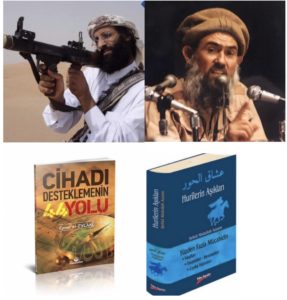
The continued availability of al-Awlaki’s writings in Turkey illustrates how jihadist propaganda has circulated through commercial and religious channels despite formal restrictions imposed by Turkish courts. The Younes investigation adds another example of the cleric’s continuing influence, with FBI investigators documenting that the American suspect promoted al-Awlaki’s teachings both before his relocation to Turkey and after his deportation.
The connection extends beyond ideological radicalization to the financing of ISIS. In September 2024 Nordic Monitor reported on a separate FBI investigation involving Mohammed Azharuddin Chhipa, an American resident accused of channeling cryptocurrency to ISIS members in Syria through intermediaries operating in Turkey.
An FBI affidavit in the Chhipa case revealed that investigators had recovered extremist material, including images containing quotations from al-Awlaki, during a search of the suspect’s electronic devices. Financial records and intercepted communications also showed that Chhipa transferred cryptocurrency to Turkey, where intermediaries allegedly converted the funds into cash before arranging their delivery to ISIS-linked recipients in Syria.
The earlier investigation established a documented connection between the circulation of al-Awlaki’s propaganda among US-based ISIS supporters and a cryptocurrency financing network using Turkey as an intermediary. Although the FBI affidavit in the Younes case does not establish that his own cryptocurrency payments passed through Turkey, the parallels underscore the recurring appearance of the same extremist ideological material and fundraising methods in separate American counterterrorism investigations.
In communications with an associate, Younes also praised Islamist fighters and encouraged the associate to seek a wife from families affiliated with religious scholars or militants. FBI investigators interpreted some of his comments as references to ISIS fighters.
The court document shows that Younes continued communicating with associates in the United States while residing in Turkey, including through encrypted WhatsApp messages. One such associate attracted the attention of US authorities after arriving at John F. Kennedy International Airport from the United Arab Emirates on July 5, 2024. A border search of the associate’s telephone yielded messages that became evidence in the investigation.
Those messages revealed that Younes had encouraged financial contributions to families associated with ISIS fighters, circulated extremist religious material and shared videos from charitable campaigns operating in conflict zones.
In June 2023, while Younes was living in Turkey, he sent the associate promotional material from a Turkish organization identified as Dar’ul Hayr Sosyal Yardımlaşma Platformu (Dar’ul Hayr Social Assistance and Solidarity Platform). One video depicted women and girls at the al-Hol camp in northeastern Syria, where thousands of family members and supporters of ISIS fighters had been held following the collapse of the terrorist organization’s territorial control.
The footage showed women distributing cash to girls and contained a message thanking a donor in Germany. Younes also shared videos featuring children in Afghanistan and what appeared to be a charitable water project in Africa. The FBI interpreted these exchanges, together with his other statements, as evidence that Younes encouraged financial support for ISIS-affiliated families as an alternative to personally joining the organization’s armed ranks.
Dar’ul Hayr has maintained a presence on Facebook since May 2021. The group uses Turkish-language social media content to promote fundraising campaigns associated with communities and families linked to jihadist movements, including ISIS. A review of the platform’s Facebook activity by Nordic Monitor found that it solicits donations from supporters in Turkey and abroad, including the United States, Europe and Australia, and publicizes aid operations extending to Syria, Iraq, Afghanistan, Bangladesh, Palestine, Uzbekistan and several African countries.

Dar’ul Hayr has also used its Facebook account to circulate videos featuring two prominent radical Salafist clerics, Murat Gezenler and Halis Bayancuk, better known as Abu Hanzala. Both have faced investigations over alleged links to al-Qaeda and ISIS, and their respective networks were identified in a confidential Turkish military intelligence assessment previously obtained by Nordic Monitor.
Bayancuk, who has repeatedly been arrested and prosecuted on terrorism-related charges, was released from prison in July 2023. He subsequently resumed his public preaching, publishing religious lectures and promoting his Tevhid ve Sünnet movement through online platforms and public appearances. In November 2025 he was detained again in connection with an investigation into a deadly ISIS-inspired attack on a police station in Izmir but was released.
Gezenler, a Konya-based radical Salafist preacher and publisher previously investigated over alleged connections to al-Qaeda and ISIS, was arrested again on September 25, 2026, as part of an ISIS-related investigation. He had initially been detained in late June and released on July 2.
By sharing videos featuring these clerics alongside its international fundraising appeals, Dar’ul Hayr promoted religious figures associated with Turkey’s radical Salafist movement. The posts provide an additional indication of the ideological environment surrounding the platform, which was promoted by Younes while he was living in Turkey.
Younes’s stay in Turkey ended abruptly on February 25, 2025, when Turkish authorities detained him. Younes’s detention was part of a nationwide crackdown that was announced by then-interior minister Ali Yerlikaya, who said police had detained 92 suspected ISIS members in coordinated operations across 16 provinces.
The investigation targeted an alleged ISIS-linked network accused of raising money under the guise of religious donations, spreading extremist propaganda and attempting to facilitate the illegal entry into Turkey of ISIS members from camps in conflict zones.
Turkish authorities round up ISIS suspects from time to time, often after growing international pressure on the government of Islamist President Recep Tayyip Erdogan, only to let most of the detainees go without formal charges. Only very few ISIS suspects were successfully convicted and sent to prison on serious terrorism charges. The Erdogan government has not revealed how many ISIS militants were actually convicted and serving time in prison despite numerous motions submitted by opposition lawmakers in the Turkish Parliament.
The Younes case fits the same pattern. Instead of facing judicial procedures that may have led to his trial and possibly conviction in Turkey, he was put in administrative detention at a removal center for three months and eventually deported. He was assigned a security designation G87, which means he is barred from entry to Turkey under a national security classification.
Younes later described his detention in Turkey to a confidential FBI source during a meeting near Lawrenceville, Georgia, on May 13, 2026. Younes told the confidential source that he initially considered remaining in detention but, after consulting his family, concluded that he could not financially support his wife and child while confined in the deportation center.
The circumstances surrounding Younes’s deportation suggest that he ultimately accepted removal to the United States rather than pursuing a prolonged legal challenge in administrative courts against the Turkish authorities’ decision.
His apparent decision not to contest deportation contrasts with cases in which foreign nationals suspected of ISIS affiliation have challenged deportation orders before Turkish administrative courts, sometimes successfully securing rulings that allow them to remain in the country. Suspected jihadists have also benefited from legal assistance arranged through ISIS-sympathetic networks in Turkey.
His deportation brought an end to more than two years of residence in Turkey. He arrived at Newark Liberty International Airport on May 16, 2025, and initially moved into a relative’s residence in North Brunswick, New Jersey.
The Turkish episode is particularly significant because Younes had already come to the attention of the FBI years before his move. In mid-2020 American investigators discovered that he had accessed ISIS propaganda online. During an interview on September 28, 2020, Younes acknowledged viewing the material but denied any sympathy for radical Islam.
He claimed that he was merely educating himself about international developments and wanted to marry, raise a family and lead a peaceful life. He also insisted that he would not entertain requests to provide financial support to individuals associated with extremist websites.
However, financial records subsequently obtained by the FBI revealed that between December 14, 2021, and April 22, 2022, while still residing in New Jersey, Younes allegedly transferred approximately $9,206 through 11 cryptocurrency transactions to addresses associated with a fundraising campaign called The Forgotten Ones.
The campaign solicited donations for wives and families of ISIS fighters living in camps in northeastern Syria, particularly al-Hol. Most of the transfers were made in amounts of exactly $900, with two smaller transactions, and investigators found that Younes used the alias “Dominic Moras” to conduct the payments.
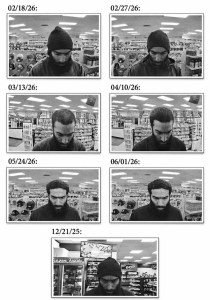
FBI agents also obtained surveillance photographs from cryptocurrency ATMs showing Younes conducting several transactions while wearing a face mask. Investigators considered the mask suspicious because other communications showed that Younes had questioned the seriousness of the COVID-19 pandemic. They concluded that he may have worn it to conceal his identity from surveillance cameras.
These payments preceded his relocation to Turkey, showing that his alleged financial connections to ISIS-affiliated networks were already established before he settled there. The affidavit also highlights Turkey’s relevance to ISIS cryptocurrency financing more broadly, citing the US Treasury Department’s 2022 National Terrorist Financing Risk Assessment.
The Treasury report described how ISIS supporters in Syrian displacement camps solicited donations through social media under the appearance of humanitarian relief and transferred funds using money remitters, informal brokers and cryptocurrency services.
According to the assessment, virtual assets were sometimes transferred directly to ISIS supporters in northern Syria or routed indirectly through Turkey, where the terrorist organization could access funds through cryptocurrency trading platforms. The FBI included this assessment to explain how seemingly charitable cryptocurrency contributions could ultimately benefit ISIS members and their families.
Following his deportation, Younes allegedly resumed sending substantial sums through cryptocurrency ATMs in Georgia. Between December 21, 2025, and June 10, 2026, investigators documented another 11 transactions totaling approximately $16,807. The FBI said he used six different secondary telephone numbers during these transactions, none registered in his real name.
A $900 payment made on May 6, 2026, through an Athena Bitcoin ATM in Royston, Georgia, was traced to a cryptocurrency wallet owned by an Iraqi national identified as Intisar Sheet Abdullah. Investigators found that the receiving wallet had previously been accessed from several Syrian cities, including Damascus, Aleppo and Tartus. The two sets of alleged transactions, totaling approximately $26,013, formed the basis of the US government’s assertion that Younes had provided more than $26,000 in financial support to individuals and networks associated with ISIS.
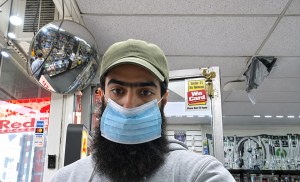
An FBI confidential source who maintained contact with Younes from November 2025 through October 2026 obtained additional statements explaining his motivations. During a June 8, 2026, conversation Younes said he personally knew families of militants belonging to the Islamic State. He specifically distinguished those militants from members of Hamas and other organizations, identifying the people he wished to support as fighters seeking to establish Islamic law.
He also explained the mechanics of his financial transfers, describing how he obtained cryptocurrency wallet addresses from overseas contacts and used intermediaries to route money to intended recipients. Younes also told the source that he regularly purchased disposable telephones and destroyed them by submerging electronic components in saltwater.
Investigators found evidence consistent with that account when they searched his residence on November 18. They discovered approximately three dismantled cellular telephones submerged in an unidentified liquid inside a coffee container. At least one telephone had been smashed and an identifying number had been removed from another device.
Agents also found a paper shredder inside a shower, surrounded by liquid and shredded documents. His mother told investigators that Younes believed soaking shredded paper in water would remove the ink and prevent the recovery of information.

The affidavit further reveals that Younes associated with individuals previously convicted of terrorism financing. During surveillance in March and April 2026, FBI agents observed him interacting at the Al-Quba Mosque in Sugar Hill, Georgia, with Sultane Salim and his brother Asif Salim. Both men had previously pleaded guilty in a terrorism financing case involving efforts to conceal payments to al-Qaeda propagandist Anwar al-Awlaki. The FBI cited these contacts as further evidence of Younes’s continued association with individuals linked to extremist causes after his return from Turkey.
The case underscores the difficulties facing law enforcement agencies in tracking transnational extremist financing conducted through cryptocurrency, particularly when suspects move between countries, use aliases and disposable telephones and disguise financial support for militant networks as humanitarian assistance.
It also illustrates the role Turkey can play in the movement of foreign nationals suspected of ISIS affiliation, particularly given its geographic proximity to Syria, pro-jihadist officials in the Islamist Erdogan government and its established position in regional financial and migration networks.
The case against Younes is being prosecuted by federal attorneys in Georgia and New Jersey, working with the Justice Department’s National Security Division. As the proceedings move forward, additional evidence may emerge that sheds further light on Younes’s connections in Turkey, the individuals or networks that may have facilitated his prolonged stay and the country’s role in the broader transnational financing and support networks associated with ISIS.