

Levent Kenez/Stockholm
The European Union’s emerging “Made in EU” industrial policy is set to deepen Turkey’s integration into European supply chains while simultaneously forcing Ankara to bring its public procurement system closer to EU standards, showing the growing political and economic implications of the bloc’s new industrial strategy.
The policy, part of the European Commission’s proposed Industrial Accelerator Act, aims to strengthen Europe’s manufacturing base and reduce dependence on global competitors such as China and the United States. It introduces a new principle of European preference in public procurement and state aid, directing taxpayer-funded spending toward products manufactured within the EU or within closely integrated economic frameworks.
While the initiative primarily targets EU member states, draft provisions indicate that Turkey could be effectively included due to its existing customs union with the bloc. However, participation comes with conditions. Under the proposal, countries benefiting from the policy must provide reciprocal access to their own public procurement markets, meaning Turkey may have to adjust its rules for public tenders to align more closely with EU standards.
The move reflects the complex trade-off facing Ankara: maintaining privileged access to the EU’s industrial ecosystem while accepting deeper regulatory alignment with European economic rules.
The initiative was previously debated under the name “Made in Europe” but has now been officially renamed “Made in EU.” According to the proposal, content originating from countries that have a free trade agreement or customs union with the EU or that are parties to the World Trade Organization’s Government Procurement Agreement, may be treated as being of EU-origin under certain conditions.
Under the EU–Turkey customs union, Turkey is expected to take part in the European Union’s “Made in EU” initiative despite not being an EU member state:
This framework effectively brings Turkey into the picture because of the EU–Turkey customs union. However, the proposal explicitly ties this recognition to the principle of reciprocity in public procurement.
That condition could require Turkey to open parts of its public procurement market more fully to European companies and adapt regulatory procedures to EU standards. Analysts say this represents a significant policy concession by Ankara in exchange for remaining integrated in European industrial supply chains.
Turkish Trade Minister Omer Bolat confirmed that consultations between Ankara and Brussels resulted in draft provisions acknowledging that goods produced within the customs union could be treated as being of EU-origin under the new framework.
“The recognition of the customs union within this policy framework is an important step for the continuity of investments and the competitiveness of European value chains,” Bolat said.
The Industrial Accelerator Act is designed to reinforce Europe’s manufacturing capacity while supporting the transition toward low-carbon technologies. European Commission officials say the plan aims to increase the share of industry in the EU economy from around 14 percent today to roughly 20 percent by 2035.
Public procurement is expected to play a central role in achieving that goal. Governments across the EU collectively spend more than €2 trillion annually through public tenders, giving policymakers a powerful tool to steer demand toward domestic manufacturing.
Under the proposed rules, public procurement and subsidy programs would introduce targeted and proportionate requirements for low-carbon products manufactured in Europe. The conditions will initially apply to strategic sectors such as steel, cement, aluminum, automotive manufacturing and net-zero technologies.
The scope of the initiative is broad. Energy-intensive industries including aluminum, cement, steel and chemicals are covered, as well as automotive production, electric and rechargeable vehicles, trucks and buses, batteries, wind turbines, electrolyzers, heat pumps, photovoltaic systems and nuclear technologies.
The legislation also introduces new requirements for large investments in sectors where global production is heavily concentrated in a single country. If more than 40 percent of global capacity is controlled by one external country, investments exceeding €100 million could face additional conditions.
Such projects would need to demonstrate that they create high-quality jobs, support innovation and growth, transfer technology and comply with local content rules that generate tangible value within the European industrial ecosystem.
Although the proposal does not explicitly mention China, European officials widely acknowledge that the measures are partly aimed at reducing dependence on Chinese supply chains in strategic industries such as batteries, solar panels and electric vehicles.
For Turkey, the policy arrives at a time when the country has become deeply embedded in European manufacturing networks. Over the past two decades Turkish factories have evolved into critical suppliers for European industries through the EU–Turkey customs union agreement, which entered into force in 1996. Turkish manufacturers produce a wide range of components and finished goods for European markets, particularly in automotive manufacturing, machinery, steel production and textiles.
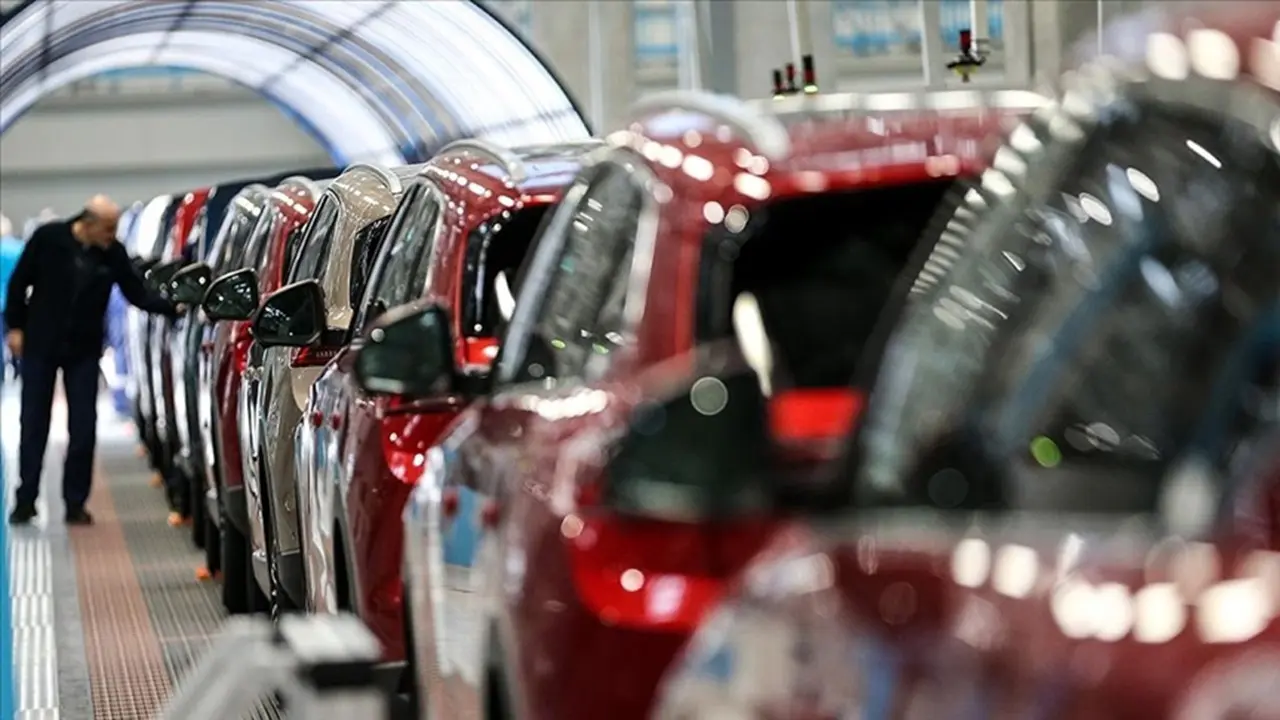
Automotive supply chains illustrate the scale of integration. Components produced in Turkey often travel across multiple European borders during the production process before final assembly, making rigid definitions of origin increasingly difficult to apply.
European manufacturers had warned that excluding Turkey from the “Made in EU” framework could disrupt those supply chains and increase costs. Companies would either have to relocate production back into EU member states or redesign complex cross-border production networks.
The compromise emerging in the draft legislation reflects those concerns. By recognizing customs union partners within the framework, the EU preserves existing industrial linkages while maintaining the political objective of strengthening domestic production.
At the same time, the policy may gradually pull Turkey closer to the EU’s regulatory orbit. Participation in the European industrial ecosystem requires compliance with EU environmental, technological and supply chain standards. These requirements are closely tied to broader EU policies such as the Net Zero Industry Act and the Clean Industrial Deal, which aim to accelerate decarbonization across European manufacturing.
For sectors such as automotive production, this means meeting increasingly strict emissions targets and adapting supply chains to support the transition toward electric mobility and clean manufacturing technologies.
Another pillar of the EU’s industrial strategy is the creation of a European Critical Raw Materials Center designed to coordinate joint purchasing and strategic stockpiling of key materials used in technologies such as batteries, defense systems and semiconductor chips.
Taken together, these policies represent a broader shift in Europe’s economic strategy toward what policymakers describe as “open strategic autonomy.” The concept seeks to maintain open trade while reducing vulnerabilities in key industrial sectors.
The “Made in EU” proposal has nonetheless triggered significant debate within the bloc. France has been among the strongest supporters of the initiative, arguing that Europe must respond to aggressive industrial policies in the United States and China by strengthening its own domestic manufacturing base.
Other countries, including Germany and several northern European member states, have expressed concerns that strict local-content rules could raise procurement costs and reduce competition.
Germany in particular has advocated a broader “Made with Europe” concept that would include trusted trading partners such as Turkey and the United Kingdom more explicitly within the industrial framework.
The compromise currently under discussion reflects these competing positions. While the initiative emphasizes European production, it allows participation by closely integrated partners through trade agreements and reciprocal procurement access.
For Turkey, that compromise preserves access to one of its most important economic relationships but also signals that deeper integration with the EU will increasingly depend on regulatory convergence.
The Industrial Accelerator Act must still be part of negotiations between EU member states and the European Parliament before becoming law, and significant changes could still occur.