
Levent Kenez/Stockholm
A confrontation between a school director and students at a Turkish-run private school in Albania has triggered public backlash and renewed scrutiny of the Turkish government-backed Maarif Foundation, a global education network operating across dozens of countries.
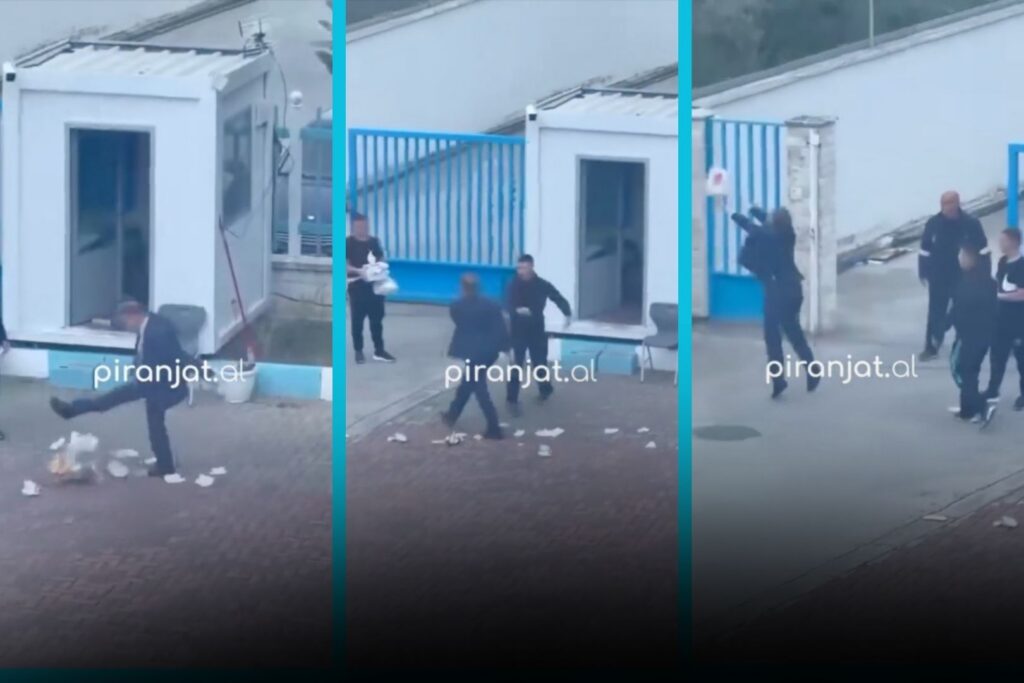
Video footage recorded at the Maarif Elbasan campus shows the school’s director, Turkish national Fatih Konuksever, taking food from students near the entrance and throwing it away, at times kicking it beyond the school grounds. In several instances, he appears to aggressively make physical contact with students while attempting to enforce school rules banning outside food.
The footage, first published by Albanian media, quickly spread online and prompted widespread reaction. Parents, students and former educators condemned the behavior and questioned how school leaders are vetted.
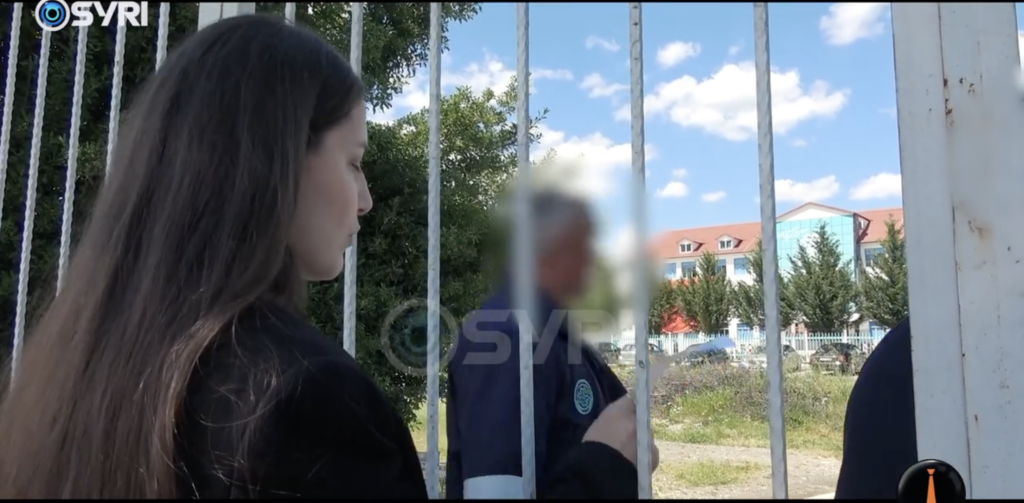
According to Albanian media reports, the incident was not isolated. Students alleged that the director has repeatedly confiscated food ordered from outside vendors, effectively forcing them to rely on the school cafeteria and pay for their meals. Some students described a school environment in which they feel pressured to comply with administrative decisions without objection.
The school issued a written statement shortly after the video surfaced, presenting its version of events and framing the actions as enforcement of internal regulations. The statement did not directly address the physical interaction captured in the footage.
Journalists who visited the campus two days later observed heightened security at the entrance. Staff declined to provide additional comment, distributing printed copies of the same statement instead. During the visit a food delivery arrived for the students. A security guard initially blocked it while cameras were present, but after journalists left the area, a student retrieved the order and brought it inside, suggesting inconsistent enforcement of the rule.
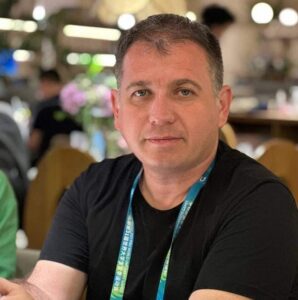
School director Konuksever previously worked as a branch manager in Turkey’s Ministry of Youth and Sports until 2024, in a department responsible for athlete training. His appointment to a leadership role in an overseas educational institution has become part of the public debate, particularly regarding professional qualifications in education management.
The controversy has attracted attention beyond this specific case to the Maarif Foundation itself. Established by the Turkish government, the foundation operates as an official entity providing education services abroad. It has been described as a key instrument of Ankara’s international policy in education and is widely seen as a flagship initiative of President Recep Tayyip Erdogan.
The foundation was created in the aftermath of a political rift between the Turkish government and the Gülen movement, a faith-based group critical of Erdogan. Maarif has since played a central role in taking over or replacing schools linked to the movement abroad. The Albanian school where the incidents occurred was previously operated by institutions affiliated with the Gülen movement before being transferred to the Maarif Foundation.
In some countries, particularly in Africa, Turkish authorities have engaged directly with governments to facilitate the transfer of these institutions to Maarif, at times involving broader diplomatic or economic engagement. Turkish officials have offered development aid, financial support and in some cases defense cooperation, including the provision of drones and other defense industry products, as part of broader bilateral agreements. Within this framework, the transfer of schools to Maarif has been pursued alongside broader state-to-state relations.
The Maarif Foundation, which also functions as a conduit for exporting political Islam overseas through its schools, is surprisingly among the beneficiaries of European Union funds. Maarif is widely described as a pet project of President Erdogan and serves as his government’s long arm abroad in delivering education services as part of a broader ideological outreach.
The foundation’s scale has expanded rapidly. It operates in 64 countries, with 517 schools, two universities, 15 education centers, 11 research institutes and 56 dormitories, serving more than 75,000 students. Its workforce totals around 13,000 employees, with fewer than 5 percent assigned directly from Turkey.
Financial allocations to the foundation have increased sharply. Funding from Turkey’s national education budget rose from 422.5 million Turkish lira (about $13 million) in 2019 to 6.7 billion lira (about $205 million) in 2025. This growth has attracted attention within Turkey’s own education system.
In official reports Turkey’s Ministry of Education has identified overlapping responsibilities between its own operations and those of the Maarif Foundation as a source of institutional discomfort and role confusion, raising concerns about duplication of duties and inefficiencies. The reports indicate that this overlap reflects deeper structural issues and has been cited as evidence that the foundation’s priorities may extend beyond core educational objectives.
Compensation policies within the foundation have also been a subject of debate. Teachers working abroad under Maarif can earn up to approximately $6,600 per month, significantly higher than salaries for teachers in Turkey. Based on current exchange rates, this represents a gap of several times the average domestic salary, creating a strong financial incentive for educators to seek positions overseas.
Data provided by the foundation show that 504 staff members from Turkey are currently assigned abroad. Despite this, criticism has focused on recruitment practices, with allegations that positions have been filled by individuals with ties to Turkey’s ruling Justice and Development Party (AKP), raising concerns about merit-based hiring.

There are also concerns about professional qualifications among some staff assigned abroad. Rapid expansion combined with high salary incentives has contributed to claims that not all personnel meet expected pedagogical standards.
Nordic Monitor previously reported that Maarif played a central role in projecting Erdogan’s ideological influence into the Balkans through education. The network, described as a flagship initiative of the Turkish government, expanded its footprint in southeastern Europe by acquiring or replacing privately run institutions and embedding itself within local education systems. High-level political involvement in these efforts, including official visits and inauguration ceremonies, underscored the strategic importance Ankara places on Maarif as part of its broader regional engagement.
The reporting also detailed how figures within the foundation have longstanding ties to political Islamist and jihadist movements and organizations such as the Foundation for Human Rights and Freedoms and Humanitarian Relief (IHH) and networks linked to Hamas, reinforcing claims that Maarif’s mission extends beyond education.
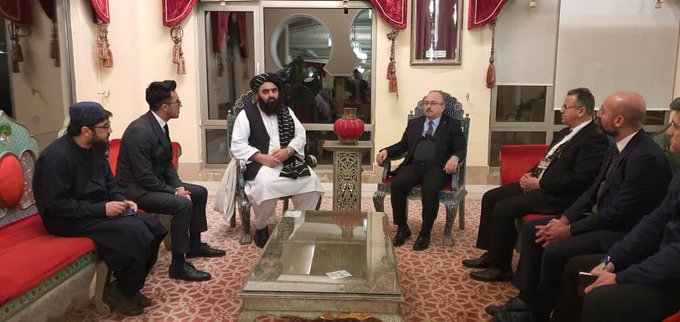
Maarif has also expanded its activities in Afghanistan through direct engagement with the Taliban administration, showing another dimension of its international operations. The foundation maintained its network of schools and dormitories in the country after the Taliban returned to power and has pledged to continue supporting the Afghan education system under the new administration. While international concerns have focused on restrictions imposed by the Taliban, particularly on girls’ education, Maarif has continued its activities without publicly challenging these policies. This approach has been interpreted as part of a broader effort by Turkey to sustain its influence in Afghanistan, with education serving as one of the key channels.