
Levent Kenez/Stockholm
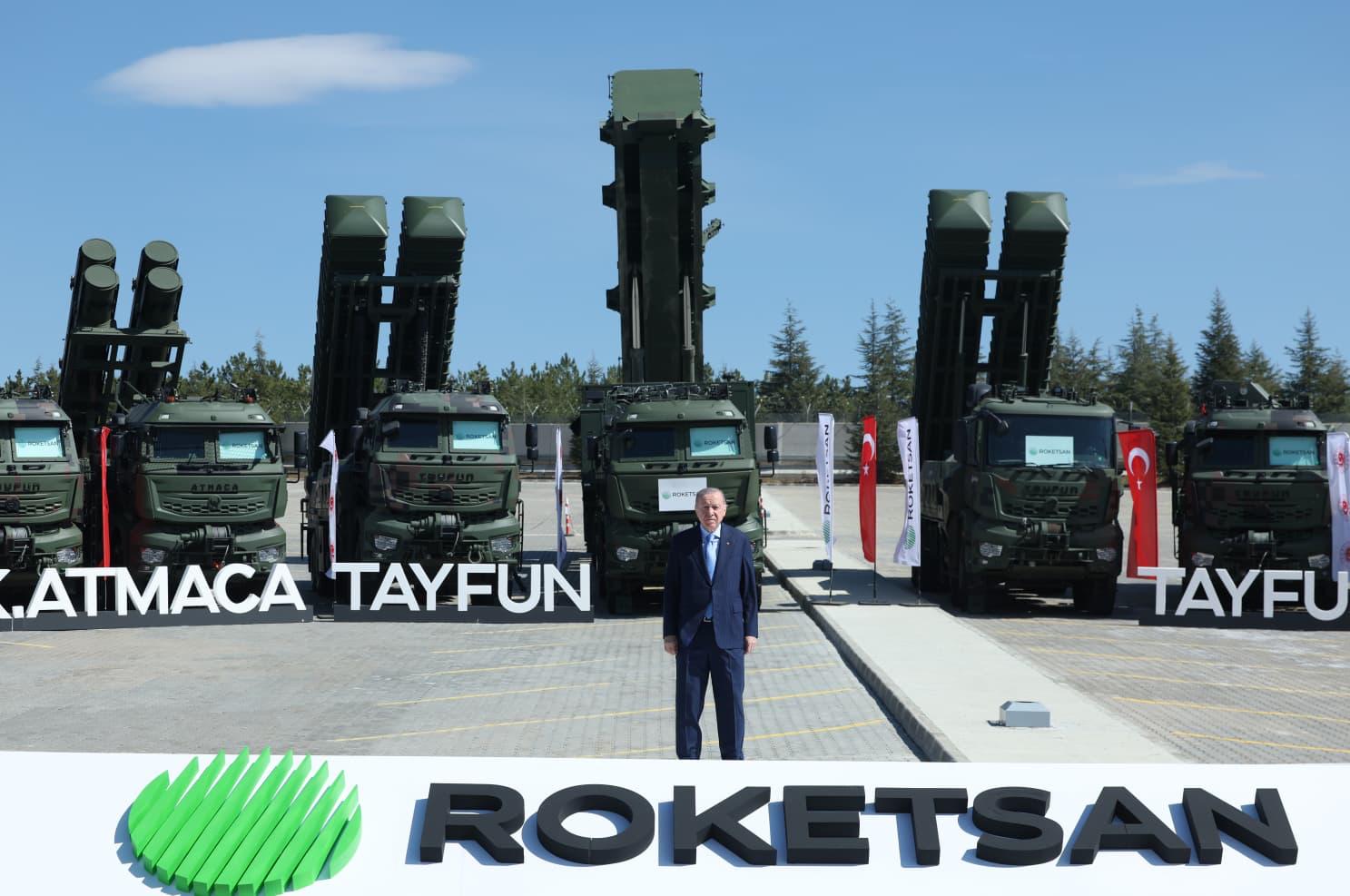
Turkish President Recep Tayyip Erdogan attended a defense industry ceremony in Ankara’s Lalahan district last Monday, marking the inauguration of new production facilities, the handover of mass-produced systems and the launch of additional infrastructure projects for the state-linked Roketsan missile manufacturer.
The event demonstrated Turkey’s ongoing focus on strengthening its domestic defense capabilities. However, a promotional video released after the ceremony has attracted significant attention for its content and tone, combining visuals from global conflict areas with political messaging and religious references.
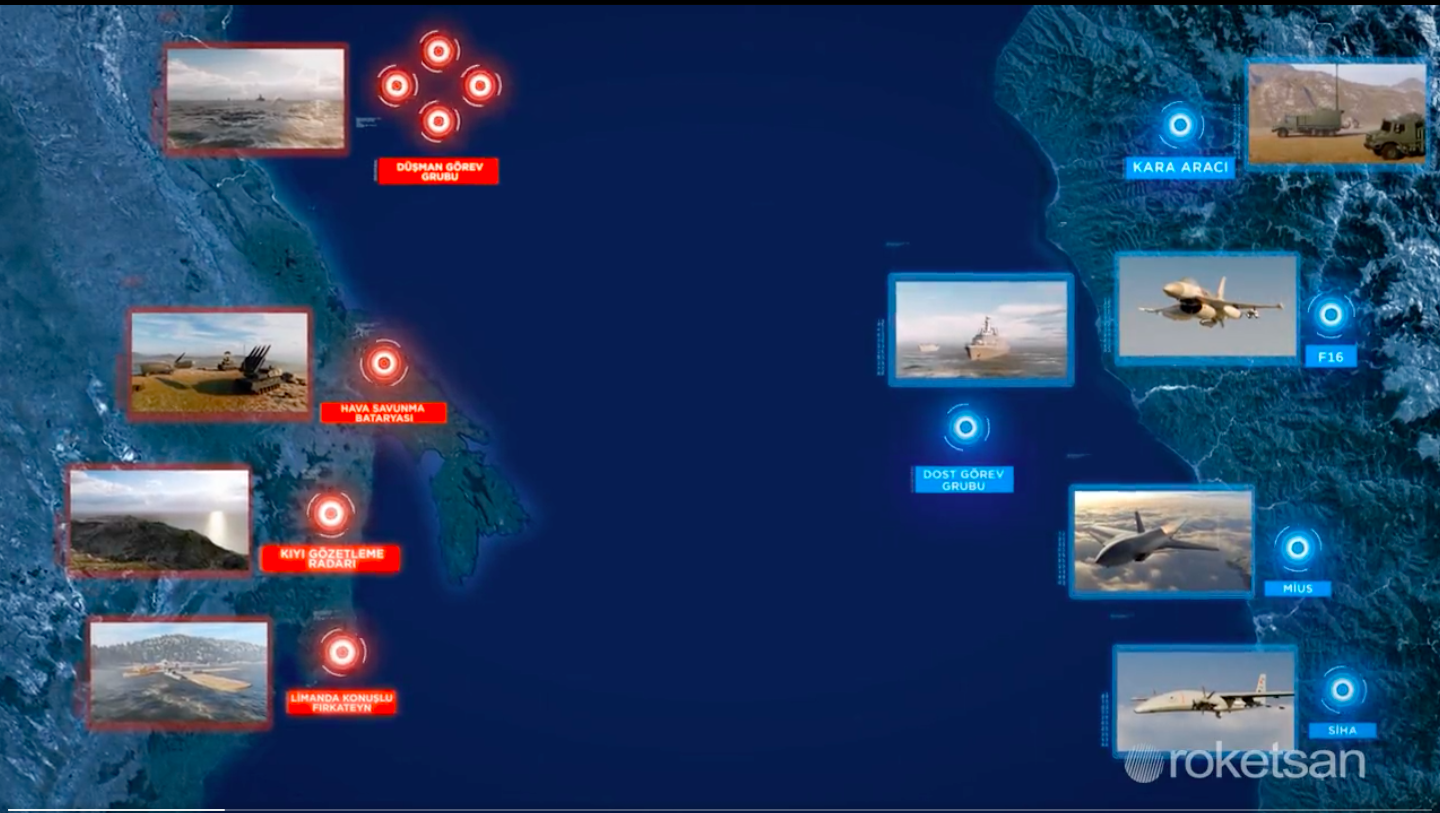
The video, produced by weapons manufacturer and defense contractor Roketsan to present its missile and rocket systems, opens with footage of Israeli military operations in Gaza. It then moves to scenes portraying conflict and humanitarian suffering in Sudan, Myanmar and Azerbaijan at various periods of time. The sequence shows civilians in wartime conditions, interwoven with explosions and military activity.
The opening segment’s focus on Gaza appears intentional, indicating a specific message. The inclusion of other conflict areas has been interpreted as an attempt to suggest a broader context beyond Israel, though the primary emphasis is widely understood to remain on portraying Israel as the central focus.
After the conflict footage, the video transitions to a compilation of Erdogan’s speeches from various occasions. These excerpts include religiously influenced expressions and calls for perseverance, such as “Do not fear, do not retreat, do not despair. Allah is with us,” reflecting themes rooted in Islamic teachings.
The video released by Roketsan, which the company later pinned on its official social media accounts:
The video also shows Erdogan reciting a well-known nationalist poem often associated with the Turkish military, describing the army as a storm rising in Allah’s name, composed of those who sacrifice their lives for a divine cause and portraying it as “the final army of Islam” tasked with ensuring the call to prayer endures.
Additional remarks attributed to the president show determination and resilience, including references to rebuilding strength despite global opposition and statements that Turkey has not yet “spoken its final word” on the world stage.
The composition and substance of the video have led some observers to characterize it as containing elements of political messaging. The combination of religious language, nationalist poetry and the president’s image at a defense industry presentation has prompted comparisons to political campaign-style material rather than traditional corporate or military communication.
Roketsan shared the video across its social media channels, where it quickly generated widespread engagement. Many users posted supportive comments with strong nationalist and religious tones, while others focused on the video’s perceived criticism of Israel, adding messages condemning Israeli military actions.
A similar case had occurred in 2022 involving Greece. Roketsan introduced its ÇAKIR cruise missile, which has a range exceeding 150 kilometers and can be launched from multiple platforms, including fixed-wing and rotary aircraft, unmanned aerial vehicles, tactical ground vehicles and naval systems. The promotional simulation video created for the missile also contained references interpreted as directed at Greece. Military experts who spoke to Nordic Monitor noted that while large defense contractors worldwide use promotional simulations for international marketing, Turkish companies have increasingly produced content perceived as targeting Greece and other neighboring states.
The Ankara-based Roketsan maintains an ownership structure dominated by national defense foundations and state-owned enterprises. According to the company’s latest corporate governance disclosures, the Turkish Armed Forces Foundation (TSKGV) holds a 55.34 percent controlling interest. Other major shareholders include the Mechanical and Chemical Industry Corporation (MKE) at 15.17 percent, ASELSAN at 14.90 percent, Vakıflar Bankası at 9.93 percent and HAVELSAN at 4.50 percent
The company currently exports to approximately 50 countries, with international sales accounting for more than 38 percent of total revenue. Official data indicate that 9O percent of the materials used in Roketsan’s production are domestically sourced, supported by a supply chain of more than 2,300 companies
The Turkish government has long emphasized developments in the defense sector as a central component of its public messaging. Erdogan has repeatedly stated that Turkey has undergone a significant transformation in domestic defense production, decreasing dependence on foreign suppliers and reinforcing national sovereignty.
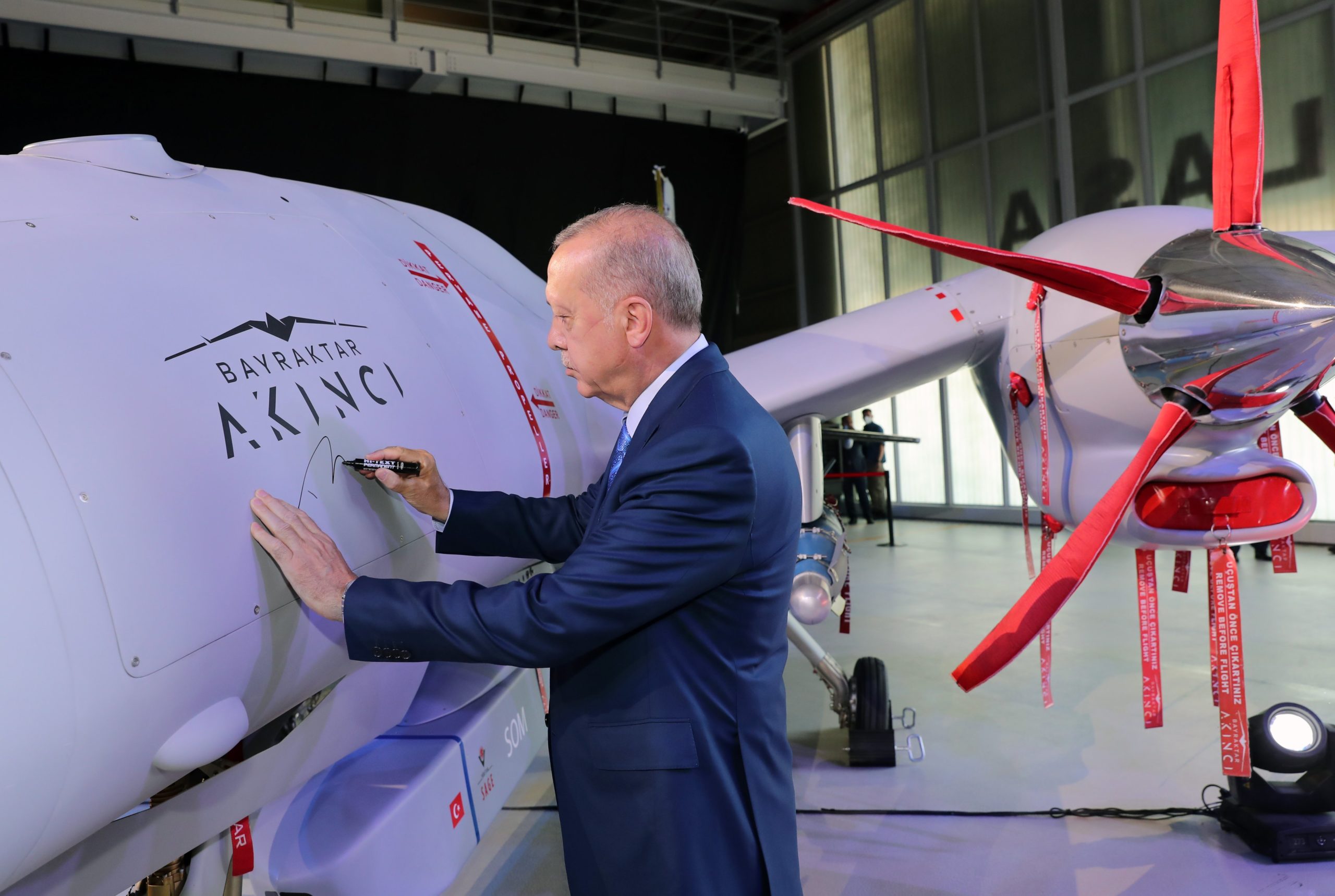
This focus is also reflected in education policy. A newly proposed draft curriculum introduced by the Ministry of Education as part of the “Education Model of the Century of Turkey” includes expanded material on domestic defense initiatives. The curriculum seeks to provide students with insight into locally developed technologies such as military drones, naval vessels and missile systems, while also addressing broader geopolitical concepts.
Among these is the idea known as ‘Blue Homeland,’ a maritime doctrine asserting Turkey’s rights in the Aegean, Black Sea and eastern Mediterranean. The curriculum also examines the country’s stance on international maritime agreements and presents these issues within a framework centered on national interests and sovereignty.
According to the ministry, the updated curriculum is intended to promote what it describes as “national consciousness” and “patriotism.” Students across multiple grade levels will study both historical and recent development efforts, including defense industry accomplishments, as part of a wider narrative about national progress.
Turkey’s drive for defense independence comes amid ongoing challenges in modernizing its military infrastructure. While the country has made significant progress in drone technology and missile systems, shortcomings remain in other areas, particularly in air power and missile defense.
The Turkish Air Force is currently navigating a period of stagnation. Following its 2019 removal from the F-35 Joint Strike Fighter program over the acquisition of Russian S-400 systems, Ankara has struggled to modernize its fighter fleet. While a deal for 40 new Block 70 F-16s was approved by the US in early 2024, deliveries have not yet begun, leaving the backbone of the air force reliant on airframes that are increasingly outclassed by fifth-generation competitors.
To bridge this capability gap, Ankara signed a multibillion-dollar agreement for Eurofighter Typhoon jets with the United Kingdom in October 2025. However, as of April 2026, none of these aircraft have entered the Turkish inventory. Domestic efforts to produce the KAAN stealth fighter are also facing challenges. Although test prototypes have already completed initial flights, the program still depends on US-supplied F110 engines. An indigenous jet engine is not expected to be operational before 2029 at the earliest.
The vulnerability of Turkish high-altitude air defense became evident earlier this month. Despite possessing the Russian S-400 system, the batteries remain largely non-operational due to US CAATSA sanctions and the risk of further decoupling from NATO’s integrated radar networks.
During a recent escalation in the Middle East, it was US and NATO naval assets rather than domestic Turkish systems that intercepted four ballistic missiles launched from Iran targeting the region. The incident showed a persistent lack of a comprehensive, multi-layered domestic air defense shield, as Turkish indigenous “Siper” and “Hisar” systems are still in the early stages of wide-scale deployment.