
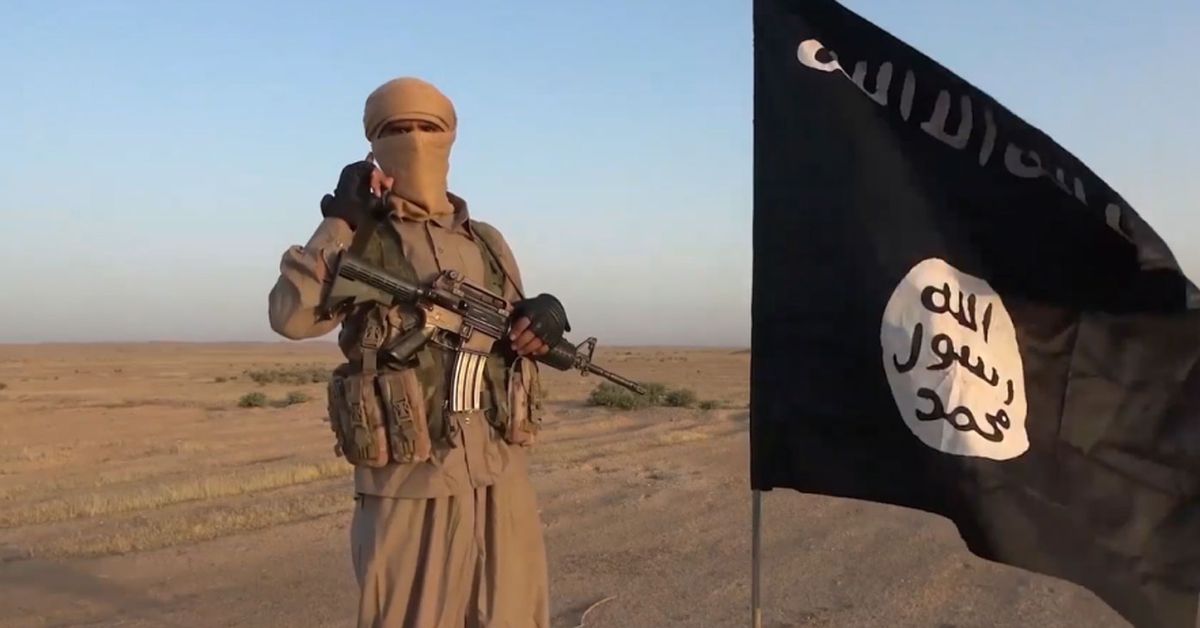
Abdullah Bozkurt/Stockholm
The Islamic State in Iraq and Syria (ISIS) terrorist network has acquired a new capability: training its militants in the use of arms and explosives in Turkish territory, rather than relying on battle-hardened operatives brought in from foreign conflict zones. A recent attack in front of a building housing the Israeli Consulate General in Istanbul demonstrates this shift.
Video footage from the April 7 terrorist attack clearly indicates that the three armed assailants had received prior training in weapons handling and assault execution. Given that none of them had spent time in conflict zones such as Syria or Iraq on behalf of the jihadist organization, the logical conclusion is that they were trained domestically in Turkey.
This marks a significant transition in ISIS operations. The group appears to have entered a new phase in which it trains recruits locally rather than dispatching them abroad for combat experience before deploying them in attacks. The implication is that ISIS is no longer satisfied with what critics describe as the Islamist government of President Recep Tayyip Erdogan’s decade-long complicity in tolerating, and at times aiding and abetting, ISIS propaganda, recruitment, funding and logistical procurement within Turkey.
Instead, the organization seems emboldened enough to establish training facilities in Turkish territory, cultivating operatives capable of handling firearms and explosives. This represents a troubling escalation and highlights a serious failure in Turkey’s counterterrorism strategy, which has largely focused on cracking down on legitimate opposition groups, journalists and human rights defenders rather than devoting sufficient resources to tracking and preventing ISIS from expanding its operational capabilities.
A review of one key piece of footage capturing the attackers’ arrival provides valuable insight into the level of planning and operational discipline exhibited during the assault. The vehicle approaches the site in a controlled and deliberate manner, with no signs of erratic driving or last-minute adjustments, indicating that the drop-off point had likely been identified in advance.
The car comes to a stop in a position optimized for a rapid exit rather than concealment, suggesting that speed of deployment was a primary consideration during the planning phase.
The attackers exit the vehicle within seconds in a coordinated, though not highly sophisticated, sequence. There is no confusion or overlap as they disembark, indicating pre-assigned seating positions and a basic understanding of roles. None of the individuals hesitate, look back at the vehicle or attempt to park it properly, implying that the car was intended as a disposable asset rather than part of an escape plan. The transition from vehicle to on-foot movement is seamless, with the group immediately advancing toward the target without pausing to regroup.
Each attacker is seen carrying a medium-sized backpack, worn securely over both shoulders in a manner that keeps their hands free. The backpacks appear similar in size and style, suggesting prior coordination. Notably, none of the individuals adjust or check their bags after exiting the vehicle, indicating that the contents had been prepared in advance and were ready for immediate use. The decision to retain the backpacks during movement — rather than discarding them — suggests they functioned as mobile load-bearing kits likely containing essential operational materials such as additional firearms, ammunition and possibly explosive devices.
Following their exit from the car, the attackers move forward in a tight cluster at a steady and purposeful pace. Their movement is linear and focused, with no attempt to disperse tactically or establish perimeter awareness. One individual, identified as Yunus Emre Sarban (32), appears to take the lead, while the others, identified as brothers Onur Çelik and Enes Çelik, follow closely behind, reflecting a basic hierarchical structure. The absence of visible communication or hand signals further suggests that roles and timing had been pre-briefed prior to the operation.
Footage from the attack shows the assailants moving through the vicinity of the Israeli consulate in a manner consistent with low-visibility urban assault tactics frequently associated with ISIS-linked operations. They were dressed in dark trousers and neutral-toned tops, with no visible insignia, uniforms or ideological markers in an apparent effort to blend into the surrounding environment and avoid early detection.
Their relatively light physical load facilitates rapid movement. Their behavior is characterized by purposeful, forward-directed motion along sidewalks and into the street, using parked vehicles, passing buses and roadside features as intermittent cover.

There is no evidence of hesitation or confusion. Instead, their uninterrupted forward momentum suggests prior reconnaissance or familiarity with the location, a conclusion later corroborated by police findings that the suspects had conducted surveillance multiple times before the attack.
Their body movements remain controlled and composed, without erratic gestures, indicating a level of discipline consistent with simulated training under stress conditions. Such composure typically reflects prior exposure to rehearsed operational scenarios.
The absence of heavy equipment or coordinated formations, combined with an emphasis on speed, concealment and minimal exposure time, points to a hit-and-move operational pattern designed to execute the attack quickly before an effective security response can be mounted.
Overall, the publicly available visual evidence suggests a basic-to-moderate level of military-style training, prioritizing mobility, coordination and surprise over sustained engagement.
The fact that the attackers made no attempt to conceal their identities, operated in broad daylight around noon time and struck one of the most heavily protected locations in Istanbul’s business and financial district represents a bold challenge by ISIS. The group appears to have orchestrated the attack not only as an act of violence but also as a signal to the Turkish government that it retains the capability to strike anytime and anywhere.
It also underscores the possibility that ISIS has access to a larger pool of recruits, potentially thousands who can be deployed as expendable operatives in similar attacks.
The rapid identification of the attackers, the swift roundup of approximately a dozen associates, the tracing of the rented vehicle used in the operation and the release of surveillance footage documenting their prior reconnaissance, all within hours of the incident, suggest that Turkish authorities were already familiar with this specific ISIS cell involved but failed to act preemptively.
The quick reaction of the police pre-deployed in and around the building that killed the lead attacker and injured the other two may have saved further causalities.
According to some security analysts, the attack raises the possibility of a clandestine understanding between elements of the Recep Tayyip Erdogan government and ISIS operatives in Turkey, an arrangement that may now be under strain as the group tests new operational ambitions.
ISIS has already established networks across nearly every province in Turkey, particularly in major urban centers such as Istanbul, Bursa, Izmir and Ankara, while Turkish authorities have largely looked the other way. Operating under dozens of legally established associations officially approved by the Interior Ministry — the very institution tasked with combating terrorist groups — ISIS has been able to draw thousands, perhaps tens of thousands, of sympathizers to its weekly sermons. Its messaging has also been amplified to a wider audience through the use of social media as a tool for radicalization by ISIS-linked groups.
Now that ISIS has begun providing military-style training to its militants inside Turkey, a new and dangerous threshold has been crossed.
The Erdogan government’s longstanding policy of turning a blind eye to ISIS activities — and at times even empowering or cooperating with such networks to advance domestic and foreign policy objectives — now risks backfiring. As the consequences of these policies unfold, Turkey may face increasing internal security threats, illustrating the adage that the chickens have come home to roost.
This problem is by no means confined to Turkey. ISIS has already demonstrated its ability to use Turkey, particularly Istanbul, as a staging ground to dispatch terrorists to Europe and other regions, channel funding and facilitate travel through the provision of documents and passports. An emboldened ISIS is likely to pose a more serious security challenge not only to Turkey but also to countries across Europe, Russia and beyond. Crackdowns on ISIS cells in foreign countries, including the United States, have repeatedly shown that operational and logistical traces of these networks often lead back to Turkey.