

Abdullah Bozkurt/Stockholm
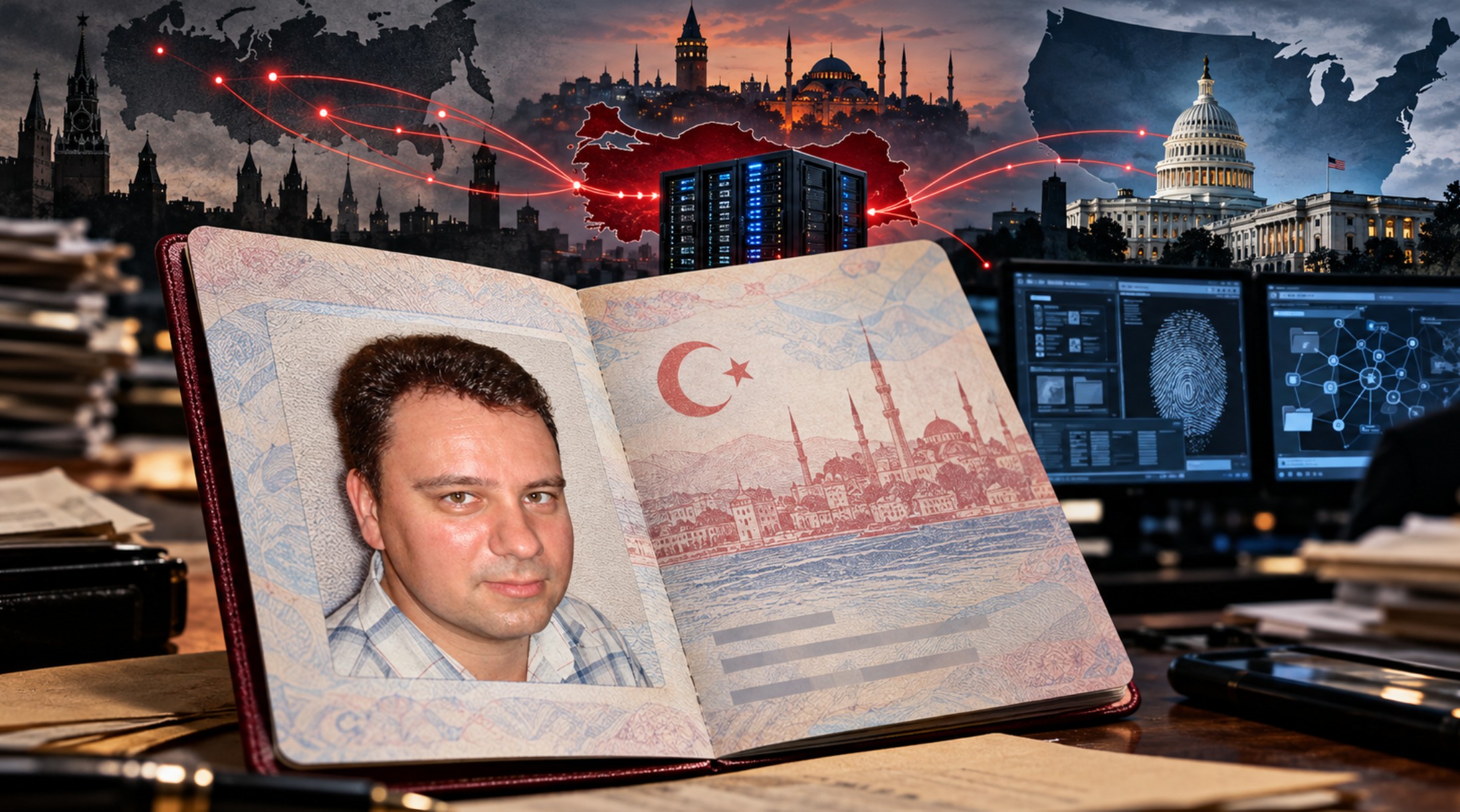
Turkey’s deliberate practice of allowing ISIS detainees to go to destinations of their choice, enabling them to roam freely and continue their jihadist activities outside of Turkey, continues to pose a national security threat for Europe, as proven in a Dutch case in which the District Court of Rotterdam sentenced a 31-year-old Tajik man to five-and-a-half years in prison for long-term membership in the Islamic State in Iraq and Syria (ISIS).
The court ruling, delivered on July 21 of this year, described in meticulous detail how the suspect’s jihadist career unfolded across multiple countries and how Turkey’s decision to release him in 2016 paved the way for his eventual establishment in Western Europe.
The man, born in Tajikistan in 1994, left his home country in 2012 to work in Russia. By 2016, however, his trajectory shifted toward Syria. On February 17 of that year, Turkish authorities arrested him in Gaziantep, a hub for would-be foreign fighters trying to slip across the border into Syria. He later admitted to Dutch undercover officers that he had sworn allegiance to ISIS before embarking on this trip and had gone to Turkey with the intention of joining the jihad.
Rather than prosecute him under Turkish laws or deport him to his home country, where he was already facing criminal charges, Turkish authorities held him briefly, released him on May 13, 2016, and transferred him to a deportation center. He was provided the option of going to a country of his choice, and just over a month later, on June 22, 2016, he arrived in Ukraine.
Within weeks of leaving Turkey, the suspect was detained again in Kharkiv at an illegal transfer point used to move Central Asian migrants toward Syria and Iraq. A Ukrainian court ordered his expulsion, but he managed to halt deportation by applying to the European Court of Human Rights (ECtHR). He was released in 2017 pending the outcome of his case at the ECtHR and moved to Kyiv, where he reconnected with extremist networks.
The Rotterdam District Court on July 21, 2025, sentenced a man to five years, six months in prison for over seven years of participation in ISIS:
In September 2019 he was arrested once more by the Ukrainian security services on an international alert from Tajikistan and held in pretrial detention until January 2020. While incarcerated, he met a fellow extremist who would later become a central figure in German-based jihadist circles.
When Russia invaded Ukraine in February 2022, the suspect and his associate found an opportunity to flee westward. His then-wife and other jihadist contacts also escaped Ukraine, eventually re-establishing themselves in Germany. On March 2, 2022, the Tajik suspect formally entered the Netherlands with his wife, and by May 24, 2022 he had obtained a Dutch residence permit valid until 2027.
It did not take too long before Dutch intelligence services flagged him for his extremist connections. In February 2023 the Algemene Inlichtingen- en Veiligheidsdienst (General Intelligence and Security Service of the Netherlands, AIVD) issued an intelligence report stating that he adhered to ISIS’s ideology, was active in extremist chats, discussed procuring firearms and wanted to take his family out of the Netherlands to undertake “something big” for Allah.
A criminal investigation launched under the code name 26Ajoux deployed wiretaps, surveillance and undercover infiltration. These operations revealed that he converted an infiltrator to Islam, making him recite the Islamic declaration of faith (the shahad), urged patience before carrying out “something with a very big impact” and praised ISIS attacks in France and Belgium.
He raised funds for ISIS detainees, including suspects arrested in Istanbul in 2023 for planning attacks on consulates, admitted to being on INTERPOL’s wanted list and told infiltrators he had sworn allegiance before going to Turkey in 2016.

The Rotterdam court concluded that his oath of allegiance, fundraising, propaganda and close ties with convicted German jihadists proved his active IS membership from 2016 to 2023.
The prosecution demanded eight years in prison. The judges imposed five and a half, citing delays that breached the “reasonable time” standard but emphasized his “serious danger” to Dutch society.
The case underscores how Turkey’s handling of ISIS detainees has continental consequences. In 2016 Ankara had the suspect in custody in Gaziantep with clear evidence he intended to cross into Syria for jihad. Instead of prosecuting him, Turkish authorities released him, enabling him to re-enter Europe and continue his extremist path.
This case is not an isolated example. Other European prosecutions have similarly traced the origins of ISIS suspects to Turkey’s permissive approach. For example German courts in Düsseldorf and Hamburg tried multiple foreign fighters who had first been detained in Turkey en route to Syria, only to be released and later make their way into Europe. Some were later convicted of planning attacks in Germany.
Several returnees involved in networks in the French cities of Paris and Strasbourg had been intercepted in Turkey but deported to third countries rather than prosecuted, allowing them to regroup. Security services in Sweden have flagged ISIS returnees who passed through Turkey after temporary detention, pointing to Ankara’s role as a critical transit point.
European counterterrorism officials privately acknowledge that Turkey’s revolving-door policy — brief detention followed by release or deportation — has repeatedly undermined their efforts to contain ISIS networks. Each time, militants who could have been neutralized in Turkey instead reappeared in EU jurisdictions, forcing national authorities to conduct long and costly investigations to mitigate the threat.
Nordic Monitor repeatedly documented that Turkey under Islamist President Recep Tayyip Erdogan has adopted a lenient stance toward ISIS detainees. In February 2023 then interior minister Süleyman Soylu disclosed that of nearly 2,000 ISIS suspects detained in one year, more than two-thirds were released by prosecutors or courts rather than prosecuted for terrorism offenses. He also revealed that over the preceding five years, Turkey had formally sent 1,126 ISIS militants of European origin back to Europe, meaning Turkey effectively exported militants rather than containing them.
An earlier exposé from a November 2024 report by Nordic Monitor detailed how Turkey’s intelligence service maintained smuggling networks facilitating the passage of ISIS operatives through Turkish routes into Greece and on into the EU. A senior ISIS figure was reported operating inside Turkey to manage such transit lines.
Another Nordic Monitor investigation uncovered that an ISIS financier acquired Turkish citizenship and ran a seemingly innocuous car rental business in Istanbul that doubled as a logistics arm for moving militants into Europe. The company provided vehicles, cover logistics and forged documents to assist ISIS fighters traveling from Syria/Iraq through Turkey and into Greek or Balkan corridors.
These reports indicate systemic patterns in which the Turkish state apparatuses (judiciary, security service and intelligence) either passively or actively facilitated ISIS transit, release or redeployment.
The Rotterdam conviction demonstrates how decisions made in Turkey nearly a decade ago continue to shape Europe’s security landscape. A man once in Turkish custody on the Syrian border was able to resurface in the Netherlands, establish a base of operations and engage in jihadist recruitment and fundraising for years. The Dutch case is therefore not only a domestic legal milestone but also a vivid illustration of how Ankara’s permissive handling of ISIS detainees reverberates across Europe’s counterterrorism frontlines.