
Levent Kenez/Stockholm
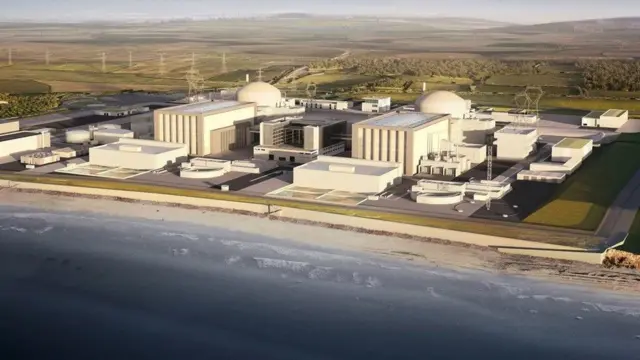
Turkey is starting to work with the United States and South Korea on the construction of its second nuclear power plant in Sinop on the Black Sea coast, a project that was previously expected to go to Russia’s state nuclear company Rosatom. The change marks a significant reversal in Ankara’s energy policy within a single year and follows a new phase in ties between President Recep Tayyip Erdogan and US President Donald Trump.
Until late 2024 senior Turkish and Russian officials spoke publicly about extending their partnership from Turkey’s first nuclear plant in Akkuyu to Sinop. Rosatom Chief Executive Alexey Likhachev said at the time that Erdogan had made a political decision to let the Russian company take the lead in Sinop, using the same build-own-operate model that Russia applied at Akkuyu. Turkish Energy Minister Alparslan Bayraktar also described Rosatom as “well positioned” for the project in statements last summer.
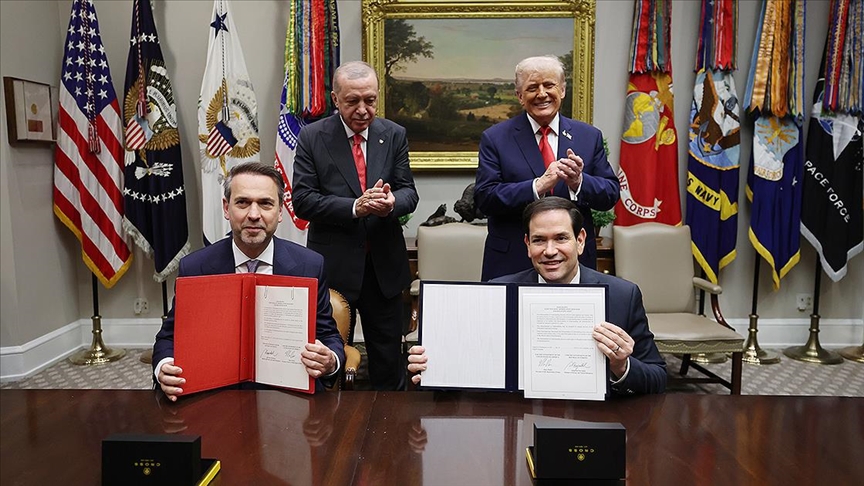
That expectation began to change after Erdogan’s visit to Washington on September 25, 2025. During the trip Turkey and the United States signed a memorandum of understanding on civilian nuclear cooperation at the White House. Trump and Erdogan attended the signing ceremony along with US Secretary of State Marco Rubio. Turkish officials later described the document as the start of a new process in bilateral nuclear cooperation.
Following the visit Bayraktar announced on October 2 that the United States and South Korea had joined ongoing talks for the Sinop project. Speaking on CNN Türk, he said a three-way model between Ankara, Washington and Seoul was under consideration and that Turkey wanted access to technology and competitive costs. He added that the United States could contribute both in large reactor systems and in the development of small modular reactors.
The inclusion of American and South Korean partners came as Ankara sought to diversify its energy relations. During the same week Erdogan and Trump held a closed-door meeting during which, according to Turkish officials, Trump urged Turkey to reduce purchases of oil and gas from Russia. Energy analysts in Ankara said the message aligned with Washington’s broader policy of limiting Russian influence in strategic energy sectors.
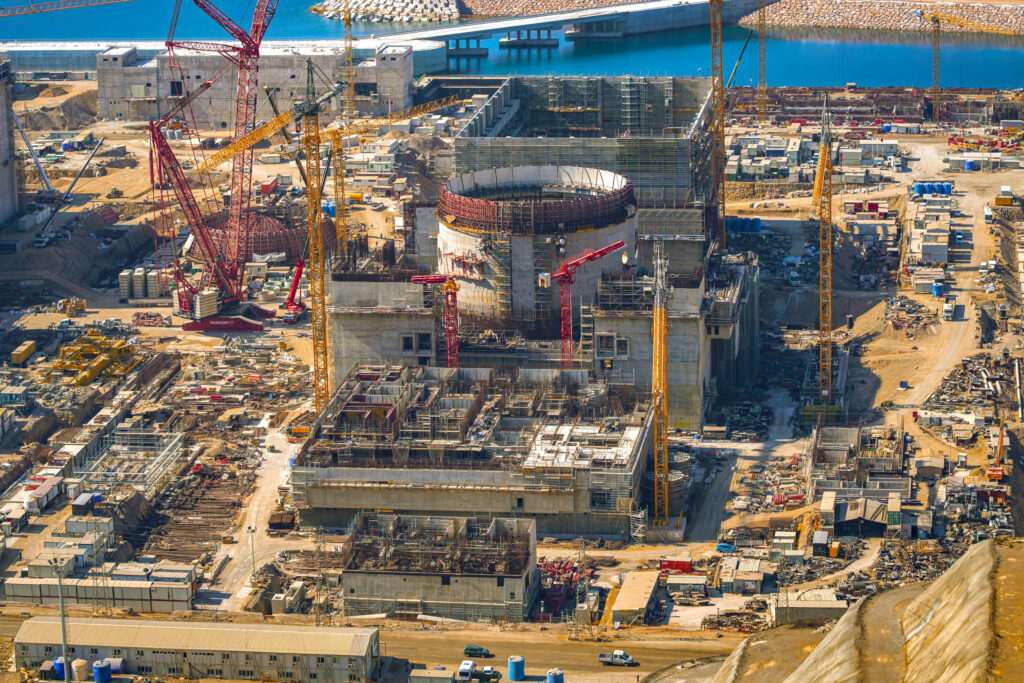
For Moscow, the shift is a setback. Russian diplomats had long treated Sinop as an extension of the Akkuyu project, where construction is being carried out by Rosatom under a 60-year license. Rosatom teams had conducted site studies in Sinop as recently as early 2024. Turkish officials now say that future work at the site will be opened to competition and that the project will not automatically be handed over to Russia.
Bayraktar has repeatedly said that Turkey wants low-cost energy production and the direct participation of Turkish companies in nuclear construction. He pointed out that in the Akkuyu project, over $7 billion of the total investment had been sourced from Turkish industry and that similar results were expected in Sinop.
The renewed talks with the United States coincide with Ankara’s broader effort to reshape its energy supply. Over the past year Turkey has signed long-term liquefied natural gas agreements with Swiss and Australian companies and expanded storage capacity to reduce reliance on Russian pipeline gas. Government officials describe the nuclear cooperation with Washington as another step in the same direction.
The exact structure of the new partnership has yet to be finalized. Energy Ministry sources say both the United States and South Korea have presented outlines of possible financing and reactor designs. Ankara is expected to decide in 2026 whether to proceed with a joint bid or to select a single main contractor. Officials have not ruled out limited Russian technical participation, but they say the project will be guided by “Turkey’s maximum benefit.”
The policy reversal also reflects lessons from the Akkuyu experience. Opposition lawmakers and energy experts have criticized that plant’s terms, under which Rosatom retains full ownership and Turkey commits to purchasing power at fixed prices. The main opposition Republican People’s Party (CHP) has called it an arrangement that leaves Turkey dependent on a foreign operator. In contrast, the government says any new nuclear project will be structured to ensure greater local control and technology transfer.
The change in nuclear policy comes as part of a wider recalibration in Turkey’s relations with major powers. Since the Russian invasion of Ukraine in 2022, Ankara has maintained trade with Moscow but also deepened its engagement with Western energy partners.
Under the 2010 intergovernmental agreement that launched the project, Rosatom finances, builds, owns and operates the Akkuyu plant. The Russian stake in project company Akkuyu Nükleer A.Ş. cannot fall below 51 percent, but up to 49 percent is available for sale. Rosatom has opened talks with potential Turkish and foreign investors for that minority holding, estimated at about $10 billion. So far, no deal has been reached. US and European sanctions imposed after Russia’s 2022 invasion of Ukraine have made potential buyers and lenders wary of involvement. Industry analysts say the scale of the investment, combined with the risk of secondary sanctions, limits the pool of interested parties.
Rosatom was expected to send roughly $7 billion this year to keep construction on track, but the funds have not arrived. Without that cash, Ankara has struggled to secure alternative financing.
The company has requested new tax exemptions, customs facilitation and government-backed guarantees from Turkey. Officials in Ankara have been cautious in responding, slowing negotiations and further delaying funding.
This is not the first time the project has run into financial obstacles. In 2022 $2 billion of a planned $3 billion transfer from Russia was blocked by US authorities during processing through Citibank and JPMorgan, following intervention by the US Department of Justice, showing Washington’s close monitoring of Russian-Turkish energy cooperation.
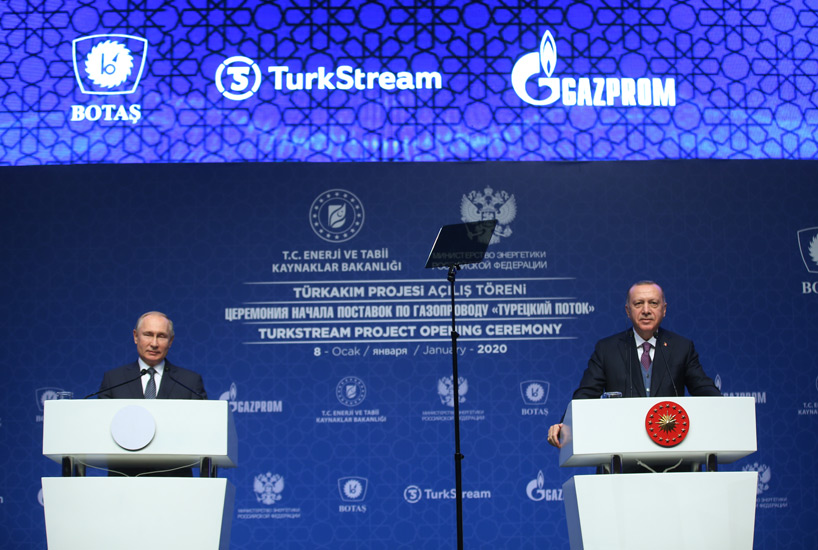
Western sanctions have also disrupted supply chains. German industrial giant Siemens, an early supplier of key components, has said it cannot ship certain equipment due to export licensing issues. Rosatom has sought Chinese alternatives for some parts.
It is clear that Turkey’s decision to reconsider Russia’s role in its second nuclear power plant is influenced not only by its efforts to move closer to the West but also by delays in the Akkuyu project and the supply and financing difficulties Russia has faced.
For Russia, losing the Sinop contract would weaken its influence in Turkey’s long-term energy plans. For the United States, participation in the project would mark a return to a field it has not been involved in for decades. For Turkey, the decision may bring new technology and financing options but also greater scrutiny over how nuclear cooperation fits within its foreign policy.