
Levent Kenez/Stockholm
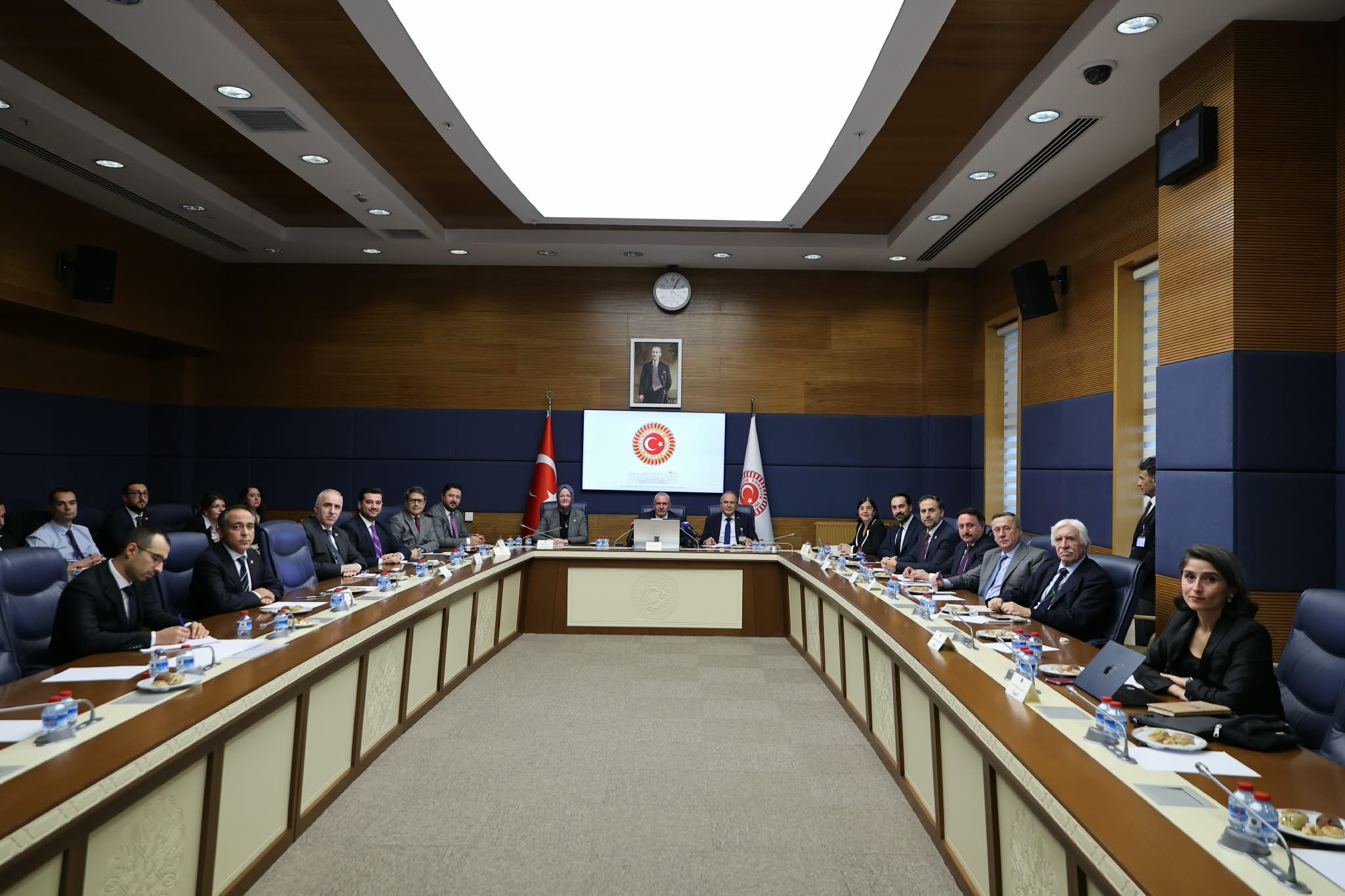
A new legislative proposal submitted to the Turkish Parliament will grant President Recep Tayyip Erdogan sweeping new powers to restructure the Turkish Armed Forces (TSK), including authority over promotions, dismissals and appointments within the military hierarchy. If enacted, the changes would represent a significant centralization of power in the presidency, enabling Erdogan to bypass previous constitutional limitations on executive influence over the military.
The bill, officially titled “Proposal for Amendments to Certain Laws,” was introduced by members of the ruling Justice and Development Party (AKP) on May 16 and includes measures previously annulled by Turkey’s Constitutional Court. One of the key provisions would allow the president to modify mandatory waiting periods for military promotions by decree, citing personnel needs or imbalances in rank distribution across the armed forces.
The proposed authority had initially been granted to the president via an emergency decree issued during a state of emergency following a controversial coup attempt on July 15, 2016. However, in a ruling dated December 7, 2023, the Constitutional Court found that such executive control was unconstitutional, arguing that “the status of military personnel can only be regulated by law and not by executive decree.”
Despite this, the new draft law reintroduces the same authority. This time it is part of formal legislation to meet the court’s requirement that military personnel regulations must be grounded in statutory law rather than presidential decree. If passed, this law would make Erdogan’s control over promotion timelines permanent and legally binding.
The new bill appears to be the government’s response to that mandate. Critics argue that it essentially reasserts presidential control under the guise of legal compliance.
In another controversial provision, the proposal would empower the president to expel officers from the armed forces for disciplinary reasons. The bill seeks to codify this authority in Article 926 of the Turkish Armed Forces Personnel Law, circumventing previous judicial restrictions.
The proposal further consolidates Erdogan’s control over military education by granting him the sole authority to appoint the rector of the National Defense University, the institution responsible for training future military leaders. The university was established by government decree shortly after the 2016 coup attempt, replacing all previous military academies, which had been shut down over their alleged involvement in the coup.
Many believe that during the state of emergency declared after the failed coup, Erdogan established one-man rule by means of emergency decree laws subject to neither judicial nor parliamentary scrutiny. Opposition groups claim that the coup attempt was also a false flag operation organized by country’s infamous intelligence agency, Milli İstihbarat Teşkilatı (MİT), to purge Erdogan’s opponents from their jobs.
Currently, people affiliated with the Gülen movement, a group critical of the government that the Erdogan administration claims was behind the coup attempt, are still being detained and arrested on trumped-up charges.
Opposition parties argue that this centralization of authority over military training, along with control over admissions and promotions, gives the executive branch unparalleled influence over the future makeup of the Turkish officer corps.
In the explanatory notes accompanying the bill, the government argues that swift and decisive action is necessary to maintain discipline and operational effectiveness within the military. “Discipline forms the foundation of the Turkish Armed Forces and is critical to its ability to respond to threats,” the proposal states. “Therefore, it is essential to take rapid and effective measures against serious disciplinary violations.”
The note emphasizes that the proposed changes are intended to preserve the strength and credibility of the armed forces by ensuring that problematic personnel can be quickly removed and replaced.
The proposed legislation is the latest in a series of measures taken by President Erdogan and his government to reshape the Turkish military in the aftermath of the 2016 coup attempt.
According to figures shared by Erdogan during a 2024 ceremony at the National Defense University, 1,524 out of 1,886 staff officers were expelled from the TSK following the coup. In total, 10,468 officers were dismissed out of the 32,189 serving at the time. More detailed Ministry of Defense figures show that 24,339 members of the military, including officers, noncommissioned officers and civil servants, have been dismissed since 2016.
While the official account claims that only 8,651 military personnel participated in the coup attempt, critics question the scale of the purges, noting that the number of dismissals far exceeds the number of alleged participants. Only 42 of the 325 flag officers on active duty during the coup retained their rank or received promotions afterward.
Many analysts view the purges not merely as a response to the coup attempt but as part of a broader strategy to transform the military into a force more aligned with Erdogan’s ideological and political goals. Several of the officers promoted to top positions after the purges have been described as less experienced and less qualified compared to their predecessors.
In the wake of the coup, the government overhauled the system for training and selecting officers. All military academies were closed and replaced by the National Defense University. A new staff officer examination process was introduced, allowing the government to vet candidates more closely.
Additionally, according to official admissions, committees responsible for selecting cadets have included members of SADAT, a jihadist paramilitary group known for its loyalty to Erdogan. The government has also opened the door to graduates of imam-hatip religious schools’ joining the military, a significant departure from previous secular standards.
The proposed law is expected to easily pass due to the AKP and its partners’ parliamentary majority.
Text of the proposed law granting extensive powers to President Erdogan within the military: