
Abdullah Bozkurt/Stockholm
A highly controversial figure aligned with Turkey’s Islamist President Recep Tayyip Erdogan has been elected to serve as the secretary general of the Organization for Security and Co-operation in Europe (OSCE), a 57-member regional security organization spanning North America, Europe and Central Asia, currently facing severe difficulties as a result of the Russian-Ukrainian conflict.
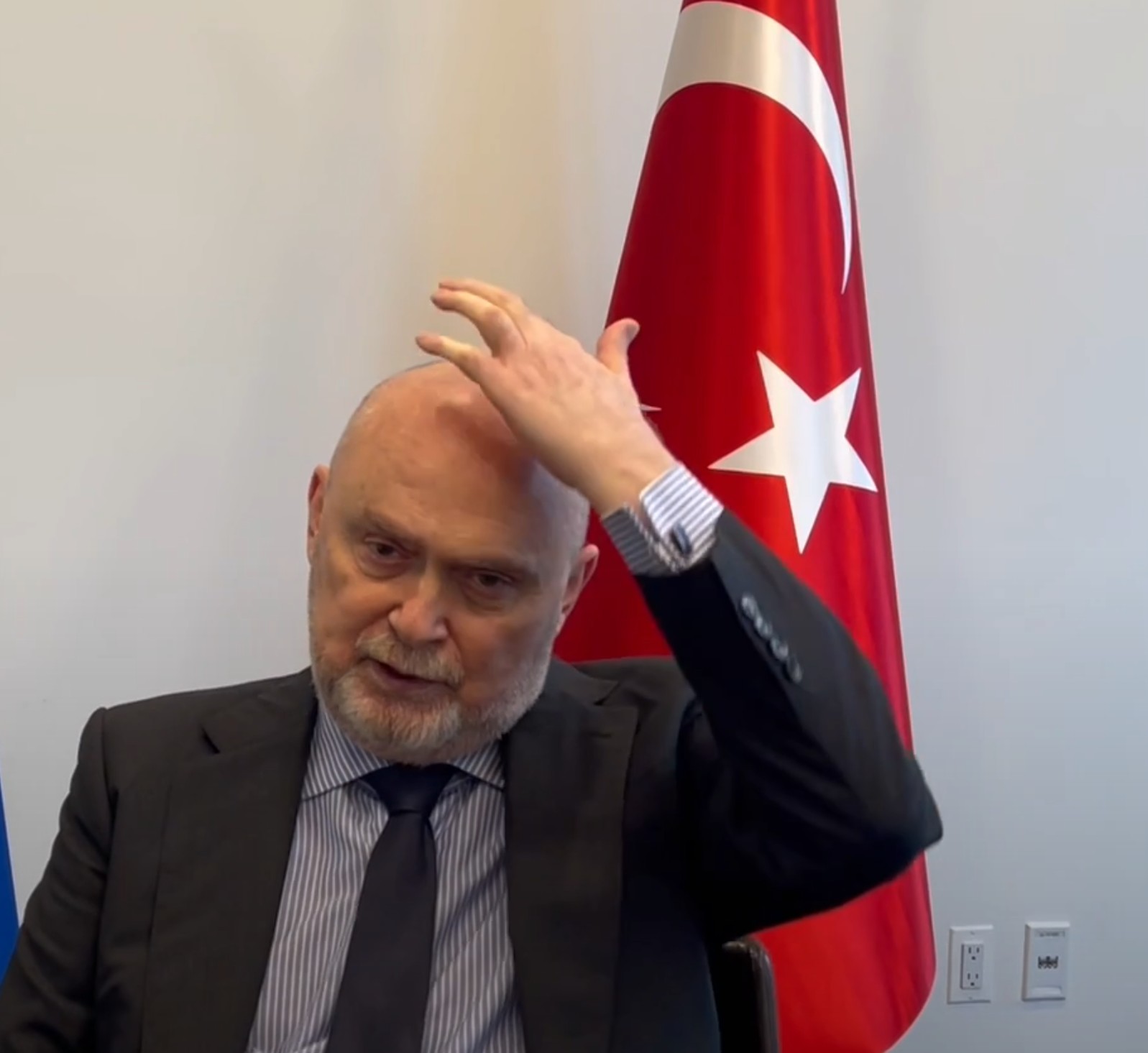
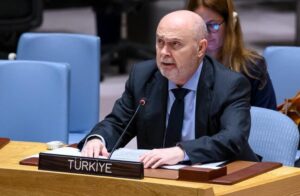
Feridun Sinirlioğlu, a career diplomat with a contentious history — including holding secret negotiations with the Islamic State in Iraq and Syria (ISIS) and advocating for a false flag operation in Syria to justify an armed invasion — was appointed secretary general of the OSCE on December 6, 2024.
His nomination occurred during Malta’s chairmanship, at a time when the OSCE — originally founded during the Cold War to foster peace, stability and cooperation through dialogue on conflict prevention, human rights and arms control — has become paralyzed by obstruction from Russia, Azerbaijan and Turkey, which have blocked key decisions within the organization.
Sinirlioğlu was not included in the original list of lead candidates proposed by Malta, the current OSCE chair, earlier this year. The leading candidate for the position was Igli Hasani, Albania’s foreign minister and a seasoned OSCE insider, who had garnered majority support from member states.
However, political infighting among member states, exploiting the OSCE’s unanimity requirement for decision-making, prevented Hasani from emerging as a unified candidate. Strangely, Turkey, with unexpected support from its rival Greece — which had nominated Maria Telalian, a legal adviser to the Greek ministry of foreign affairs, for the directorship of the Office for Democratic Institutions and Human Rights (ODIHR) — successfully advanced Sinirlioğlu as a compromise candidate.
Russia, traditionally wielding significant influence within the OSCE, also chose to endorse the Turkish candidate, given Ankara’s decision to abstain from participating in Western sanctions against Russia and its role in enabling the circumvention of financial and economic restrictions through Turkish territory.
This is not the first instance of Turkey obstructing the candidate selection process for top OSCE leadership. In 2020, Ankara blocked a leadership proposal package after the ODIHR permitted the participation of human rights organizations critical of President Recep Tayyip Erdogan’s government over issues such as rule of law, media suppression and fundamental human rights violations.
Turkey falsely labeled several international human rights organizations as “terrorists” and vehemently criticized the OSCE for involving their representatives in human rights events. Accusing critics and opponents of fabricated terrorism charges became a hallmark of the Erdogan government, which has wrongfully imprisoned tens of thousands of dissenters over the past decade.
Although the OSCE no longer wields the same influence in European affairs it once did and has faced growing pressure from certain member states, it still holds significant sway in areas such as election observation, monitoring press freedoms and safeguarding the rights of national minorities.
Although the position of secretary general at the OSCE requires neutrality and independence, the profile of the secretary general can nevertheless influence the organization’s operations. Sinirlioğlu, a trusted loyalist of President Erdogan, is expected to leverage any available leeway to shield the repressive Erdogan government from international scrutiny over violations of free and fair elections, abuse of fundamental human rights and the treatment of minorities.
His background raises significant concerns about the role he may play as secretary general of the OSCE. He has proven to be more of a political and partisan operative than a career diplomat, often prioritizing political interests over the traditional principles of diplomatic engagement.
Despite lacking the seniority typically required for the position, Erdogan appointed Sinirlioğlu as undersecretary of the foreign ministry in 2009, a role traditionally held for two to three years. However, Sinirlioğlu unusually served in this capacity until 2016, far exceeding the typical tenure.
He was frequently accused of nepotism and misusing the ministry’s resources during his tenure as undersecretary. On one occasion, he was alleged to have charged tens of thousands of euros in personal meal expenses for a single trip without providing any invoices, which led to resentment within the ministry’s accounting bureau.
While serving as undersecretary, Sinirlioğlu appointed his wife, Ayşe, to a senior position at the ministry, making her deputy undersecretary in September 2014. He also illegally assigned the official residence of the Turkish consulate in Dubai to his son for nearly a year, even though the son was employed by a private British firm. Sinirlioğlu blocked the appointment of a new general counsel to allow his son to continue residing there.
In 2014, Sinirlioğlu was implicated in a plot involving the deliberate surrender of the Turkish Consulate General and consulate staff in Mosul to ISIS, resulting in them being held hostage by ISIS. This move was part of a strategy to facilitate negotiations with ISIS, leading to the release of ISIS detainees from Turkish prisons and financial gains from smuggled oil.
Öztürk Yılmaz, then-consul general in Mosul, accused the Turkish government of selling out the hostages to benefit from ISIS oil in Syria. He revealed that his numerous attempts to get Turkish authorities to launch airstrikes on advancing ISIS troops were ignored and that emergency cables he sent to Ankara disappeared, suggesting that Sinirlioğlu was involved in a cover-up of the situation.
Sinirlioğlu has a long history of orchestrating secretive operations for Erdogan, including discussions in 2014 about a false flag operation to justify a military invasion of Syria. His involvement in such operations highlights a consistent pattern of using covert tactics for political and financial advantage.
He was one of the ardent supporters of armed conflict, as revealed in a leaked recording from March 2014 in which he, Turkey’s then-intelligence agency (MIT) chief Hakan Fidan and others were heard discussing the possibility of a military intervention in Syria through a false flag operation orchestrated by MIT.
Sinirlioğlu was notably hawkish during the meeting, advocating for a military invasion of Syria, while Fidan suggested ways to fabricate a pretext, saying, “If needed, I would dispatch four men to Syria. [Then] I would have them fire eight mortar shells at the Turkish side and create an excuse for war.”
However, the military resisted the idea until 2016, when the Erdogan government purged nearly all NATO-affiliated officers who opposed the war in Syria following a failed coup attempt, which was widely viewed as a false flag operation.
The role of OSCE secretary general grants Sinirlioğlu unique access to leaders and institutions at the national, regional and international levels, positioning him to gather intelligence on behalf of the Erdogan government and potentially influencing decisions behind closed doors.