Nordic Monitor
In a further sign of how Turkey under the government of President Recep Tayyip Erdoğan has been systematically disengaging from its allies and pivoting away from transatlantic and European values, Turkish judges and prosecutors have started receiving training at Chinese universities, familiarising themselves with the China’s judicial system, culture and language.
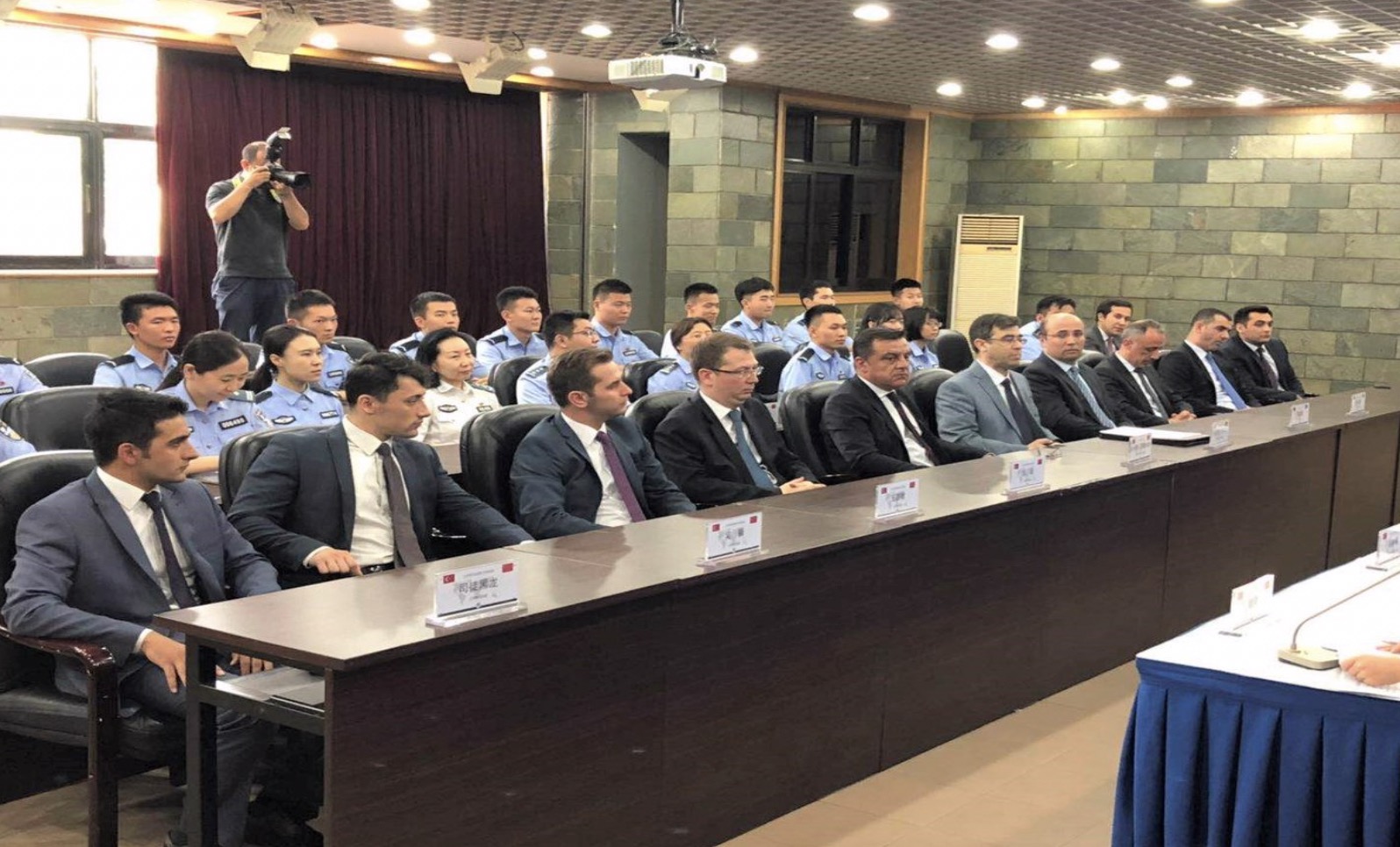
The first group of Turkish judges and prosecutors completed a special program at the Public Security University of China in Beijing in July 2019. The course was the latest example of initiatives that reveal the new direction of the Turkish judicial system, which has been completely subordinated to the executive branch and staffed with partisans and loyalists who rule according to political directive.
Judges and prosecutors attended language courses and studied the Chinese judicial system during the program, which was set up in accordance with a memorandum of understanding (MoU) signed by Turkey and China in November 2018 in Beijing.
Emin Önen, the Turkish ambassador to the People’s Republic of China and former a advisor to President Erdoğan, stressed in his speech at the certificate ceremony that the program would deepen the multidimensional Turkish-Chinese relations.
According to an official statement from the Turkish Justice Ministry, a similar protocol between Turkey and the Russian Federation was also initialed in August 2018 “in order to strengthen the judicial and administrative capabilities of the Turkish judiciary.”

Turkey, a member of the Council of Europe (CoE) and a candidate country to the EU, has gone through several justice reforms over the decades in accordance with the EU acquis. The dramatic shift in the judiciary began when Erdoğan orchestrated the dismissal and removal of judges and prosecutors in the aftermath of graft probes in December 2013 that incriminated himself, his family members and his business and political associates. The multibillion dollar corruption scheme involved Iranian sanction buster Reza Zarrab and Saudi businessman Yasin Al-Qadi, once designated as an al-Qaeda financier by both the UN and the US. The new judges and prosecutors who took over the cases hushed up not only the graft investigations but also years-long probes into Iran’s IRGC Quds Force operations and al-Qaeda networks in Turkey.
The dismissals and purge gained speed after a failed coup bid in July 2016 that gave Erdoğan a pretext to pursue a mass purge with no administrative or judicial probes. Erdoğan used his grip on power to restructure the Turkish judiciary and justice system and change its direction from the European perspective to Russo-Chinese standards.
In the aftermath of the coup attempt 4,560 judges and prosecutors were dismissed and replaced by pro-Erdogan staff, many of whom were barely out of college and others who worked as politicians for the ruling Justice and Development Party (AKP). A total of 2,431 of them were detained on trumped-up charges. Some 30 percent of the Turkey’s judges and state prosecutors were dismissed and/or jailed, part of a sweeping crackdown that has seen more than 130,000 people sacked or suspended from the military, police and civil service.
In addition to members of various high courts, two members of the Turkish Constitutional Court including its vice president, Alparslan Altan, were deprived of their liberty primarily on suspicion of membership in the Gülen movement, a civic group known for its investment in science education and the promotion of interfaith and intercultural dialogue around the world. Upon his application, the European Court of Human Rights (ECtHR) ruled that detaining Altan was unlawful and in breach of Article 5 of the European Convention on Human Rights (ECHR).
With increased powers following a referendum in 2017, Erdoğan has solidified his control of the Board of Judges and Prosecutors (HSK), which appoints and removes judges, applies disciplinary measures and elects judges to the Supreme Court of Appeals. Today Erdoğan has the power to appoint almost half the members of the council. The judiciary is now weighed down by the combined weakness of inexperienced and pro-government judges and the heavy hand of Erdoğan control.
Through a number of “democratization packages” that have been put into practice over the years, steps have been taken to harmonize the Turkish judicial system with EU standards. In this regard Turkey has conducted several projects to ensure the proper functioning, effectiveness and efficiency of the judiciary with the help of EU and CoE funds. One of the main objectives of the projects is to contribute to better protection of the rule of law, human rights and fundamental freedoms, especially the right to freedom of expression, in Turkey. Furthermore, they focused on improving the capabilities of public prosecution offices in criminal investigations and of judicial professionals in the prevention of ECHR violations in Turkey.
Within the scope of the EU-funded projects, legislative changes took place, the human rights perspective was embedded in all topics, Turkish judicial professionals established relations and cooperation with their European counterparts through study visits and placements and the ability of practicing lawyers to play an active role in the system was strengthened. All relevant stakeholders, namely representatives from the high courts, the HSK, the Ministry of Justice, bar associations and representatives of civil society were included during the planning and implementation phases of the projects.
However, the 2013 graft probes and failed coup bid, which was believed to have been orchestrated by the Turkish president, gave Erdoğan a chance to turn Turkey in an authoritarian direction. Erdoğan’s “new Turkey” has turned its back to its Western allies and the values it once shared with them.
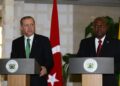
Turkish Minister of Justice Abdulhamit Gül paid a visit to China and met with Fu Zhenghua, the Chinese minister of justice, and Zhou Qiang, chief justice and president of the Supreme People’s Court, on November 14, 2018. The ministers signed an MoU to enhance cooperation between their two ministries.
Gül underlined at press conference that Turkish-Chinese dialogue has increased due to contacts between the two countries’ leaders and that this has led to cooperation in economy, trade and diplomacy as well as the judiciary. Moreover, he added that China and Turkey would seek more judicial cooperation and that the program would increase Turkish prosecutors and judges’ knowledge of the Chinese judicial system.
Turkey and China also signed an agreement on the extradition of criminals, on May 13, 2017, on the sidelines of the Belt and Road Forum for International Cooperation in Beijing, attended by President Erdoğan.