

Levent Kenez/Stockholm
Turkey’s expanding use of court-appointed trustees to oversee private companies has reached its largest scale in years, with a new investigation into the country’s poultry industry putting 13 major producers under judicial supervision and adding fresh momentum to a system that now encompasses more than 1,000 companies throughout the economy.
The latest intervention began on June 12, 2026, when prosecutors coordinated raids across eight provinces including Istanbul, Ankara, Balıkesir, Bursa, Izmir and Samsun. Authorities issued detention warrants for 32 executives and senior managers from some of Turkey’s largest poultry producers, alleging that they acted together to influence prices and undermine competition. Twenty-nine suspects were detained and later released under judicial supervision measures including travel restrictions, while the investigation remains ongoing.
The escalation has intensified a broader debate about the expanding role of trusteeship in Turkey’s private sector. Official figures from the Savings Deposit Insurance Fund (TMSF) show that more than 1,100 companies are now under trustee administration, supervision or related forms of state oversight. Excluding firms in liquidation, the number increased from 699 at the end of 2024 to 949 at the end of 2025. More recent estimates place the total at approximately 1,156 companies.
The economic scale of those holdings has grown just as rapidly. Companies under TMSF administration collectively employ nearly 50,000 people and control assets approaching 1 trillion Turkish lira. Their combined annual turnover exceeds 270 billion lira, according to official data.
List of companies under the control of the TMSF:
The figures have transformed the TMSF into one of the country’s largest economic actors. Based on employment, assets and equity, the institution now rivals some of Turkey’s largest listed conglomerates, with interests spanning manufacturing, construction, retail, finance and energy-related industries.
The TMSF’s expansion has not been confined to corporate fraud cases. Its most aggressive use has been as an instrument of political pressure.
In March 2025 prosecutors seized İmamoglu İnşaat, a construction company owned by Ekrem İmamoglu, the jailed Istanbul mayor who was President Recep Tayyip Erdogan’s most credible electoral rival. The seizure came as part of a sweeping corruption investigation targeting İmamoglu and his associates. By June 28, 2025, 52 companies connected to the case had been put under TMSF trusteeship. İmamoglu remains in pretrial detention on charges that his legal team and international human rights organizations describe as politically motivated.
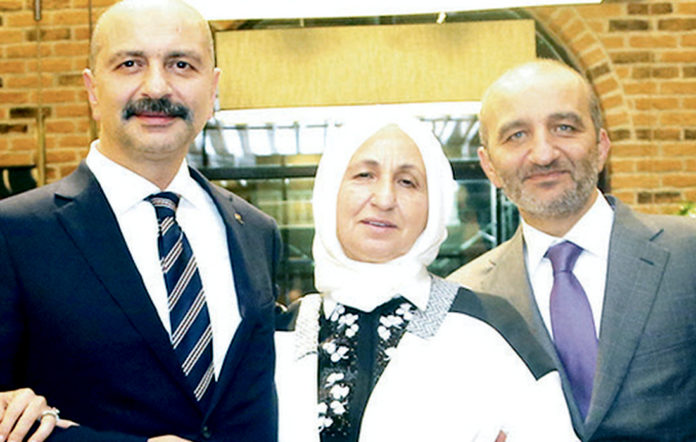
In September 2025 prosecutors ordered the seizure of 121 companies belonging to Can Holding, a media and education conglomerate that had recently acquired Habertürk, Show TV and Bloomberg HT. Can Holding’s chairman and nine executives were detained on charges of smuggling, tax evasion and money laundering. The state pledged that the media properties would continue operating under trusteeship, although under whose editorial direction was left unstated.
The machinery now being deployed against political opponents and inconvenient business interests was first built and stress-tested against followers of the Gülen movement, a network of schools, businesses, media organizations and civic associations inspired by the late cleric Fethullah Gülen, a strong critic of President Erdogan.
The crackdown that followed was, by measurable scale, the largest peacetime property confiscation in modern Turkish history. Using emergency decree powers, the government shuttered 1,419 civil associations and transferred their assets to the treasury. An additional 145 foundations had their properties transferred to the Directorate General of Foundations. Some 1,060 private schools with a combined enrollment of 138,000 students were closed and their buildings seized. A total of 841 student dormitories with a capacity for 86,397 students were shut down. Thirty-four television channels, 38 radio stations and 73 newspapers and magazines were closed. Forty-seven hospitals and clinics were taken over. Fifteen universities were shuttered along with seven affiliated hospitals.
The private business seizures were equally sweeping. According to a 2020 report prepared under the oversight of an Oxford University academic and published by London Advocacy and the Platform for Peace and Justice, the TMSF took control of 998 companies with a declared asset value of approximately 58.94 billion Turkish lira, equivalent to roughly $20.4 billion at 2016 exchange rates. An additional 1,075 companies were liquidated entirely and their assets transferred to the treasury. The report calculated the total value of property confiscated from individuals and entities linked to the Gülen movement across associations, foundations, real estate, schools, dormitories, media companies, hospitals, universities and private businesses at a minimum of $32.24 billion.
The legal instruments used in the Gülen seizures, including emergency decrees, terrorism designations applied to economic actors and trusteeship without due process or compensation, have since been routinized into standard prosecutorial practice.
Investor decisions often depend on assessments of regulatory stability, judicial independence and the consistency of legal institutions. The expansion of trusteeship and state intervention in private companies has therefore become part of a wider discussion about Turkey’s long-term investment climate.
Those questions resurfaced during negotiations involving Chinese electric-vehicle manufacturer BYD. Turkish officials announced plans for a major BYD investment and manufacturing project, presenting the agreement as evidence of continued confidence in Turkey’s industrial potential. Subsequent international reporting indicated that BYD adjusted parts of its European expansion strategy and prioritized production growth in Hungary while revising timelines for some planned investments. Turkish officials have maintained that agreements with the company remain in force and that discussions are continuing.
The poultry investigation marks the latest instance in a broader pattern of court-appointed trustees being used across Turkey’s economy.
What began as a competition probe alleging coordinated pricing has expanded into a criminal investigation that led to detentions and the appointment of state trustees over several major producers, primarily in the food sector but also affecting companies in other industries.
Supporters of court-appointed trustees argue that the practice is necessary to address financial misconduct, protect consumers and ensure continuity in strategically important companies. Critics say the expanding use of trustees is reshaping the relationship between the state and private enterprise and raises concerns about property rights and corporate governance.