Levent Kenez/Stockholm
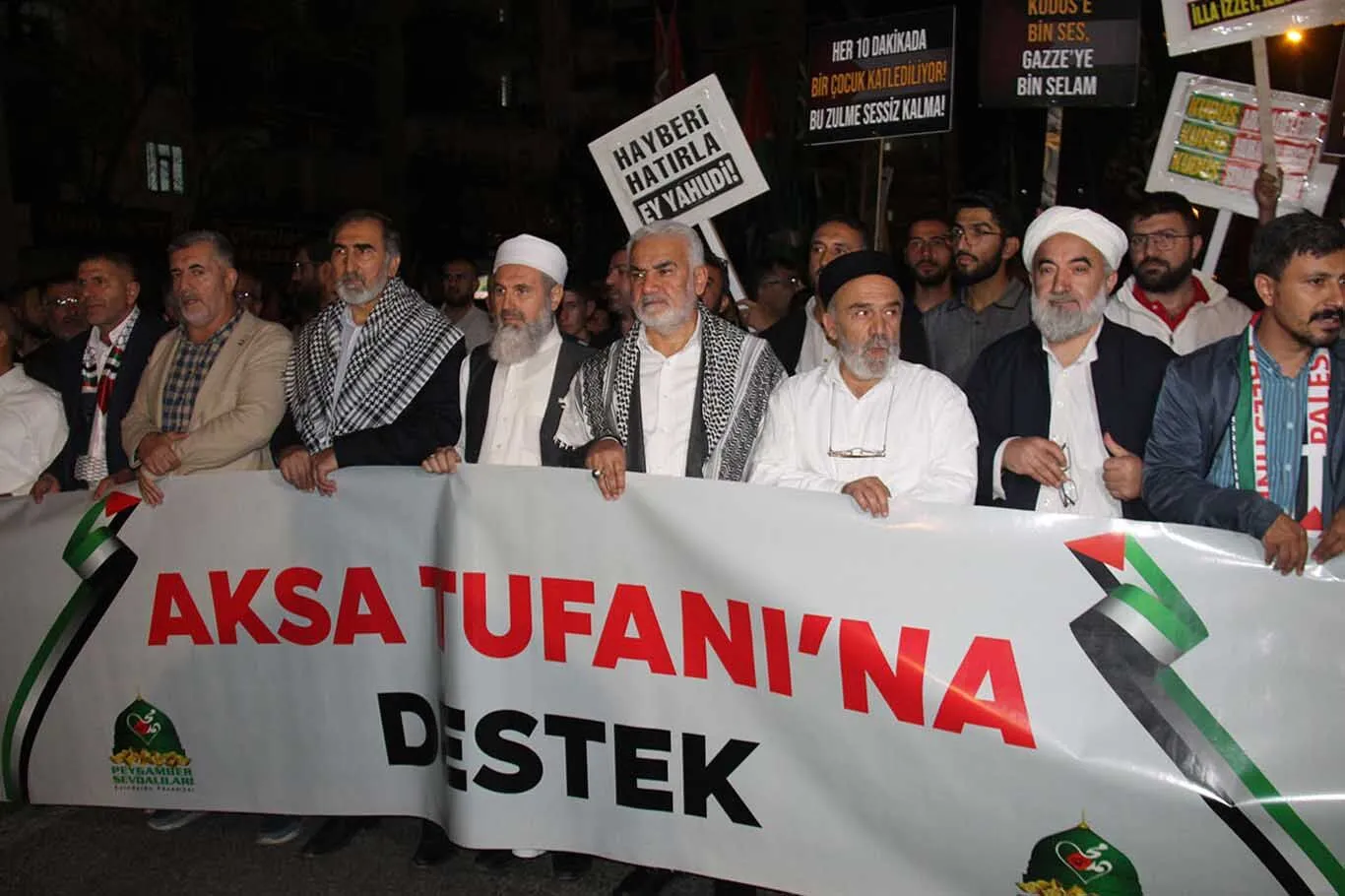
A political party allied with President Recep Tayyip Erdogan has openly defended Iran and repeated Tehran’s geopolitical narrative, again drawing attention to the presence of a pro-Iran actor inside Turkey’s governing alliance. The Free Cause Party, known as HÜDA-PAR, entered parliament through Erdogan’s ruling alliance and has repeatedly expressed ideological support for Iran’s leadership during the regional crisis.
HÜDA-PAR gained parliamentary representation in the 2023 elections after joining the alliance led by the ruling Justice and Development Party (AKP). Four of its members were elected to the Turkish Parliament through AKP candidate lists, giving the party national representation despite receiving a very limited share of votes in previous elections.
Senior party figures responded forcefully after US and Israeli strikes targeting Iran that started on February 28. HÜDA-PAR executive board member Şeyhmus Tanrıkulu accused regional governments aligned with Washington of facilitating the attacks. In a message posted on X, Tanrıkulu also criticized the Turkish government for supporting Gulf states hosting US forces: “Those you call brotherly countries allowed their land to be used by the US and Zionists to attack Iran,” Tanrıkulu wrote in response to comments by AKP spokesman Ömer Çelik. He also urged the Turkish government to address those governments directly instead of focusing criticism on Tehran.
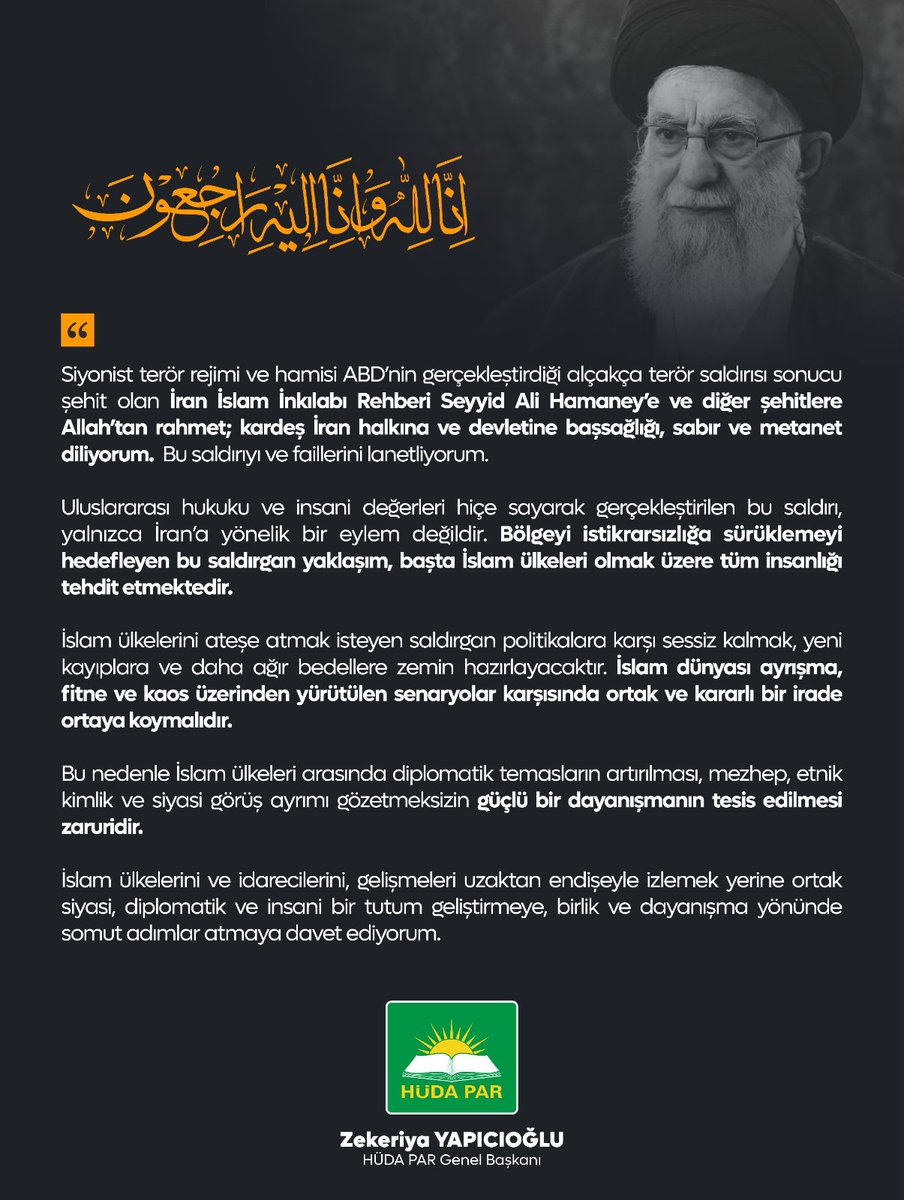
HÜDA-PAR Chairman Zekeriya Yapıcıoğlu has framed the conflict involving Iran as part of a broader confrontation between the United States, Israel and Muslim-majority countries in the Middle East. In public remarks discussing regional security, Yapıcıoğlu said Washington had spent decades expanding military deployments across the region.
He also cited military installations in several Gulf countries used by the US as well as earlier US troop deployments in Greece. Yapıcıoğlu argued that these moves form part of a strategy aimed at surrounding regional powers. “If Iran falls, the next country in line could be Turkey,” Yapıcıoğlu said in comments addressing regional developments.
The party’s position became particularly visible after reports circulated that Iran’s supreme leader Ali Khamenei had been killed in an attack. Yapıcıoğlu issued a public message describing Khamenei as a “martyr” and blaming what he called a “terrorist attack carried out by the Zionist regime and its patron the United States.”
Three senior HÜDA-PAR officials — Deputy Chairman İshak Sağlam, Secretary General Mehmet Hüseyin Yılmaz and Deputy Chairman Hüseyin İmir — later visited Iran’s ambassador to Turkey, Muhammed Hasan Habibullahzade, in Ankara. The delegation signed a condolence book at the embassy and expressed sympathy for Iran’s leadership.

Statements by HÜDA-PAR officials frequently include sharply worded attacks against Israel. Several party messages describe Israel as a “Zionist terror regime” and accuse Western governments of supporting military actions against civilians in the region.
The party’s emergence as a parliamentary actor is closely connected to the history of the militant movement known as Turkish Hizbullah. The organization, which is not formally linked to Hezbollah in Lebanon, emerged in the 1980s as a Sunni Kurdish Islamist group in Turkey.
Gaining prominence in the 1990s by recruiting mainly Kurds in southeastern Turkey, Hizbullah also received backing from certain elements within Turkish intelligence to weaken the influence of the outlawed Kurdistan Workers’ Party (PKK) in Kurdish areas and intimidate local residents through jihadist groups.
During the 1990s the group carried out assassinations, kidnappings and torture across southeastern Turkey. Police raids during that decade uncovered safe houses used as interrogation chambers along with videotaped torture sessions recorded by members of the organization.
The group’s founder, Hüseyin Velioglu, was killed during a police operation in Istanbul in January 2000. Turkish security forces seized large quantities of documents and video recordings during the raid, which led to hundreds of arrests connected to the network.
Following Velioğlu’s death the organization retreated from armed militancy and rebuilt its network through religious associations, charities and media outlets. The shift allowed the movement to preserve its ideological influence while avoiding direct confrontation with the state.
The political party HÜDA-PAR was formally established in 2012 as the movement’s legal political wing. Its creation allowed figures associated with the network to participate openly in Turkey’s political system.
Several members previously convicted in cases related to Turkish Hizbullah were released during the 2010s after lengthy legal proceedings stalled. Critics in Turkey argued that the releases enabled the network to reorganize and re-enter public life.
Among those released was Enver Kılıçarslan, who had been sentenced in 2002 to seven-and-a-half years in prison for membership in Turkish Hizbullah. Court records show that Kılıçarslan received training in Iran in 1987 and served under Velioğlu during the organization’s early years.
Kılıçarslan later became involved in outreach activities connecting the movement with Islamist groups abroad, including contacts with Hamas and Palestinian Islamic Jihad.
Beyond its political party, the broader network associated with HÜDA-PAR operates media outlets, religious associations and charity groups. These include the Doğru Haber newspaper, the İlke Haber Ajansı news agency and religious broadcaster Rehber TV.
The network also runs several foundations and associations such as the Peygamber Sevdalıları Foundation and Yetimler Vakfı, which organize charity campaigns, religious conferences and public events in multiple Turkish cities.
Financial links between Iranian institutions and organizations tied to Turkish Hizbullah have also been documented in official investigations. Files from a terrorism investigation into the Islamic Revolutionary Guard Corps Quds Force recorded a transfer of approximately $500,000 from Iran to Hizbullah-linked structures in Turkey in February 2012.
Organizations connected to the network operate outside Turkey as well. In Germany the charity Orphans Help e.V. has been identified by Turkish investigators as part of the movement’s European structure and works among Turkish and Kurdish diaspora communities.
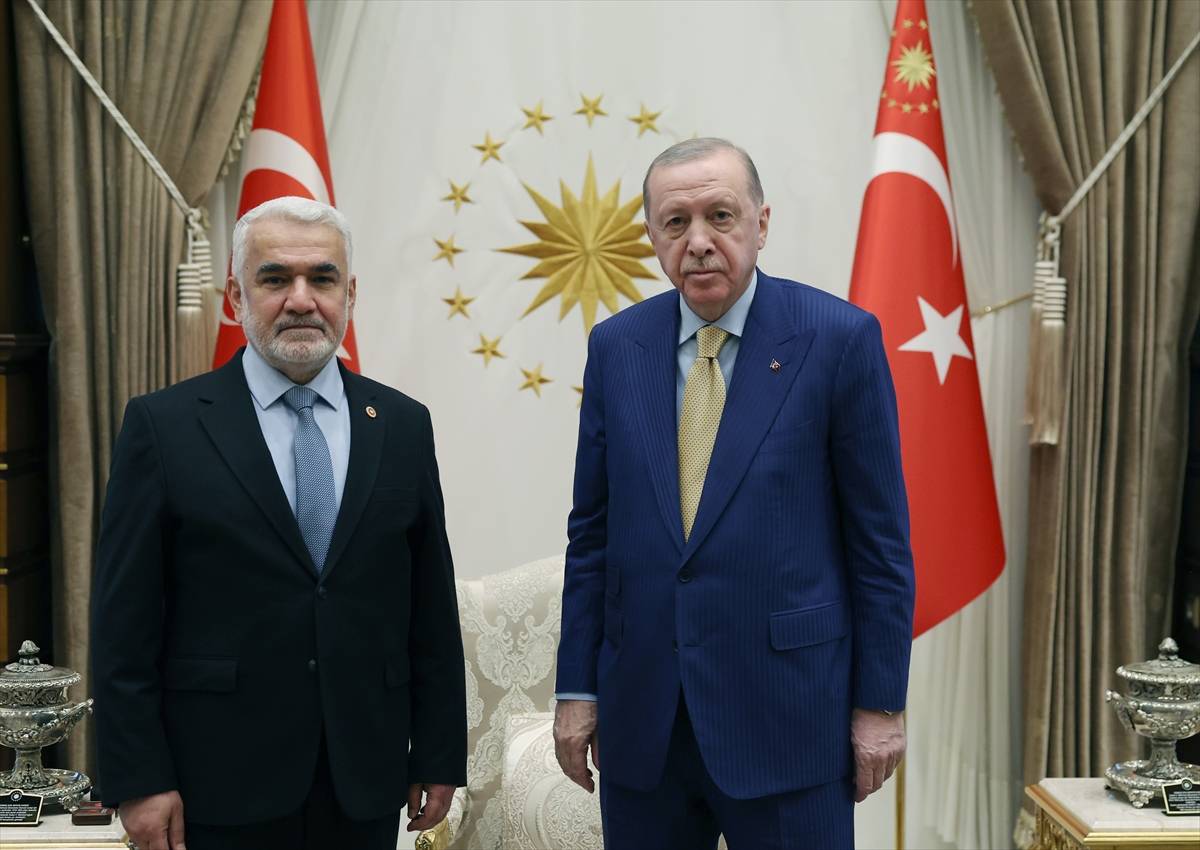
HÜDA-PAR formally joined Erdogan’s political alliance ahead of the 2023 elections. Several of its candidates entered parliament through AKP lists, giving the movement legislative representation for the first time in Turkey’s national assembly.
Opposition politicians criticized the alliance during the election campaign, pointing to the violent history of Turkish Hizbullah and questioning the government’s decision to cooperate with a party rooted in that network.
HÜDA-PAR continues to support Erdogan’s government in parliament while maintaining rhetoric that frequently aligns with Iran’s leadership. Public statements praising Iranian officials and condemning Israel remain a regular feature of the party’s messaging. The arrangement has placed a movement with a history rooted in militant Islamism and longstanding ties to Iranian networks inside Turkey’s governing political coalition.