Abdullah Bozkurt/Stockholm
A government-run religious foundation with multi-billion dollar assets in Turkey has quietly been funding Hamas, designated as a terrorist organization by the US and the EU, through charity, humanitarian aid and mosque construction, a Nordic Monitor investigation has revealed.
Türkiye Diyanet Vakfı (Turkey Diyanet Foundation, TDV), a private foundation on paper but effectively run by senior government officials, has channeled aid worth $46.3 million to Gaza since the October 7, 2023, attack by Hamas and its allied factions against Israeli civilian and military targets.
The TDV, established in 1975 with the stated aim of conducting scientific research and publishing, editing and translating works on Islam, is among the state-linked entities that have been radically transformed into extensions of the Islamist government of President Recep Tayyip Erdogan abroad. Described as the wealthiest foundation in Turkey, the TDV enjoys vast assets, most derived from donations in cash and property, and finances numerous projects organized by the Erdogan government overseas.
The foundation’s total wealth has never been publicly disclosed, but its 2024 operating budget of 12.7 billion Turkish lira underscores the scale of the financial resources it controls. The chairman of the TDV board is Safi Arpaguş, the top government imam and president of the Religious Affairs Directorate (Diyanet), a state institution with more than 100,000 imams that oversees some 90,000 mosques in Turkey and abroad. The TDV enjoys unique and unfettered access to the Diyanet’s mosque network and has the capacity to raise millions of dollars rapidly through campaigns launched after Friday prayers.
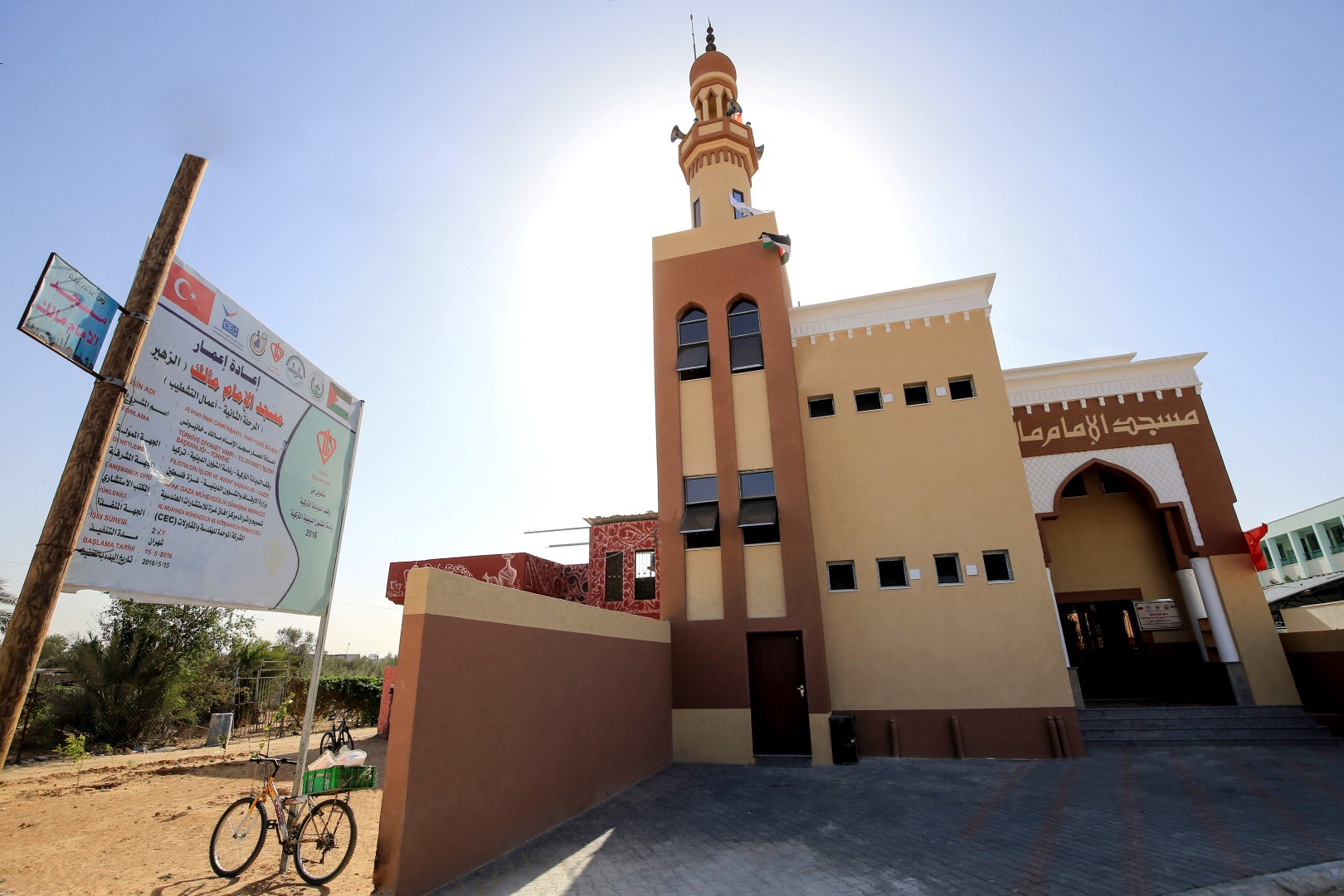
The TDV has long been involved in Gaza in bolstering Hamas’s hold over the territory, particularly through the construction of mosques that serve as ideological breeding grounds for militants and jihadists. The TDV, together with the Diyanet and other partners, has built nine mosques in Gaza fully funded by Turkey and has also contributed to dozens of renovation, rebuilding and new construction projects involving mosques and other venues used by Hamas.

For example, the Bedir Mosque in the Gaza Strip, whose construction was funded by the TDV, featured a militant propaganda banner depicting a masked, armed fighter wearing a headband bearing Arabic inscriptions commonly associated with Hamas’s military wing, the Izz ad-Din al-Qassam Brigades. The banner was displayed outside the mosque with a slogan pledging the “sacrifice of blood and soul,” blending a religious space with pro-Hamas militant messaging.
Another poster displayed in front of the mosque depicted a so-called martyr in heroic imagery, reflecting the use of religious spaces to circulate pro-militant propaganda tied to the Gaza conflict. The Foundation for Human Rights and Freedoms and Humanitarian Relief (İnsan Hak ve Hürriyetleri ve İnsani Yardım Vakfı, IHH), a Turkish charity long known as a logistical supplier for global jihadist networks and noted for its fierce antisemitism, was also involved in the construction of the Bedir Mosque.
The latest example of this pattern is the inauguration of a mosque dedicated to Abdullah Yusuf Azzam, a Palestinian cleric who played a key role in the establishment of Hamas and was one of the founding figures of al-Qaeda.

This development is hardly surprising, given that Azzam’s teachings have long been circulated in Turkey through translated books with the approval of President Erdogan’s Islamist government, which has emerged as Hamas’s most vocal defender in the Middle East. Azzam, often referred to as the “father of global jihad,” reached Turkish youth through translated works such as “Lovers of the Paradise Maidens” (Hurilerin Aşıkları in Turkish), which glorifies the lives of more than 150 mujahideen killed in the Soviet-Afghan war. Azzam was assassinated in 1989.
Azzam’s poisonous influence has been flagged in multiple terrorism investigations in Turkey, yet the Erdogan government has allowed the publication, sale and distribution of his books despite a February 2016 ruling by the Mersin First Criminal Court of Peace that banned “Lovers of the Paradise Maidens” and ordered the seizure and destruction of all available copies.
A review of multiple online shopping websites conducted by Nordic Monitor as of February 18, 2026, showed that the banned book remained on sale on dozens of popular Turkish platforms, including Amazon’s Turkish site and Hepsiburada.com, a major Turkish e-commerce platform owned by businesswoman Hanzade Doğan Boyner and Kazakhstan-based technology and finance group Kaspi.kz.

Azzam’s teachings have played an integral role in the radicalization of Turkish jihadists. Mevlüt Mert Altıntaş, the 22-year-old Turkish police officer who assassinated the Russian ambassador on December 19, 2016, was influenced by Azzam. A copy of Azzam’s book was seized after the murder, revealing that Altıntaş had purchased and read it.
The Erdogan government protected the real culprits behind the radicalization of the police officer, declined to investigate the extremist networks with which he had been involved, including indicted al-Qaeda militants, and shielded them from criminal accountability. Instead, the assassination was scapegoated onto a group with no connection to the killing, despite overwhelming evidence showing that pro-Erdogan radical circles played a decisive role in the assassin’s indoctrination. These included Nureddin Yıldız, a preacher who has advocated the killing of Jews, and Hüsnü Aktaş, another radical cleric who leads the jihadist Vahdet group in Turkey.
Azzam’s teachings also exerted significant influence on a Turkish jihadist group known as Tahşiyeciler, led by Mollah Muhammed, also known as Mullah Muhammed el-Kesri, whose real name is Mehmet Doğan. The group openly advocated armed jihad in support of the late al-Qaeda leader Osama bin Laden and promoted the view that Christians and Jews were infidels who should be eliminated wherever they were found, even urging the beheading of Americans.
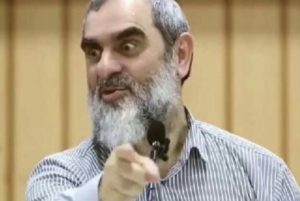
During police raids on the home of Mehmet Nuri Turan, an indicted Tahşiyeciler member, Azzam’s jihadist lecture book was among the materials seized. Intercepted emails further revealed the existence of possible hit lists prepared by Tahşiyeciler for future attacks, with a particular focus on Jewish targets. The group even collected names from tombstones in the Bülbüldere Cemetery, where Jews were believed to have been buried.
When police detained Tahşiyeciler leader Mullah Muhammed and his associates in January 2010, they recovered three hand grenades, one smoke bomb, seven handguns, 18 hunting rifles, electronic components for explosives, knives and a large cache of ammunition from the suspects’ homes.
Although Mullah Muhammed and his associates were indicted and put on trial, Erdogan personally intervened in 2014 to defend the group and vouch for the radical imam. The campaign to rehabilitate Mullah Muhammed was launched by the pro-government Sabah daily, owned by Erdogan’s family, on March 13, 2014, in an article portraying him as a victim. The government falsely claimed that the jihadist leader had been framed by the Gülen movement, a group sharply critical of Erdogan over corruption and Turkey’s support for jihadist groups in Syria and Libya.
Ultimately, Erdogan secured the acquittal of Mullah Muhammed and his associates through loyalist judges and prosecutors, launched a crackdown on journalists who exposed the radical network, and even hired a lawyer to file a civil defamation lawsuit in the United States against the late Muslim scholar Fethullah Gülen, an outspoken critic of jihadist ideology.
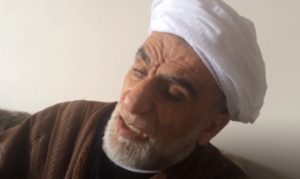
The Turkish president’s lawyer, Mustafa Doğan İnal, personally defended Tahşiyeciler in court. İnal also represented controversial Saudi businessman Yasin al-Qadi, a close associate of Erdogan who for years was designated by both the UN Security Council sanctions committee and the US Treasury as an al-Qaeda financier.
Turkey’s support for Hamas is clearly a two-way street in which the Erdogan government not only aids and abets terrorism abroad but also imports the radicalism cultivated beyond Turkey’s borders back into the country, exposing its predominantly Sunni population of 86 million to extremist teachings and jihadist ideology.