Levent Kenez/Stockholm
Ankara is working on new military strategies in Syria as it seeks to establish a new phase of cooperation and influence in the region. Ankara aims to sign a series of military agreements with Syria similar to its earlier maritime delimitation deal with Libya, signaling potential for broader collaborations in the Mediterranean.
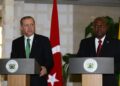
Hulusi Akar, chairman of the Turkish parliament’s defense committee and former minister of defense, recently hinted at the possibility of a maritime agreement with Syria during an interview on the parliament’s TV channel. Akar emphasized that such a deal could outline maritime jurisdiction areas in the Mediterranean, paving the way for enhanced regional cooperation.
Akar further stated that leveraging Syria’s airfields, maritime facilities and logistical infrastructure would accelerate Turkey’s efforts in Syria’s reconstruction and development. He underlined that a potential maritime delimitation agreement could serve as a cornerstone for deeper ties, positioning Turkey as a key player in Syria’s rebuilding process and regional stability.

On November 27, 2019, Turkey and Libya signed a maritime agreement in İstanbul, officially titled the “Memorandum of Understanding Between Turkey and Libya on Delimitation of the Maritime Jurisdiction Areas in the Mediterranean.” The agreement defined the maritime boundaries between the two nations, establishing a framework for the exercise of sovereignty, sovereign rights and jurisdiction in accordance with international law. It represented a strategic move by both countries to assert their interests in the resource-rich and geopolitically sensitive Mediterranean region.
The agreement was portrayed as a significant step toward strengthening Turkish-Libyan relations. By clarifying their respective maritime zones, the memorandum sought to eliminate disputes and promote cooperation in areas such as resource exploration and economic development. Turkey and Libya framed the deal as an equitable solution that would not only benefit the two nations politically and economically but also set a precedent for resolving maritime disagreements through bilateral negotiation.
However, the agreement sparked immediate controversy in the Mediterranean region. Neighboring countries, including Egypt, Greece and Cyprus, vehemently opposed the deal, claiming that it disregarded international norms and encroached on their own maritime interests. The controversy highlighted broader tensions over overlapping claims in the Mediterranean, turning the agreement into a flashpoint in regional diplomacy and a subject of ongoing debate in international forums
Despite the agreement’s initial prominence, Turkey has opted to de-emphasize it in its diplomatic engagements since 2020, particularly as it sought to improve relations with Greece and Egypt. This shift reflected a pragmatic approach by Ankara, aimed at reducing tensions in the Eastern Mediterranean and fostering a more conciliatory regional dialogue.
Nevertheless, the agreement has remained a cornerstone of Turkey’s maritime policy and is regarded by the Turkish government as a model for future bilateral or multilateral arrangements. By framing the agreement as a precedent for resolving complex maritime issues through negotiation and cooperation, Turkey signaled its intent to maintain an active and strategic role in shaping the geopolitical landscape of the Mediterranean.
The maritime agreement between Turkey and Libya also faced significant challenges regarding its legitimacy, a concern acknowledged even by Turkish officials. Critics argue that the deal, signed with Libya’s Government of National Accord (GNA) on November 27, 2019, lacks a solid legal foundation due to questions surrounding the GNA’s mandate and its authority to enter into such international agreements.
Meanwhile, Turkey is also considering reaching a swift agreement with the current transitional government in Syria to legalize the presence of its troops in Syrian territory. This would be followed by a comprehensive military training and defense cooperation agreement, enabling Turkey to help shape the newly formed Syrian army. In his annual review with reporters last week, Turkish Defense Minister Yaşar Güler signaled that such agreements are already in the works at a press meeting on December 15.
Opposition groups in Syria, led by Hay’at Tahrir al-Sham (HTS), launched an offensive on November 27 from Idlib in the northwest. They captured several Syrian cities, ultimately seizing Damascus on December 8 and forcing President Bashar al-Assad to resign and flee the country.

Nordic Monitor reported on Monday that Turkey had secretly initiated a plan to create a parallel shadow government in Syria to take control after the potential removal of al-Assad. The plan, supported by a Turkish intelligence-driven military offensive involving rebel and jihadist groups, aims to reshape Syria’s governance with Turkey playing a central role.
The plan was tested in regions under Turkish control since 2016 and was designed to expand across Syria if rebel forces secured nationwide control. Under this framework, Turkish officials act as behind-the-scenes advisors to Syrian authorities, helping to manage government operations without appearing to interfere directly. Turkey plans to present this initiative as a way to rebuild Syria’s institutions and enhance governance while avoiding overt involvement in its internal affairs.
A critical part of the plan is to integrate Syrian army troops with rebel forces, including the Turkish-backed Syrian National Army and groups like HTS. This approach aims to maintain stability, avoiding the chaos seen in post-invasion Iraq, when the national army was disbanded. Turkey’s ultimate goal is to prevent the rise of new militias, address security challenges and foster unity among Syria’s diverse communities, including Kurds and Alawites. At the same time, Turkey aims to facilitate the expulsion of Syrian refugees and focus on addressing the Kurdish issue, which remains a central concern in Turkey’s regional strategy and domestic politics. On the civilian side, Ankara plans to leverage senior Syrian figures who were part of the Istanbul-based opposition, established with the support and guidance of the Erdogan government and its intelligence service in 2011. However, questions remain about the feasibility and long-term success of such an ambitious initiative.