
Abdullah Bozkurt/Stockholm
A newly filed US Justice Department brief has added fresh details to a terrorism case that already cast Turkey as a key transit corridor for Islamic State in Iraq and Syria (ISIS) operatives, revealing more concrete evidence of travel preparations, operational materials and links to a separate ISIS-connected attack plot in the United States.
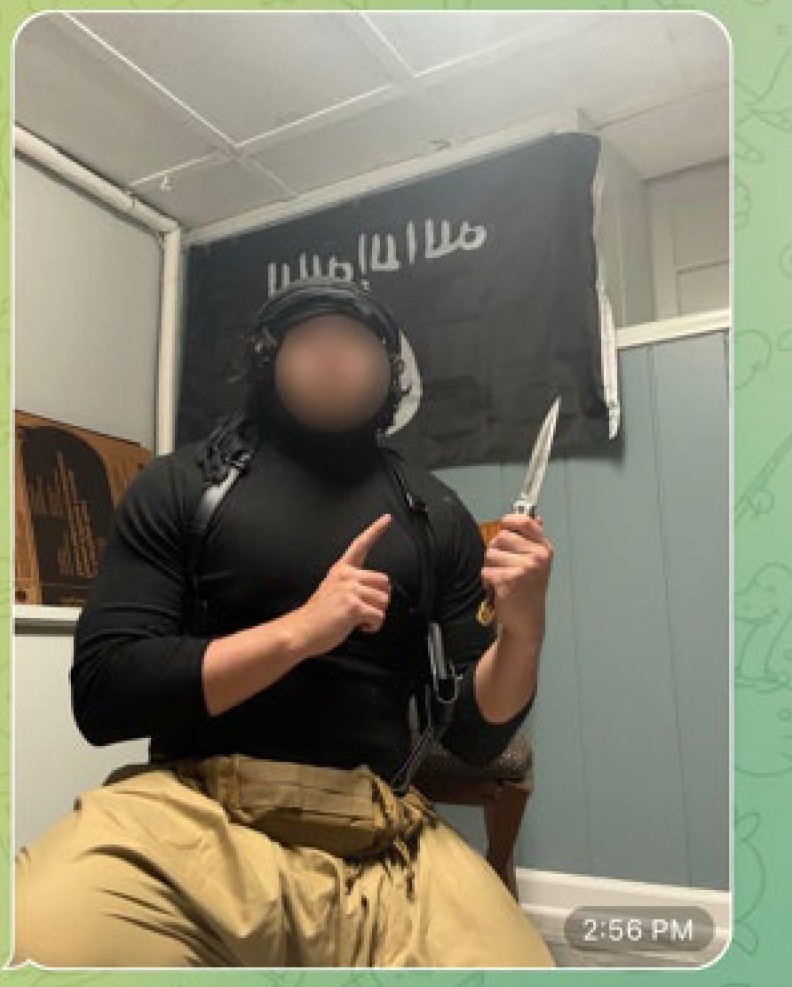
The February 5, 2026, filing by the US Attorney’s Office for the District of New Jersey was submitted to oppose pretrial release for Tomas-Kaan Jimenez-Guzel, a national of the United States, Turkey and Spain who was arrested on November 4, 2025, at Newark Liberty International Airport as he prepared to board a flight to Turkey and, according to prosecutors, continue onward to ISIS-held territory in Syria.
The earlier Nordic Monitor report, published in November 2025 and based on the original FBI complaint, laid out how Turkey figured centrally in the group’s planning. The new filing goes further by detailing additional investigative findings gathered after the arrest, including what prosecutors say were concrete steps showing not just ideological support but active preparation for jihadist travel and possible violence.
Among the most significant new details is evidence that Jimenez-Guzel had already secured onward ground transportation inside Turkey. Prosecutors said that when he was arrested, investigators later found a booking confirmation on his phone for bus travel scheduled for November 7, 2025, from Istanbul to Gaziantep, the Turkish border city long known as a gateway for jihadists heading into Syria.
The filing also says Jimenez-Guzel was in touch with a smuggler who could allegedly help move him and his co-conspirators from Turkey into Syria. That point was mentioned in broad terms in the earlier reporting, but the government now presents it as one of several affirmative steps taken in furtherance of the conspiracy, along with physical training, equipment purchases and financial support for his co-defendant Saed Ali Mirreh’s ticket to Turkey. Prosecutors said Jimenez-Guzel sent Mirreh $500 through Apple Cash to help fund travel.
US federal prosecutors detailed new evidence in a motion opposing bail for Jimenez-Guzel, citing flight risk and concerns about the safety of the community:
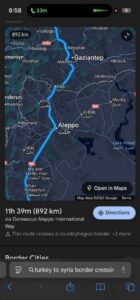
Another notable addition is the extent of the material recovered from his phone and laptop. According to the filing, investigators found photos showing information on “the border from Turkey to Syria and how to cross that border,” along with screenshots from an artificial intelligence search engine about traveling to Syria.
The filing includes images of those searches and says he also possessed a 50-page guide titled “Hijrah to the Islamic State,” whose cover featured Gaziantep and a map of the Turkish-Syrian frontier. Chapters reportedly included sections such as “How Islamic State members get into & out of Syria,” “Getting Stopped in Turkey” and guidance on avoiding airport scrutiny.
Prosecutors also said Jimenez-Guzel visited a website about smugglers helping ISIS fighters escape across the Syria-Turkey border and ran Google searches on Gaziantep, the Syria-Turkey border, ISIS battles, executions and “Jihadi John.”
The new filing also broadens the portrait of Jimenez-Guzel’s alleged militancy beyond travel plans. Prosecutors say he had been on the FBI’s radar since October 2024, after making online posts suggesting that America would soon be the scene of a terrorist attack. The filing then catalogs a series of violent messages from spring 2025 that were not fully laid out in the earlier Nordic Monitor article.
In those exchanges, prosecutors say, he spoke of killing someone, going to a local synagogue, murdering Jews and Shia Muslims, and committing sexual violence against an individual he had targeted online. The government cites those messages to argue that he posed a danger not only because of his attempt to join ISIS abroad but also because he had expressed willingness to commit violence inside the United States.
Perhaps the most consequential new material concerns his alleged awareness of, and proximity to, a separate ISIS-linked domestic attack plot in Dearborn, Michigan. Jimenez-Guzel and his circle accelerated their travel after the Dearborn arrests. The new filing provides much more detail.
Prosecutors say he visited Dearborn between June 30 and July 2, 2025, staying at the residence of one of the plotters he knew as “Bukhari” and meeting with another identified as “Athari.” In later group calls, the filing says, he discussed whether those men were preparing a Paris-style attack and remarked that “knowing Athari,” it would probably be at “a club, a disco.”

Prosecutors also allege that he said if authorities confiscated his passport and he could not leave the country, he would do “what Athari is gonna do,” suggesting a fallback to domestic terrorism if foreign travel were blocked.
The government further alleges that he knew the Michigan suspects were planning “to do something here” in the United States and panicked after their arrests became public. In a call cited in the filing, Jimenez-Guzel allegedly said “our names are in the” complaint, warned that “the feds are gonna be looking for us soon” and insisted that the group had to leave immediately for Turkey, delete communications and scrub their phones.
Prosecutors say he rebooked his flight on November 3 to depart much sooner, in the early hours of November 4, after the Michigan case was unsealed.
Searches of his residence and dorm room added still more detail. The filing says agents found a gun holster, tactical vest and camouflage shirt in the basement room where he stayed at his Turkish mother’s home in Montclair, New Jersey.
In his dorm room, investigators found a notebook listing the names and phone numbers of “Athari” and “Bukhari” as well as Mirreh’s contact details. The notebook also contained handwritten entries referring to “Defensive Jihad,” “obligation for jihad” and “instances when it is permissible to kill women, children, the elderly, monks, and others.” Prosecutors cite those findings as further evidence that the case involved not fantasy role-playing but deliberate operational preparation.
The filing also says Mirreh, after his arrest in Washington state, admitted in a post-arrest interview that he had developed plans with Jimenez-Guzel to travel abroad and join ISIS. Prosecutors argue that this admission, together with encrypted chats, surveillance, search warrants and seized digital evidence, makes the case against Jimenez-Guzel especially strong.
They also stress that he has family in Turkey and had already attempted to flee the United States before facing formal charges, which they say makes him both a serious flight risk and a continuing danger to the community.
In a bail hearing, Jimenez’s defense argued that he became radicalized after suffering serious concussions that forced him to abandon a promising football career, leaving him isolated and increasingly immersed in extremist online chat groups. His lawyers also said many of his statements about weapons, smuggling networks and militant training were exaggerated online boasts without real capability or connections and asked the court to release him under strict bail conditions. However, US Magistrate Judge José R. Almonte denied the request on February 6, ruling that releasing the defendant would pose a security risk to the community.

Jimenez-Guzel speaks Turkish, as his mother, Meral Guzel, is originally from Turkey. She was educated in Turkey and earned a degree in economics from Marmara University in Istanbul before moving to Europe, then to Ecuador and later to the United States. She married Jimenez-Guzel’s father, a dual Ecuadorian and Spanish national, but the two later separated.
Meral Guzel moved back to Turkey in 2014 and subsequently returned to the United States, where she now leads the UN Women’s Entrepreneurship Accelerator, a program under the UN’s umbrella that focuses on advancing women’s rights and economic empowerment.
Taken together, the new DOJ filing sharpens the picture first outlined in the original charge document filed by prosecutors. The earlier complaint established Turkey as the preferred corridor for reaching ISIS territory. The new submission shows that the route had advanced from discussion to execution: a plane ticket to Istanbul, a bus booking to Gaziantep, research on smugglers and border crossings, a practical travel manual centered on southern Turkey and efforts to flee once a connected ISIS plot in Michigan was exposed.
It also adds a more alarming domestic dimension, suggesting that the suspect not only knew about a planned ISIS-inspired attack in the United States but contemplated violence at home if his passage through Turkey to Syria was blocked.