Abdullah Bozkurt/Stockholm
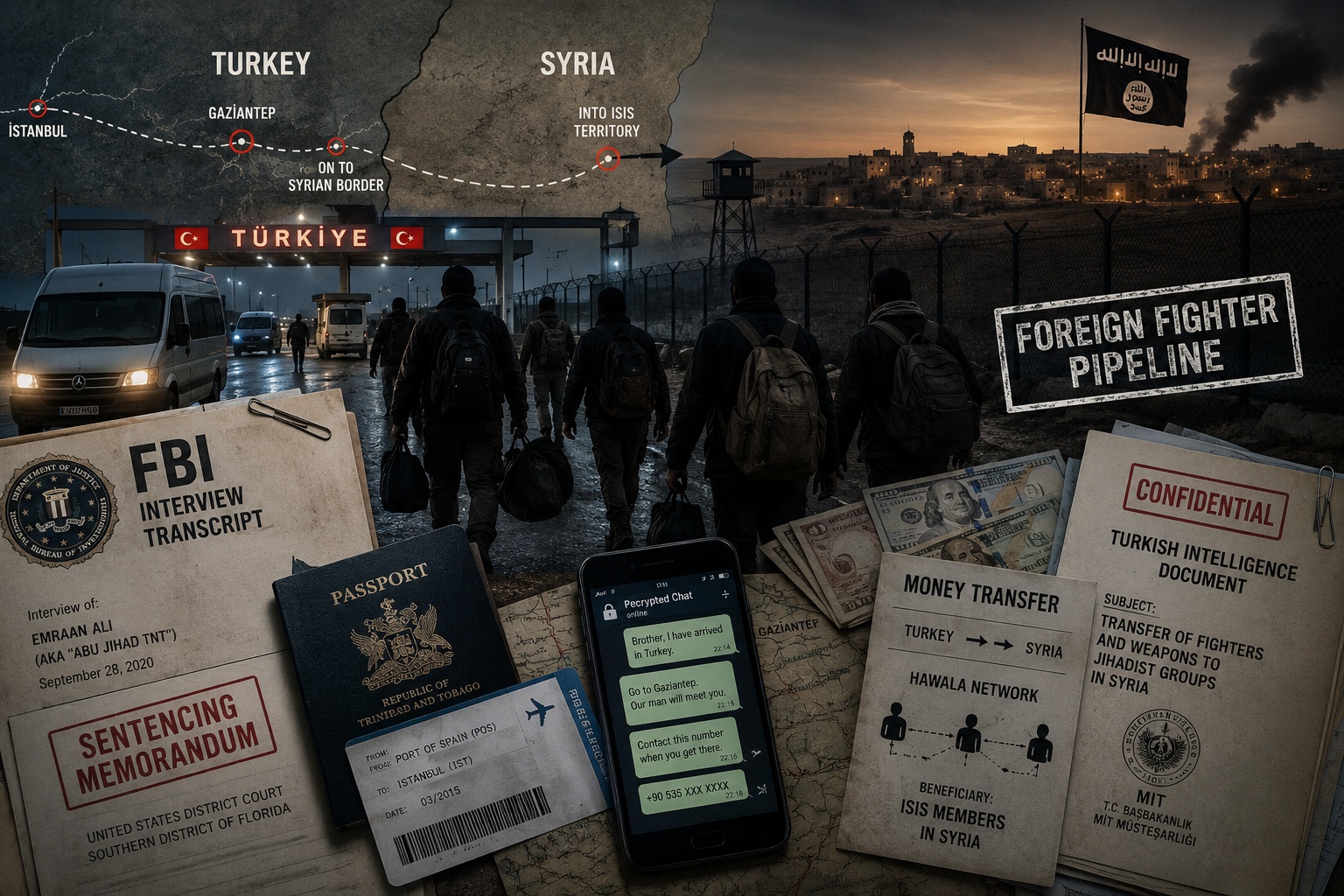
A US court filing in a terrorism case has provided fresh details on how Turkey functioned as a key conduit for foreign fighters traveling to Syria to join the Islamic State in Iraq and Syria (ISIS), describing a network of facilitators, vetting procedures, financing channels and logistical support mechanisms that guided recruits through Turkish territory before they crossed into ISIS-held areas.
The chilling account aligns with findings from abruptly terminated criminal investigations in Turkey, where public prosecutors uncovered evidence linking Turkey’s National Intelligence Organization (MIT) to the transfer of weapons and fighters to armed jihadist groups in Syria. Those investigations were quickly shut down by the government of President Recep Tayyip Erdogan, which for years pursued policies that empowered various Islamist militant groups operating in Syria, including ISIS and organizations affiliated with al-Qaeda.
The prosecutors, police officers and judges involved in these investigations were subsequently dismissed, prosecuted or imprisoned, effectively burying evidence that could have shed light on the extent of Turkey’s role in facilitating the movement of jihadist fighters and supplies across its border with Syria. Yet a growing body of evidence has continued to emerge in cases prosecuted in US courts, pointing to what critics describe as the Erdogan government’s complicity in terrorism financing and logistical support networks that benefited jihadist groups operating in Syria.
Court filings, indictments, FBI affidavits and witness testimony in multiple US cases have revealed how Turkish territory was repeatedly used as a transit corridor for foreign fighters, a hub for funds transfers and a logistical gateway for militant organizations, including ISIS. These judicial records have helped fill the gaps left by the suppression of investigations in Turkey, bringing into the public domain information that Turkish authorities worked hard to conceal.
Transcript of an FBI interview with Emraan Ali, a 59-year-old Trinidadian-American ISIS member known as “Abu Jihad TNT,” provides rare firsthand details about Turkey’s role in facilitating the movement of foreign fighters into Syria as well as the financial networks that supported ISIS operations:
A sentencing memorandum, filed by US prosecutors on March 20, 2023, portrayed Emraan Ali, a 59-year-old Trinidadian-American ISIS member known as “Abu Jihad TNT,” as a committed ISIS operative who not only joined the terrorist organization but also actively contributed to its military, financial and social infrastructure while involving his entire family in the ISIS project.
Ali eventually pleaded guilty to one count of providing material support to terrorism after traveling with his wife and six children to Syria in March 2015 to live under ISIS rule. For four years during his stay in Syria, Ali performed military duties including reconnaissance and terrorist raids; volunteered his young sons as child soldiers; married off his approximately 14-year-old daughter to an ISIS fighter, trafficked in weapons in support of ISIS; and helped finance ISIS operations.
The records, filed in the US District Court for the Southern District of Florida, also include an FBI transcript of Ali’s September 28, 2020, interview during his repatriation from Syria to Miami.
The FBI transcript contains important operational details about how foreign recruits reached ISIS territory through Turkey at the height of the Syrian war.
Ali told FBI agents that his journey from Trinidad to Syria was not improvised: It relied on contacts who were already connected to ISIS-linked networks. According to Ali, his brother-in-law Akil, who had traveled to Syria earlier, was linked to a person who helped arrange entry into ISIS territory. Ali said this contact provided a number and instructions to call once the travelers reached Turkey.
The FBI interview shows that recruits needed to be vouched for before being allowed into ISIS territory. Ali explained that “someone has to say they know [you] and they recommend you.” When an FBI agent described this as a person having to “vouch” for the traveler, Ali confirmed that was the case.
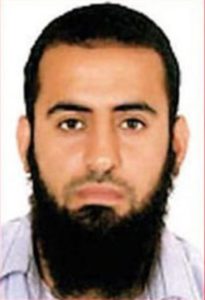
This detail is significant because it shows that ISIS maintained a structured intake and screening system for foreign arrivals traveling through Turkey. The process was designed to prevent infiltration while ensuring that new recruits could be moved from Turkey into Syria with the help of trusted intermediaries.
That account aligns with Nordic Monitor’s previous investigations into the trafficking of foreign fighters through Turkey into ISIS-held territory in Syria, which identified Turkish national İlhami Balı as one of the central figures overseeing the cross-border pipeline.
Balı, widely known by his nom de guerre Abu Bakr or Ebu Bekir, was identified by Turkish prosecutors as the border emir responsible for coordinating the movement of foreign recruits from Turkey into Syria. He was also named as the mastermind and prime suspect in a series of deadly ISIS terrorist attacks in Turkey that killed hundreds of people between 2015 and 2017.
Those terrorist attacks, officially blamed on ISIS, helped Erdogan regain the parliamentary majority his party had lost in the June 2015 elections. Critics and opposition figures have long argued that the attacks created a climate of fear and insecurity that benefited the ruling Justice and Development Party (AKP), driving voters back to the party in the snap elections held in November 2015. Some analysts and government critics have alleged that the authorities turned a blind eye to ISIS activities or exploited the resulting violence for political gain, pointing to the timing of the attacks and subsequent political developments as grounds for suspicion.
Confidential Turkish intelligence and law enforcement documents reviewed by Nordic Monitor and later published in a series of investigative reports revealed that despite being one of the country’s most wanted ISIS operatives, Balı maintained clandestine contacts with MIT. According to secret intelligence records prepared by Turkish police, Balı was hosted as a guest at a hotel in Ankara between May 25 and 27, 2016, where he reportedly met with several senior MIT operatives.
Additional documents obtained from Turkey’s Health Ministry further showed that Balı received medical treatment at a state hospital in the central province of Konya on July 25, 2016, despite being the subject of multiple terrorism investigations and an active manhunt at the time.
Superseding indictment filed against Emraan Ali:
More than a decade after he emerged as a key ISIS figure, Balı has never been apprehended or brought to justice. His continued ability to evade capture has fueled allegations that he benefited from protection provided by elements within the Turkish state apparatus.
Confidential police wiretap transcripts from 2014 and 2015, a copy of which was obtained by Nordic Monitor, place Balı squarely at the center of a sophisticated network used to move foreign fighters into Syria. The recordings reveal a structured intake system that closely mirrors the process described by Ali in his FBI interview.
According to the wiretaps, prospective recruits were first vetted through an ISIS contact point in Syria. Once approval was granted, Balı coordinated their movement inside Turkey, directing them to designated hotels in border provinces and dispatching couriers to escort them to predetermined meeting points. He maintained detailed records of arrivals and departures and later reconciled the number of fighters delivered with couriers in order to calculate transportation expenses and submit reimbursement requests to ISIS headquarters.
The intercepted communications suggest that the trafficking of foreign fighters was not an ad hoc operation but rather a highly organized logistical enterprise with established procedures for screening, transportation, accommodation and accounting. The system described in the wiretaps bears striking similarities to the account provided by Ali, who told FBI investigators that recruits needed to be recommended by trusted intermediaries before receiving instructions upon arrival in Turkey and proceeding to Gaziantep, the final staging point before crossing into Syria.
Taken together, the FBI transcript and the Turkish wiretap evidence provide complementary accounts of the same cross-border infrastructure, illustrating how ISIS relied on facilitators operating on Turkish territory to manage the steady flow of foreign fighters into Syria during the height of the conflict.

The FBI interview transcript also identifies the Turkish border province of Gaziantep, describing it as the last place Ali went before crossing the border. Gaziantep was one of the most important staging grounds for foreign fighters, smugglers, aid workers, intelligence operatives and armed factions during the Syrian conflict. Turkish spy agency MIT maintains a significant presence in the province, closely monitoring foreigners and conducting round-the-clock surveillance of activities deemed unusual or suspicious.
Given the extensive intelligence and security infrastructure in the region, it would have been difficult for large numbers of foreign fighters to transit through Turkish border provinces and enter Syria without at least the knowledge and approval of Turkish authorities. Likewise, ISIS and other jihadist groups could not have fully exploited the logistical networks operating along the border without a degree of tolerance and support from Ankara.
The Erdogan government pursued a policy aimed at toppling Syrian President Bashar al-Assad and replacing his regime with an Islamist-led alternative, a strategy that resulted in Turkey’s borders becoming a conduit for a wide array of radical Islamist actors heading to Syria.
Several counterterrorism investigations launched by Turkish prosecutors between 2014 and 2016 uncovered evidence pointing to MIT’s involvement in the transfer of weapons and fighters to armed jihadist groups operating in Syria, including ISIS. Those investigations were abruptly terminated by the Erdogan government, while prosecutors, police officers and judges who pursued the cases were dismissed, prosecuted or imprisoned on politically motivated charges.
Although Erdogan’s government succeeded in suppressing scrutiny of MIT’s clandestine activities within Turkey, judicial proceedings, criminal prosecutions and intelligence investigations conducted abroad have continued to expose details of these operations. Court records and official documents from the United States and Europe have repeatedly shed light on the mechanisms through which Turkish territory was used to facilitate the movement of fighters, weapons and supplies into Syria.
The Ali case is one of many examples found in US court records that illuminate Turkey’s role in enabling the flow of foreign fighters to ISIS. In Ali’s account the FBI transcript identifies Gaziantep as the final stop before crossing into Syria, underscoring once again how the province functioned as a critical gateway for recruits seeking to join the jihadist group.

The court filing therefore reinforces longstanding findings by Western intelligence and law enforcement agencies that Turkey’s southern border became a major gateway for ISIS recruits from around the world. Foreign fighters from Europe, North America, the Caribbean, Central Asia and the Middle East frequently flew into Istanbul or other Turkish airports, traveled onward to border provinces such as Gaziantep, Hatay, Şanlıurfa or Kilis, and then crossed into Syria with the assistance of smugglers or jihadist facilitators.
Ali’s account also shows how ISIS propaganda and family-based recruitment was combined with the Turkish transit route. According to the filing, Ali came from Rio Claro, a small and isolated town in Trinidad, where a close-knit Muslim community received information about Syria from mosque circles, relatives and acquaintances who had already gone there. Ali’s brother-in-law Akil was described as a key source of information, using online material and alternative media to portray the West as hostile to Muslims.
Ali told FBI agents that he believed he was taking his family to a pure Islamic society where his children would be shielded from alcohol, drugs, partying and other “Western distractions.” He said he expected to work in construction, not to fight. However, the documents obtained by US authorities from seized ISIS materials in Syria confirmed that Ali was listed as a fighter. The documents show him as enlisted with the Anwar al-Awlaki battalion and possessing approximately $40,000 in cash upon arrival.
Ali’s son Jihad, who was 15 at the time, also went through training and later left the family home. Jihad Ali was later sentenced in the United States to five years in federal prison for joining and fighting for ISIS.
The documents further show that foreign families who traveled through Turkey into Syria were absorbed into ISIS’s administrative and military structures after arrival. Ali said that after completing training he was assigned to a battalion but claimed he was too sick to serve and was taken to a hospital.
The sentencing memorandum filed by US prosecutors details Emraan Ali’s activities in ISIS and describes how he traveled to Syria through Turkey, highlighting the logistical networks that facilitated the movement of foreign recruits into territory controlled by the terrorist group:
After leaving combat duties, Ali worked in construction, traded goods and facilitated funds transfers for other Trinidadian ISIS members. The FBI complaint states that he used a contact in Trinidad and Tobago who collected funds from relatives of ISIS fighters. The money was then transferred through Western Union to a hawala broker, an informal money-transfer agent who moves funds across borders through a trusted network of intermediaries, operating between Turkey and Syria. The broker subsequently delivered the funds to Ali inside ISIS territory for a commission.
This indicates that Turkey served not only as a transit route for fighters but also as part of a financial network used to move funds into ISIS-controlled areas.
His statements also offer insight into the foreign fighter economy inside ISIS-held territory. Ali told agents that foreign fighters preferred “fancy weapons,” including Glocks and higher-quality scopes. He described a market in which the widows of slain fighters sometimes sold weapons or accessories without knowing their value. He estimated that he had bought and sold four or five guns or gun parts.
The filing also details Ali’s failed attempt to escape ISIS territory. According to the memorandum he paid $6,000 to a smuggler to move his family out in an empty oil tanker, but the smuggler disappeared with the money. The account illustrates how the same smuggling ecosystem that helped move recruits into Syria could also be used, at great risk, by those trying to leave.
Ali and his two eldest sons eventually surrendered to the Syrian Democratic Forces near Baghuz in March 2019, during the collapse of ISIS’s last territorial stronghold. They were interviewed by US Department of Defense personnel near the Tanak oil field and later held in several detention facilities in northeast Syria before Ali was returned to the United States.
The broader importance of the Ali case lies in the Turkish dimension. The FBI transcript confirms that Turkey was the operational bridge used by ISIS-linked networks to move foreign recruits into Syria. The process involved prior contacts, a recommendation or vouching system, instructions provided after arrival in Turkey and a final staging point in Gaziantep before crossing the border.
The case adds to the growing body of judicial records from the United States and Europe showing that Turkey was repeatedly used as the main transit corridor for ISIS recruits during the Syrian war. Despite Ankara’s later claims that it tightened border controls and cracked down on jihadist networks, the Ali filing again demonstrates how easily foreign fighters were able to exploit Turkish territory, infrastructure and border provinces to reach ISIS-controlled areas.
For years Turkey’s government under President Erdogan faced criticism from allies for failing to adequately police its long border with Syria, allowing jihadist networks to use Turkish cities as logistical hubs, recruitment nodes, medical recovery points and smuggling corridors. The Ali case offers another first-hand account confirming that the pipeline was not merely theoretical but operational and structured and that it relied on Turkish territory as the last gateway to ISIS.