Abdullah Bozkurt/Stockholm
The recent terrorist attack on the Israeli consulate in Istanbul has once again highlighted how Turkish authorities have tolerated Islamic State in Iraq and Syria (ISIS) networks inside the country while pulling out all the stops — including flagrant violations of constitutional provisions — to crack down on legitimate opposition groups in order to sustain the repressive Islamist regime of President Recep Tayyip Erdogan.
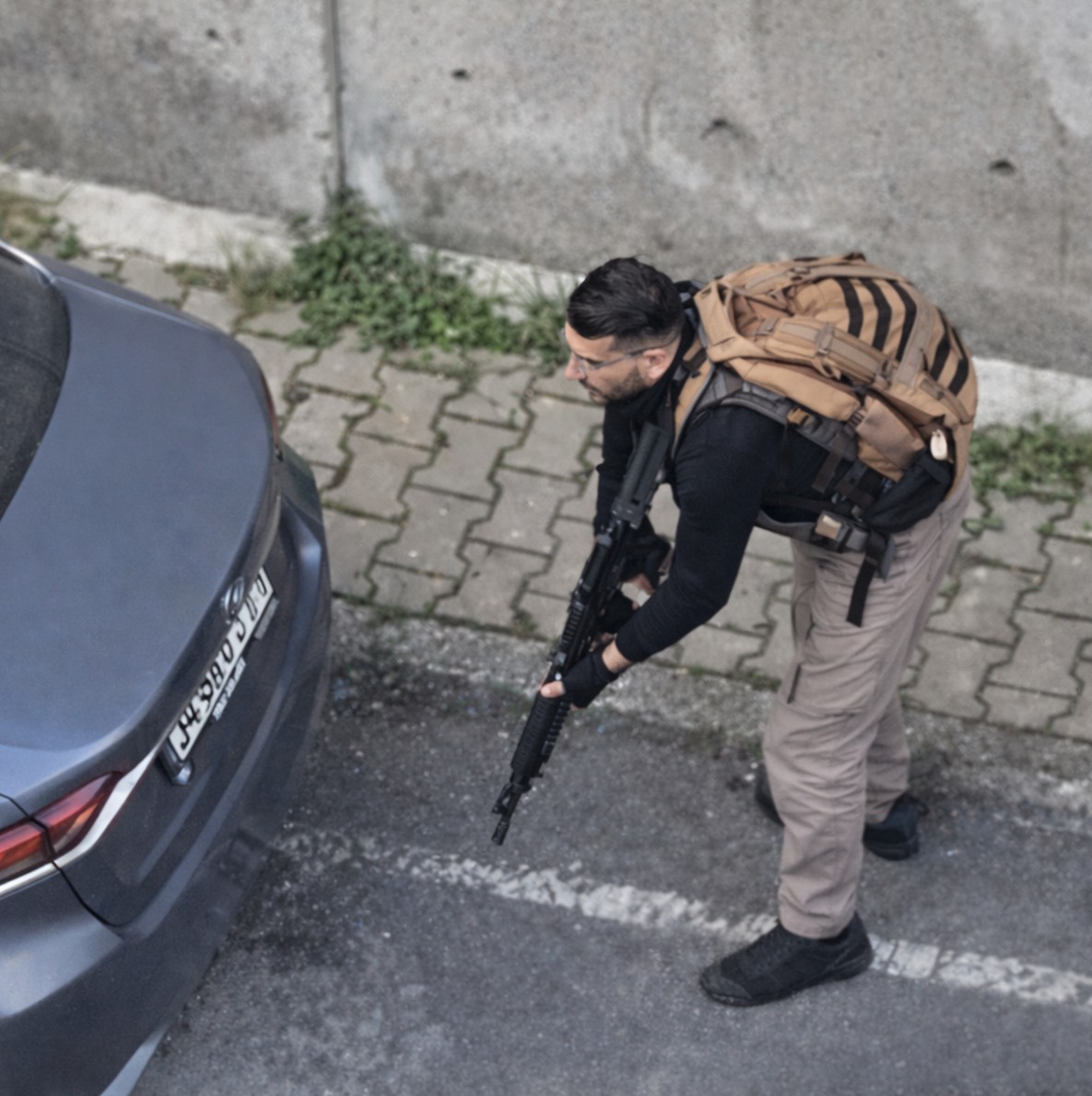
The attack targeted the Israeli Consulate General, located in one of Istanbul’s busiest and most strategically significant districts, at noon on April 7, marking one of the most serious security incidents involving a diplomatic mission in Turkey in recent years. Two police officers were injured, while one attacker was killed and the other two were wounded and captured.
Turkish authorities downplayed the ISIS link in the attack, refraining from even naming ISIS as the perpetrator, focusing on a provocation narrative with implicit reference to foreign states as the main culprit behind the incident.
President Erdogan said, “We will not allow vile and timed provocations to harm Turkey’s climate of security.” Interior Minister Mustafa Çiftçi said one of the attackers was “linked to a terrorist organization that exploits religion,” without naming ISIS. Istanbul Governor Davut Gül noted that the consulate building was not currently in use and described the incident as “an act that reeks of provocation.”
Yet the facts are hard to hide given the background of the lead attacker, Yunus Emre Sarban (32), who had been indicted on ISIS charges in the past. A Turkish court, however, acquitted him, just like in thousands of other ISIS cases where the Turkish judiciary has been far more lenient when it comes to jihadist groups, as opposed to the violation of due process and the rule of law in cases involving legitimate opposition and critics of the Erdogan government.
Sarban’s case dates back to 2019, when Turkish authorities detained several suspects during a roadside check in Tekirdağ in the European part of Turkish territory. Four individuals identified only as H.T., L.D., Ö.B. and O.B. were taken into custody on suspicion of ISIS links. A forensic examination of L.D.’s mobile phone uncovered message exchanges with Sarban which indicated that L.D. had asked Sarban to help procure a rental vehicle, a mask and a weapon, raising suspicions about potential operational planning.
Following these findings, Sarban was added to the case file and arrested along with the other suspects on January 10, 2019. Prosecutors formally charged him with ISIS membership, citing evidence recovered during a search of his residence. This included books and publications allegedly supporting ISIS ideology, which authorities argued were used for purposes of recruitment and indoctrination.
In addition, prosecutors pointed to digital materials found on his devices, including jihadist propaganda, images of armed children, ISIS flags and calls to jihad. Other items seized — such as a beret, face mask, green neck scarf and a baton — were described in the indictment as materials that could be used by militants to conceal their identities during acts such as murder, injury, kidnapping or sabotage.
Despite these allegations, the Tekirdağ 2nd High Criminal Court ordered the release pending trial of Sarban and the other defendants on May 10, 2019.
During the proceedings, Sarban denied all accusations, stating that he had no affiliation with any terrorist organization. He acknowledged knowing L.D. but claimed their contact was related to a personal debt. He described himself as someone interested in reading and research, arguing that exposure to certain individuals or content did not mean he embraced their views.

In its final ruling on October 4, 2022, the court acquitted Sarban and the other defendants of charges of membership in the ISIS terrorist organization. The judges acknowledged that ISIS-related materials had been found but determined that these alone were insufficient to prove organization membership. It also found that phone traffic records did not establish a clear link to terrorist acts or involvement in the organization.
An appeal of the acquittal was rejected by the Istanbul Regional Court of Justice, with the decision becoming final on November 3, 2023. In the meantime, prosecutors also dropped charges of terrorism financing against Sarban.
Separately, it was revealed that Turkish authorities had imposed an asset freeze on Sarban on April 7, 2021, on ISIS-related terrorism charges while the trial was ongoing. This measure was lifted on August 1, 2024, after the Asset Freeze Evaluation Commission (Malvarlığının Dondurulmasını Değerlendirme Komisyonu), which operates under the Ministry of Finance and includes members from multiple agencies, including Turkish intelligence agency MIT, concluded that there was no need to maintain the freeze.
The decision was published in the Official Gazette on August 31, 2024, bearing the signatures of Finance Minister Mehmet Şimşek and then–interior minister Ali Yerlikaya.
Sarban also served three months in prison in connection to the murder committed by his father of a relative in a domestic dispute. His record also showed that he had been detained by police multiple times on alleged ISIS charges but released on every occasion.

The Turkish government’s post-incident response was to round up 273 known ISIS suspects across the country — a typical move aimed at projecting a crackdown on ISIS. In reality, however, many of those detained in such operations are later released in stages, whether from police custody or by prosecutors and courts, as has been seen in thousands of ISIS-related cases in Turkey over the past decade.
The other two participants in the consulate attack were identified as brothers Onur Çelik and Enes Çelik, who were captured by the police after they were wounded in the shootout. Onur, the elder brother, had a record of drug abuse, while the younger brother had no criminal record, which allowed him to rent the car the three had driven to the building housing Israeli consulate.
The attackers were reportedly active in a notorious group called Ahlak ve Sünnet, in the Darıca district of Kocaeli province, known to have been associated with ISIS in Turkey. The group members clashed with the police in December 2025 during the execution of a search warrant by the police, resulting in the death of three police officers and six ISIS militants. They later joined the radical Tevhit ve Davet group, where Salafi and takfiri ideologies were dominant.
The attackers had conducted multiple surveillance operations around the building housing the consulate at various times, ultimately deciding to use the rear entrance to gain access and proceed to the seventh floor in an attempt to penetrate the consulate offices.
The Erdogan government often brags about mass detentions in its crackdowns on ISIS but does not disclose how many suspects are actually convicted and serve prison time, despite parliamentary inquiries demanding the release of such data.

Available limited data suggest that two out of three ISIS suspects are released by courts at arraignment, while the bulk of the remainder is freed in stages either before trials begin or during hearings. Only a small number are ultimately convicted in first-instance criminal courts, and even some of those convictions are later overturned on appeal.
Multiple US federal cases involving ISIS suspects including operatives who used Turkey as a staging ground have documented how militants were able to move through Turkish territory, establish logistical infrastructure and maintain communication networks with limited interference for extended periods of time.
Opposition figures and independent observers say the government of President Erdogan has devoted far greater resources to suppressing political dissent, targeting journalists and prosecuting critics and opponents on fabricated charges while allowing extremist networks to operate with relative freedom.
For example, Turkish authorities’ lenient and accommodating approach toward ISIS and other jihadist groups stands in stark contrast to their harsh crackdown on legitimate critics and opposition groups such as the faith-based Gülen movement, which has engaged in interfaith dialogue and outreach as well as social and community empowerment through science education.
The movement has been a vocal critic of Erdogan due to Turkey’s alleged support for radical religious groups, pervasive government corruption and increasingly authoritarian governance that undermines democracy, the rule of law and fundamental rights and freedoms.
Over the past decade, nearly 400,000 people have been detained and more than 113,000 arrested in investigations related to the movement. According to Justice Ministry statistics, in excess of 126,000 people have been convicted in Gülen-related trials since 2016, with thousands still imprisoned and tens of thousands remaining under investigation nearly a decade later.