Abdullah Bozkurt/Stockholm
A new US Treasury sanction on three Turkish companies reveals that Iran has increasingly relied on Turkey to expand its unmanned aerial vehicle (UAV) programs, using newly set-up shell companies to move parts and funds through the Turkish corporate and financial sectors.
In a sweeping action announced on February 25, 2026, the US Department of the Treasury’s Office of Foreign Assets Control (OFAC) sanctioned more than 30 individuals, entities and vessels tied to illicit Iranian petroleum sales and Tehran’s ballistic missile and advanced conventional weapons (ACW) programs. The designations were issued as part of Washington’s renewed “maximum pressure” campaign.
While much of the announcement focused on Iran’s shadow fleet transporting petroleum to finance weapons development and regional proxy groups, the inclusion of three Turkey-based companies underscores Ankara’s continuing role as a financial and logistical conduit for Iran’s drone and missile procurement networks.
A Nordic Monitor investigation into the sanctioned Turkish companies reveals that all were established in 2024 as single-owner businesses, with little traceable activity in official trade registry records since their incorporation. Their limited corporate footprint, coupled with the identities of relatively unknown Turkish founders, suggests they were set up for specific, short-term purposes and functioned as shell companies used by Iran to bypass sanctions — measures the Islamist government of President Recep Tayyip Erdogan has repeatedly vowed not to comply with when imposed unilaterally by the United States.
OFAC designated three Turkey-based companies — Utuş Gümrükleme Gıda Tekstil İthalat İhracat Dış Ticaret ve Sanayi Limited Şirketi (Utuş), Arya Global Gıda Sanayi ve Ticaret Limited Şirketi (Arya) and Altis Tekstil Makina Ticaret Limited Şirketi (Altis) — for serving as financial intermediaries in procurement transactions benefiting Iran’s UAV production network.
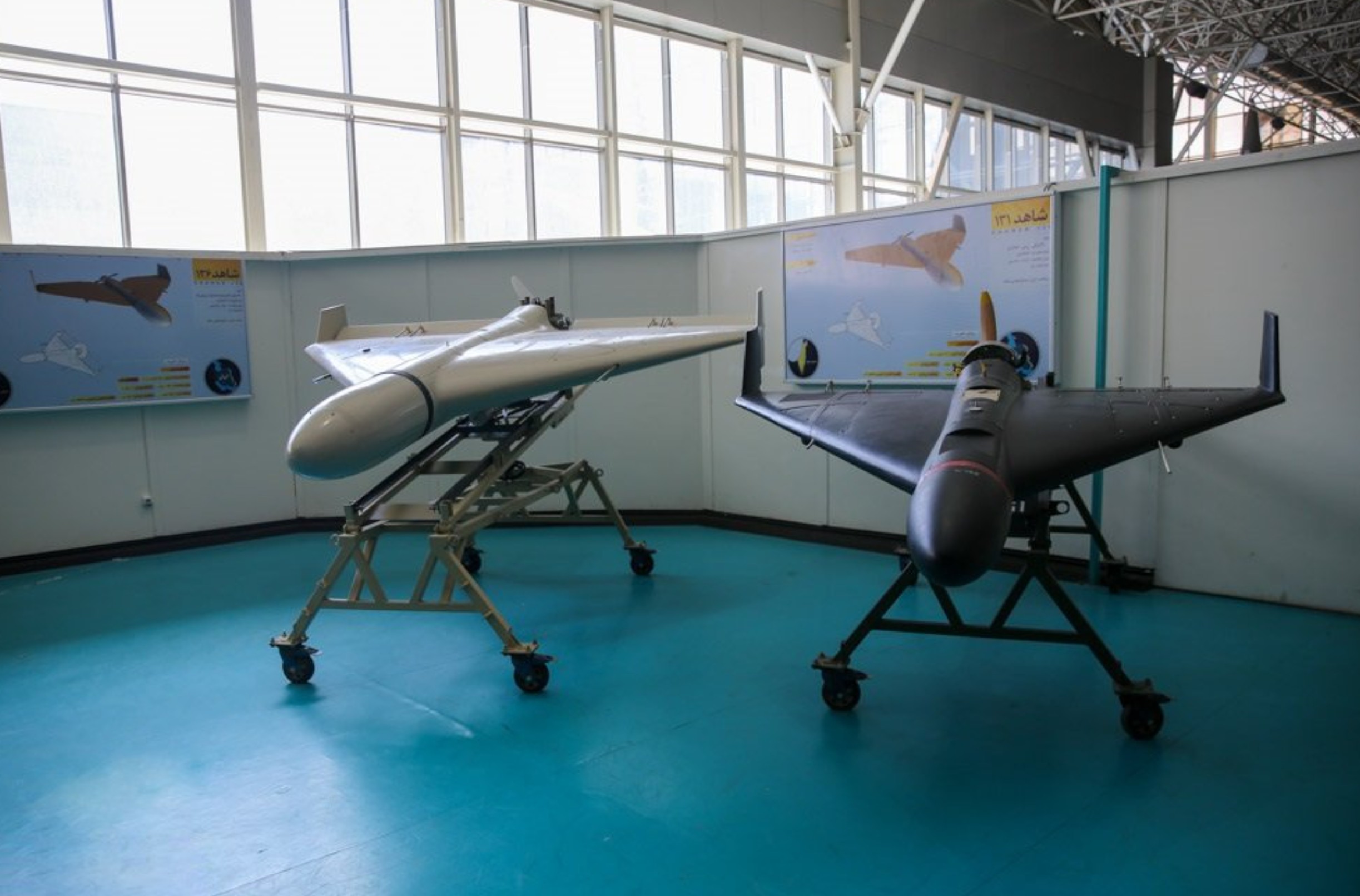
According to the Treasury statement, the companies facilitated payments on behalf of Iran-based Oje Parvaz Mado Nafar Company (Mado), a drone engine manufacturer previously sanctioned in 2021 for supporting the Islamic Revolutionary Guard Corps (IRGC). Mado produces engines used in Iran’s Shahed-131 and Shahed-136 drones, which have been deployed in regional conflicts and exported abroad.
Utuş reportedly originated payments totaling hundreds of thousands of dollars to support Mado’s purchases of sensitive machinery used in advanced conventional weapons platforms linked to the IRGC Aerospace Force Self Sufficiency Jihad Organization (IRGC ASF SSJO).
A review of official Turkish Trade Registry records shows that Utuş was incorporated in Istanbul on December 6, 2024, with a modest capital base of 100,000 Turkish lira (worth roughly $3,400 at the time of incorporation). The company was established as a single-shareholder limited liability entity, fully owned and managed by one individual, Ecevit Utuş. There are no additional partners, no listed board structure and no evidence of prior corporate history.
The company’s registered address is located in Pendik, Istanbul, in what appears to be a mixed-use residential-commercial building rather than an industrial or logistics facility. Trade registry records show no subsequent capital increase, no branch offices and no significant amendments following its incorporation.

Utuş declared an exceptionally broad scope of business activities, covering customs brokerage, food products, textiles, machinery, chemicals, construction materials, automotive trade, industrial equipment, logistics services, domestic and international trade and e-commerce. The wide-ranging and generic activity list does not reflect a specialized operational focus but instead grants flexibility to engage in nearly any form of import-export transaction.
Despite being registered as an international trade and industrial services company, the firm’s low capitalization and lack of structural expansion suggest limited visible operational capacity. The absence of a defined commercial niche, coupled with the timing of its incorporation and its simplified ownership structure, is consistent with patterns often observed in trade-front entities used to facilitate sanctioned procurement networks.
The registry footprint indicates that Utuş functioned less as an established commercial enterprise and more as a recently formed intermediary vehicle capable of routing payments and coordinating transactions without attracting significant public scrutiny.
Arya allegedly facilitated transfers exceeding $1 million for similar procurement efforts by Iran according to the US Treasury. A review of its trade registry records shows that Arya was incorporated in Istanbul on October 8, 2024, with a declared capital of 100,000 Turkish lira (approximately $3,400 at the time). The company was established as a single-shareholder limited liability entity, fully owned by one individual, Mehmet Bozkurt, a Turkish national. No additional partners, board members or complex ownership layers are listed in the registry.
Like Utuş, trade registry records show no branches, no capital increases and no structural amendments following its establishment.
Arya declared an exceptionally broad and non-specialized scope of business activities. The registered activity list includes food production and trade, import and export of agricultural products, machinery and industrial equipment, textiles, construction materials, chemicals, electronics, automotive products, logistics services, fuel trade, warehousing, e-commerce and consultancy. The breadth of declared activities spans dozens of unrelated sectors, granting the company maximum transactional flexibility.
Despite being registered as a company capable of international trade and industrial procurement, the firm’s minimal capitalization and lack of visible corporate expansion suggest limited operational infrastructure. There is no indication of manufacturing capacity, warehouse facilities or sector-specific investment that would normally accompany a firm engaged in large-scale machinery procurement or cross-border industrial supply chains.
The registry footprint — recent incorporation, single-owner structure, low capital base and extremely expansive but generic activity description — aligns with structural characteristics commonly associated with intermediary trading vehicles or shell entities.
The third sanctioned Turkish company, Altis, processed transactions worth tens of thousands of dollars tied to Mado’s acquisitions according to the US Treasury. A review of official Turkish Trade Registry Gazette records shows that it was incorporated in Istanbul on December 25, 2024, with a declared capital of 200,000 Turkish lira (approximately $6,000–$7,000 at the time of incorporation). The company was established as a single-shareholder limited liability entity, fully owned by Nurettin Batur, a Turkish national. No additional shareholders or complex governance structure are listed.
Trade registry data for Altis Tekstil Makina Ticaret Limited Şirketi (Altis), a shell company used in Turkey to bypass US sanctions on Iran:
The company’s registered address is located in Beylikdüzü, Istanbul, within a residential-style site (Skyport Residence), rather than in an industrial zone typically associated with machinery trade or manufacturing operations.
Although its name suggests specialization in textile machinery, the registered business description spans industrial control equipment, machinery installation, electrical and electronic systems, industrial production lines, automotive components, construction materials, mining equipment, medical devices, laboratory instruments, chemicals, metals, petroleum derivatives, logistics services, foreign trade and consultancy. The scope also includes import, export, wholesale and retail trade across numerous unrelated sectors.
Despite presenting itself as a machinery trading company, the company’s relatively modest capital base, single-owner structure and absence of visible operational expansion raise questions about its capacity to conduct large-scale industrial procurement or cross-border machinery transactions.
The timing of Altis’s incorporation combined with its expansive and non-specialized activity list and simplified ownership structure, mirrors patterns observed in recently formed intermediary trading entities. The company’s profile is consistent with a flexible corporate vehicle capable of routing financial transactions or facilitating procurement across multiple sectors without revealing a focused commercial specialization.

The designation of these three Turkish companies signals that Iranian defense-linked entities have been able to exploit Turkey’s commercial infrastructure and banking system to secure machinery and components for drone and missile production.
Treasury’s announcement suggests that Turkey has become an increasingly important jurisdiction for Iranian procurement networks seeking to circumvent sanctions. Rather than directly purchasing restricted goods from Iran, sanctioned entities appear to have relied on Turkey-based intermediaries to originate payments and move funds through the international financial system.
The pattern reflects a broader trend in which Iranian-linked networks establish or utilize lightly scrutinized trading and textile companies to mask dual-use transactions. The structure allows funds to be routed through legitimate-appearing commercial channels before reaching sanctioned Iranian defense manufacturers.
The use of Turkish entities as financial conduits is particularly significant given Ankara’s NATO membership and its integration into global financial markets. Transactions routed through Turkey can carry less immediate suspicion than those moving directly from Iran or through more heavily sanctioned jurisdictions.
Under US sanctions rules, all property and interests of designated persons within US jurisdiction are blocked, and US persons are prohibited from engaging in transactions with them. Foreign financial institutions that knowingly facilitate significant transactions for sanctioned entities risk secondary sanctions, including restrictions on correspondent banking access to the United States.
The designation of Utuş, Arya and Altis raises the prospect of increased scrutiny of Turkish banks and trading companies that may have processed or facilitated related transactions.
The Treasury action suggests that as sanctions pressure mounts, Iran is increasingly turning to intermediaries embedded in Turkey’s corporate landscape to sustain and expand its UAV and missile programs, leveraging newly established commercial entities to bypass restrictions and move funds and technology across borders.
The designations underscore Washington’s assessment that Turkey is not merely a transit corridor for Iranian oil but also an emerging node in the financial and logistical networks sustaining Tehran’s expanding unmanned aerial and advanced weapons capabilities.