Abdullah Bozkurt/Stockholm
Turkey’s highest criminal court, dominated by far-right nationalists and Islamists, last year halted the extradition of a suspect accused of playing a key intermediary role in the transatlantic shipment of nearly one ton of cocaine aboard the sailboat Majic, delivering a major setback to Spanish prosecutors seeking to dismantle an international narcotics network operating between Brazil and Europe.
In a ruling dated April 9, 2025, the 10th Criminal Chamber of the Supreme Court of Appeals (Yargıtay) overturned a lower court decision that had found Spain’s extradition request admissible under Turkish law and the European Convention on Extradition. The high court blocked the extradition on procedural pretexts, endorsing the suspect’s defense arguments and citing what it claimed were serious deficiencies in how the request was handled by Turkish courts and Spanish authorities.
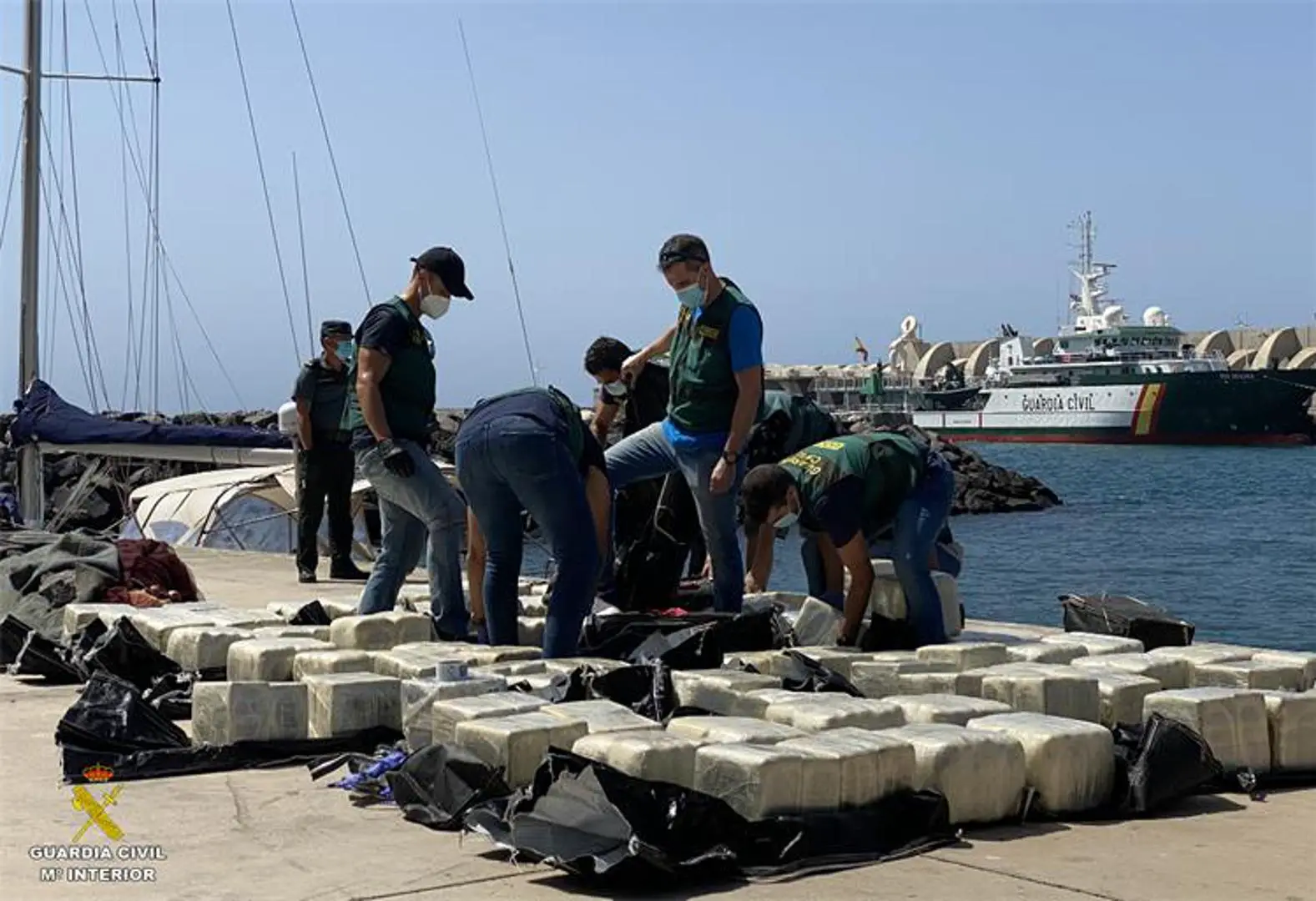
The case stemmed from the seizure of 980 kilograms of cocaine aboard the Croatian-flagged sailboat Majic on September 8, 2020, during a Spanish-led maritime interdiction operation. The investigation was launched after Croatian investigators received a credible tip that a sailboat would be used in drug trafficking and alerted Spanish counterparts.
Investigators determined that the cocaine with a street value of some $40 million had been sourced in Brazil, transported across the Atlantic via maritime routes increasingly exploited by organized crime groups, and was destined for Spain, where it was to be handed over to a criminal organization operating as the receiving end of the network.
The suspect, identified as Martin Toplanaj, who uses multiple aliases, acted as an intermediary and facilitator in the smuggling operation, helping coordinate the movement of narcotics from South America to Europe. He was part of Balkans Cartel in which Turkish and Turkey-based criminals were also involved in facilitating the transport of drugs to the European market.
The case highlighted the growing use of sailboats and yachts by transnational criminal networks, which exploit jurisdictional gray zones on the high seas and less-monitored maritime corridors to move large cocaine shipments into European waters.
Madrid’s Central Investigative Court No. 6 issued international and European arrest and search warrants for him on December 14, 2023, for drug trafficking and membership in a criminal organization. Turkey did not move against him or his international drug trafficking activities until after a coordination meeting at Europol, during which the Turkish representative was told to take action against the Majic network. The government of President Recep Tayyip Erdogan, already under criticism for harboring notorious foreign drug traffickers on its territory and even providing some of them with Turkish citizenship and residence permits, came under increased pressure from European partners.
Turkish police eventually arrested the suspect in Istanbul on November 17, 2023. A search of his residence uncovered a passport issued in another name that authorities assessed to be forged, underscoring how figures linked to international narcotics trafficking networks routinely rely on false identities to evade capture. The Madrid court formally requested his extradition on January 3, 2024, and the Spanish Embassy in Ankara forwarded the court papers to Turkish authorities on February 6, 2024.
The Turkish Justice Ministry’s Directorate General for Foreign Relations and EU Affairs transmitted the request to prosecutors, noting that the suspect was wanted internationally with a Red Notice issued by INTERPOL at Spain’s request on drug trafficking charges and that a separate INTERPOL Blue Notice had been issued by North Macedonian authorities in relation to document fraud and identity issues. At the time, the suspect was being held at the Pehlivanköy Removal Center, a facility used for foreigners in removal proceedings on immigration-related charges in northwestern Turkey.

In March 2024 the Kırklareli 1st High Criminal Court ruled that Spain’s extradition request was admissible under Turkish law and international conventions. Defense lawyers appealed, raising multiple objections, including that the seizure occurred on the high seas, calling into question Spain’s jurisdiction; that Spanish authorities failed to provide the precise criminal statutes that would be applied upon extradition; and that Turkey should first conclude proceedings related to the suspect’s alleged use of forged documents inside Turkey.
The high court decided to block the extradition by overturning the lower court’s ruling on procedural grounds, stating that Spanish authorities had not adequately provided the specific provisions of Spanish criminal law that would be applied to the suspect upon extradition. As a result, the extradition was halted, forcing the case to be sent back to the lower court for reconsideration.
The decision effectively delayed Spain’s efforts to prosecute a suspected key facilitator in the Majic cocaine shipment and highlights how Turkey’s high judiciary, controlled by the corrupt regime of President Erdogan and his far-right nationalist ally Devlet Bahçeli — who has been a top protector of mafia figures and organized crime syndicates, including drug traffickers, in Turkey — continues to undermine international cooperation.
The Supreme Court of Appeals routinely frees suspects, acquits defendants and overturns convictions in cases involving mafia figures who enjoy political protection from the government and its allies. In this case, international cooperation against transnational organized crime, even in a case involving nearly one ton of cocaine and multinational criminal networks, was obstructed by the Turkish judiciary.
The ruling also underscored Turkey’s growing profile as a transit and safe-haven country for figures linked to international narcotics trafficking routes between Latin America and Europe. The Majic case illustrates how Balkan-linked and transnational criminal groups exploit maritime routes across the Atlantic while relying on forged documents and legal delays on land to evade accountability.
As European authorities increasingly target maritime smuggling corridors, the Turkish court’s decision shows how the Erdogan government can slow down extradition efforts, allowing high-value suspects to remain out of reach even after major drug seizures and international arrest warrants.