Abdullah Bozkurt/Stockholm
Turkey’s Islamist ruling Justice and Development Party (AKP) appears to have cultivated a far more ideological and confrontational internal messaging system than the pragmatic communication mechanisms historically associated with authoritarian party structures such as those used in the former Communist Party of the Soviet Union or the modern Chinese Communist Party.
While those systems often combine ideological rhetoric with pragmatic policy guidance internally, the AKP’s internal information networks frequently reinforce a starkly ideological worldview that is deeply suspicious of the world and openly hostile toward major powers, especially the West. Israel, Jews and Christians, in particular, occupy a central place in these narratives.
The AKP, led by the brutally repressive President Recep Tayyip Erdogan, claims more than 10 million registered members in Turkey and among the diaspora, particularly in Europe, making it one of the largest political parties in the world. Maintaining cohesion across such a vast membership requires an extensive communication infrastructure that blends centralized messaging with grassroots amplification through informal social channels.
Unlike communist parties that historically relied on formal internal circulars, group briefings and party schools to communicate policy guidance, the AKP’s messaging ecosystem increasingly relies on a mixture of digital platforms and social interaction networks.
Party officials and activists routinely circulate talking points through closed messaging groups on applications such as WhatsApp, while narratives are reinforced through neighborhood meetings, mosque networks, youth organizations and informal discussions in coffeehouses — long a traditional hub of political debate in Turkey.
Within these platforms, Erdogan is often depicted as a caliph-like figure, the leader of the global Muslim community, who is said to be pursuing a long-term, strategic agenda to confront world powers and transform Turkey into a neo-Ottoman hegemonic force. His engagement with the West, Russia and China, as well as the concessions he is perceived to offer, are framed as tactical maneuvers designed to buy time until Turkey emerges as a global superpower, according to messaging circulated in these networks.
Pro-government media outlets and commentators often serve as a bridge between the party’s internal narrative and the broader public discourse. Newspapers and television stations aligned with the government frequently echo themes circulating in party circles, typically in a more moderated form, while still offering insight into the talking points being disseminated among grassroots members.
There are several figures whose writings provide clues about the narratives circulating behind closed doors and beyond official statements. One such figure is İbrahim Karagül, a prominent AKP-aligned commentator known for accompanying Erdogan on presidential trips and writing in the pro-government Yeni Şafak daily.
In a commentary reflecting the increasingly militant rhetoric common in internal messaging platforms aligned with the government, Karagül warned that if Israel made what he described as a fatal mistake, Turkey could “occupy Israel, burn down Tel Aviv and liberate Jerusalem.”
Karagül argues that the longstanding security architecture dominated by the United States in the Middle East has effectively collapsed and that many regional actors are no longer willing to fight on behalf of Washington or Israel.
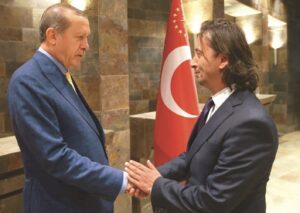
His article contains highly aggressive rhetoric toward Israel. Karagül suggests that if Israel were to make what he calls a “fatal mistake” by targeting Turkey, Ankara could respond militarily in dramatic fashion. He writes that in such a scenario, Turkey would occupy Israel and that Turkish forces would “destroy Tel Aviv and liberate Jerusalem.” He goes further by claiming that Israel’s long-term survival is uncertain, writing that “Israel is a one-week-old state,” suggesting it could collapse rapidly under the right conditions.
He portrays Turkey as a central actor in a sweeping geopolitical transformation, arguing that the country’s historical role in shaping Middle Eastern geopolitics will re-emerge after what he describes as a brief interruption during the 20th century. Such statements illustrate the tone of narratives often circulated within pro-government media ecosystems that function as extensions of the ruling party’s political messaging.
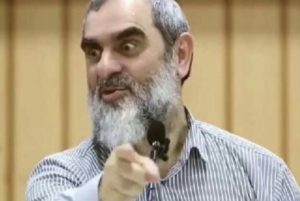
The Erdogan government also taps religious figures to legitimize and reinforce these narratives, providing theological backing for the president’s ambitions and policies. Hayrettin Karaman, often described as Erdogan’s chief religious authority or fatwa [religious edict] issuer linked to Muslim Brotherhood networks, and Nurettin Yıldız, a radical cleric known for advocating armed jihad and expressing support for al-Qaeda-linked groups in Syria, are among the figures who have provided religious justification for government policies.
Karaman has issued religious opinions excusing Erdogan’s crackdown on opposition groups and has urged the development of weapons of mass destruction, including chemical, biological and nuclear capabilities. Yıldız, for his part, has endorsed extreme punitive measures against critics, stating that members of the Gülen movement, a faith-based group opposed to Erdogan, should be executed, hanged or subjected to severe corporal punishment, including the cutting off of hands and arms.
These themes often circulate far beyond the pages of pro-government newspapers. Party activists and local officials frequently reference similar narratives in speeches at district-level gatherings, youth meetings and neighborhood forums organized by the AKP’s extensive grassroots network. Talking points first aired in media columns or presidential speeches are quickly shared in messaging groups — often in a sharper and more confrontational tone — and repeated in community discussions, creating a feedback loop that reinforces ideological messaging among supporters.
This decentralized amplification allows the party’s political narratives to spread organically through Turkey’s social fabric. Informal discussions in coffeehouses, local party offices and religious associations often replicate themes first promoted by pro-government commentators, ensuring that political messaging reaches individuals who may never read the original articles.
The ideological tone of these narratives has become increasingly pronounced as Turkey’s relations with Western countries and Israel have deteriorated in recent years. Although Turkey formally recognized Israel in 1949 and maintained close strategic ties for decades, relations have sharply deteriorated under Erdogan’s leadership amid repeated diplomatic crises and escalating rhetoric over conflicts in the Middle East.
The AKP’s internal messaging ecosystem risks deepening political polarization at home while further complicating Turkey’s already strained relations with Western allies, as well as with major global actors such as Russia and China. Supporters, however, view the rhetoric as part of a broader effort to assert Turkey’s regional and global leadership and resist what they see as attempts by global powers to constrain Ankara’s geopolitical ambitions.
What remains clear is that the AKP’s communication network, spanning digital messaging platforms, pro-government media, local party organizations and informal social spaces, plays a central role in shaping the worldview of millions of party members. Through this vast ecosystem, narratives that blend nationalism, Islamist symbolism and geopolitical confrontation continue to circulate widely, reinforcing an ideological identity that increasingly frames the outside world as an adversary rather than a partner.