Levent Kenez/Stockholm
Former Halkbank deputy general manager Hakan Atilla says Turkish officials encouraged him during his US trial to accuse the presiding judge of being linked to terrorism, an allegation he refused to make, revealing what he described as pressure from Ankara to deploy politically charged accusations during one of the most sensitive international corruption cases involving Turkey.
Atilla, who spent 28 months in a US prison after being convicted in 2018 of helping Iran evade American sanctions, made the claim in an interview published by Turkish journalist Cansu Çamlıbel. His comments offer a rare account from a central figure in the long-running Halkbank case, which exposed allegations of corruption and sanctions-busting reaching to the highest levels of the Turkish government.
According to Atilla, the request came through lawyers conveying messages from officials in Turkey while he was on trial in federal court in New York. “They wanted me to argue that the judge was linked to FETÖ and request his removal,” Atilla said, referring to the term widely used by the government of President Recep Tayyip Erdogan to label followers of the faith-based Gülen movement as terrorists.
“I didn’t do it. Reza Zarrab did,” he added.
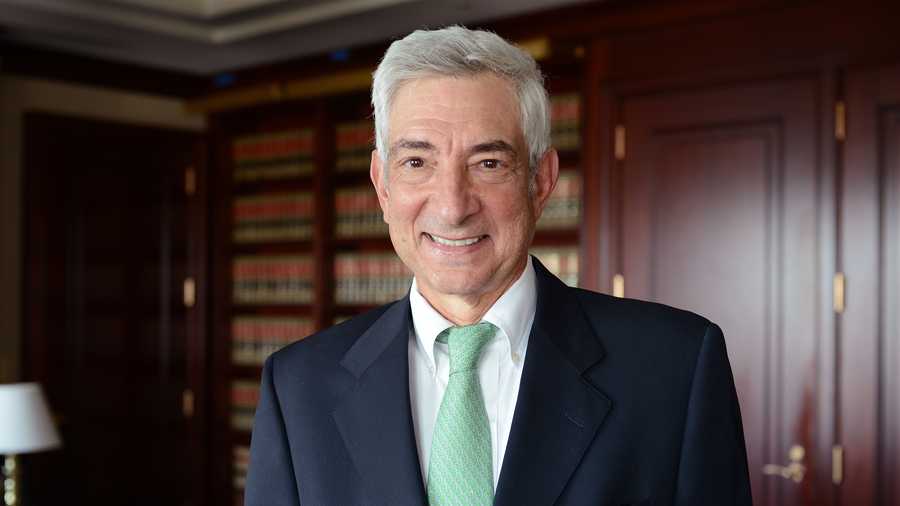
Atilla said the idea was to accuse the judge, Richard Berman, of being affiliated with the Gülen movement, a label that has frequently been used in Turkey to discredit critics or political opponents since President Erdogan launched a sweeping crackdown on the group after corruption investigations in 2013 exposed allegations against senior government officials and his family members.
In the interview Atilla criticized the use of the accusation, saying it amounted to an attempt to manipulate the court process by labeling the judge as a terrorist.
The claim shows how the term “FETÖ,” which the government uses as a shorthand for the Gülen movement, has become a political tool in Turkey. Critics say it is used as a blanket accusation to delegitimize opponents without evidence.
Atilla said the pressure reflected a broader pattern of officials encouraging individuals to deploy accusations as a political defense. “They wanted a certain style of defense,” he said. “When I didn’t follow it, they were unhappy.”
Atilla was arrested in New York in March 2017 while on a business trip and later convicted of conspiring to violate US sanctions on Iran. Prosecutors said he helped facilitate a complex scheme allowing Tehran to access billions of dollars in oil and gas revenue held in Turkish banks despite US restrictions.
The case centered on a network run by Iranian-Turkish gold trader Reza Zarrab, who moved funds through gold trades, fake food shipments and shell companies to bypass sanctions imposed on Iran over its nuclear program.
Zarrab was arrested in Miami in 2016 and later agreed to a plea deal, becoming a key government witness. In court testimony he described paying tens of millions of dollars in bribes to Turkish officials, including cabinet ministers, to keep the operation running.
Atilla maintained during the trial that he was a minor participant and said prosecutors initially portrayed him as a central figure in the scheme.
“At the beginning they showed a chart with Iran’s leaders and put my photo there as if I were the mastermind,” he said in the interview. “By the end of the trial I had become a small cog in the machine.”
In 2018 a federal jury convicted Atilla on several counts related to sanctions violations and bank fraud after he was detained at New York’s JFK Airport on March 29, 2017. He was sentenced to 32 months in prison and returned to Turkey in 2019 after being incarcerated for some 28 months.
He was welcomed as a hero upon his return and later appointed head of the Istanbul Stock Exchange, a position he held until resigning in 2021.
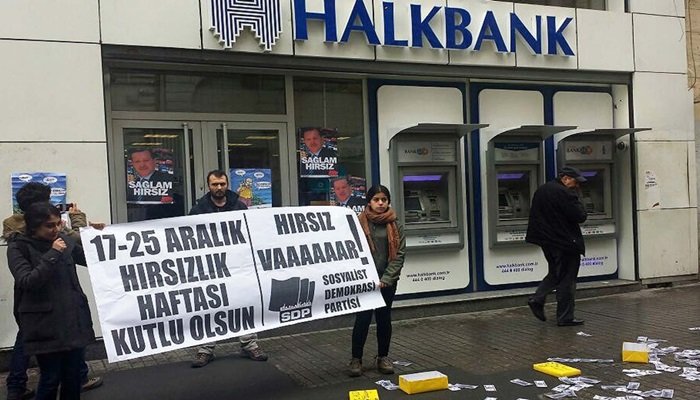
The Halkbank scandal itself has roots in a major corruption investigation launched in Turkey in December 2013. Prosecutors alleged that senior government officials accepted bribes from Zarrab in exchange for allowing Iranian funds to move through Turkey’s financial system.
The investigation implicated several ministers in the government of then-prime minister Recep Tayyip Erdogan. Police raids uncovered large sums of cash and documents detailing alleged bribery and sanctions-evasion operations linked to the gold-for-oil trade with Iran.
Erdogan denounced the probe as a conspiracy orchestrated by the Gülen movement and dismissed the prosecutors and police officers involved. The cases were quickly dropped, and many investigators were later prosecuted or forced from their positions. After the corruption scandal, the government increasingly labeled the movement as a terrorist organization and blamed it for the investigations that exposed the bribery allegations.

The Halkbank case later resurfaced in the United States, where federal prosecutors argued that the sanctions-busting scheme violated American law because it used the US financial system.
They said the operation moved billions of dollars through banks in Turkey, the United Arab Emirates and elsewhere between 2011 and 2016, disguising Iranian oil revenues as legitimate trade transactions.
According to prosecutors, senior Turkish officials supported the arrangement, enabling Iran to convert restricted funds into gold and cash while concealing the transactions from regulators.
Zarrab’s testimony during Atilla’s trial described how ministers and bank executives allegedly received bribes to facilitate the transfers. The revelations put the Turkish government under intense international scrutiny.
Erdogan repeatedly lobbied successive US administrations to intervene in the case, arguing that the prosecution of the state-owned Halkbank was politically motivated.
After years of litigation, the case against the bank itself took an unexpected turn earlier last week. US prosecutors and Halkbank reached an agreement to place the case in a deferred prosecution framework, effectively suspending the proceedings. The arrangement followed negotiations between the US Justice Department and the bank and was justified by the US government on grounds of national interest.
Under the agreement, the bank avoided a criminal trial and immediate financial penalties while accepting oversight conditions during a monitoring period. The deal effectively closed one of the most contentious legal disputes between Washington and Ankara.
For Atilla, however, the outcome brought little personal closure. In his interview, he said the agreement even included provisions addressing the return of assets belonging to Zarrab in Turkey, but did not mention him.
“Turkey agreed to return the assets of someone it once accused of espionage,” Atilla said. “But no one thought to ask for anything regarding someone who worked for the state and spent time in prison.”
He said he believed government officials knew he was not responsible for the scheme but allowed him to take the blame to shield others.
“Those who knew I was innocent but threw me into the fire to protect themselves — I do not forgive any of them,” he said.
Atilla also described broader frustrations with how the case was handled in Turkey. He said potential witnesses from Halkbank were prevented from testifying in his defense and that decisions about the legal strategy were influenced by officials in Ankara.
The episode, he suggested, demonstrated how easily political narratives and accusations can be mobilized in Turkey’s polarized environment. By asking him to label a US judge as a terrorist, Atilla said, officials showed how readily such claims could be deployed.
“I’m glad I didn’t follow those instructions,” he said. “If I had, I might still be in prison today.”