Abdullah Bozkurt/Stockholm
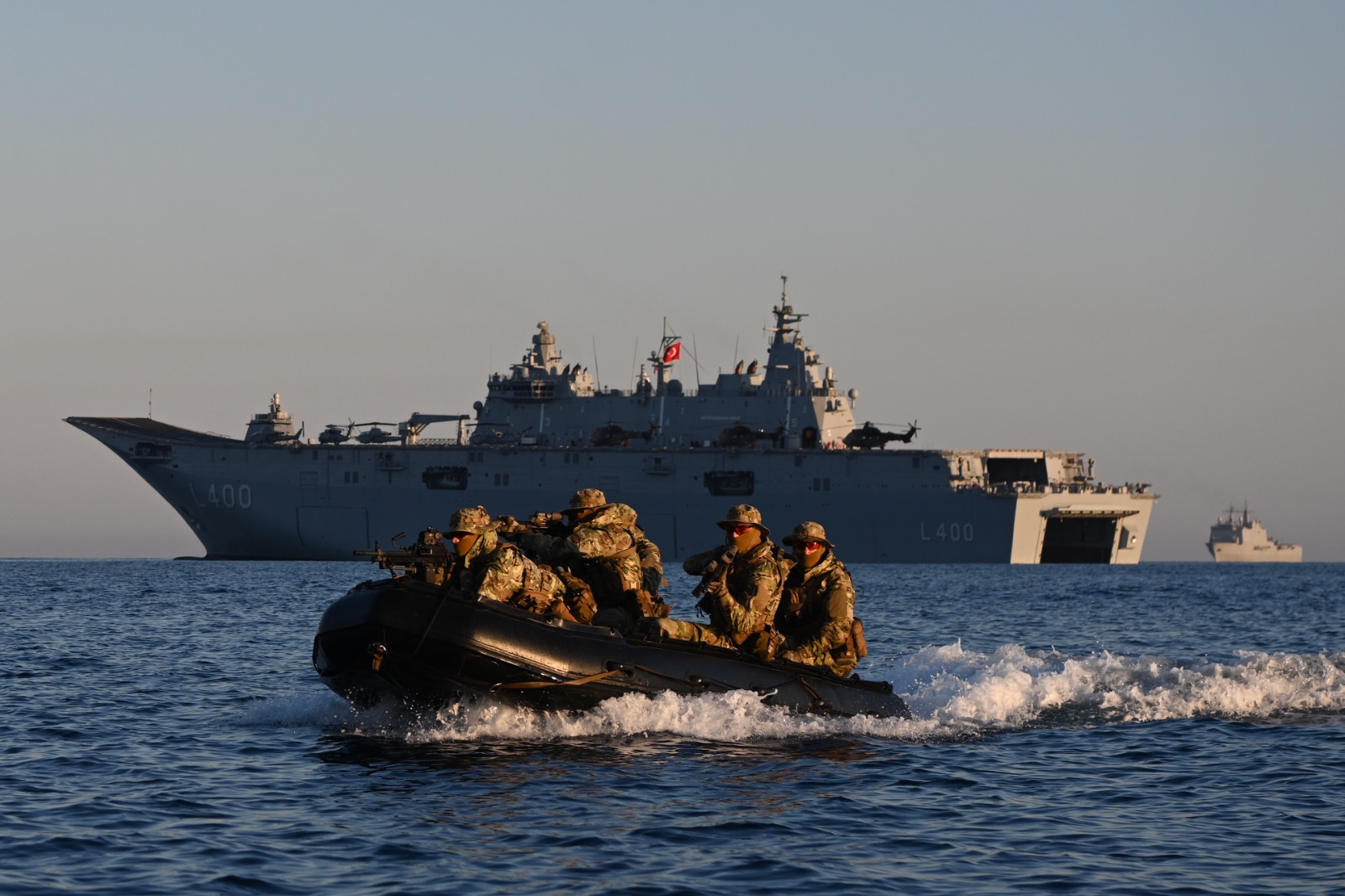
Turkey has rejected claims that its longstanding military presence in Albania could be jeopardized by recent cooperation agreements between Tirana and Rome, insisting that its role at the Pashaliman naval base remains essential and will continue without interruption.
In a letter sent to parliament earlier this month, Turkish Defense Minister Yaşar Güler said Albania has made no official request for the termination of Turkey’s presence at Pashaliman and that Ankara has undertaken no planning to withdraw its personnel.
“Allegations in this direction are completely unfounded,” the minister said in response to speculation that the Turkish presence might be at risk in light of a recent agreement between Albania and Italy on the modernization and development of the port.
Historically significant as the Soviet Union’s only Mediterranean submarine base in the 1950s, Pashaliman was taken over by Albania after its split with Moscow in 1961 and currently serves as a key naval facility for the Albanian Navy, with Turkey playing a major role in its reconstruction and use.
Turkish officials stressed that modernization activities at the base, launched in 1998, are ongoing and that personnel from the Turkish Naval Forces Command continue to serve there, providing advisory and training support to the Albanian Navy. The ministry described the mission as a key pillar of the two countries’ defense partnership.
Letter signed by Turkish Defense Minister Yaşar Güler confirms Turkey’s continued presence at the Albanian naval port of Pashaliman:
Ankara sought to downplay the significance of Albania’s recent security arrangements with Italy, arguing that such cooperation stems from the two countries’ geographical proximity and their shared obligations under NATO. These initiatives, the ministry said, are “independent in nature” from Turkey’s role at Pashaliman and do not undermine Ankara’s position.
Under a late 2025 agreement, Italian shipbuilding giant Fincantieri entered a joint venture with Albania’s state-owned company KAYO. The goal is to revitalize the Pashaliman shipyard into a modern production hub capable of building and maintaining naval vessels up to 80 meters in length for both the Albanian Navy and the international market.
The deal is projected to generate annual revenue of €400 million by 2031, with an immediate focus on constructing seven new patrol ships for Albania. Beyond the industrial sphere, Italian investment has sparked controversy with plans for the “Pashaliman Laguna Eco Resort,” a 25-hectare tourism project that sits partially on active military and protected heritage land.
Under existing bilateral agreements, the Turkish Navy maintains the right to utilize the facility for its own operations in the Ionian and Adriatic seas. Turkey continues to provide critical financial protocols and logistical support aimed at training personnel and restructuring the Albanian Armed Forces to align with NATO standards.
Relations between Turkey and Albania have deepened since Tirana joined NATO in 2009. Officials highlighted the signing of a “Military Framework Agreement” during the first meeting of the Turkey-Albania High-Level Cooperation Council in February 2024 as evidence of the expanding strategic partnership.
Turkey views the continued development of Pashaliman within NATO as an opportunity to reinforce its role in the alliance and secure leverage against Greece, a neighboring country with which Turkey has long-standing disputes over maritime borders in the Aegean. Minister Güler noted that evaluating “effective and multilateral working models” for the base would further strengthen Ankara’s contribution to security in the Adriatic and Ionian seas.
Reaffirming its commitment, the minister said Turkey is fully aware of the importance of maintaining its presence at Pashaliman and will continue bilateral and multilateral activities on the basis of cooperation with Albania.
The statement signals Ankara’s determination to remain a central security actor in the Western Balkans despite growing Italian engagement and objections from Greece.
To solidify its footprint in Albania, Turkey announced in December 2025 that it would gift an Airbus A319-115J, a government-configured aircraft worth $11.9 million, to the Albanian Armed Forces under a bilateral grant agreement. The agreement bears the signature of Albanian Defense Minister Pirro Vengu and is dated October 22, 2025.
The grant agreement, a copy of which was obtained by Nordic Monitor, states that the donation aims to strengthen the “friendly relations and close cooperation” between Turkey and Albania, initially established under the 1992 Treaty of Friendship, Good Neighborliness and Cooperation, with both sides expressing their desire to further deepen these ties through mutual technical and defense collaboration.