Abdullah Bozkurt/Stockholm
In mounting evidence that Turkey’s Islamist leadership is increasingly governing through its intelligence apparatus, the budget of the National Intelligence Organization (Millî İstihbarat Teşkilatı, MIT), the powerful spy agency tasked with neutralizing both domestic and foreign threats to the rule of President Recep Tayyip Erdogan, has been dramatically increased for 2026.
Official budget figures show that funding for MIT is set to grow at a pace far exceeding most civilian state institutions, reinforcing the agency’s central role in Ankara’s security-driven model of governance under President Erdogan.
MIT’s actual spending stood at 23.9 billion Turkish lira in 2024, rose to 28.9 billion lira in 2025 and is projected to jump to 39.5 billion lira in 2026. The latest rise represents a 37 percent year-on-year increase and more than 65 percent nominal growth over two years.
The latest increases build on a pattern of rapid growth in MIT’s funding. In 2024 alone the agency’s budget was increased by a staggering 125.7 percent compared with its 2023 allocation, jumping from 7.7 billion lira to 17.4 billion lira after approval by the Turkish Parliament.
Even after adjusting for Turkey’s high inflation, MIT’s budget is estimated to rise in real terms by 20–25 percent between 2024 and 2026. In US dollar terms MIT’s annual budget has climbed from approximately $750 million in 2024 to a projected $1.15–1.25 billion in 2026, making it one of the region’s most heavily financed intelligence services.
Those expansions took place amid a broader rollback of financial transparency: Since 2020 the government has stopped publishing annual spending and asset reports for MIT that were previously audited by Turkey’s Court of Accounts, depriving lawmakers and the public of oversight and making the agency’s financial resources largely opaque.
Cevdet Yılmaz, Turkey’s vice president, disclosed figures for the official budget of the National Intelligence Organization (MIT) during budget deliberations in the Turkish Parliament on December 1:
Although the agency does not disclose its total staffing levels, estimates suggest that MIT’s permanent workforce has grown to around 20,000 personnel, more than double that of a decade ago. When including networks of informants and assets both inside Turkey and abroad, some analysts believe MIT engages over 50,000 individuals in intelligence-related roles.
MIT also maintains access to off-budget funds and extra-budgetary resources that are difficult or impossible to trace. Under a legislative change in 2014 the agency gained access to the Defense Industry Support Fund (SSDF) without the usual tender and reporting requirements, allowing it to contract for arms and equipment without public disclosure. In 2024 alone the government transferred nearly 153.5 billion Turkish lira from tax revenue.
The agency also has access to the president’s discretionary budget, known in Turkish as Örtülü Ödenek, a slush fund primarily used to finance highly clandestine operations authorized by Erdogan. The government never discloses how this fund is spent, and details are known only by a small circle of officials working directly under the president, placing the expenditures entirely beyond public oversight or parliamentary scrutiny.
In 2024 a total of 10.48 billion lira was spent under this item, while in just the first eight months of 2025 another 7.15 billion lira had already been used. Where this money went, to whom it was transferred and for what purpose remain unanswerable questions. All of these expenditures are classified, shielded from oversight and completely closed to public scrutiny and access to information.
In addition to tapping multiple government funds to finance its activities, the agency also relies on off-the-books, illegal funding to support some of its operations. Money in this category is generated through various organized crime activities that the intelligence service allows to operate, ranging from drug trafficking to arms transfers. Shell companies are often used to obscure the origin of these funds, with the ultimate aim of diverting the proceeds to finance intelligence operations, particularly abroad.
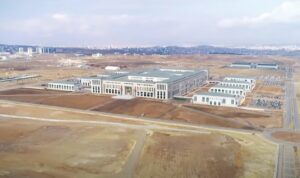
Turkey’s emergence as a hub for international organized crime figures, attracting foreign nationals who were granted Turkish citizenship with remarkable ease, is far from coincidental. All naturalization applications require vetting and approval by MIT, a process that the agency has allegedly exploited by recruiting notorious criminals to support its intelligence operations. In return these individuals are not only fast-tracked for citizenship but are also shielded from legal and administrative scrutiny over their illegal activities.
MIT’s rapidly expanding budget — both official and off-the-books — along with its growing manpower and network of informants and assets at home and abroad has coincided with a marked shift in the agency’s mission. Once primarily tasked with foreign and domestic intelligence collection, the service has increasingly been deployed to advance the Erdogan government’s political objectives, including influence and psychological operations, sabotage and disruption campaigns, covert special forces deployments and other controversial security actions.
The suspension of financial transparency, the absence of meaningful parliamentary oversight and near-absolute immunity from judicial investigation — enshrined through controversial amendments to the intelligence law passed by the Erdogan-controlled parliament — combined with explosive budget increases have transformed the agency into a tool used not merely for national security but as an instrument of political control and repression in Turkey.
President Erdogan further tightened his grip over the intelligence service in 2023 by appointing his longtime confidant İbrahim Kalın as its director. Kalın, who served for years as Erdogan’s chief spokesperson, is widely regarded as a hard-line Islamist figure who during his formative years was deeply influenced by and openly expressed admiration for Iran’s revolutionary leader, Ayatollah Khomeini.