Abdullah Bozkurt/Stockholm
The European Union’s new emissions rules and emerging local-content requirements are pushing Turkey’s automotive industry toward a critical crossroads, as Brussels moves to redesign its industrial and supply-chain architecture amid growing geopolitical and economic pressures.
While debates continue inside the EU over easing certain emission standards, far more consequential for Turkey is Europe’s effort to reduce strategic dependence on China, particularly in electric vehicles, batteries and clean-technology supply chains.
The proposed Industrial Accelerator Act, which is still under debate with no decision taken so far, is being closely watched by automotive executives in Turkey, who warn that rules initially targeting the car industry are likely to spread rapidly to other sectors.
The critical question is whether Turkey would be considered part of Europe under the bill despite not being a full EU member. Turkey’s customs union agreement with the EU, which allows Turkish manufacturers in industrial sector to access the single European market without tariffs or customs duties, could strengthen Ankara’s position in the negotiations.
However, the customs union agreement, signed in 1995, has long been criticized as outdated. Talks on its modernization have been under way for years but have so far failed to produce any concrete outcome.
Automotive export data underline Turkey’s deep dependence on the EU market, highlighting the European Union’s significant economic leverage over the country.
According to the latest data released by Turkish automotive industry exporters association the Uludağ Otomotiv Endüstrisi İhracatçıları Birliği (OİB), automotive exports rose 11.6 percent in 2025 to $41.5 billion, making the sector Turkey’s largest exporter and allowing it to claim the export-champion title 19 times in the past 20 years.

Exports in December 2025 alone increased 8 percent to $3.76 billion, while the automotive industry accounted for 16.2 percent of Turkey’s total exports, once again ranking first among all sectors.
In the January–November 2025 period, total automotive production increased 4 percent year-on-year to 1.3 million vehicles in Turkey. In unit terms, total automotive exports increased 5 percent to 961,000 vehicles in the same period. In terms of value, total automotive exports reached $37 billion.
The supply industry remains a key pillar. Parts and components exports rose 6 percent in 2025 to $15.77 billion, accounting for 38 percent of total automotive exports.
The EU remains Turkey’s overwhelmingly dominant market. In 2025 EU countries absorbed 72.5 percent of Turkey’s automotive exports, amounting to $30.11 billion. December exports to the EU rose 8.5 percent to $2.68 billion, accounting for 71 percent of total monthly automotive exports.
By country, Germany remained the single largest market, with exports rising 36 percent to $6.61 billion in 2025. Significant annual growth was also recorded in France (+17 percent), Spain (+36 percent), Romania (+35 percent), Slovenia (+27 percent) and Belgium (+19 percent). In December, France ranked first with $690 million in exports, up 33 percent, followed by Germany ($469 million, an increase of 8.5 percent),
The numbers show that making any shift in EU procurement rules, subsidies or localization thresholds will have a huge impact on Turkey. Industry representatives argue that if Turkey is included within a broader “Made in Europe” framework, it could strengthen its role as a strategic production and supply hub for Europe, offering the EU a credible alternative to Chinese producers.
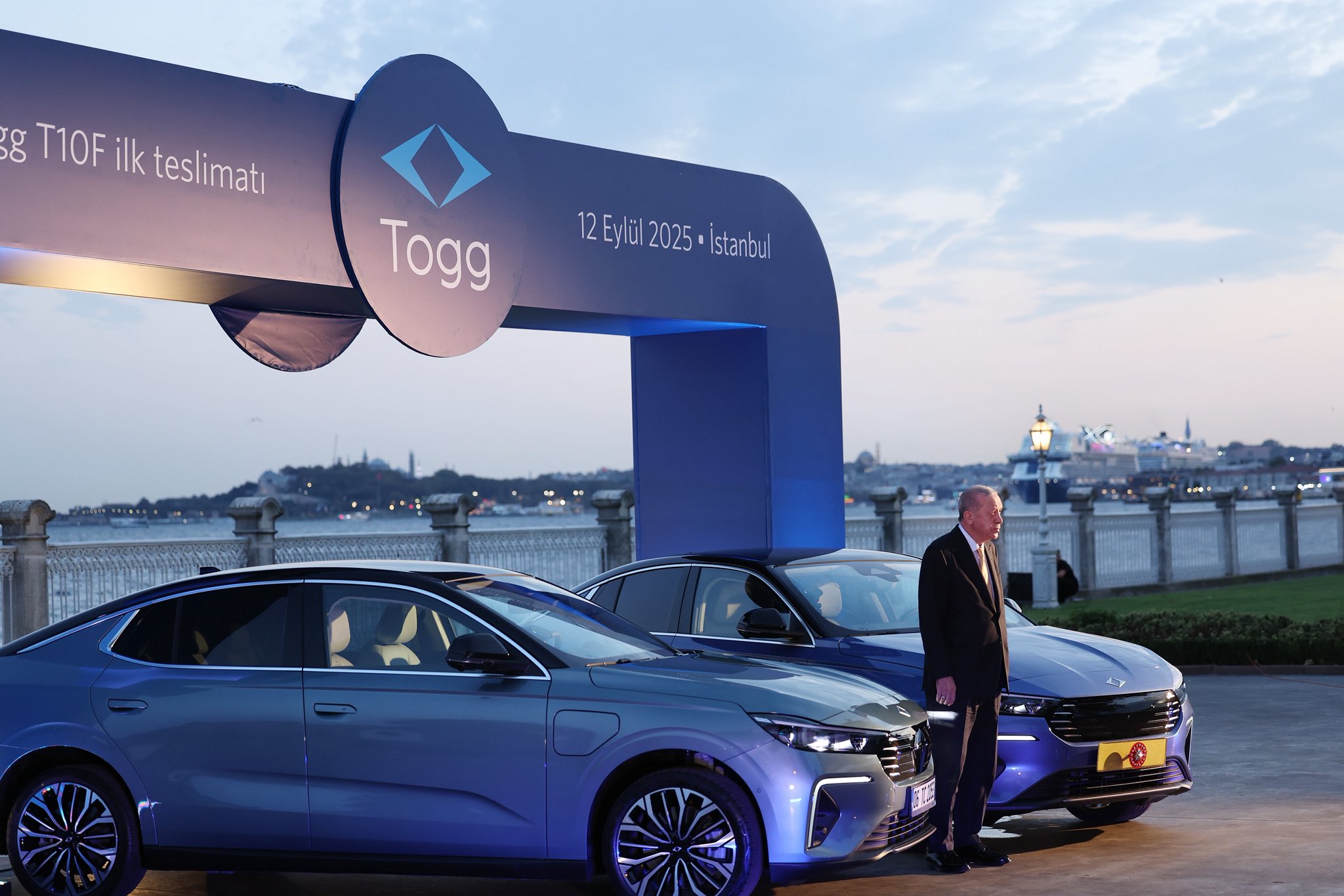
Many international tenders including those involving Turkish manufacturers such as TOGG, Karsan and Otokar already require European origin or inclusion within EU regulatory regimes. A narrow interpretation of localization rules could shut Turkish companies out of public procurement, even as exports to the private market continue.
Baran Çelik, president of the OİB, warned that the EU’s localization push is aimed primarily at reducing dependence on China, not at sidelining Turkey.
“This is not a ‘Made in European Union’ policy, but a ‘Made in Europe’ approach,” Çelik said. “Turkey should not be excluded. Many European investors operate production facilities in Turkey, and such a move would also put their investments at risk. If Turkey is negatively affected, the meaning of the customs union itself becomes questionable.”
With exports at record levels but investment decisions increasingly shaped by regulation, subsidies and geography, the automotive industry sees the EU’s new bill as a defining moment.
The outcome will determine whether Turkey consolidates its position as Europe’s strategic manufacturing partner in the auto manufacturing industry or faces gradual marginalization at a time when access to public funding and regulatory inclusion is becoming as important as cost competitiveness.
This underscores that despite President Recep Tayyip Erdogan’s repressive Islamist government’s attempts to distance Turkey from the EU and diversify its trade after accession talks stalled over failures on the rule of law and fundamental rights, the country remains deeply tied to Europe for its economic viability. As a result the EU holds considerable leverage over Turkey, with policy shifts in Brussels carrying immediate and far-reaching consequences for the Turkish economy.
Turkish government officials have remained silent on the proposed changes to the EU legislation, while opposition inquiries have drawn no response. With the exception of a few specialised industry outlets — which said they had briefed the government and presented detailed analyses of the potential impact — the Turkish media, largely dominated by the Erdogan administration, has avoided substantive coverage of the issue, effectively shielding it from public scrutiny.
Should Turkey be excluded from the new framework, the consequences would extend beyond lost exports, potentially endangering tens of thousands of jobs across the automotive sector.