Levent Kenez/Stockholm
The capture of Venezuelan President Nicolás Maduro by US forces and his transfer to New York have reignited scrutiny of how Venezuela’s gold, money and political protection networks operated during years of international sanctions and economic collapse and how Turkey emerged as a key partner in that system.
For years, officials and analysts have argued that the sharp rises and sudden collapses in Venezuelan gold exports tell a story on their own. With Maduro now facing trial in the United States on charges including narco-terrorism, US authorities allege that he allowed cocaine-fueled corruption to flourish within his government and personal circle.
Investigators are once again tracing how money moved out of Venezuela and through which political relationships, countries and business networks those flows passed.
Since taking power in 2013, Maduro has presided over hyperinflation, economic breakdown and deepening isolation from Western financial systems. As oil revenue declined and established export pathways closed, gold became central to regime survival. It functioned not only as a commodity export but also as a store of value and a tool for circumvention of sanctions.
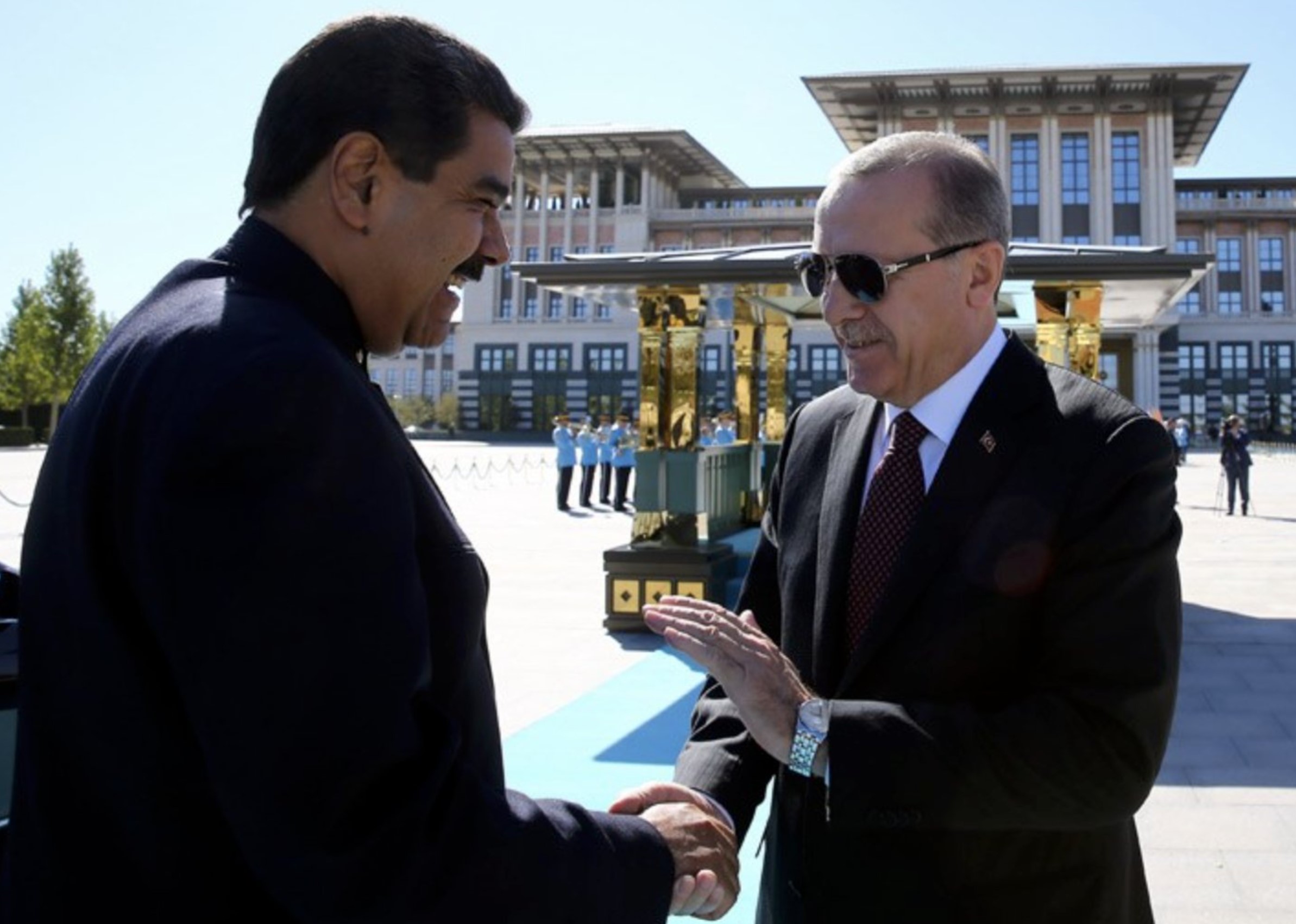
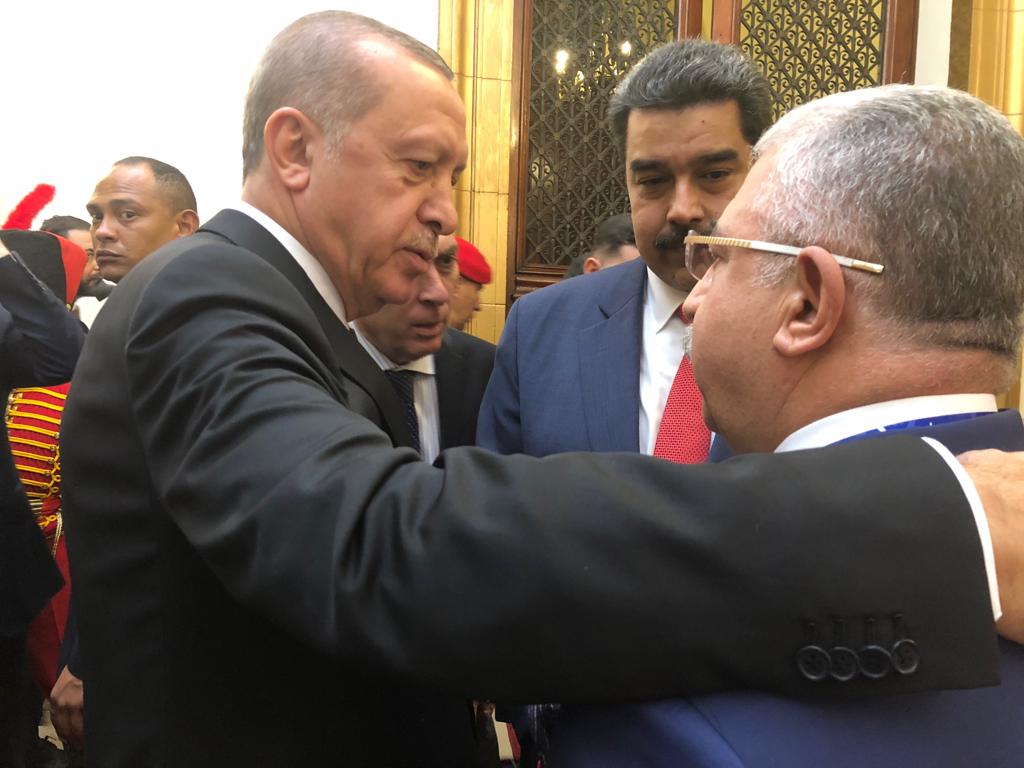
Venezuela’s period of greatest international isolation occurred at the same time as its strongest political cooperation with Ankara. Diplomatic ties accelerated after July 2016, when Maduro became one of the first foreign leaders to publicly support Turkish President Recep Tayyip Erdogan following a coup attempt.
Erdogan later repeatedly described Maduro as a dear friend and thanked Venezuela for its solidarity. Only three months after the coup attempt, Maduro visited Istanbul, becoming the first Venezuelan president to do so. Turkish Airlines soon launched direct flights between Istanbul and Caracas, creating a physical corridor that mirrored the growing political alliance. Both leaders openly rejected US and European Union sanctions and framed their partnership as resistance to unilateral pressure.
Trade figures soon reflected this alignment. In 2016 bilateral trade between Turkey and Venezuela stood at around $80 million. In 2017 it exceeded $150 million. The decisive break came in 2018 after Washington imposed sanctions on Venezuela’s gold sector.
In 2021 the Turkish Central Bank authorized the Ahlatçı Group to trade in e-money and cryptocurrencies:
Turkey began importing Venezuelan gold, reportedly refining it domestically. Official Turkish data show that imports reached approximately $900 million in 2018, pushing total bilateral trade above $1 billion in a single year. Following explicit US warnings focused on gold processing and sanctions evasion, the trade collapsed just as abruptly. By 2019 volumes had fallen back toward pre-spike levels, a pattern regulators see as indicative of routes opening under political cover and closing once scrutiny intensified.
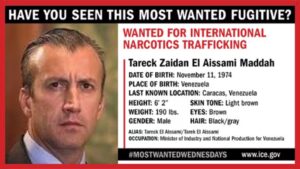
One of the most closely watched actors during this period was the Ahlatçı Group, a small, Çorum-based conglomerate operating in gold refining, jewelry, finance and brokerage services. In January 2019 Tareck El Aissami, then Venezuela’s vice president for economic affairs and a figure sanctioned by the United States since 2007 for alleged narcotics trafficking and links to Iran and Hezbollah, visited Ahlatçı’s gold refinery in Çorum. The visit took place while US officials were actively warning Turkey against involvement in Venezuelan gold processing.
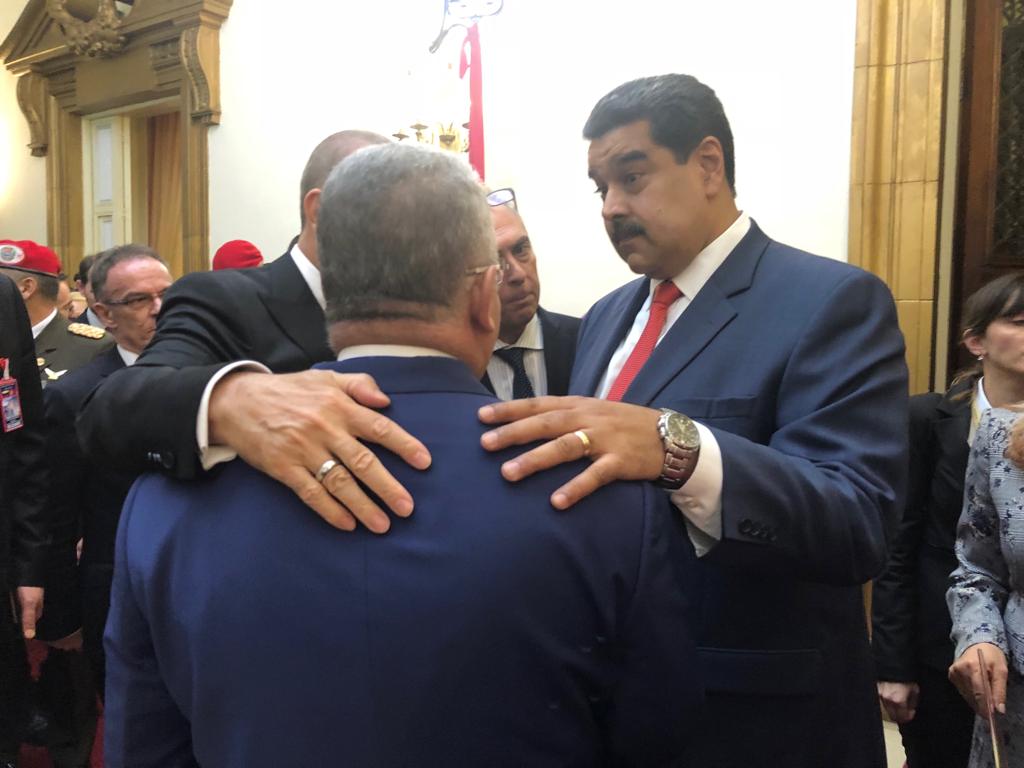
Ahlatçı Group chairman Ahmet Ahlatçı later confirmed that President Erdogan personally introduced him to Maduro during the Turkish president’s 2018 visit to Caracas, presenting Ahlatçı’s refinery as one of the most advanced in Turkey.
According to Ahlatçı, Maduro showed particular interest because Venezuela is a major gold producing country. While Ahlatçı publicly denied processing Venezuelan gold and insisted that all business activities were fully documented, opposition figures and investigative journalists have consistently portrayed the group as emblematic of a broader class of Erdogan-aligned businessmen.
In this narrative, such companies are described as trusted intermediaries able to operate in politically sensitive environments where commercial activity and political approval overlap. Ahlatçı and Turkish authorities deny claims that the group functions as a financial proxy or operational contractor for the government.
Scrutiny intensified as the Ahlatçı Group expanded rapidly after 2017. The company was included on the Fortune 500 Turkey list in 2019 and quickly climbed into the top ranks by net sales. Analysts linked the surge partly to soaring domestic demand for gold amid inflation and weakening of the Turkish lira, while critics pointed to preferential positioning during a period when Turkey’s gold ecosystem increasingly reflected political priorities.
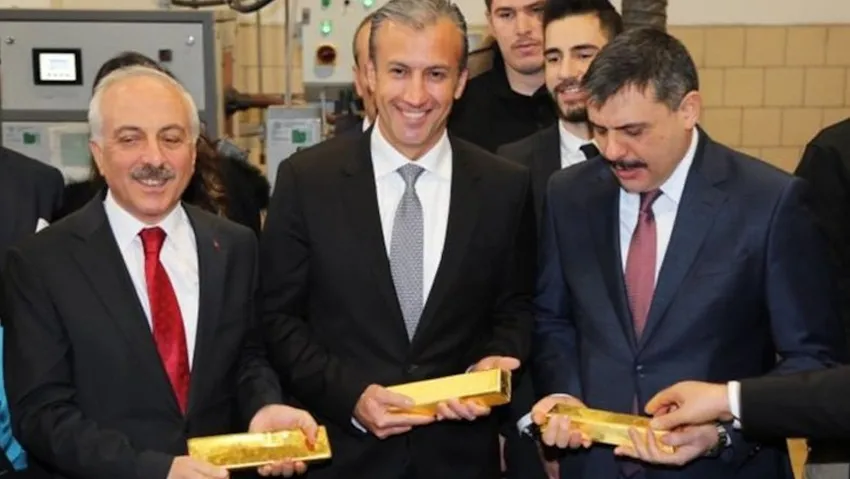
By 2020 the Ahlatçı companies ranked among Turkey’s largest by turnover, reinforcing perceptions that the group had become a central pillar of the Erdogan era.
In May 2021 the Ahlatçı Group received authorization to operate as an electronic money institution, allowing it to issue e-money and provide payment services. For financial crime analysts, the convergence of large-scale gold operations and licensed digital payment infrastructure raised concerns. In several jurisdictions investigators have examined whether physical gold from sanctioned environments can be monetized through electronic money platforms or converted into digital assets. In the Venezuelan case, these remain investigative hypotheses rather than established facts, but they form part of broader risk assessments.
Questions surrounding gold intersected with drug trafficking allegations that resurfaced in Turkey in 2021. That year, new accusations were made by Sedat Peker, a convicted gang leader and Erdogan ally who fled Turkey and gained widespread attention through online videos detailing alleged criminal ties between politicians and organized crime. Peker claimed that Erkam Yıldırım, the son of former prime minister Binali Yıldırım, who is a close ally of President Erdogan, traveled to Venezuela to help establish a new cocaine route from Colombia to Turkey. According to Peker, Yıldırım made two trips to Venezuela in early 2021, staying several days each time, arguing that Venezuela offered fewer enforcement obstacles.
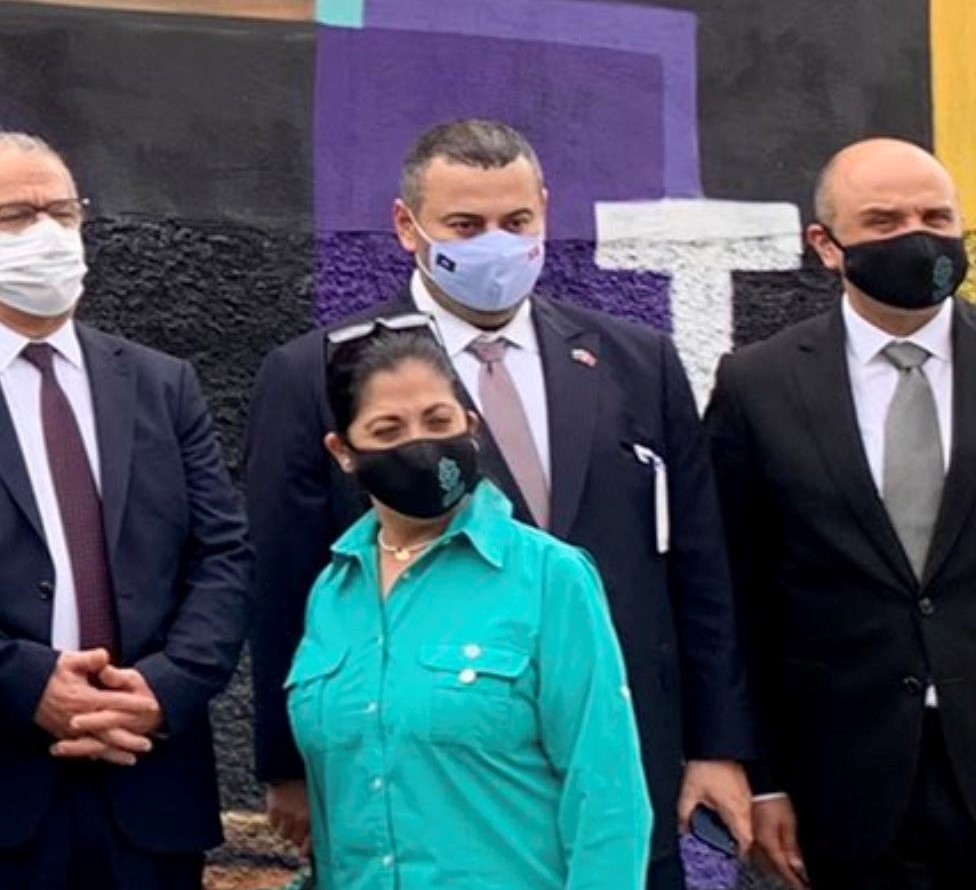
Shortly after the allegations were made, archived photos published by Turkish media confirmed Yıldırım’s presence in Caracas. The images showed him accompanying an official parliamentary delegation during a visit to a Turkish government-funded school run by the Maarif Foundation. The visit raised questions since Yıldırım held no parliamentary or government position. Former prime minister Binali Yıldırım denied the allegations but confirmed that his son had traveled to Venezuela, saying the trip took place in late 2020 to deliver medical supplies during the pandemic. The explanation was widely questioned, as Venezuela was reporting far fewer COVID cases than Turkey at the time.
With Maduro now in US custody, observers expect that both the movement of Venezuelan gold and cocaine trafficking allegations could be examined again in court and political debates.