Levent Kenez/Stockholm
A book published by Turkey’s Presidency for Turks Abroad and Related Communities (YTB) argues that while Sweden promotes itself as an open and inclusive democracy, political participation for migrants is shaped by implicit ideological boundaries that give advantage to some groups while constraining others. The “Atlas of the Turkish Diaspora in Sweden” documents how Sweden’s political system, media environment and security policies have increasingly limited the civic and political participation of communities from Turkey, particularly those identified with Islam, Turkish nationalism or conservative values, while privileging other minority identities.
The book, based on field research, statistical data and in-depth interviews, traces nearly six decades of migration from Turkey to Sweden. It argues that Turks are no longer a marginal migrant group but a permanent and politically relevant segment of Swedish society. Yet, according to the authors, their integration into political life has unfolded unevenly, shaped not only by class, generation and migration history but also by Sweden’s ideological boundaries and foreign policy calculations.
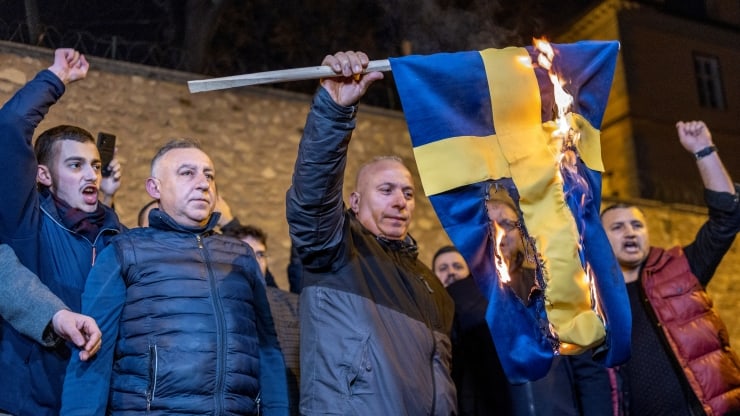
The publication also focuses on the rise of Islamophobia in Sweden, culminating in the public burning of the Qur’an under police protection. These incidents, the authors argue, are not isolated acts of provocation but symptoms of a broader shift in how freedom of expression, minority rights and national security are interpreted. The book documents a steady increase in anti-Muslim hate crimes, attacks on mosques and cultural centers and what it describes as institutional indifference toward Muslim communities’ security concerns.

The Qur’an burnings of 2022 and 2023, carried out by far-right activists with official permits, receive particular attention. According to the book, these events exposed a contradiction at the heart of Sweden’s democratic discourse. While authorities initially defended the acts as protected speech, the consequences were borne disproportionately by Muslims, who faced public hostility, threats to their places of worship and a sense of exclusion from the national community.
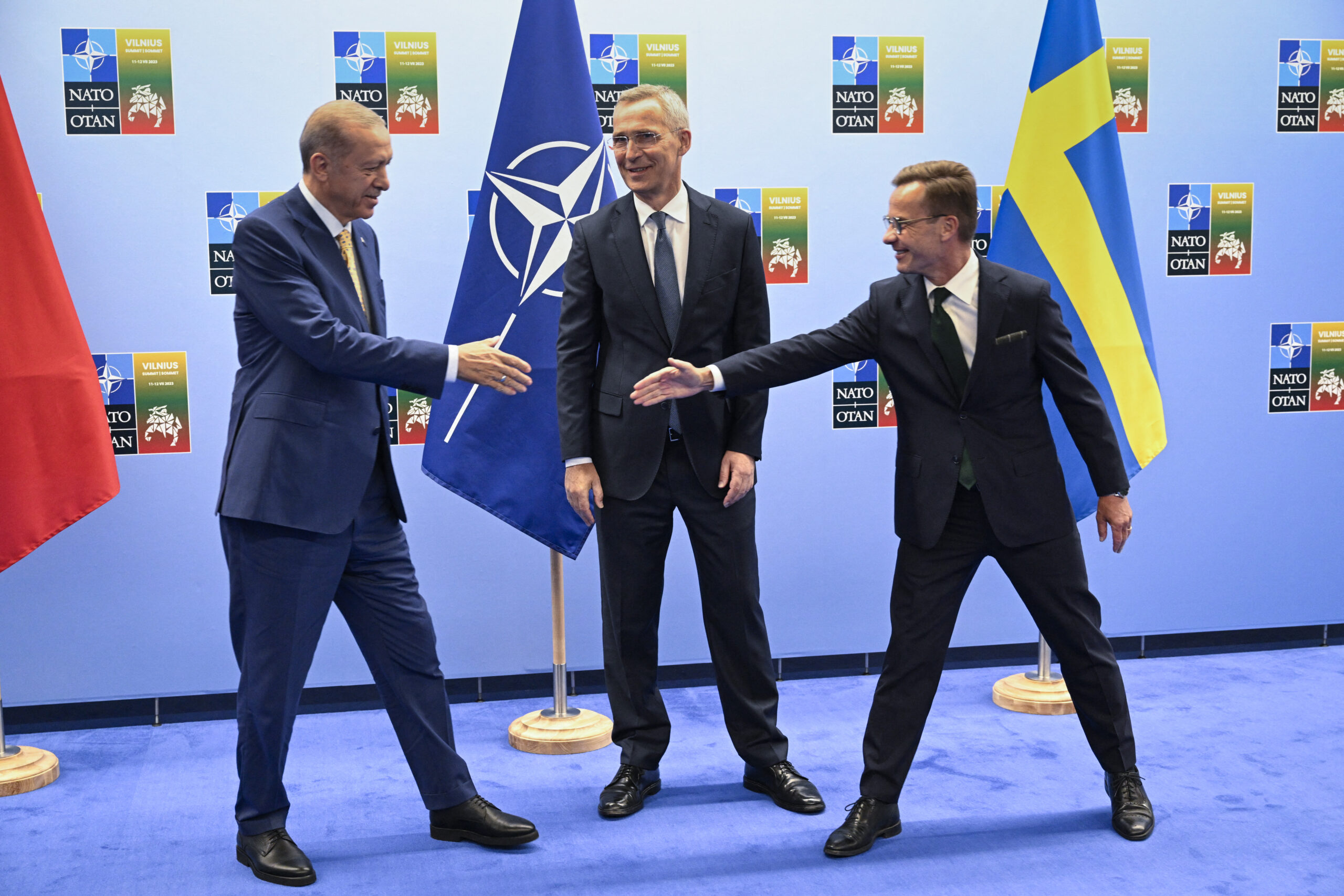
The authors note that the timing of these incidents during Sweden’s NATO accession process gave them a clear geopolitical dimension, straining relations with Turkey and other Muslim majority countries.
In interviews included in the book, Mikail Yüksel, a politician of Turkish origin, offers some of the sharpest criticism of Sweden’s political double standards. Yüksel, the founder and chairman of Sweden’s Islamist Nuance Party (Partiet Nyans), argues that Turkish politicians are subjected to scrutiny and suspicion that their ethnic Swedish counterparts do not face. Yüksel was expelled from the liberal Center Party in 2018 over his relations with the Grey Wolves, the racist youth wing of Turkey’s far-right Nationalist Movement Party, which is President Recep Tayyip Erdogan’s ally.
According to Yüksel, this episode in his life marked a turning point in how he viewed Swedish politics. He tells the authors that no matter how much effort migrants invest in the political system, full acceptance often remains conditional. He describes this realization as a key factor behind his decision to establish a new political party in 2019.
Yüksel, who is associated with pro-Erdogan circles, claims that Sweden’s political environment appears unproblematic to those who do not closely follow public debate, but that a different picture emerges upon closer scrutiny. He argues that systematic prejudice against Muslims becomes visible once the surface is examined, a dynamic he believes is insufficiently acknowledged in mainstream political discourse.
The experience of Mehmet Kaplan, Sweden’s first cabinet minister of Turkish descent, from Sweden’s Green Party (Miljöpartiet), is presented as another emblematic case. Kaplan, who served as housing and urban development minister, resigned in 2016 following criticism over his contacts with Islamist and nationalist organizations and remarks comparing Israeli policy toward Palestinians to the historical persecution of Jews. While acknowledging the controversy surrounding Kaplan’s statements, the book argues that the intensity of the response reflected a deeper discomfort with Turkey-linked, religiously conservative actors in Swedish politics.

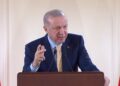
President Erdogan criticized Sweden over its treatment of Kaplan, describing the case as an example of discrimination against Muslim politicians in Western countries. “You see what they did to a Muslim who became a minister in Sweden. In the end he was forced to resign,” Erdogan said in remarks broadcast live on Turkish television.
The book also includes an interview with Atila Altuntaş, the Sweden correspondent of Turkey’s state-run Anadolu news agency. Altuntaş, who also runs his own news website, speaks in the interview less as a reporter and more as a government-aligned voice, focusing extensively on grievances related to Sweden’s treatment of Turkey and politicians with a Turkish background.
In the interview Altuntaş criticizes what he describes as political double standards, arguing that actions tolerated when carried out by ethnic Swedish politicians become grounds for exclusion when associated with Turkish figures. He cites cases in which politicians faced political marginalization over social media activity, saying that in a country that presents itself as a democracy, even liking a photograph of President Erdogan could be sufficient to end a political career. According to Altuntaş, such incidents have prompted a reassessment of how freedom of expression is applied in practice in Sweden.
Altuntaş also raises concerns about Swedish media coverage of Turkey, which he characterizes as exaggerated or in some cases defamatory. He says opinion pieces and responses he has written to counter such reporting are frequently not published by Swedish outlets. He frames this lack of space for rebuttal as inconsistent with Sweden’s stated commitment to press freedom and pluralism.
In contrast the book notes that politicians of Kurdish and Assyrian, also known as Syriac, origin, many of whom arrived in Sweden as political refugees, have found comparatively greater acceptance, particularly in left-wing and social democratic parties. Sweden’s political culture, shaped by a strong anti-authoritarian and anti-fascist tradition, is described as more receptive to minority identities framed through narratives of historic oppression. This dynamic, the authors argue, has created structural advantages for Kurdish and Assyrian groups while leaving Turkey-centered nationalist or conservative groups at a disadvantage.

The book situates these disparities within Sweden’s broader ideological framework, which treats right-wing nationalism and political Islam as inherent threats to democratic order. While this stance has historical roots in Europe’s experience with fascism, the authors contend that it has been applied selectively, resulting in what many Turkish interviewees perceive as exclusionary practices. Survey data cited in the book show significantly lower political engagement among self-identified Turks compared with Kurdish and Assyrian respondents, reflecting a sense of alienation from Swedish political institutions.
Sweden’s NATO accession process further complicates this picture. The book argues that Ankara’s objections, particularly over Qur’an burnings and perceived tolerance of anti-Turkish activism, forced Sweden to confront the international implications of its domestic policies. Legal debates over hate speech and religious incitement intensified only after sustained diplomatic pressure, raising questions about whether minority protections are applied proactively or reactively.
Throughout, the book maintains an academic tone, grounding its critiques in empirical research rather than polemic. It does not deny Sweden’s achievements in migrant integration or minority representation, but it challenges the notion that these successes are evenly distributed. Instead, it presents a more fragmented reality in which ethnicity, religion and ties to Turkey continue to shape who can participate fully and who remains on the margins of Swedish democracy.
Pdf. of the book on the Turkish diaspora in Sweden, published by Turkey’s Presidency for Turks Abroad and Related Communities (YTB):