Abdullah Bozkurt/Stockholm
Turkish intelligence conducted foreign espionage activities involving the surveillance of an Indian nongovernmental organization, monitored its activities, flagged individuals associated with the NGO, including US nationals, and reported its findings back to headquarters in Ankara, according to confidential documents obtained by Nordic Monitor.
The documents show that the Indialogue Foundation, a Noida-based international organization committed to fostering peace through intercultural and interfaith dialogue, community cohesion and active citizenship, has apparently been in the crosshairs of Turkish intelligence for some time.
The foundation, established in 2005, has been affiliated with the transnational civil society initiative known as the Hizmet, or Gülen, Movement, inspired by the teachings of the late Islamic scholar Fethullah Gülen, who passed away in the United States in 2024. The movement has been critical of the government of President Recep Tayyip Erdogan on a range of issues, including Turkey’s support for radical jihadist groups and pervasive corruption in the upper echelons of the government.
One document, dated December 29, 2025, takes the form of a background research note prepared by the police after intelligence was passed to the Security Directorate General (Emniyet) on April 29, 2025. It was signed by two police officers whose names were not disclosed and who were identified only by their personal identification numbers.
Another document, in the form of a communiqué, shows that the background note was sent to the Ankara 4th High Criminal Court on February 6, 2026, by police chief Engin Aydın. The transmission of intelligence collected overseas to judicial branches indicates that politically motivated prosecutions and trials in Turkey are driven by the intelligence services, which have become the main instruments of suppression used by the authoritarian Erdogan government to sustain its regime of intimidation.
The documents in question focus on one Turkish individual who currently lives in Sweden under political protection, with the background research specifically prepared about him. They further suggest that other people flagged by Turkish intelligence were also investigated and that separate paper trails were created for each and every one of them.
The Security Directorate General did not name the source of the intelligence or specify which intelligence service actually gathered the information in the first place. Instead, it stated that the information was received from an “affiliated institution,” a formula routinely used to mask the origin of sensitive intelligence, protect the service involved and prevent potential backlash in the event of exposure.
However, the wording and the nature of the activities described in the spying operation fit the pattern of the modus operandi of a clandestine intelligence branch operating out of the Turkish Foreign Ministry. The unit, officially known as the Intelligence and Research Directorate (İstihbarat ve Güvenlik İşleri Genel Müdürlüğü), one of five major intelligence services in Turkey, expanded its espionage operations in foreign territories after Hakan Fidan, former head of Turkey’s National Intelligence Organization (Milli İstihbarat Teşkilatı, MIT), became foreign minister in the summer of 2023.

Fidan brought many veteran intelligence officers from MIT into the foreign service, provided them with diplomatic titles and dispatched numerous agents abroad under the cover of ambassadors, counselors and attachés. India is one among a dozen countries specifically singled out as a priority target for Turkish intelligence operations, reflecting the policies of Islamist President Erdogan, who has invested heavily in radical Islamist networks in Asia as part of Ankara’s strategy to cultivate proxy forces overseas.
Turkey views the Indian government as a hindrance to its regional aspirations in Asia, aligns closely with its arch-foe Pakistan and provides sanctuary to radical figures wanted by India. Turkish proxy groups such as the intelligence-linked Foundation for Human Rights and Freedoms and Humanitarian Relief (İnsan Hak ve Hürriyetleri ve İnsani Yardım Vakfı, or IHH), which has been documented as a logistical supplier for global jihadist networks including al-Qaeda, Hamas and the Islamic State in Iraq and Syria (ISIS), have also cooperated with radical Indian Islamist actors as part of the government’s broader political Islamist agenda abroad. Turkey’s secretive paramilitary group SADAT has also been working with anti-India figures to expand its operations in Asia and entertained the idea of sending foreign fighters to Kashmir to fight against Indian troops.
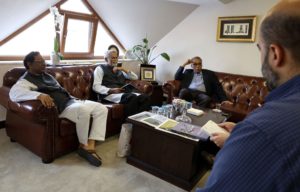
The Turkey Youth Foundation (TÜGVA), run by the family of Turkish President Erdogan, is also training experts who would work in the field abroad with a special focus on India, among other countries. The foundation, which facilitates young Turkish Islamists landing jobs in government including in diplomacy, intelligence and security, suggested that the candidates would also be sent to these countries for further study in the field, providing them the opportunity to get to know the culture and language. The program, which covered a four-year period, would also be aided by foreign personnel who would be hired by the foundation.
Although the documents in question are limited to surveillance activities targeting the Gülen movement in India, the Turkish government’s interest goes far beyond that when it comes to intelligence operations on Indian territory. These efforts are apparently designed to pursue multiple objectives, including stealthy influence operations, building networks of assets and informants, investing in proxy groups, lobbying, undermining social cohesion within Indian society and creating leverage to be used against New Delhi in bilateral dealings.
The intercepted documents referred to a documentary shared by the Indialogue Foundation on its YouTube channel in December 2024. The documentary, titled “Love Is a Verb,” portrayed the Gülen movement as Sufi-inspired Sunni Muslims that began in Turkey in the 1960s and has since spread across the globe. The film was treated as a criminal offense under Turkey’s notoriously abusive counterterrorism laws, which the Erdogan government has routinely used to crack down on legitimate opposition, suppress dissent and silence critical voices in Turkish society.
The intelligence report also red-flagged US nationals involved in producing the documentary, namely Terry Spenser Hesser and Stephan Mazurek, as well as the narrator, Ashley Judd.
The Gülen movement’s interfaith dialogue and outreach activities have been treated as criminal acts by the current Turkish government led by the Islamist Justice and Development Party (AKP). Multiple criminal prosecutions and trials of individuals associated with the movement in Turkey have cited interfaith dialogue with Jews and Christians as incriminating evidence used to level accusations.
Nordic Monitor previously published a judicial document showing how Turkish prosecutors alleged in an indictment submitted to a high criminal court in Istanbul on March 2, 2022, that the Gülen movement had established dialogue with Jewish and Christian organizations rather than Muslim and Turkish entities around the globe. In another instance in 2015, an indictment filed against Gülen himself listed the cleric’s 1998 meeting with the pope at the Vatican as criminal evidence.
These accusations reflect how the ruling Islamist elite’s political Islamist ideology, which defines non-Muslims as adversaries, has become dominant in driving criminal prosecutions in Turkey, a country that has compiled a poor human rights record over the past decade.
President Erdogan had previously slammed efforts at interfaith dialogue, saying there could be no dialogue between Islam and other religions, in a xenophobic speech he delivered to lawmakers in the Pakistani Parliament in November 2016 during an official visit to the country.
The exposé poses yet another challenge for Indian intelligence services, which must now contend with an increasingly aggressive spying campaign and influence operations carried out by Turkish intelligence services and their proxies and assets on Indian territory.