Abdullah Bozkurt/Stockholm
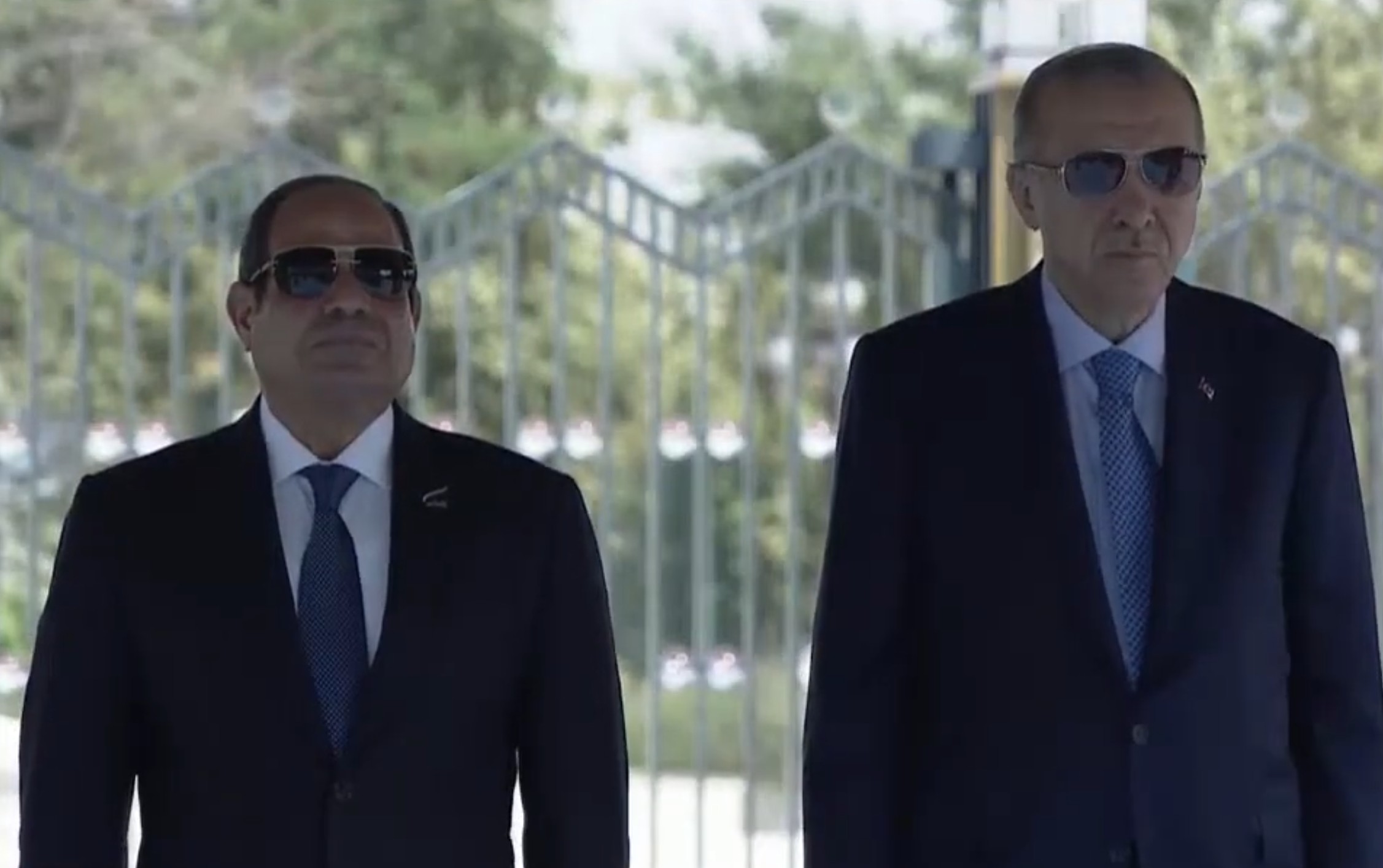
Despite a publicly promoted thaw between Ankara and Cairo in recent years, accompanied by high-level diplomatic visits and gestures of normalization, Turkey and Egypt remain deeply at odds over the future of Libya.
That unresolved fault line resurfaced recently when Egypt mounted a forceful counteroffensive at the United Nations, exposing how the Libyan question continues to anchor a lingering and strategically significant tension between two heavyweight powers in the eastern Mediterranean.
Egypt’s latest filing, circulated on September 16, 2025, lays out Cairo’s strongest rejection to date of Libya’s newly submitted claims over extended continental shelf limits and maritime boundaries. According to Egypt, the maps and coordinates submitted by Libya in May and June 2025 do more than stake out new maritime zones: they place swaths of Libyan-claimed areas inside Egyptian waters, encroaching on Egypt’s territorial sea, contiguous zone, exclusive economic zone and parts of its continental shelf.
Cairo’s note asserts that the Libyan outer limits overlap Egypt’s western maritime boundary and that Libya’s declared eastern limit lies entirely within Egyptian jurisdictional waters. In effect Egypt views these filings as an attempt to unilaterally redraw the Mediterranean’s maritime geography at its expense.
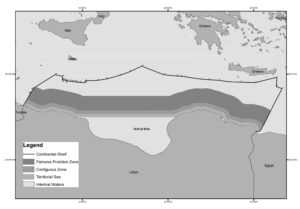
Libya’s filing to the United Nations on May 27, 2025, lays out Tripoli’s formal declaration of the outer limits of its continental shelf in the Mediterranean, accompanied by a map and a list of coordinates. The document asserts that Libya’s maritime boundaries, drawn in accordance with the 2019 maritime delimitation memorandum signed with Turkey, constitute an equitable solution under international law and explicitly states that neither Greece nor Egypt holds sovereign rights in the areas delimited between Libya and Turkey.
Egypt’s note verbale filed at the UN reveals ongoing tension between Turkey and Egypt despite a thaw in relations:
Tripoli rejects the 2020 EEZ agreement between Greece and Egypt as legally invalid and accuses both governments of issuing offshore hydrocarbon licenses in areas that Libya claims as its own. The note argues that Greek exploration activities south of Crete, including surveys begun in 2022, violate Libya’s sovereign rights and disregard established international maritime norms. Libya further claims that parts of Greece’s 2025 Maritime Spatial Plan and Greece’s newly declared Ionian Sea EEZ encroach upon the Libyan continental shelf.
In its submission Libya outlines a broad maritime boundary extending west toward Tunisia and east toward Egypt, anchored in the 2019 Turkey–Libya memorandum and supported, it argues, by international jurisprudence that limits the effect of islands in maritime delimitation. It provides a full list of coordinates along with a map showing its claimed continental shelf zone, territorial sea and exclusive economic jurisdictions.
It demands that Greece and Egypt suspend all hydrocarbon licensing and exploration activities in contested areas until final maritime boundaries are agreed.
It appears that what heightens Egypt’s alarm is not only the content of the Libyan claims but the political context behind them. The Egyptian filing devotes significant space to Libya’s accelerating offshore cooperation with Turkey.
It singles out a June 25, 2025, memorandum of understanding between Libya’s National Oil Corporation and Turkey’s state-owned national oil and gas company, the Turkish Petroleum Corporation (Türkiye Petrolleri Anonim Ortaklığı, TPAO), which allows seismic surveys across four offshore blocks, one of which — “Area 4” — Egypt says overlaps directly with its maritime boundary.
Cairo rejects the entire agreement, insisting that no legal effects can stem from activities rooted in what it considers an illegitimate claim. The document further reiterates Egypt’s long-standing position that Turkey’s previous deals with Libyan authorities — the 2019 maritime delimitation agreement and the 2022 hydrocarbons agreement — are both invalid and without legal force.
For Cairo these are not isolated technical disagreements but evidence of a coordinated Libyan–Turkish effort to reshape the regional energy and security landscape in ways that undermine Egypt’s strategic interests.
Libya’s June protest against Greece’s international tender for hydrocarbon exploration south of the Peloponnese and Crete deepens the complexity. Tripoli maintains that one of the tender blocks, “south Crete 2,” lies within Libyan jurisdiction. Egypt categorically rejects this claim as well, arguing that it disregards Egypt’s established sovereign rights.
The triangular dynamic that emerges — Egypt and Greece on one side, Libya and Turkey on the other — underscores how interlinked the disputes have become and how the eastern Mediterranean has evolved into a layered geopolitical theatre where every maritime move reverberates across multiple capitals.
To reinforce its position, Egypt grounds its objections in a comprehensive legal and diplomatic framework. It references Presidential Decree No. 595 of 2022 defining its western maritime borders, its 2023 Maritime Zone Notification and earlier notes deposited with the UN in 2019, 2023 and 2024. By locking its boundaries into the UN record, Egypt positions itself as defending an established legal status quo while portraying Libya’s submissions and, by extension, Turkey’s influence as destabilizing revisions that violate international law.
Behind the formal language, the underlying geopolitical narrative is clear. Libya’s persistent fragmentation has created an opening for external actors, with Turkey’s deep military and political engagement with western Libyan factions giving Ankara considerable leverage in shaping Libyan policy.
Cairo has long viewed Turkish influence on its western flank as a strategic threat, and the latest UN filing reflects an enduring suspicion: that Libya’s new maritime claims are less an expression of Libyan national interest and more an extension of Turkish strategic ambitions in the Mediterranean.
Turkey’s activist regional policy, rooted in energy exploration, security partnerships, and political sponsorship of Libyan factions, has become one of Egypt’s most enduring concerns despite public claims of reconciliation.
While Egypt closes its filing by expressing openness to negotiations “in good faith,” the substance of the document underscores the depth of the divide.
Cairo believes the rules of engagement have already been distorted by unilateral Libyan declarations and Turkish-driven agreements. With Libya unstable, Turkey entrenched, Greece directly implicated and lucrative offshore hydrocarbon prospects at stake, tensions in the eastern Mediterranean remain far from resolved.
Libya is unlikely to withdraw its submissions; Turkey is unlikely to reduce its footprint; and Egypt is certain to continue escalating its diplomatic resistance.
The dispute is still confined to the diplomatic and legal arena, but the actors are positioning themselves for a protracted contest, one in which maritime boundaries serve as proxies for a broader strategic rivalry that normalization efforts between Ankara and Cairo have yet to bridge.