Levent Kenez/Stockholm
A Turkish journalist first accused of defaming an al-Qaeda-linked jihadist group remains in prison more than 10 years after his arrest, despite the charges against him predating a coup attempt that later became central to his prosecution.
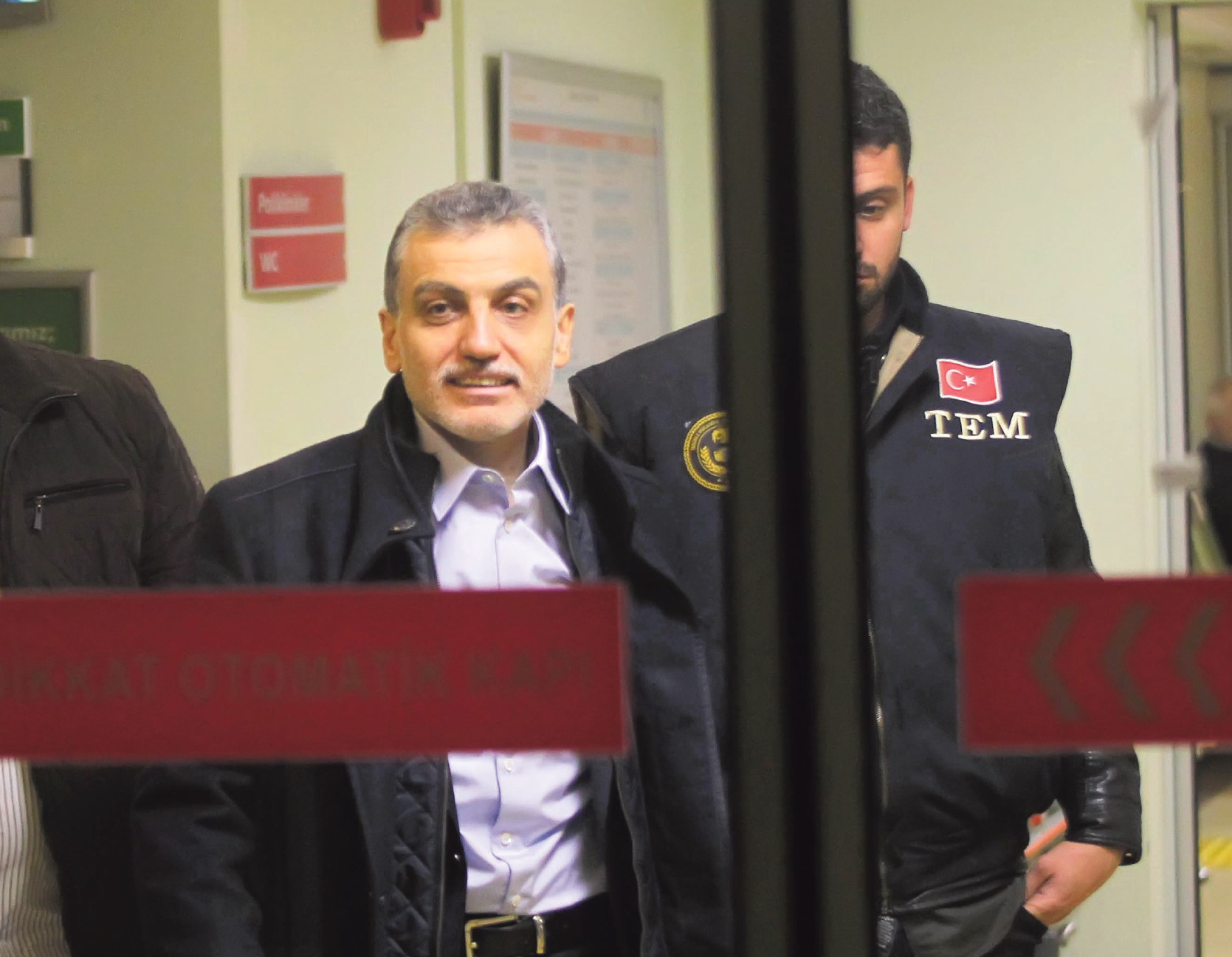
Hidayet Karaca, a veteran broadcaster and former chief executive of the now-defunct Samanyolu Media Group, was detained December 14, 2014, after prosecutors accused him of responsibility for the portrayal of a radical jihadist group in a fictional television series aired by Samanyolu TV. Karaca has been incarcerated ever since.
On June 4, 2022, an Istanbul court sentenced Karaca to more than 297 years in prison for allegedly smearing the group known as Tahşiyeciler. According to a ruling issued November 22, 2022, by another court in Istanbul, his total sentence increased to 318 years when combined with a separate conviction from 2015.
The case centered on Tahşiyeciler, a radical group led by Mehmet Doğan, also known as Mollah Muhammed or Mullah Muhammed el-Kesri. Turkish intelligence and law enforcement agencies had monitored the group since 2000. In 2010 police launched raids against its members, citing evidence that the group was preparing terrorist attacks.
During those operations authorities seized three hand grenades, a smoke bomb, seven handguns, 18 hunting rifles, ammunition, knives and electronic components used to assemble explosives. Investigators also collected hundreds of wiretapped conversations and seized recordings that they said showed the group operating as part of the global al-Qaeda network.
Court document that shows journalist Hidayet Karaca was sentenced to serve 318 years in prison:
According to police reports and court documents from that period, Mollah Muhammed urged followers to take up arms, instructed them to manufacture bombs and mortar shells at home and called for the beheading of Americans. In recorded statements he said armed jihad was a religious obligation and expressed support for then-al-Qaeda leader Osama bin Laden. Investigators said the group recruited fighters for conflicts in Afghanistan and Pakistan and raised funds to support its activities.
Despite those findings, political developments altered the course of the case. In 2014 President Recep Tayyip Erdogan publicly defended Mollah Muhammed, arguing that he and his associates had been framed. Pro-government media outlets began portraying the radical cleric as a victim of a conspiracy, blaming the Gulen movement, a group critical of Erdogan.
The campaign to rehabilitate Tahşiyeciler gained momentum after March 2014, when the Sabah daily, owned by Erdogan’s family, published articles supporting the group. Erdogan’s government argued that the earlier terrorism prosecutions were politically motivated.
In December 2015 the Bakirkoy 3rd High Criminal Court, staffed with newly appointed judges, acquitted Mollah Muhammed and other defendants of terrorism-related charges. Police later issued revised reports that downplayed the group’s activities.
Prosecutors alleged that a television drama aired years earlier had portrayed Tahşiyeciler as violent extremists and that Karaca was criminally responsible for the content. He spent approximately 18 months in pretrial detention before prosecutors filed an indictment on July 22, 2016. Karaca, meanwhile, remained in custody.
During hearings, Karaca told the court that he was unable to mount an effective defense. In August 2016 he said some of his lawyers had been arrested and others had withdrawn from the case. “I could not even find a lawyer to write a petition for me,” he said during one hearing.
In May 2015 Karaca applied to the European Court of Human Rights, arguing that his detention was unlawful. In submissions to the court, the Turkish government defended Tahşiyeciler, describing the group as peaceful and claiming its leader had been slandered. The government did not disclose earlier intelligence and police findings linking the group to al-Qaeda, armed jihad or plans for violent attacks. The case concluded in May 2023, with the court saying Karaca’s detention violated his rights.
Karaca’s legal troubles grew after an attempted coup on July 15, 2016. Although he had been imprisoned since 2014, prosecutors later charged him with attempting to overthrow the constitutional order. In June 2018 Ankara’s 4th High Criminal Court sentenced him to aggravated life imprisonment in a case involving dozens of defendants accused of ties to the Gulen movement.
The Gulen movement, inspired by US-based cleric Fethullah Gulen, who died in October 2024, denies involvement in the coup. The Turkish government designated the movement as a terrorist organization in May 2016, a label not recognized by the United States or the European Union.
In April 2025 Turkey’s Supreme Court of Appeals’ General Assembly overturned procedural rulings in the case, which includes Karaca and former ruling party lawmaker Ilhan Isbilen among its defendants. Despite earlier reversals by higher courts, the local court again imposed aggravated life sentences, sending the case back to the high court.
Karaca also received lengthy prison sentences in other cases, including a match-fixing trial in which courts relied on testimony alleging secret meetings he later demonstrated he had not attended. Despite evidence showing he was abroad at the time of one such alleged meeting, he was sentenced to more than 1,400 years in that case.
The European Court of Human Rights ruled in 2023 that Turkish journalist Hidayet Karaca had been unlawfully detained in 2015 and that his rights were violated:
Karaca is currently held in Marmara Prison in Istanbul’s Silivri district, a facility known for housing political prisoners. Prison records show he has spent more than nine years in solitary confinement.
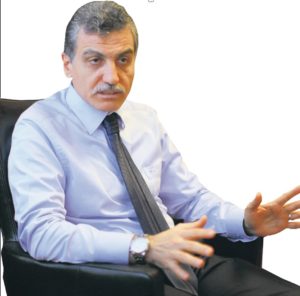
Before his arrest Karaca held senior positions in Turkish media. He served as chairman of the Television Broadcasters Association and worked on the board of Television Audience Measurement. He previously worked as a bureau chief for the now-closed Zaman daily in Izmir and Ankara before joining the Samanyolu Media Group in 1999.
Hasan Yilmaz, the prosecutor who initiated Karaca’s original case in 2014, later rose through the judiciary. He was promoted to deputy chief public prosecutor in Istanbul and, in 2020, was appointed deputy justice minister, a position he continues to hold.
Karaca’s imprisonment, which began in 2014, continues as Turkish courts revisit overlapping cases that link media activity, alleged organizational affiliation and terrorism-related charges in a legal process that has stretched across more than a decade.
Journalists’ associations and professional unions in Turkey have largely avoided publicly addressing Karaca’s case, citing concerns about government pressure and potential repercussions. Despite his long incarceration and widespread recognition for opposing the government, media unions and professional associations have refrained from drawing attention to his imprisonment.
Representatives of international media associations based in Turkey have also tended to overlook Karaca’s case and those of journalists in similar circumstances. This reluctance stems both from concerns about operating under restrictive conditions in Turkey and, in some cases, from ideological considerations against the Gulen movement. As a result some international advocacy efforts and reporting have excluded or minimized cases involving figures viewed as politically sensitive. For example, Karaca’s name does not appear on the list of imprisoned journalists included in Reporters Without Borders’ annual 2025 roundup report. However, the list includes Merdan Yanardag, the founder, owner and editor-in-chief of the Tele 1 television station who was detained October 27, 2025, on espionage-related charges. Despite media executive Yanardag’s detention by the government for alleged espionage, his inclusion on the list undermines claims that Karaca’s absence is due to his managerial role or terrorism-related charges.