Abdullah Bozkurt/Stockholm
The Islamic State in Iraq and Syria (ISIS) has for more than a decade maintained a clandestine cell network in Turkey’s northwestern province of Yalova, a quiet coastal area on the eastern shore of the Sea of Marmara better known for its thermal spas, seaside resorts and proximity to Istanbul.
Far from being an accidental security failure, the group’s long-term presence appears to have been sustained by a permissive environment shaped by Turkey’s intelligence services, which treated jihadist networks as manageable assets rather than existential threats and, at times, leveraged their violence to advance the political objectives of the Islamist ruling Justice and Development Party (AKP), both domestically and in Turkey’s immediate neighborhood.
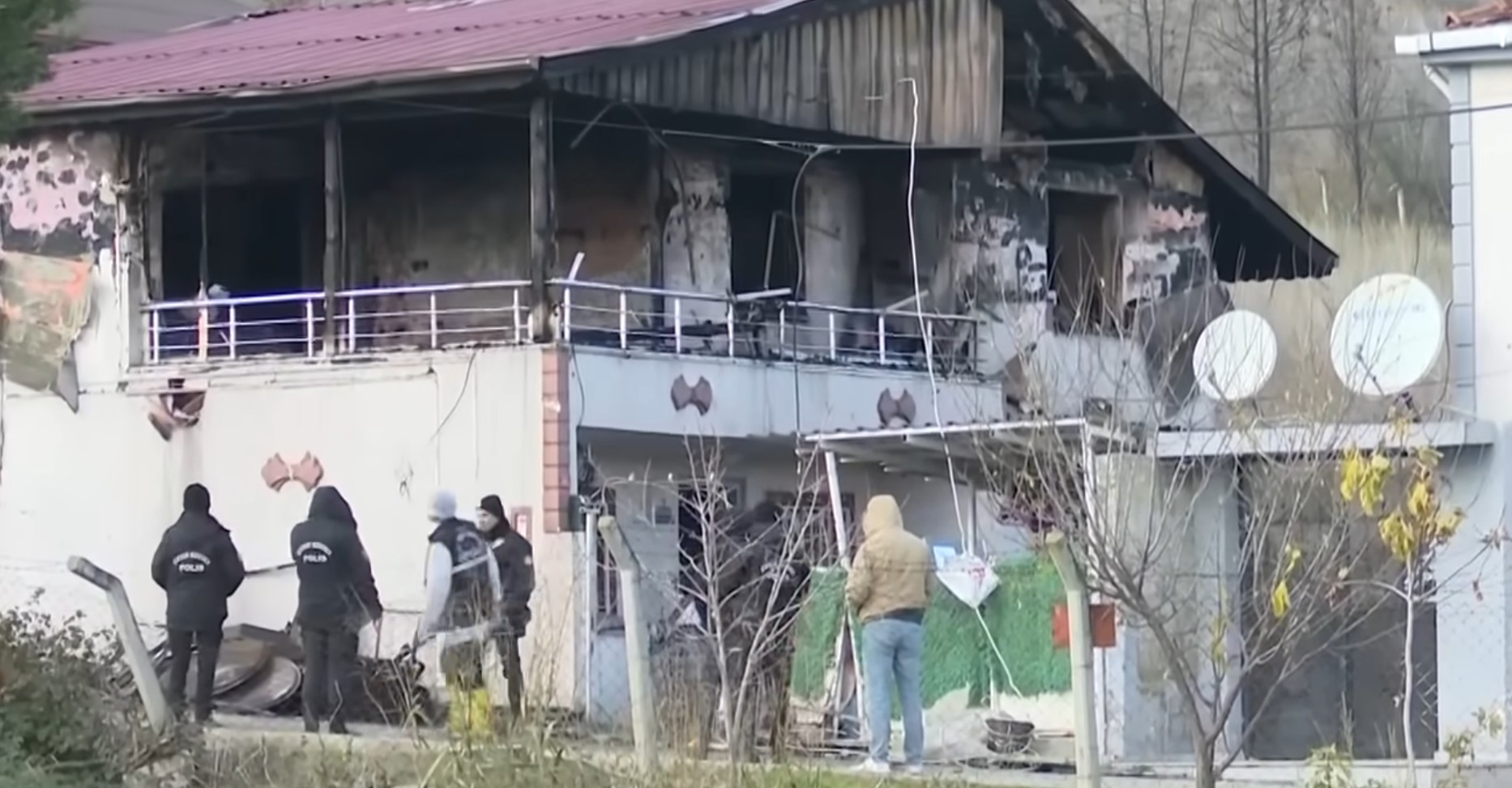
That calculation collapsed violently in December 2025, when a police operation against a known ISIS cell in Yalova spiraled into a deadly confrontation. Three police officers were killed along with six ISIS militants, exposing the limits of Ankara’s ability to “manage” radical groups it had long tolerated and in some cases shielded and sponsored. The episode underscored how jihadist operatives, emboldened by years of legal impunity and political protection, ultimately demanded more than the Turkish state, even under President Recep Tayyip Erdogan’s Islamist government, could or would deliver.
Although the ISIS safe house and the militants holed up inside had long been known to Turkish authorities, the government dispatched a local police unit at around 2 a.m. to execute a search warrant without adequate equipment. Officers reportedly lacked body armor, night-vision goggles and armored personnel carriers. Special forces, normally deployed in high-risk counterterrorism operations before regular police execute warrants, were not called in.
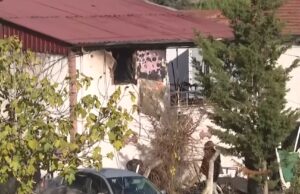
The decision suggests that authorities did not anticipate armed resistance and that intelligence assessments failed to warn of a likely deadly confrontation. When police arrived at the house, ISIS militants immediately opened fire, pinning officers down in exposed positions, killing three and wounding others. Forensic examinations later revealed traces of gunpowder on some of the wives of the slain ISIS militants, suggesting that women may also have taken part in the firefight.
Only after more than six hours of intense gunfire did the government deploy special forces and commando units to bring the situation under control. By the end of the operation four brothers from the same family — Musa Sordabak, Mehmet Cami Sordabak, Lütfi Sordabak and Haşem Sordabak — along with İbrahim Yaman and Zafer Umutlu, were dead.
The backgrounds of the deceased ISIS militants reveal how systematically they had been protected by Turkey’s criminal justice system. Zafer Umutlu had previously been indicted and tried on allegations of ISIS membership but was acquitted. In an irony bordering on the grotesque, court records show that on December 29, 2025, the very day Umutlu was killed in the Yalova operation, the province’s 2nd High Criminal Court attempted to serve him the written acquittal decision, noting that he had “left his address and could not be located.”
The involvement of the Sordabak family in ISIS activities had also long been known to Turkish authorities. An intelligence note circulated by the counterterrorism department on October 1, 2024, indicated that Umutlu and the Sordabak brothers were seeking to travel to the Afghanistan–Pakistan conflict zone to join the Islamic State – Khorasan Province (ISIS-K). Their phone communications were put under surveillance, and a week later travel bans were issued for them.
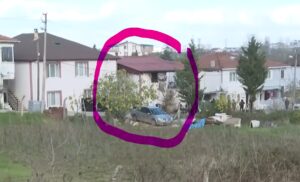
The most chilling episode involving the family occurred on October 9, 2024, in Yalova’s Çiftlikköy district. Neighbors reported an armed confrontation at an apartment building where several family members lived. Police recovered a 9mm shell casing, a shattered bullet jacket and torn shirt buttons, initially suggesting a domestic dispute.
In his testimony Haşem Sordabak’s father described how his sons declared him an infidel, assaulted family members and threatened to take their mother to Syria to join ISIS. Shots were fired during the confrontation. Despite the seriousness of the incident, Haşem was briefly detained and then released.
This was not the first time he had been freed. Haşem was also a suspect in a major ISIS case involving 18 defendants. In an indictment filed on February 6, 2025, prosecutors detailed allegations ranging from takfir-based violence, which justifies killing by declaring others apostates, claiming their lives are religiously permissible, to preparations for foreign fighter travel, assassination planning and even reconnaissance targeting the local AKP provincial chairman. Yet he was freed in that case as well.
According to the indictment, searches at the home of Musa Sordabak uncovered military-style clothing and accessories, including camouflage outfits and a firearm holster. He, too, was released pending trial.
Court files further detail findings related to Lütfi Sordabak, who investigators said believed ISIS represented “true Islam” and that a new Islamic state would be established, pledging to stand with the group “until the end.” A notebook titled “Siyer Notları” (Notes on the Prophet’s Life) seized from his home emphasized strict clandestine discipline, including a tight core structure, secrecy, hidden meeting locations, avoidance of electronic devices, coded communication, changing travel routes, delaying contact until conditions “calmed down” and preparing members for martyrdom and victory under a central leader.
Another defendant, Mehmet Cami Sordabak, told authorities that he did not send his two daughters to school, claiming that he and his wife were educating them at home. Prosecutors alleged that he had declared: “If there is only one true path on earth, it is ISIS. We must all join and wage jihad. We will establish a new Islamic state and stand with them to the end.”
Mehmet Cami Sordabak and Haşem Sordabak were detained on October 14, 2023, but were released in April 2025 at their first hearing. Umutlu, also a suspect in the same case, was never jailed and faced only travel restrictions and reporting requirements. On October 21, 2025, all defendants were acquitted of charges related to membership in an illegal organization — once again highlighting the pattern of failed terrorism prosecutions in Yalova despite extensive investigative findings.
Prosecutors also issued a decision of non-prosecution on the alleged assassination plot against the local AKP official, concluding that the plans had not progressed beyond the “thought stage” and that no weapons had been procured.
In a separate domestic violence case, Haşem received suspended sentences for assaulting family members and carrying an unlicensed firearm in deferred judgment rulings, ensuring he would serve no prison time unless he committed another crime within five years.
These repeated “grab-and-release” episodes were not isolated mistakes but part of what appears to be an undeclared revolving-door policy under the Erdogan government, in which jihadist suspects were briefly detained and then released either by prosecutors during investigations or by courts during trial proceedings. The pattern reflects longstanding leniency and impunity within Turkey’s criminal justice system when dealing with radical Islamist figures.

Court records, indictments and intelligence files show that ISIS could not have embedded itself so deeply in Yalova without the indulgence of state authorities. Militants were repeatedly detained, prosecuted and released, while investigations routinely collapsed into acquittals for lack of evidence. The result was more than a decade of de facto immunity.
The permissive climate was already evident by 2018. Prosecutors were then investigating Dagestani and Uzbek figures suspected of ISIS membership. According to indictments drafted by the Yalova Chief Public Prosecutor’s Office, intelligence units had identified an ISIS operative known as “Abu Omar,” active in Syria since 2014 and later located in Yalova.
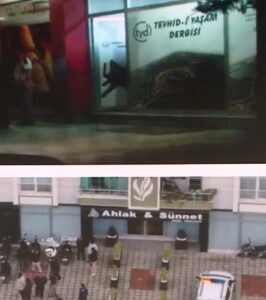
The files alleged that at least 10 Turkish nationals were operating as part of an ISIS-linked group known as Ketibetu’l Hanif. Prosecutors noted that suspects congregated around radical religious publications, followed sermons by jihadist ideologue Halis Bayancuk (Abu Hanzala), frequented the Tevhid magazine offices and described the Turkish Republic as a taghut state, a term used by jihadists to label a government as illegitimate and un-Islamic, claiming it rules by man-made laws instead of God’s law and is therefore lawful to oppose or attack.
While two foreign defendants received prison sentences of seven-and-a-half years, all Turkish defendants were acquitted in 2019. Even the convictions of the foreigners rested largely on their refusal to recognize Turkish courts and laws rather than concrete operational evidence.
In 2019 intelligence units reported that ISIS leaders had instructed followers to sell urban homes and acquire land in forested areas for weapons storage and training camps. Evidence showed that ISIS members had camped in Yalova and Mersin and had drawn maps identifying potential sites. Yet once again, terrorism charges collapsed, with one suspect convicted only under Law No. 6136 on Firearms, Knives and Other Weapons for possession of a knife.
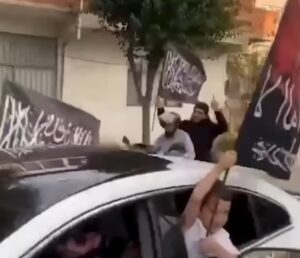
A January 2021 police operation in Yalova revealed how ISIS had built a multi-purpose operational hub in the province, where forged documents were produced, financial flows were coordinated and logistical decisions were made. The operation followed police efforts to track the movements of a senior ISIS figure and an operative described as an “assassin,” identified only by the initials A.Y., uncovering a network that spanned multiple provinces.
According to the case files, the Yalova cell possessed advanced technical capabilities and effectively functioned as a “Hijra and Logistics Office.” For jihadists, hijra refers to leaving their home country to relocate to areas they see as “Islamic lands” or conflict zones, believing this migration is a religious duty in preparation for or participation in jihad. For ISIS members seeking to move onward to Europe, Yalova served as the hub where false identities were produced, travel routes were planned and departures were organized.
Searches conducted at cell houses exposed the scale and sophistication of the operation. Police seized 433 forged passports from various countries, many of them fully prepared and ready for use, a quantity sufficient to enable the international movement of a force equivalent to a military battalion. In addition, 346 forged identity cards were recovered, intended for use during internal security checks and banking transactions.
Investigators also confiscated nine professional document-production machines, along with cold stamps, chips, holograms and counterfeit seals, demonstrating a level of sophistication consistent with an industrial-scale forgery operation.
Indictments further revealed that the cell financed its activities through a combination of external funding and domestic criminal activity. Members of the network were accused of kidnapping wealthy foreign nationals in Eskişehir, Istanbul and Sakarya, and extorting money through armed threats and robbery.
Rather than relying on formal banking channels, the organization predominantly used the hawala system, a trust-based and difficult-to-trace money-transfer mechanism. Under this arrangement, instructions issued by a money changer in Syria prompted payments by exchange offices in Istanbul, with the funds ultimately delivered by couriers to the Yalova cell.

One of the most striking findings concerned Piko Turizm, a company owned by defendant Imad Machnouk. Despite having no legitimate commercial activity, the firm recorded at least 1 billion Turkish lira in transactions since 2017. Investigators identified 212 million lira in suspicious movements through Machnouk’s personal accounts, concluding that the company functioned as a conduit for organizational funds.
The files also referenced companies such as Sham Express and Wadi Alrrafidayn, whose assets were frozen on January 5, 2023, by the U.S. Treasury Department. These entities were assessed as having provided financial support to ISIS under the guise of humanitarian assistance.
Finally, investigators traced a $600,000 transfer sent in February 2023 from Raqqa, Syria, by a figure identified as Fawaz Abd-al-Hamid Hadib, known by the codename Abu Alaa. The funds were distributed among ISIS cells operating in Turkey’s Marmara region, further confirming Yalova’s role as a central node in the organization’s domestic and transnational operations.
The Turkish crackdown on this network came only after intervention by the Financial Action Task Force (FATF). FATF put Turkey on its increased monitoring list, commonly referred to as the “grey list,” citing serious deficiencies in the country’s anti–money-laundering and counterterrorism financing framework between 2021 and 2024.
To secure its removal from the FATF grey list, the Erdogan government needed to demonstrate concrete action against money launderers, terror financiers, criminal syndicates and organized crime networks. It was at this juncture that Machnouk’s business activities in Turkey became the focus of a criminal investigation, fully seven years after he had first established his operations in the country.
By 2022 and 2023, Yalova had become a hub for Salafi–takfiri groupings linked to religious magazines and online propaganda. One prominent example was the Ahlak ve Sünnet network, which expanded its reach through magazine offices, YouTube channels and regional representatives.
According to prosecutors, figures such as Osman Akın (also known as Mamoste Osman el-Kurdî) and Amer Onay played leading roles in the network. Onay, born in 1995, was later marked as “neutralized,” indicating that he was killed — likely in clashes in Syria — but not before the network had expanded its influence across multiple provinces, including Yalova.
In 2023 a major operation centered in Diyarbakır led to arrests and detentions, followed by raids in Yalova targeting individuals suspected of indirect ties to the group. Yet the judicial outcome followed a familiar pattern. The Yalova 2nd High Criminal Court ruled that attending magazine openings, participating in religious talks or expressing Salafi views did not meet the legal threshold for ISIS membership or for aiding a terrorist organization. As a result, all defendants were acquitted under Article 314 of the Turkish Penal Code and Article 223 of the Criminal Procedure Code.
Notably, the same legal provisions were routinely and aggressively applied in recent years against critical and independent journalists who were branded as terrorists by the Erdogan government for their reporting and criticism of state policies.
By 2024 intelligence reports had grown more explicit. The counterterrorism department warned that ISIS operatives, having lost territorial control in Syria and Iraq, were shifting their focus toward ISIS-K, operating primarily in Afghanistan and Pakistan.
According to intelligence files, prospective recruits were traveling legally via Saudi Arabia, Iran, Qatar, Pakistan and the United Arab Emirates, often after obtaining new passports, selling vehicles and altering their appearance. Several of these indicators were detected among suspects residing in Yalova.
The Yalova case is not an isolated failure but rather a microcosm of Turkey’s broader approach to jihadist networks. For years, intelligence agencies tracked individuals, monitored communications and issued warnings yet systematically failed to build cases capable of dismantling these networks before they turned lethal.
The indictment drafted by prosecutors after the December 2025 bloodshed revealed that Turkish authorities were aware of ISIS activities not only in Yalova but across Turkey, yet failed to take action. A report prepared on October 25, 2023, by the police Counterterrorism Department (TEM) and incorporated into the indictment shed light on how jihadist structures had entrenched themselves inside the country under the guise of legal religious activity.
According to the report radical groups adhering to the Salafi ideology have systematically sought to build a grassroots base in Turkey by establishing bookstores, kindergartens, mosques and madrasas. The document emphasized that these structures primarily target young people, both for ideological indoctrination and for long-term recruitment.
The report stated that a total of 97 entities, described as “ISIS-affiliated,” had been identified across Turkey, including associations, bookstores, mosques and madrasas operating in 25 provinces. Of these, 24 were located in Yalova alone, making the small Marmara province one of the most concentrated hubs for such activity.
The report emphasized that shutting down these entities would play a critical role in disrupting the organization’s grassroots recruitment strategy and cutting off material support to its militants. Yet the broader case file illustrates how, despite such detailed assessments, many of the identified networks continued to operate for years with minimal legal consequences.
The deadly December 2025 incident laid bare the consequences of that strategy. By tolerating ISIS-linked cells, resolving their legal troubles and allowing radicalization to fester under the guise of religious activity, Turkish authorities created a security time bomb. When it finally exploded, it killed not only the militants themselves but also the police officers sent to confront a threat that should never have been allowed to grow unchecked.