Abdullah Bozkurt/Stockholm
Turkey is attempting to position itself as a new player in the global rare earth elements (REEs) market, yet the country continues to face significant technological, economic and geopolitical obstacles in transforming extensive underground reserves into a functioning industrial ecosystem.
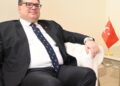
A January 3 letter by Turkish Energy and Natural Resources Minister Alparslan Bayraktar, a copy of which was obtained by Nordic Monitor, acknowledged Turkey’s limitations, particularly in technology, even though the country reportedly has the world’s fourth-largest REE reserves.
The minister highlighted promising deposits, particularly in Eskişehir’s Beylikova district, where exploration has identified 694 million tons of complex ore containing REEs along with barite, fluorite and thorium. Drilling has extended more than 125,000 meters across 310 locations, and over 59,000 samples have undergone laboratory analysis.
Despite this geological potential, the letter suggests that converting resources into industrial capacity remains elusive.
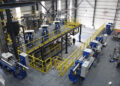
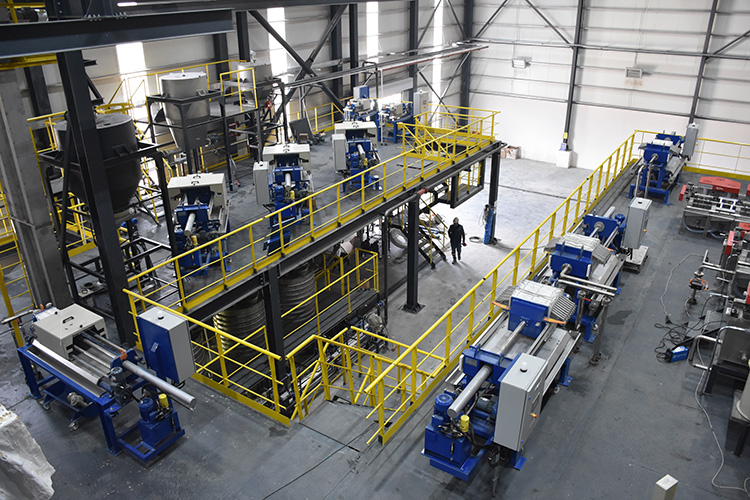
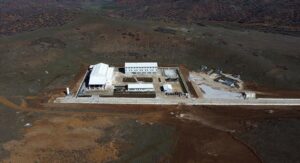
To process the Beylikova ore, state-owned mining company Eti Maden established the Beylikova Fluorite, Barite and Rare Earth Elements Directorate and in 2023 launched a pilot facility with a capacity of 1,200 tons per year. The plant produces an initial REE concentrate using physical and chemical methods, but the sophisticated technology needed to separate individual rare earth oxides is still under development.
Plans exist to convert the plant into a full industrial facility capable of processing 570,000 tons of ore annually by 2027, once the design and construction phases are complete. Until then, Turkey will remain far from commercial-scale production.
Turkish Energy and Natural Resources Minister Alparslan Bayraktar’s letter on REEs admits Turkey’s difficulties in obtaining technology:
The minister openly admitted the technology gap Turkey faces in processing REEs, stating that “countries and companies with REE technology view the production processes as a strategic and competitive asset and are reluctant to share this know-how.”
Turkey’s ambition to become a key rare earth player, among the top five globally according to President Recep Tayyip Erdogan, clashes with stark technological realities. Despite abundant resources, the country lacks mature refining, separation and high-value manufacturing capacity.
Domestic research initiatives under the Turkey Energy, Nuclear and Mining Research Agency (TENMAK) and collaboration with Turkish universities are ongoing, but they remain fragmented and largely experimental.
The issue has also been politicized, with the opposition accusing the government of planning to sell out the country’s REEs through partnerships, particularly with the United States, while the government insists that any such cooperation must respect national sovereignty over resources and prioritize domestic value creation.
In a statement on September 26 regarding the US President Donald Trump–Erdoğan summit at the White House, main opposition Republican People’s Party (CHP) Chairman Özgür Özel claimed, “Preparations have been completed to hand over these valuable rare earth elements — so crucial for Turkey’s future — to Trump.”
According to Bayraktar, no binding agreement has been signed with the United States or other major producers, and current contacts remain at the level of consultations.
In public remarks in October 2025 Erdogan defended Turkey’s rare earth strategy, insisting that the Beylikova reserve would not be handed over to any foreign country and stressing that the resources should be developed domestically to maximize economic value.
Erdogan noted that Turkey aims to be among the top five global producers and emphasized the strategic importance of REEs for renewable energy, defense and advanced technologies. However, he acknowledged that established technology holders are reluctant to share expertise, making international cooperation essential.
Turkey has been striving to build domestic expertise through research coordinated by TENMAK, which is working with leading universities including Istanbul Technical University, Hacettepe University, Middle East Technical University and the İzmir Institute of Technology. Graduate researchers specializing in REEs are employed in these projects as staff or fellows.
Ankara is also pursuing cooperation talks with Japan, Malaysia, Pakistan, Germany, Romania, Poland, Slovenia and the Czech Republic while attempting to send Turkish specialists abroad to join research teams in the United States, Canada, Australia, Japan and Germany.
As part of this effort TENMAK has established Turkey’s first Rare Earth Ore Enrichment and Purification Laboratory and the Permanent Magnet Production R&D Laboratory. A domestic magnet production system has been launched to develop materials needed by the energy and defense industries, covering ingot, ribbon and powder magnet manufacturing, mold design, sintering processes and magnetic analysis.
Sector representatives have echoed the need for a coordinated national strategy. Proposals from business circles call for the creation of a national critical minerals authority to streamline efforts across different institutions and ensure Turkey achieves its production potential.
Turkey’s difficulties are increased by the entrenched structure of the global rare earth industry. China remains the dominant force, accounting for around 70 percent of global mine production and close to 90 percent of refining and separation capacity. Most high-value stages of the supply chain — oxide separation, metal production and magnet manufacturing — are concentrated in a handful of countries.
Global annual REE oxide production is estimated at roughly 350,000 metric tons, while the overall market value exceeds $12 billion and is projected to rise to more than $37 billion by 2033 as demand from electric vehicles, wind turbines, electronics and defense systems accelerates. These trends highlight why governments increasingly view REEs as a strategic resource rather than a conventional commodity.
Until Turkey can bridge the gap between resource potential and industrial capability, its rare earth ambitions risk remaining aspirational rather than economic reality, a reminder that in the global race for critical minerals, geological wealth is only the first step toward technological power.