Abdullah Bozkurt/Stockholm
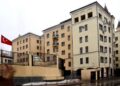
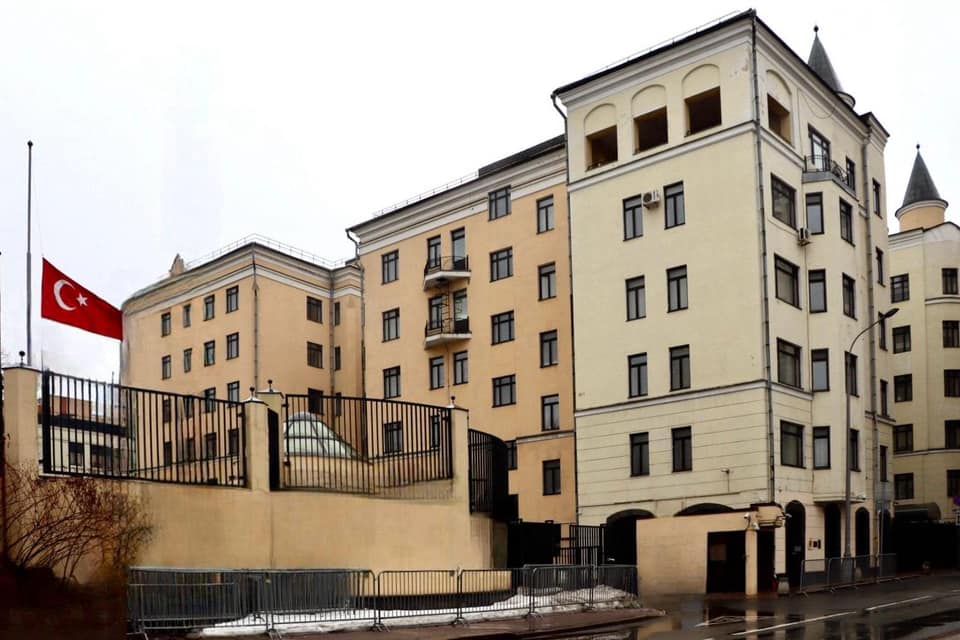
The Turkish government has quietly established and operated a clandestine intelligence cell inside its embassy in Moscow to conduct intelligence-gathering activities on Russian territory, according to confidential documents obtained by Nordic Monitor.
The covert unit is not run by Turkey’s main foreign intelligence agency, the National Intelligence Organization (Milli İstihbarat Teşkilatı, MIT), but rather by the Interior Ministry, which appears to have set up the operation under the guise of promoting law-enforcement cooperation with Russian authorities.
Two separate classified documents, both titled Investigation Record and dated December 29, 2025, describe a series of internal communications between the Security Directorate General (Emniyet), which operates under the Interior Ministry, and operatives stationed at the Turkish Embassy in Moscow. The documents were signed by two police officers whose names were redacted, identified only by their badge numbers.
According to the documents, Turkish operatives working out of the embassy under diplomatic cover as Interior Ministry “counselors” transmitted intelligence gathered in Russia to headquarters in Ankara on February 27, 2025. The material was first assessed by the Interior Ministry’s Foreign Relations Department (İçişleri Bakanlığı Dış İlişkiler Dairesi) before being circulated to other departments for follow-up action.
The records explicitly state that Turkish operatives collected information through both intelligence-gathering activities and background research into judicial records they were able to access in Russia. The documents reference intelligence concerning two individuals believed to be critics of Turkish President Recep Tayyip Erdogan.
Document sent by a police department in Ankara reveals how intelligence was gathered on Russian territory by a unit operating out of the Turkish Embassy in Moscow. (Redactions were made by Nordic Monitor to protect the privacy and safety of the individuals targeted by the intelligence operation):
The intelligence concerning these two individuals was forwarded to the Ankara Provincial Police Department under a cover letter dated January 27, 2016, signed by then–deputy police chief Vahti Kamurbay. Additional background checks and profiling were subsequently carried out on both targets by Turkish security units.
Both individuals targeted by the intelligence operation are believed to be affiliated with the Gülen movement, a group that has become a primary target of Erdogan’s government due to its refusal to endorse the policies of the current Turkish leadership. The movement has been openly critical of Ankara’s actions on a range of issues, particularly Turkey’s role in aiding and abetting radical Islamist groups, including al-Qaeda and ISIS-linked networks operating in Syria and other countries.
The documents further suggest that intelligence was gathered on additional individuals as well and shared with multiple security agencies across various provinces in Turkey. However, they do not specify how the intelligence was collected, what operational methods were employed or how many individuals in Russian territory were ultimately targeted.
What is clear is that the Moscow-based operation appears to extend beyond surveillance of Erdogan’s critics. The scope and secrecy of the intelligence buildup inside the Turkish Embassy indicate greater objectives, possibly including the collection of leverage against Russian institutions or individuals as part of Ankara’s broader bilateral strategy. The intercepted documents do not clarify the full rationale behind embedding such clandestine activity within a diplomatic mission.
The intelligence cell at the Turkish Embassy in Moscow is currently overseen by Maj. Gen. Emrullah Büyük, an officer at the Gendarmerie General Command, which maintains its own independent intelligence apparatus. Büyük replaced Brig. Gen. Hidayet Arıkan, who served in Moscow until August 2025. Both were appointed to the post by Turkish President Erdogan in a government decree.
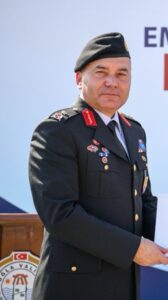
Both officers have spent most of their careers in the Gendarmerie, a force of approximately 207,000 personnel responsible for law enforcement across large swaths of Turkey, particularly in rural and border regions. The Gendarmerie functions as both a police force and a military unit and carries out any assignment ordered by the Turkish president.
The Gendarmerie has previously played a key role along the Turkish-Syrian border, where it facilitated the movement of Turkish and foreign jihadists into Syria through covert coordination with MIT during the height of the Syrian conflict.
In the 1990s the Gendarmerie’s notorious intelligence unit, known as JITEM, conducted a series of illegal clandestine operations in southeastern Turkey, including extrajudicial killings and enforced disappearances, aimed at shaping domestic politics and suppressing dissent. JITEM has also been implicated in organized crime and drug trafficking networks operating through Turkey’s borders.
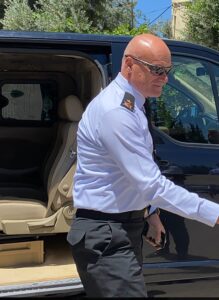
Despite this record, the Turkish Gendarmerie is a member of the NATO Stability Policing Centre of Excellence, led by the Italian Carabinieri and based in Vicenza, Italy. Turkey is a founding member of the center and has five assigned positions, including that of deputy director.
Turkey has also been represented by the Gendarmerie on the NATO Military Police Panel since 2014, a body responsible for coordinating doctrine development, training standards and capability planning for military policing operations within NATO.
The covert intelligence unit in Moscow does not appear to be an isolated initiative but rather part of a much broader global intelligence architecture that Ankara has steadily expanded over the past decade. Following an intelligence-orchestrated, false-flag coup attempt in 2016, a pivotal event that enabled a consolidation of Erdogan’s authoritarian rule, Turkey has increasingly mobilized its intelligence services, police, military, diplomatic corps and even religious institutions for coordinated intelligence-gathering operations abroad.
Cover letter sent by a deputy police chief in Ankara, accompanied by intelligence information collected in Russia:
These efforts have gone beyond tracking critics in exile. Turkish state institutions have been tasked with influencing foreign governments, disrupting diaspora communities, undermining social cohesion and pressuring host states to align with Ankara’s political objectives.
The exposure of the Moscow-based intelligence cell underscores a significant transformation in Turkey’s foreign policy posture. Once centered on soft power, regional diplomacy and multilateral engagement, Turkish embassies under Erdogan have increasingly been repurposed as extensions of the security state, operating as platforms for intelligence collection, covert action and political influence well beyond traditional diplomatic functions.