Abdullah Bozkurt/Stockholm
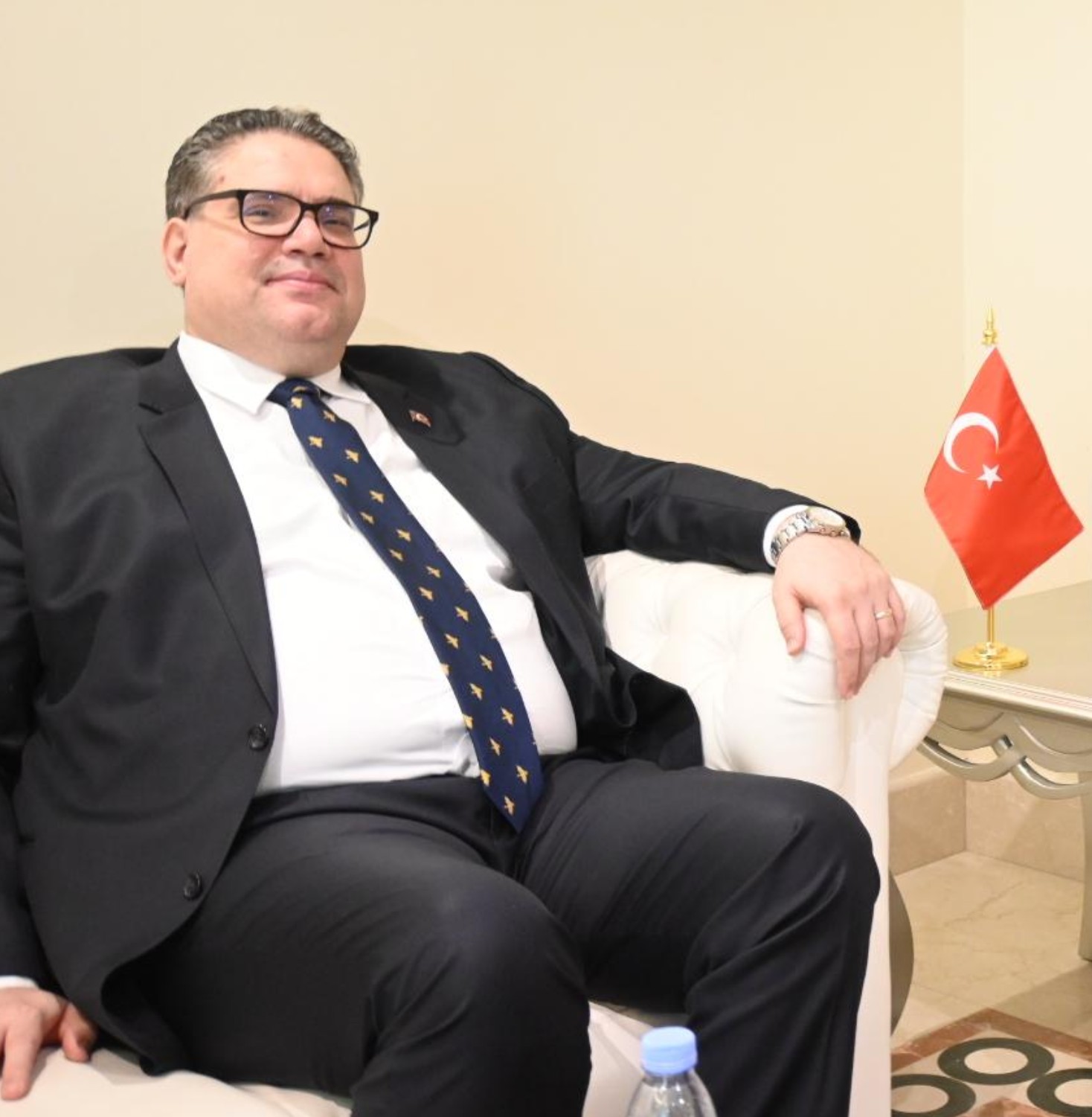
A Turkish ambassador has tried to undermine a criminal case in the United States to save his jailed brother, a convicted felon, by allegedly mobilizing state resources and orchestrating a campaign to discredit the lawyer who represented him at trial.
Cenk Uraz, Turkey’s permanent representative to the Organisation of Islamic Cooperation (OIC), sought to have the case against his brother Tunc Uraz thrown out after Tunc was convicted in Michigan of aggravated stalking and three counts of solicitation to commit murder. Prosecutors proved that Tunc harassed his ex-girlfriend and, while jailed, attempted to arrange her killing through fellow inmates and an undercover officer.
In 2018 a jury found him guilty on all counts. He was sentenced to 36–90 months for aggravated stalking and 200–360 months for each solicitation count, to be served concurrently. His earliest possible release date is 2033, and his maximum discharge date is 2046.
Tunc Uraz’s entire family lives in Turkey. Although he was born in the United States, his family returned to Turkey when he was 1 year old. He later returned to the US for college, earning a master’s degree in hospitality management from Michigan State University. His marriage began to collapse in 2015 after his wife returned to Turkey.
During this period he began abusing alcohol and Xanax and was diagnosed with PTSD, manic depression and substance-abuse disorders. He was fired from his job in April 2016 after asking a co-worker to obtain an illegal gun.
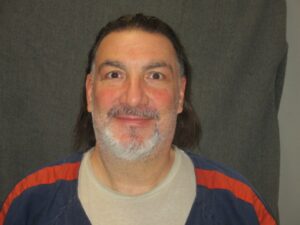
In June 2015 Erika L. Melke, his girlfriend since 2012, ended their relationship and obtained a personal protection order (PPO) against him after multiple incidents of stalking. These included slashing her car tires, entering her apartment, attempting to hack her social media accounts and interrupting a dinner she had with a new boyfriend. Tunc violated the order and was charged with aggravated stalking, to which he pleaded guilty.
While jailed and awaiting sentencing, he continued stalking Melke and attempted to recruit a hitman to kill her. A second criminal case was brought, leading to convictions on both stalking and solicitation-to-commit-murder charges.
Cenk Uraz, who was then deputy chief of mission at the Turkish Embassy in Moscow, closely followed his brother’s prosecution and trial and pressured officials at the Turkish Embassy in Washington and the Turkish Consulate in Chicago to intervene. According to court filings in both state and federal proceedings, Cenk repeatedly contacted his brother’s trial lawyer, Jacob Perrone, often through their sister Aysem Uraz.
Aysem Uraz’s email to defense lawyer Jacob Perrone regarding a statement issued by the Turkish Embassy in Washington.
Turkey even sought to leverage Tunc’s Michigan prosecution in high-level diplomatic tensions between Ankara and Washington. This occurred after the US reacted strongly to Turkey’s unlawful arrest of longtime local employees of US consulates in Istanbul and Adana and suspended non-immigrant visa services.
In 2017 the Erdoğa government arrested Metin Topuz, who had worked at the US Consulate General in Istanbul since 1982 and later served as a liaison between Turkish police and the Drug Enforcement Administration. In June 2020 he was convicted on fabricated terrorism charges and sentenced to eight years, nine months in prison, a case the US government said lacked credible evidence. He was released in November 2023.
Another consulate employee, Nazmi Mete Cantürk, was also prosecuted on fabricated terrorism charges, convicted and sentenced to five years, two months and two weeks. He was released under a travel ban. Turkish authorities also prosecuted his wife and daughter, both of whom were acquitted. Hamza Uluçay, a translator at the US Consulate in Adana for 36 years, was arrested in February 2017 and sentenced to four-and-a-half years in prison in January 2019. He was later released pending appeal.
A document discovered in US court records show that Ankara attempted to link these politically motivated prosecutions to Tunc Uraz’s criminal case in Michigan.
In an email dated November 8, 2017, Aysem Uraz asked Perrone for an update on her brother’s trial and said their diplomat brother Cenk would call him. She also attached a press release issued two days earlier by the Turkish Embassy in Washington defending the arrest of US consulate employees in Turkey and referring obliquely to Tunc’s case in the US.
“Turkey has also very serious concerns about the ongoing cases against Turkish citizens in the US,” the statement said.
Turkish Embassy statement highlighting cases against Turkish nationals in the United States, implicitly referring to Tunc Uraz’s criminal case:
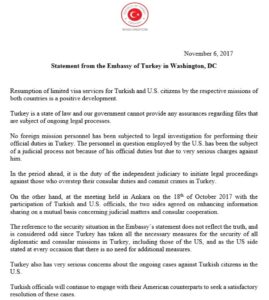
Court filings suggest that Cenk Uraz succeeded in having the embassy insert that reference to his brother’s prosecution, a statement approved in Ankara, issued by the embassy and then forwarded to the defense lawyer by the defendant’s sister. Aysem also informed Perrone that Turkish diplomats from the Chicago consulate were likely to attend the trial.
In sworn filings Perrone described the extraordinary level of diplomatic interference.
“Representatives of the Turkish Embassy were involved throughout the trial and were very upset that I was not sharing status updates with them regarding the case and providing them with an objective viewpoint on the merits of the case,” he said.
He reaffirmed this in a hearing in August 2025 at Michigan’s 30th Judicial Circuit Court. “I was getting a significant amount of calls from the Turkish Embassy [he means Turkish consulate] in Chicago in regards to his case, and frankly I explained to them the nature of his circumstances also so that they could attempt to convey to him what he was up against if he were to go to trial.”
Messages exchanged between Jacob Perrone and Aysem Uraz, the sister of convicted felon Tunc Uraz:
This filing documents that a foreign authoritarian government led by Recep Tayyip Erdogan, a repressive leader with a proven record of extraterritorial intimidation, was actively watching and attempting to influence a US criminal proceeding.
Following his conviction Tunc filed multiple appeals, including claims of ineffective assistance of counsel. The Michigan Court of Appeals rejected them and upheld both his convictions and sentences. In December 2025 Tunc escalated the effort to federal court, seeking an evidentiary hearing in the US District Court for the Eastern District of Michigan, where the case remains pending.
Perrone told the court that the campaign to portray him as incompetent was orchestrated by the Turkish envoy using state resources.
Mr. [Tunc] Uraz disparages my name and likely has the full support of his brother [Cenk] who at the time of trial was the {acting] Turkish Ambassador to Russia and since then has been named the Turkish Representative to the Organization of Islamic Nations (“OIC”), which is similar to the North Atlantic Treaty Organization (“NATO”) in the Middle East. Mr. Uraz is solely attempting to create an issue because the appeals court didn’t rule in his favor on the Brady violation,” Perrone wrote, asking the court to dismiss the complaint filed by Tunc in September 2025.
Criminal defense lawyer Jacob Perrone’s legal brief countering the allegations against him and exposing the Turkish diplomats’ campaign to discredit him:
“Mr. Uraz’s brother [Cenk] is not bigger than the [US] Constitution and not bigger than the rule of law,” he added. “I anticipate that his brother will pull any support for him once he becomes aware of his continued misbehaviour and how it may negatively affect his standing in the Turkish government and in social circles;” Perrone further noted.
“Have the Turkish Embassy call me. They have my number. Just don’t send that last arrogant, pretentious prick who called before. He knows I won’t speak to him anyway,” Perrone wrote.
In filings submitted from prison, Tunc alleged that Perrone suffered from bipolar disorder during trial, believed himself to be a god and wanted to take over the city of Lansing.
Those claims were refuted in a Michigan court hearing by multiple witnesses. Ingham County Assistant Prosecutor Charles Koop and Jonathan Roth, now an assistant US attorney, testified that Perrone was not impaired during the trial. Defense attorneys Eric Schroder and Nicholas Fernandez also testified that Perrone’s mental health did not affect his performance.
Tunc claimed that many of his family members have bipolar disorder and that he recognized signs of breakdown during trial. Yet when asked why he failed to raise any objection at the time or why he kept Perrone as his lawyer after a trial that ended in a guilty verdict, he offered no credible explanation.
Meanwhile, the campaign to free him on grounds of ineffective-assistance-of-counsel is still being pursued by his sister Aysem and his diplomat brother Cenk.