A study published in a journal of President Recep Tayyip Erdogan’s propaganda office, the Presidential Directorate of Communications, provides a detailed account of Turkey’s expanding public diplomacy activities in Central Asia while also pointing to coordination deficiencies, budget transparency limitations and competition from Russia and China as factors shaping Ankara’s effectiveness in the region.
The article, titled “Turkey’s Public Diplomacy Tools in Central Asia: An Inter-Institutional Comparative Analysis,” was written by İbrahim Halil Yaşar of Harran University and appears in İletişim ve Diplomasi, a journal issued by the Presidential Directorate of Communications. The study examines Turkey’s public diplomacy initiatives in Kazakhstan, Kyrgyzstan and Uzbekistan through a comparative framework, focusing on activities in education, culture, development assistance and media.
Using qualitative case analysis, the study situates Turkey’s public diplomacy within established soft power and public diplomacy theories while identifying institutional practices and constraints affecting implementation.
According to the study Turkey’s public diplomacy in Central Asia is primarily concentrated on education and cultural diplomacy. Institutions such as the Turkish Cooperation and Coordination Agency (TİKA), the Yunus Emre Institute, the Turkish Maarif Foundation, the Presidency for Turks Abroad and Related Communities (YTB), TRT Avaz and the state-run Anadolu news agency are identified as the main actors involved.
Nordic Monitor has previously reported that Turkey’s National Intelligence Organization (MİT) deploys operatives overseas under official cover, including staff affiliated with the Directorate of Religious Affairs (Diyanet), the Turkish Maarif Foundation, the Anadolu news agency, the Yunus Emre Institute and TİKA, and that these institutions have been used to recruit or employ personnel abroad, including from the diaspora.
Educational diplomacy constitutes the largest share of activities in all three countries examined. Scholarship programs coordinated by the YTB, overseas schools and educational partnerships run by the Turkish Maarif Foundation, a Turkish government-funded entity run by jihadists to export political Islam abroad; and joint universities, notably Hoca Ahmet Yesevi University in Kazakhstan and the Kyrgyz-Turkish Manas University in Kyrgyzstan, are described as central components of Turkey’s long-term engagement.
The study notes that these institutions contribute to sustained educational exchange and long-term social interaction, though it also acknowledges that measuring their long-term diplomatic impact remains difficult due to the nature of public diplomacy outcomes.
Cultural diplomacy, led mainly by the Yunus Emre Institute, represents the second major axis of activity. Turkish language courses, cultural festivals, art workshops and heritage-focused programs aim to emphasize shared linguistic, historical and cultural elements between Turkey and Central Asian societies. TİKA’s restoration of historic and cultural sites supports this approach by linking development assistance with cultural preservation.
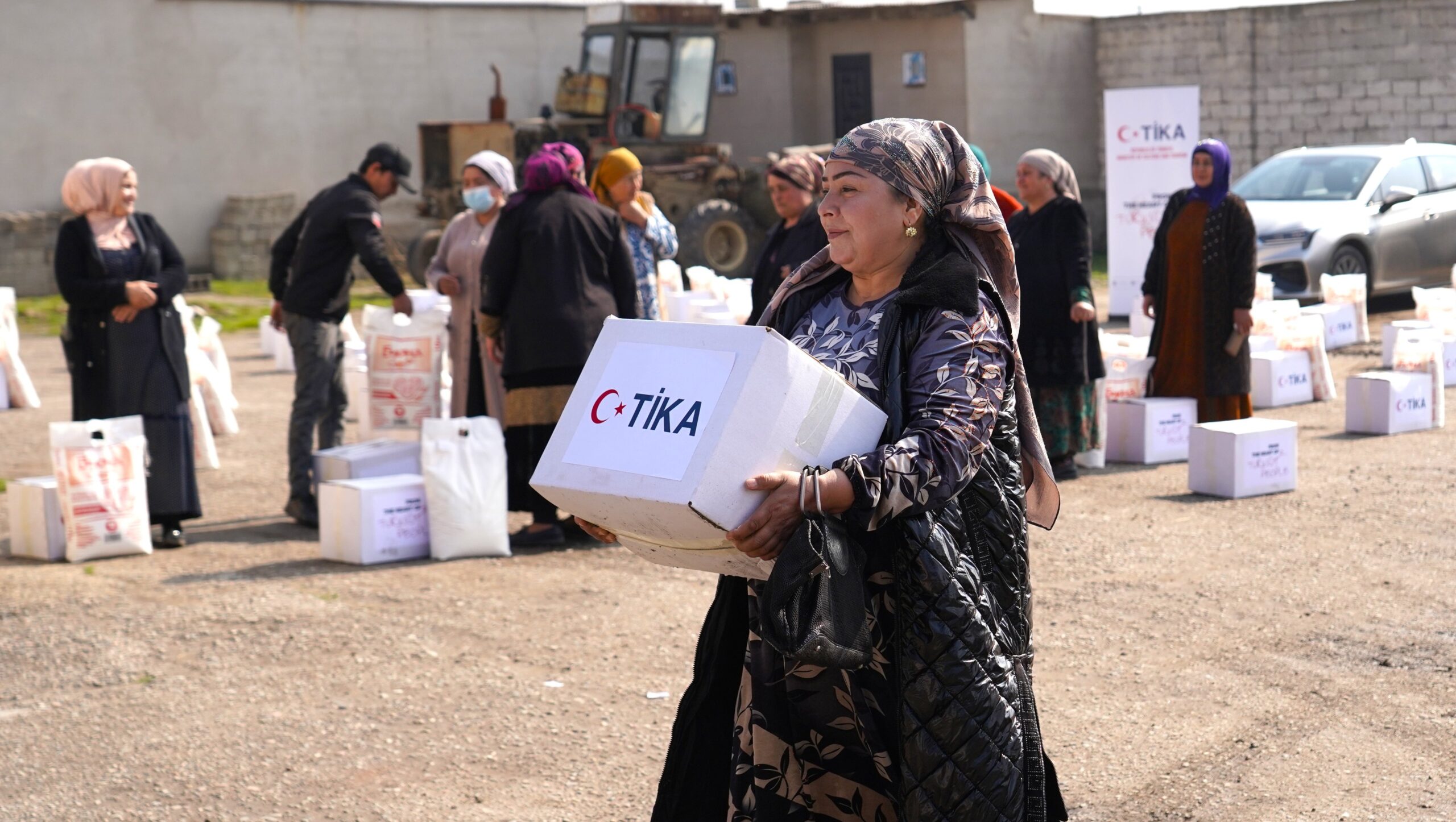
TİKA is identified as the most prominent institutional actor in Turkey’s public diplomacy activities in Central Asia, particularly in the field of development diplomacy. Its projects cover education, health infrastructure, agriculture and cultural heritage, positioning Turkey as a development partner in the region.
Media diplomacy is conducted primarily through TRT Avaz and the Anadolu news agency. According to the study, these outlets contribute to public diplomacy by broadcasting in regional languages and covering themes related to shared culture, history and cooperation. While media-related activities are fewer in number compared to education and aid projects, they are described as complementary tools that support broader public diplomacy efforts.
The study characterizes Turkey’s overall approach as multi-actor and network-based, involving several institutions operating simultaneously. While this structure allows for a wide range of engagement, the article also notes that it presents coordination challenges.
One of the key limitations identified in the study concerns coordination among institutions involved in public diplomacy. Activities are often planned, implemented and reported independently, which can make it difficult to assess how individual initiatives contribute to shared strategic objectives.
The study also highlights budget transparency as a challenge. Activity and financial reports are not published regularly by all institutions, and some data are incomplete or inaccessible. As a result the analysis relies in part on estimated budget figures, particularly when comparing activities across countries and years.
Kazakhstan is identified as the country where Turkey’s public diplomacy activities are most extensive, particularly in education and culture. Kyrgyzstan shows a greater emphasis on development assistance and health infrastructure, while Uzbekistan has emerged as an increasingly important focus following domestic reforms and greater openness to international cooperation.
The study notes fluctuations in project numbers and spending levels across countries, complicating systematic evaluation. The study places Turkey’s public diplomacy within a broader regional environment shaped by competition from other major actors, particularly Russia and China.
China’s Belt and Road Initiative and Russia’s Eurasian integration projects are identified as significant frameworks influencing Central Asia. These initiatives are supported by substantial economic resources, political leverage and communication capacity, creating a competitive context for Turkey’s public diplomacy efforts.
While Turkey benefits from historical, cultural and linguistic ties with Central Asian countries, the study notes that these advantages operate alongside external competition and internal institutional constraints. The article does not address allegations raised by independent investigative outlets regarding the political or security roles of some Turkish institutions operating abroad.
The article concludes that Turkey’s public diplomacy contributes to sustained interaction and identity-building in Central Asia but that its effectiveness is shaped by institutional practices, data limitations and the broader geopolitical environment in which it operates.
Text of “Turkey’s Public Diplomacy Tools in Central Asia: An Inter-Institutional Comparative Analysis”: