Abdullah Bozkurt/Stockholm
An aircraft passenger from Africa who used Turkey as a transit point en route to his final destination was subjected to severe abuse by airport police, unlawfully detained, beaten and forcibly expelled to a third country. Yet his five-year struggle for justice collapsed on multiple fronts, as prosecutors and government authorities shielded the perpetrators from any meaningful accountability.
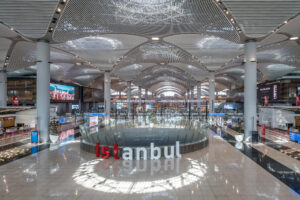
Emmanuel Fosso Someon Chedjou, a Cameroonian citizen and an unsuspecting traveler en route to Dubai for business, was stopped by Turkish police and subjected to degrading treatment, physical abuse and unlawful detention at Istanbul Airport. His case has become a stark illustration of how law enforcement abuses are normalized, minimized and left unpunished at the criminal level under the authoritarian government of President Recep Tayyip Erdogan, even when such violations are captured on video and later confirmed by the courts.
Chedjou was traveling on Turkish Airlines (THY) on January 21, 2020, from Cameroon to Dubai to conduct a trade. During an eight-hour layover, he wanted to do some shopping at duty free and move from the transit area to the main hall. But the airport police flagged him, accusing him of using forged documents.
He was immediately labeled as an INAD (inadmissible passenger), which ordinarily involves brief holding and prompt return without punitive force. That is not what happened. Police first presented him with a Turkish-language document and demanded his signature. When Chedjou refused to sign a document whose contents he did not understand, the abuse began. He was then confined for days in airport facilities without any judicial detention order and subjected to repeated forced-deportation attempts on January 24 and January 27.

During the first attempt to put him on a flight to Cameroon, the aircraft crew noticed that he was covered with a blood-stained sheet and appeared seriously unwell after the abuse he had suffered at the hands of police. The crew refused to board him and demanded that he first be taken to a medical clinic for treatment. Instead of providing medical care, police returned him to a holding cell at the detention facility, where he was beaten again.
In statements recorded during a disciplinary investigation, the aircraft captain and crew claimed that Chedjou posed a flight safety risk after allegedly shouting in protest.
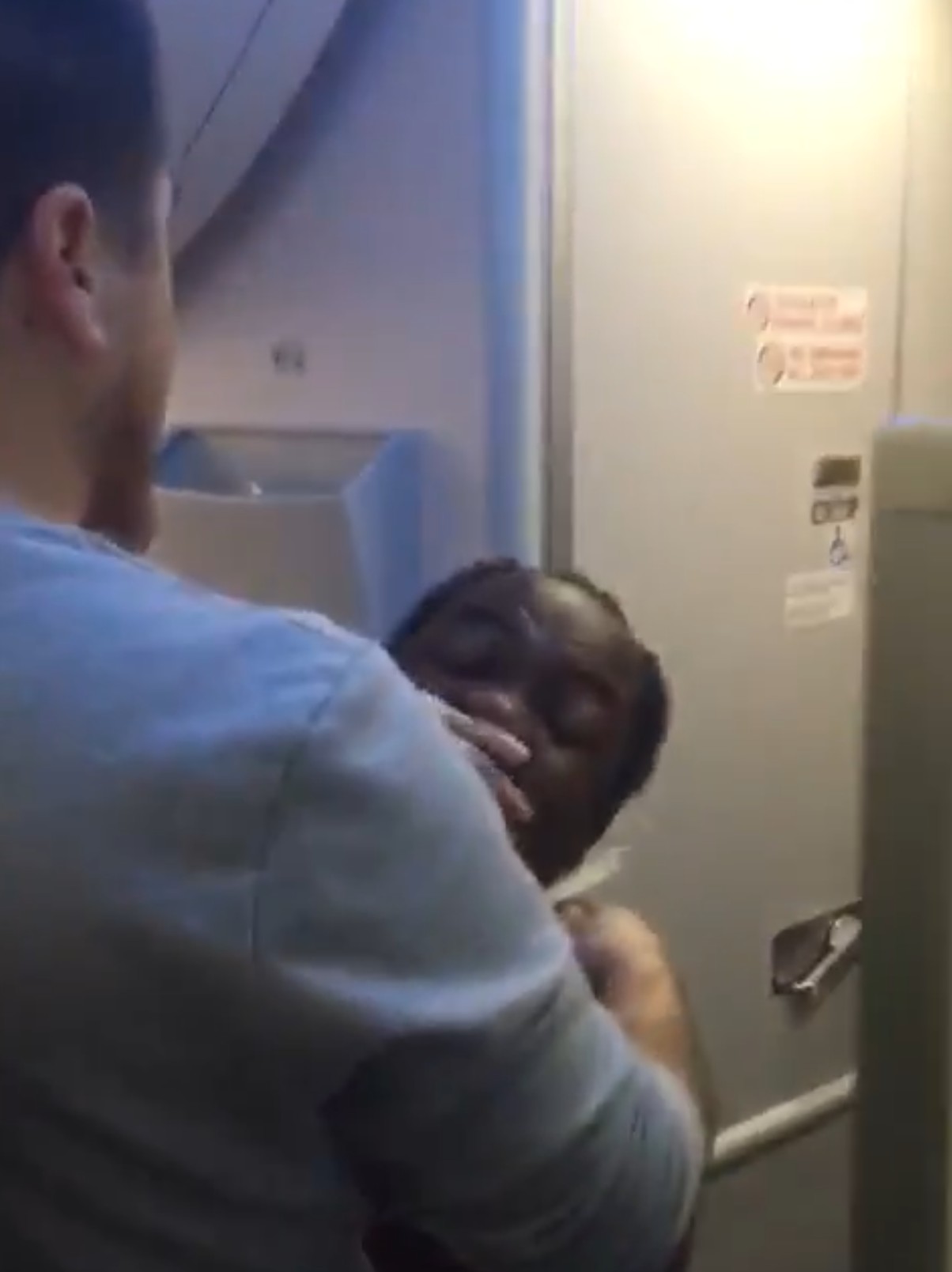
In a criminal complaint submitted through Turkey’s embassy in Yaoundé and later through his attorney in Turkey, Chedjou described how the abuse escalated. Before police attempted to put him on a flight for a second time, he was subjected to physical violence, wrapped head to toe in stretch film, gagged with cloth, his mouth taped shut, strapped to a wheelchair nearly naked, restrained at the hands and legs and forcibly seated in the last row at the back of the aircraft.
After he managed to remove the tape from his mouth and cry out for help, fellow passengers intervened, and the pilot refused to take off amid mounting objections from those on board over his forced boarding.
On January 30 authorities finally expelled him not to Cameroon, his home country, but to Nigeria, leaving him stranded, without funds and exposed to serious risk.
Passenger-recorded videos that later circulated online showed him nearly naked, immobilized and wrapped in plastic film. He could be heard shouting for help as a fellow passenger assisted in removing the stretch film, while others protested his treatment. A police officer in civilian clothing was also seen holding a roll of packing tape, apparently used on Chedjou.
Despite the evidence, the Gaziosmanpaşa Chief Public Prosecutor’s Office in Istanbul issued a decision of non-prosecution in September 2020 for three police officers and two employees of Turkish Ground Services (TGS), a company partly owned by Turkish Airlines. Prosecutors accepted police claims that Chedjou had resisted deportation and ruled that the force used was justified, even while conceding that wrapping a person in stretch film is not a lawful method of restraint, which they nonetheless deemed acceptable in light of the alleged resistance.
Prosecutors also claimed that there was no medical report substantiating allegations of abuse and torture and ignored the fact that Chedjou was never taken to a medical facility by the police for a thorough examination.
This case reflects a broader pattern in Turkey, where victims of torture and abuse are frequently left without effective remedies. Police often fail to take victims to hospitals, or — when medical examinations do occur — doctors are allegedly pressured not to document signs of abuse or torture. When victims later file complaints with prosecutors or courts, they are deprived of the crucial medical evidence needed to substantiate their claims. Such practices have enabled systematic and deliberate use of abuse and torture under the Erdogan government as a tool to intimidate critics and political opponents.
An appeal filed by Chedjou’s lawyer challenging the prosecutor’s decision not to bring charges against the alleged abusers was rejected by another court on November 20, 2020, effectively closing the criminal case and relieving the officers involved of criminal liability.
An administrative investigation, launched only after the incident was exposed on social media and reported by international media, appeared to function primarily as a box-ticking exercise, allowing Turkish officials to claim that action had been taken while deflecting criticism that the abuse went unaddressed.
The ruling of Turkey’s Constitutional Court on the abuse of a Cameroonian national at Istanbul Airport:
A disciplinary report issued by the Turkish Interior Ministry on June 10, 2020, concluded that Deputy Police Commissioner F.U. and police officers Y.E. and F.A. had used physical force in a manner not justified under the law and had engaged in conduct that humiliated the victim. The report recommended salary deductions equivalent to 11 days’ pay. In practical terms the officers lost roughly 2,500 Turkish lira or about $300 at the time, a token penalty given the severity of the abuse inflicted at the airport.
It also found that police officer Ö.K. should be formally reprimanded for attempting to persuade the flight crew that the victim could travel while wrapped in stretch film, an act deemed to violate regulations.
These penalties amounted to little more than a slap on the wrist. The police officers who abused an African citizen remained on duty and faced no meaningful consequences.
While Chedjou’s efforts to obtain justice in Turkey failed in the criminal justice system, they gained limited traction in the administrative courts. After filing a compensation claim that was partially upheld, the Istanbul 3rd Administrative Court ruled in June 2022 that Chedjou had been restrained without a detention order, bound to a wheelchair, gagged, partially stripped and forcibly taken to an aircraft while wrapped in plastic film, treatment incompatible with human dignity.
The court stressed that video evidence contradicted claims of violent resistance and initially awarded 75,000 lira in moral damages. A regional court later reduced the amount to 25,000 lira or less than $1,500 at the time, citing alleged contributory fault based largely on police narratives.
Video footage showing the abuse of Cameroonian citizen Emmanuel Fosso Someon Chedjou by Turkish police aboard a Turkish Airlines aircraft circulated on social media:
Chedjou’s bid for justice at Turkey’s Constitutional Court, alleging violations of his fundamental rights, was partially successful. His application, lodged in January 2021, resulted in a favorable ruling despite objections from the Justice Ministry. On July 29, 2025, the Constitutional Court delivered a judgment confirming that the treatment inflicted on Chedjou violated the constitution.
However, the practical impact of the decision remains uncertain, as its implementation now depends on a new investigation by a public prosecutor.
In multiple cases in Turkey, trial courts and prosecutors have ignored Constitutional Court rulings and stood by their original decisions, raising doubts about whether the judgment will lead to genuine accountability.
The Constitutional Court ruled that the prohibition of inhuman and degrading treatment under Article 17 had been violated in both its material and procedural dimensions, explicitly recognizing that the actions of police and airport authorities were incompatible with human dignity.
While the court declared the complaint regarding unlawful deprivation of liberty inadmissible on procedural grounds, it found the torture-related complaint admissible and upheld it on the merits. It ordered the reopening of the criminal investigation by the Gaziosmanpaşa Chief Public Prosecutor’s Office and that 200,000 Turkish lira (some $5,000) in moral damages be paid to Chedjou,
Rights advocates say the ruling exposes a structural failure rather than an isolated instance of abuse, confirming how torture and mistreatment by Turkish police have become normalized under President Erdogan’s repressive rule. Most complaints alleging abuse are dismissed by a partisan and politicized judiciary that operates under the influence of the executive branch. Even when courts establish that torture or ill-treatment has occurred, the rulings are often neutralized through non-prosecution, token disciplinary measures and sharply reduced compensation.
For Chedjou, the Constitutional Court’s decision brings long-delayed recognition — but not justice. The officers responsible for his treatment at Istanbul Airport remain free, having faced little more than a slap on the wrist. The renewed investigation ordered by the Constitutional Court is widely expected to yield the same outcome, leaving genuine accountability elusive and justice for Chedjou out of reach even years after the abuse.